The $650 annual fee attached to the Delta SkyMiles Reserve American Express Card positions it as the flagship, ultra-premium offering within Delta Air Lines’ co-branded credit card portfolio, yet it remains one of the most frequently misunderstood financial products in the travel rewards sector. Designed primarily for dedicated flyers pursuing Delta Medallion elite status, the card offers an array of luxury travel perks that often entice casual consumers before they perform the necessary cost-benefit analysis. With an increasingly competitive credit card market and shifting airline loyalty structures, prospective cardholders must carefully weigh whether the extensive list of benefits justifies the steep yearly investment or if alternative cards better suit their travel habits.
An Overview of the Delta Reserve Card’s Core Benefits
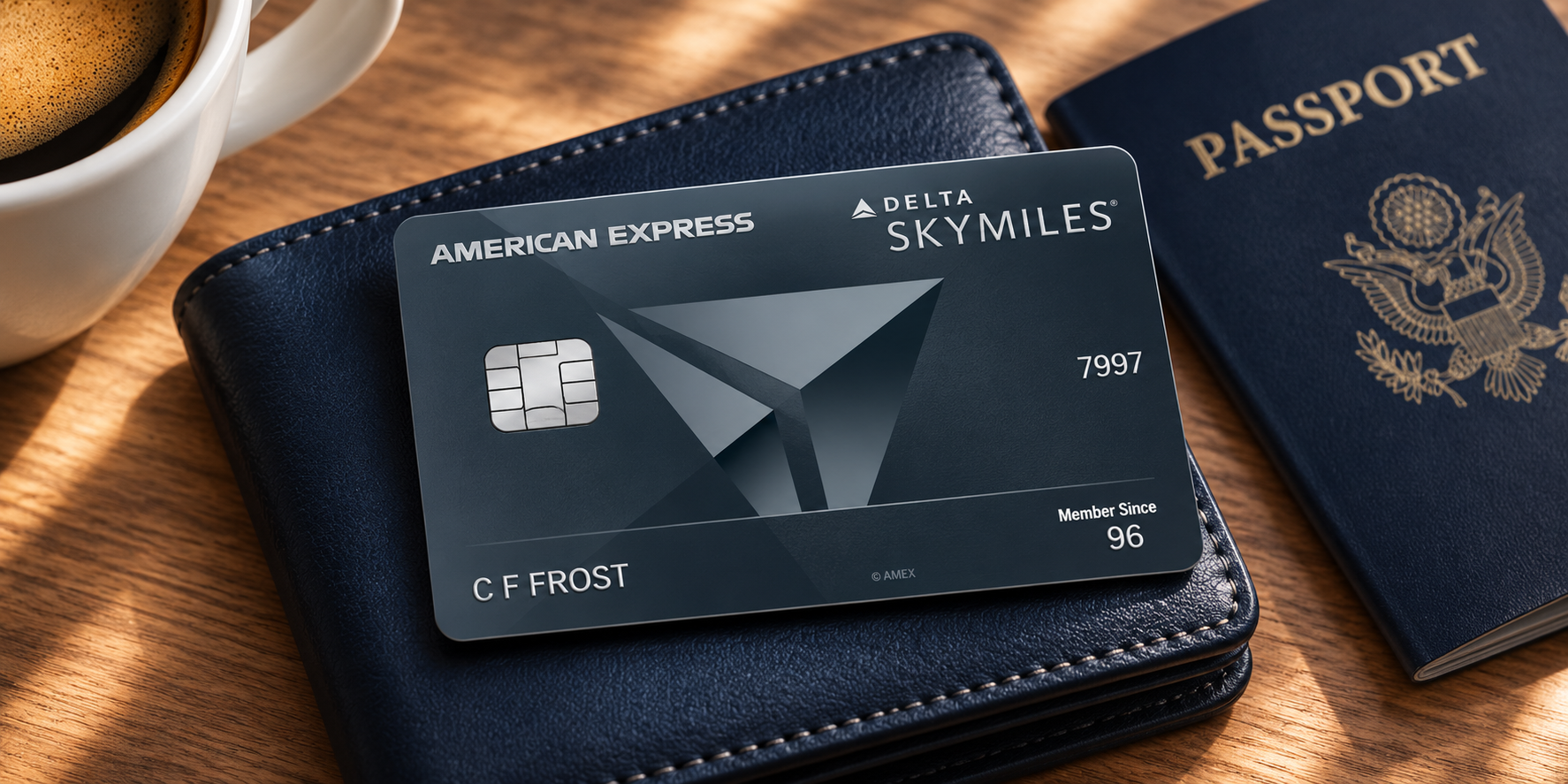
At its core, the Delta Reserve Card is engineered to bridge the gap between everyday consumer spending and airline loyalty. For its annual fee of $650, cardholders receive a robust package of travel enhancements. These include an annual companion certificate—valid for first class, Delta Comfort+, or main cabin tickets—starting in the second year of cardmembership, alongside free checked bags on Delta itineraries. Furthermore, the card offers a significant structural advantage for status hunters by depositing 2,500 Medallion Qualifying Dollars (MQDs) directly into the cardholder’s account every year, giving them a substantial head start toward achieving airline elite tiers.
However, for travelers whose primary goals are limited to occasional checked baggage and basic airport convenience, lower-tier options within the Delta portfolio can adequately cover those requirements at a fraction of the cost. Meanwhile, consumers focused broadly on comprehensive lounge access across multiple airlines often find that general travel rewards cards provide superior versatility.
The Modern Landscape of Delta Medallion Elite Status
The primary justification for holding the Delta Reserve Card lies in the acquisition and maintenance of Delta Medallion status. Following a sweeping overhaul of the SkyMiles loyalty program at the end of 2023, Delta fundamentally restructured how flyers earn status, shifting the primary metric entirely to dollar-based spending rather than distance flown. Under the current rules, achieving elite status requires accumulating specific thresholds of Medallion Qualifying Dollars (MQDs). Members earn $1 MQD for every dollar spent on eligible Delta-operated flights, but credit card spending has become an indispensable accelerator.
The Delta Reserve Card accelerates this process by awarding $1 MQD for every $10 spent on purchases. Alternatively, the mid-tier Delta SkyMiles Platinum American Express Card awards $1 MQD for every $20 spent. Crucially, entry-level cards like the Delta SkyMiles Gold and Blue editions offer no MQD accumulation through spending whatsoever. When combined with the annual 2,500 MQD head start granted to Reserve cardholders, elite status becomes attainable for heavy spenders who might not log millions of actual flight miles. For instance, achieving Silver Medallion status requires $5,000 MQDs; a Reserve cardholder receives half of that requirement automatically and can bridge the remaining gap through a $25,000 annual card spend.
Despite these pathways, industry analysts frequently caution that chasing elite status is rarely financially optimal for the average consumer. Travelers are often better served operating as free agents, booking flights based purely on price, schedule, and convenience rather than remaining loyal to a single carrier. Status accumulation makes sense primarily for corporate travelers or road warriors who consistently fly multiple times per month, preferably on an employer’s budget, where the accumulated perks meaningfully enhance the travel experience.
The Reality of Complimentary Upgrades
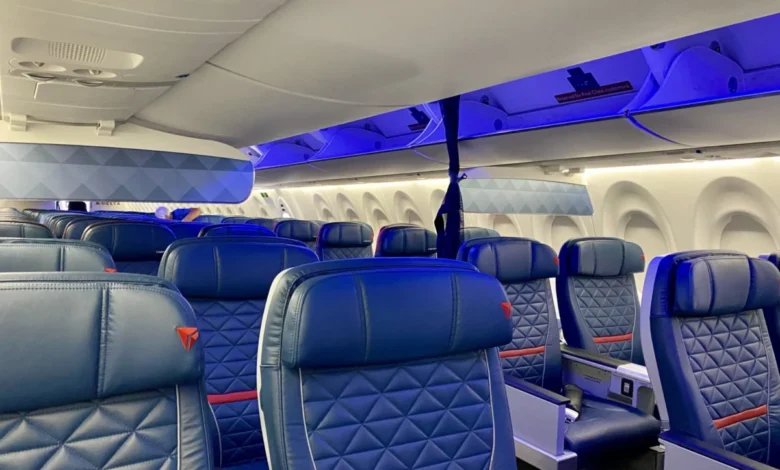
A heavily marketed selling point of the Delta Reserve Card is the inclusion of complimentary space-available upgrades to Delta First Class and Delta Comfort+ for non-status holders. On paper, this perk offers everyday flyers a taste of premium travel without paying for a business-class fare. In practice, however, securing an upgrade through the card alone is statistically rare.
Delta processes complimentary upgrades through a strict hierarchy that heavily prioritizes high-tier Medallion members, fare class purchases, and corporate contract codes. A Reserve cardholder without underlying status sits near the bottom of this upgrade queue. Furthermore, broader commercial shifts within the airline industry have drastically reduced the pool of available upgrade seats. Delta executives, including President Glen Hauenstein, have noted a strategic pivot toward selling premium seating outright rather than holding inventory for complimentary upgrades. While Delta historically filled the vast majority of its first-class cabin via complimentary Medallion upgrades a decade ago, the airline now sells roughly 88% of its first-class seats directly to paying customers, leaving only 12% available for upgrades. Consequently, even top-tier Diamond Medallion members holding a Reserve card can no longer reliably count on complimentary front-cabin seating.

Airport Lounge Access: Sky Club Restrictions and Alternatives
For many applicants, access to the Delta Sky Club network serves as the decisive factor in acquiring the Reserve card. Yet, access policies have tightened significantly in recent years to combat overcrowding.
Delta Reserve cardholders are currently limited to 15 individual Sky Club visits per calendar year. To unlock unlimited access, a cardholder must spend a minimum of $75,000 on the card within that same calendar year. For travelers who do not reach this high spending threshold, the 15-visit allotment must be carefully budgeted. Fortunately, multiple visits within a single 24-hour window count as a single visit, protecting travelers during complex connections. Additionally, cardholders receive four complimentary one-time guest passes annually, with subsequent guests subject to a fee of $50 per person.
Evaluating the American Express Platinum Card Alternative
Travelers weighing the merits of the Delta Reserve Card frequently arrive at a crossroad involving the American Express Platinum Card. While the Amex Platinum carries a higher annual fee of $895, it delivers a broader array of travel benefits that often eclipse the co-branded offering for consumers who are not strictly bound to Delta.
The Amex Platinum provides access to a comprehensive global lounge ecosystem known as the Global Lounge Collection, encompassing over 1,550 lounges worldwide. This includes proprietary American Express Centurion Lounges, Priority Pass Select networks, Plaza Premium locations, and Escape Lounges, alongside 10 complimentary visits per year to Delta Sky Clubs when flying on a Delta-marketed itinerary.

Furthermore, the rewards structure differs fundamentally. While the Delta Reserve Card earns SkyMiles—which are restricted to Delta and its SkyTeam partners—the Amex Platinum earns American Express Membership Rewards points. These points can be transferred instantly to Delta SkyMiles when needed, or shifted to dozens of other airline and hotel loyalty programs, offering superior long-term flexibility and valuation. Coupled with an extensive suite of statement credits for dining, digital entertainment, retail, and travel incidentals, the Amex Platinum often provides a higher net value for frequent flyers who value ecosystem diversity.
Strategic Implications and Recommendations
Deciding whether to acquire the Delta SkyMiles Reserve American Express Card requires a rigorous evaluation of individual travel patterns. For the dedicated Delta loyalist who spends tens of thousands of dollars annually on the card and consistently chases high-tier Medallion status, the Reserve Card acts as a necessary and efficient tool within the travel hacking ecosystem. The combination of MQD head starts, spending accelerators, and annual companion certificates can easily offset the $650 annual fee.
Conversely, casual flyers drawn in by luxury marketing, infrequent travelers, or those primarily seeking generalized lounge access are generally advised to look elsewhere. For consumers who prioritize global lounge flexibility and transferable points currencies over airline-specific elite tiers, general-purpose premium cards present a more viable financial return. Ultimately, the Delta Reserve Card remains a specialized instrument—indispensable for the true Delta road warrior, but an unnecessary expense for the casual vacationer.