Exploring the River Red Gum Parks of New South Wales: A Comprehensive Guide to Australia’s Inland Wilderness

The sprawling landscapes of New South Wales (NSW) have long captivated travelers with their coastal vistas and sun-drenched beaches, yet a profound ecological and cultural treasure lies far inland. Within the Riverina region, the River Red Gum Parks protect a vast, interconnected network of floodplains, wetlands, and ancient forests centered around Australia’s two longest waterways: the Murray and Murrumbidgee rivers. Spanning over 100,000 hectares, this protected area houses the largest contiguous River Red Gum forest in the world. As conservation efforts mature and tourism infrastructure expands, these once-contested timberlands have transitioned into vital sanctuaries for native wildlife, offering travelers an immersive journey into authentic Australian bushland.

Main Facts and Geographic Scope
The River Red Gum National Park is not a single, isolated parcel of land, but rather a complex assemblage of national parks, state forests, and regional reserves. Situated within the triangle formed by major regional hubs such as Narrandera, the park system borders both New South Wales and Victoria. The geography of the region is defined by dynamic river systems, most notably the Murrumbidgee River, which flows past the town of Narrandera—located roughly 549 kilometers from Sydney, 428 kilometers from Melbourne, and 341 kilometers from Canberra.

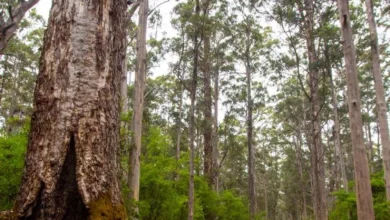
The broader ecosystem incorporates renowned environmental zones, including the Barmah-Millewa National Park, the Lower Goulburn floodplains, the Nyah Vinifera forest, and parts of the Murray-Sunset National Park. At the heart of this region are the iconic Eucalyptus camaldulensis, commonly known as River Red Gums. These monumental trees can reach heights of up to 30 meters and possess lifespans ranging from 500 to 1,000 years. Their survival depends entirely on the cyclic flooding of inland river basins, which rejuvenates the soil and maintains the health of the surrounding wetlands.
Historical Context and Conservation Timeline

The contemporary ecological status of the River Red Gum forests represents a significant shift from their industrial past. For generations, these timberlands were heavily utilized by the commercial logging industry due to the density, durability, and termite-resistant properties of River Red Gum timber. Widespread ring-barking, timber harvesting, and river regulation through dam construction severely degraded the ecosystem. By the early 2000s, scientific assessments indicated that approximately 75 percent of the trees within the primary forest were dead, dying, or under severe physiological stress due to altered hydrological flows and prolonged drought.
The turning point for the region occurred in July 2010, when the New South Wales government officially declared the area a National Park. This legislative action brought an end to commercial logging in the targeted state forests, converting them into the largest protected system of its kind in NSW. The designation aimed to halt habitat destruction, restore natural flood regimes where possible, and preserve cultural heritage sites tied to the traditional custodians of the land.

Biodiversity and Ecological Restoration
Today, the River Red Gum Parks serve as a crucial refuge for Australian wildlife, supporting over 150 bird species that populate the dense canopy and wetland margins. Notably, the region provides critical habitat for the endangered Superb Parrot, alongside populations of laughing kookaburras, pink galahs, yellow-crested cockatoos, and various waterfowl.

Mammal populations have also rebounded significantly within the protected boundaries. The most notable conservation success story involves the koala population along the Murrumbidgee River. In the 1970s, conservation authorities established specific reserves near Narrandera, reintroducing koalas sourced from populations in Queensland and French Island, Victoria. Decades later, monitoring confirms that these animals have not only survived but thrived, expanding well beyond the original reserve boundaries. Visitors frequently encounter wild koalas resting in the forks of River Red Gum branches, particularly during warmer months when the canopy offers shade and shelter.
Recreational Infrastructure and Visitor Engagement

With the cessation of commercial forestry, the NSW National Parks and Wildlife Service has developed infrastructure to support low-impact eco-tourism, positioning the region as a premier destination for bushwalking, mountain biking, kayaking, and camping.
Free Bush Camping and Outdoor Living
The park system offers numerous designated free camping areas along the riverbanks and within open grassy clearings. Locations such as Town Beach, situated near Narrandera, and Graham’s Grave provide accessible sites for self-sufficient travelers. These areas feature primitive amenities that encourage traditional outdoor experiences, such as campfire cooking under the southern night sky. Regional tourism bodies collaborate with local visitor information centers to guide travelers toward appropriate camping zones while emphasizing minimal-impact environmental ethics.

Water-Based Exploration via Kayaking
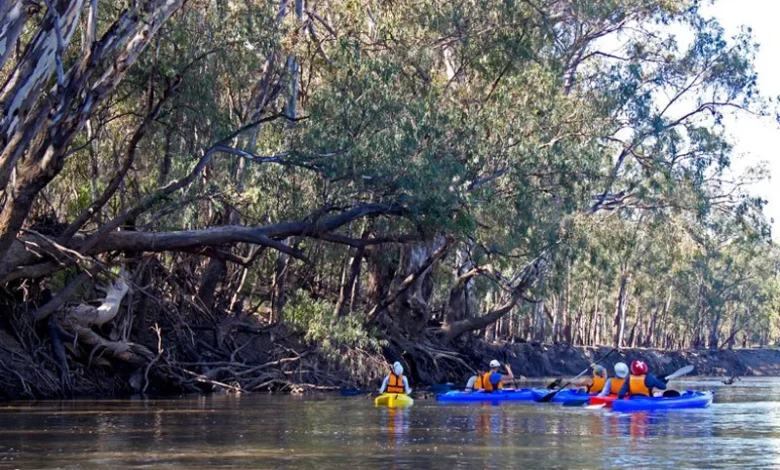
The Murrumbidgee River provides premier paddling routes, such as the 14-kilometer stretch near Narrandera. The river’s natural flow allows kayakers to navigate past red clay cliffs, dense eucalyptus corridors, and floodplain wetlands with minimal exertion. This water-level perspective offers heightened opportunities for wildlife observation, particularly for spotting platypuses, turtles, and roosting birds, as well as arboreal marsupials clinging to the trunks of ancient gums.
Mountain Biking and Terrestrial Trails
Land-based recreation has expanded through the creation of shared-use trails traversing the Flora and Fauna Reserve and surrounding state lands. These tracks wind through landscapes marked by historical flood lines—visible as distinct white watermarks high on the trunks of the red gums—and connect key points of interest such as the Narrandera Koala Reserve. Trail networks cater to varying skill levels, drawing adventure tourists seeking physical endurance amidst remote natural scenery.

Socio-Economic Impact and Regional Implications
The formal protection and promotion of the River Red Gum Parks have catalyzed a diversification of the local economy in the Riverina district. Historically reliant on agriculture and timber extraction, towns like Narrandera increasingly benefit from domestic and international tourism. Overlanding travelers journeying between major urban centers—such as Adelaide and Sydney, or Melbourne and Brisbane—frequently utilize the Riverina region as an intentional stopover rather than a transit corridor.

Furthermore, partnerships with local Indigenous communities ensure that cultural heritage is preserved and interpreted for visitors. Traditional owners contribute to the management of the parks, sharing historical knowledge, artistic practices, and connections to the country that span tens of thousands of years. This collaborative management model reinforces the dual mandate of the National Park system: conserving biodiversity while honoring cultural continuity.
Conclusion

The River Red Gum Parks of the Riverina offer a distinct alternative to Australia’s internationally recognized coastal tourism destinations. By embedding environmental protection into a landscape once dominated by resource extraction, New South Wales has secured a sanctuary for endangered flora and fauna while opening a gateway for sustainable adventure travel. As restoration efforts continue to heal the basin’s hydrological systems, the world’s largest River Red Gum forest stands as a testament to the balance between historical industry and modern conservation biology.