The Sacred Fermentation: Tracing the Cultural and Historical Significance of Andean Chicha

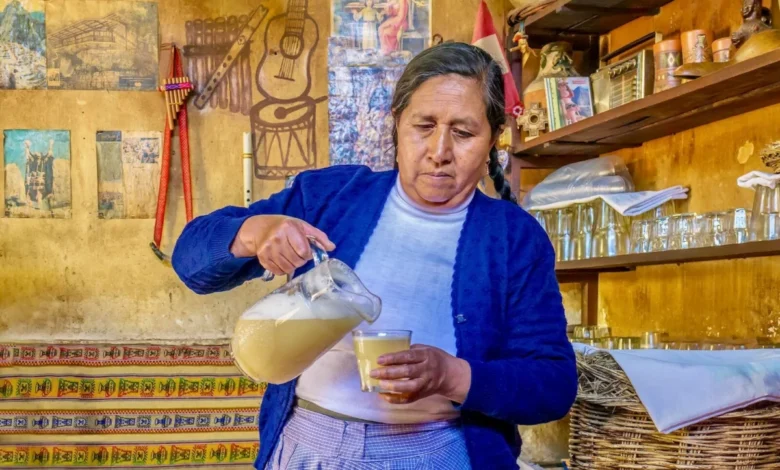
Chicha is an ancestral beverage with deep cultural significance in the Andes; it has long played an important role in ceremonial life, serving as the liquid backbone of societal, spiritual, and economic cohesion in South America. Far beyond a simple fermented corn drink, chicha represents a continuity of indigenous knowledge that has survived millennia, resisting the pressures of colonial transition and modern globalization. From the high-altitude peaks of Cusco to the bustling markets of coastal Lima, the preparation and consumption of chicha remain a vital expression of Andean identity, reciprocity, and reverence for the natural world.
The Spiritual Foundation and Ritualistic Origins
The role of chicha in Andean culture is inextricably linked to the concept of the Pachamama, or Mother Earth. Leo Silva, the Indigenous Community Relations Manager at Mountain Lodges of Peru, notes that the beverage is fundamental to the ceremonial calendar. During Inti Raymi, the Inca Festival of the Sun, chicha is offered as a libation to the deity. This act is not merely symbolic; it is a formal exchange. Before any participant consumes the drink, the first sip is traditionally poured onto the earth, a practice known as tinka.
This ritual serves as an acknowledgment of the earth’s bounty. In shaman-led pago a la tierra (payment to the earth) ceremonies, which are still practiced extensively throughout the Sacred Valley, chicha functions as a medium of communication between the human and spiritual realms. The beverage is also deeply embedded in the social fabric through the concepts of minka—collective labor for the benefit of the community—and ayni, the principle of reciprocal exchange. When a community gathers to harvest crops or build a home, chicha is the essential reward, fueling the participants and validating the collective effort.
A Chronology of Consumption: From Empire to Modernity
The origins of fermented maize beverages predate the expansion of the Inca Empire by several centuries. Archeological evidence suggests that the Wari and Tiwanaku civilizations were already masters of brewing techniques using native corn varieties. By the time the Inca Empire established its dominance in the 15th century, chicha had become a state-sanctioned tool of diplomacy. Inca rulers would host massive feasts where vast quantities of chicha were consumed to solidify alliances with local curacas (chieftains).
Following the Spanish conquest in the 16th century, the beverage faced periods of prohibition and stigmatization as colonial authorities attempted to suppress indigenous religious practices. However, the cultural resilience of the Andean people ensured that chicha survived. In the 19th and 20th centuries, as urbanization accelerated, the chichería—the traditional, often home-based venue for serving the drink—evolved into the picantería. These establishments became hubs for regional cuisine, cementing the drink’s status as an accompaniment to culinary staples like slow-roasted cuy, fried trout, and hearty quinoa soups.
The Science and Taxonomy of Andean Brewing
The most prevalent form of the beverage is chicha de jora, derived from germinated yellow corn. The process is a testament to sophisticated indigenous food science. The corn is soaked, germinated, and then ground to create a base that is boiled. The initial liquid, known as upi, is strained through straw-lined baskets before being fermented. The resulting beverage typically contains an alcohol content of approximately five percent, though the duration of fermentation is frequently adjusted for specific ceremonial purposes.
Beyond the standard chicha de jora, the diversity of the drink is vast. Chicha morada, while non-alcoholic, is perhaps the most globally recognized iteration. It is produced by boiling purple corn with pineapple, cinnamon, cloves, and sugar. Beyond its role as a refreshment, it is widely cited by locals and travelers alike for its hydration properties, often utilized to mitigate the physiological effects of high-altitude travel in the Andes.
Other regional variations provide a glimpse into the agricultural diversity of the region:
- Frutillada: A sweet, strawberry-infused version popular in the Cusco region.
- Chicha de güiñapo: Crafted from the distinctive black corn of the Arequipa region.
- Chicha blanca: A lighter, often more opaque variant produced from white corn or quinoa.
Visual Communication: The Red Flag Tradition
One of the most enduring traditions associated with the distribution of chicha is the use of visual signals to denote availability. In many rural and peri-urban Andean communities, a red flag or a bunch of red flowers displayed outside a home indicates that a fresh batch of chicha is ready for consumption. This custom, described by scholars as an example of cultural mestizaje, highlights the blending of indigenous semiotics with colonial-era commercial practices.
This system serves as a decentralized, community-based advertising mechanism. Unlike a conventional commercial enterprise, the chichería is often located within the brewer’s private residence. When the red flag is raised, the home effectively transitions into a public space, welcoming neighbors and travelers to interact, socialize, and participate in a longstanding social tradition. When the supply is exhausted, the flag is lowered, signaling the end of the day’s hospitality.
Socio-Economic Implications and Modern Adaptations
The transition from traditional chicherías to modern picanterías represents a significant shift in the culinary landscape of Peru. Establishments such as Picanteria Mamatrini in the San Blas neighborhood of Cusco or La Chuccha in Santa Ana serve as crucial links between the past and present, providing an economic lifeline to families who continue to produce artisanal, small-batch chicha. These venues are not merely restaurants; they are cultural institutions that maintain the social cohesion of the neighborhood.
In the contemporary era, the influence of chicha has reached the high-end gastronomy sector in Lima. Modern mixologists have begun incorporating chicha morada into sophisticated cocktail programs. The "chicha sour," a variation of the classic pisco sour, has become a staple in upscale bars such as Bijou in Miraflores. Furthermore, venues like Limaq Bar are experimenting with the fusion of traditional ingredients, such as horchata and purple corn, to create innovative, terroir-driven beverages.
Analysis of Current Trends and Sustainability
While the modernization of chicha has expanded its market reach, experts express concerns regarding the preservation of traditional fermentation techniques. The industrialization of chicha morada, often sold as a mass-produced, shelf-stable product, lacks the probiotic complexity and cultural depth of the artisanal version. However, there is a counter-movement among culinary historians and indigenous activists to protect the integrity of the chicha de jora brewing process.
Workshops, such as those operated by the Salineras Ranch in the Sacred Valley, represent an effort to educate both locals and international visitors on the labor-intensive, multi-day process required to produce authentic chicha. These initiatives are essential for maintaining the cultural value of the beverage in the face of mass-market pressures.
Conclusion: A Beverage of Enduring Relevance
The trajectory of chicha from the imperial courts of the Inca to the contemporary bars of Lima illustrates a remarkable story of cultural survival. It remains a beverage that defies simple categorization—it is simultaneously a sacred offering, a staple food, a social lubricant, and a commodity. For those traveling through the Andes, the sight of a red flag or a chalkboard sign advertising fresh chicha is an invitation to engage with a living history. As the beverage continues to evolve, its core identity—rooted in the soil of the Andes and the communal spirit of its people—remains steadfast, ensuring that chicha will continue to play a vital role in the cultural life of the region for generations to come.