Bay Area Activists Launch Burma Spring Benefit Film Festival to Support Resistance Against Military Junta

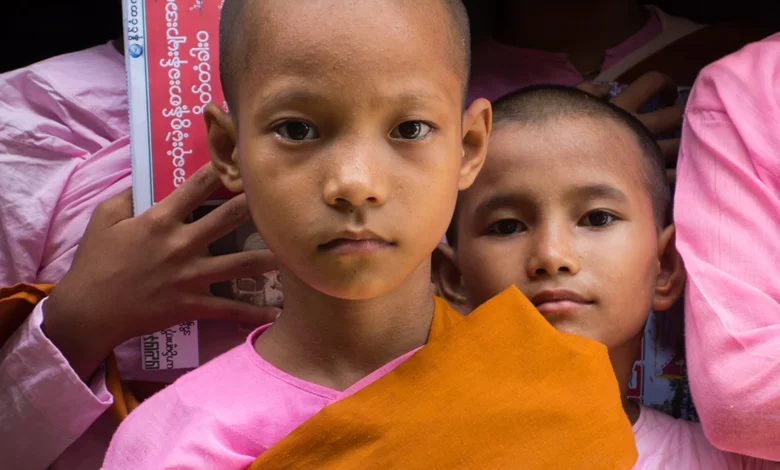
The San Francisco Bay Area has emerged as a prominent international hub of solidarity for the pro-democracy movement in Myanmar, launching the Burma Spring Benefit Film Festival to raise vital funds and global awareness. Running online from June 3 through June 20, the virtual festival features an extensive curation of more than thirty films alongside daily live panel discussions with prominent human rights activists, journalists, and regional observers.
Organized entirely by a dedicated volunteer coalition of artists, academics, and filmmakers, the festival directs all net proceeds to grassroots humanitarian organizations operating on the ground in Myanmar. These funds directly aid the non-violent civil disobedience and democracy movements that materialized in the wake of the military coup earlier in the year. While donations are encouraged to sustain humanitarian relief operations, viewing access has been structured to ensure the widest possible audience reach, keeping tickets accessible regardless of financial contribution.
The comprehensive cinematic lineup transcends standard documentary reporting, offering audiences a multi-faceted exploration of Myanmar’s complex social fabric. Program selections span human rights abuses, environmental degradation, ethnic minority struggles, Buddhist traditions, LGBTQ rights, and critical women’s issues. Through this broad lens, the festival actively challenges reductive media portrayals of Myanmar, presenting a vibrant society rich in cultural heritage while confronting the harsh realities of authoritarian oppression.
Chronology of Crisis: From Fragile Democracy to Military Dictatorship
The humanitarian and political emergency driving the festival traces back to the early morning hours of February 1, 2021. In a swift pre-dawn maneuver, the military junta—formally known as the Tatmadaw—overthrew Myanmar’s democratically elected civilian government. The coup abruptly shattered a decade-long, albeit fragile, transition toward democratic governance that had begun in 2011.
The generals justified the takeover by alleging widespread voter fraud during the November 2020 general elections, an assertion thoroughly discredited by domestic and international election monitors. In the election, the National League for Democracy (NLD), led by civilian leader Aung San Suu Kyi, secured a resounding landslide victory, capturing the vast majority of parliamentary seats.
The military’s actions on February 1 extended far beyond the ouster of Suu Kyi and President Win Myint. Security forces launched coordinated sweeps across the capital of Naypyidaw and major urban centers, detaining cabinet ministers, regional chief ministers, election commissioners, writers, and prominent cultural figures. Min Htin Ko Gyi, founder of the Human Rights Human Dignity Film Festival, was among the initial wave of high-profile arrestees.
As the weeks progressed, the junta expanded its dragnet to target the country’s artistic and intellectual communities. The Assistance Association for Political Prisoners (AAPP), a prominent human rights monitoring organization, documented a systematic campaign of intimidation and imprisonment. Cultural icons, including acclaimed comedian Zarganar, romantic action film star Min Lu—reportedly detained in the notorious Insein Prison—and popular male model Paing Takhon, were targeted for their vocal opposition to military rule. More than thirty poets were imprisoned, with several killed in custody, while over one hundred professionals from the local filmmaking industry were forced into hiding or placed on military arrest warrants.
By May 2021, the disparate strands of civilian resistance had coalesced into a unified force, calling for a global "Spring Revolution." Citizens from all walks of life adopted civil disobedience as a primary tool of defiance, shutting down government administrative offices, railway networks, banking institutions, and healthcare systems.
Human Toll and Statistical Realities
The cost of civilian resistance has been extraordinarily high. According to comprehensive tracking data compiled by the AAPP, the Tatmadaw’s violent suppression of nationwide protests resulted in the deaths of well over 800 peaceful demonstrators within the first four months following the coup. Concurrently, nearly 12,000 individuals were arrested, charged, or sentenced under sweeping emergency decrees designed to criminalize dissent.
Lee Morgenbesser, an expert on authoritarian politics in Southeast Asia at Griffith University’s School of Government and International Relations, notes that the coup effectively terminated Myanmar’s experimental democratic opening. The structural weaknesses and unaddressed sociopolitical grievances of the preceding decade left the nation deeply vulnerable to this institutional regression.
Despite the overwhelming deployment of lethal force by state security apparatuses, the popular uprising achieved an unprecedented sociopolitical shift: mainstream Bamar society began bridging historical divides with ethnic minority populations. For decades, ethnic groups residing in Myanmar’s border regions—including the Rohingya, Karen, Kachin, and Shan—had endured systemic marginalization, military abuses, and armed conflict largely ignored by urban centers. The shared experience of Tatmadaw brutality under the post-coup regime catalyzed unprecedented solidarity, laying the groundwork for a more inclusive national vision.
Cinematic Programming and Cultural Highlights
The Burma Spring Benefit Film Festival captures this evolving historical moment through careful curation, pairing contemporary frontline footage with historical retrospective works. Among the featured pieces is Burma Spring 21, a collaborative short film documenting the genesis of the post-coup Civil Disobedience Movement.
Festival organizer Kenneth Wong, a Burmese-American author, translator, and language instructor at the University of California, Berkeley, emphasizes the contextual value of pairing contemporary works with historical documentation. He points to the inclusion of Burma VJ, a seminal documentary following the undercover video journalists who risked their lives to document the 2007 Saffron Revolution. Watching these films in tandem, Wong suggests, allows viewers to analyze the evolution of resistance tactics across generations, contrasting the analog reporting of the past with today’s decentralized, digital-age uprisings.
Other notable selections address specific humanitarian crises within the country’s borders. I Am Rohingya: A Genocide in Four Acts features fourteen young refugees courageously reenacting their families’ harrowing survival stories during the systematic military campaigns against the Rohingya Muslim minority. The Black Zone chronicles the perilous journeys of clandestine medical teams striving to deliver life-saving aid to war-torn jungle territories amidst ongoing military atrocities. Meanwhile, A Peaceful Land examines rural resistance, detailing how farmers mobilized against government agricultural mandates that triggered mass land confiscations and forced labor practices.
Speaker Forums and International Solidarity
Complementing the film screenings, the festival features daily panel discussions addressing the geopolitical and humanitarian dimensions of the crisis. Sessions such as Myanmar Diaspora and the Milk Tea Alliance connect the domestic struggle within Myanmar to broader regional democracy movements across Asia. Discussions on Refugees and the Humanitarian Crisis highlight the plight of displaced populations fleeing across borders to escape military airstrikes and ground offensives.
A centerpiece of the speaker series involves panels featuring high-ranking members of the National Unity Government (NUG)—a parallel administration established by elected lawmakers, ethnic representatives, and civil society leaders in defiance of the junta. Sessions examining Ethnic Nationalities and the Rohingya: A Search for Justice and Peace directly engage with the complex transitional justice framework required for a future federal democratic union.
The festival’s organizing committee reflects deep academic, artistic, and community ties to Southeast Asia. Alongside Kenneth Wong, the volunteer team includes Gaetano Kazuo Maida, executive director of the Buddhist Film Foundation; award-winning documentary filmmaker Ellen Bruno; Jeanne Marie Hallacy, director of digital storytelling projects focused on refugee and migrant youth; Hozan Alan Senauke, abbot of the Berkeley Zen Center; and Gregg Butensky, operations director of Kirana Productions and co-founder of Ethical Traveler.
Reflecting on his longstanding engagement with the region, Maida noted that his initial connection to Myanmar stemmed from its rich Buddhist heritage and the architectural marvels of the Bagan temple valley. However, he emphasized that the resilient resistance movement over recent years revealed the country’s profound ethnic, religious, and linguistic diversity. The festival, Maida explained, embraces this pluralism as a fundamental component of the broader democratic struggle.
Broader Implications and Long-Term Outlook
From an analytical standpoint, the Burma Spring Benefit Film Festival serves a dual purpose: immediate resource mobilization and long-term narrative preservation. By channeling financial support directly to grassroots mutual aid networks—including community-based healthcare providers, independent journalists, and displaced families—the festival provides material backing where traditional international aid mechanisms often fail to reach.
Furthermore, organizers hope to reshape international perception. While current headlines are dominated by military crackdowns, economic collapse, and humanitarian suffering, cultural advocates stress that Myanmar possesses a rich intellectual and artistic heritage that predates and outlives military dictatorships.
Reflecting on this duality, Wong envisions a future where international audiences look past the immediate crisis to discover the nation’s broader cultural identity—a country that inspired George Orwell’s anti-colonial critique Burmese Days, where literature and poetry are fiercely debated in neighborhood teashops, and where traditional arts continue to thrive despite systemic suppression.
As the online festival streams its selections through June 20, organizers maintain that international solidarity remains a vital lifeline for a population determined to reclaim its political destiny. Through art, documentation, and material support, the global community continues to bear witness to a society refusing to surrender its democratic future.