The Ultimate Guide to Royal Caribbean Oasis Class Ships: Size, Neighborhoods, Dining, and Family Travel Insights

Royal Caribbean International’s Oasis Class ships have long defined the pinnacle of modern mega-ship engineering and contemporary cruise travel. Even travelers who have never stepped foot on a floating resort are likely familiar with the striking, brightly colored vessel designs, expansive open-air courtyards, and multi-story atriums featured prominently in commercial advertising. Prior to the introduction of the Icon Class, Oasis Class vessels held the undisputed title of the largest cruise ships in the world, a distinction that cemented their reputation as floating cities capable of redefining passenger expectations at sea.
Understanding the scale and scope of these engineering marvels requires looking beyond the marketing imagery. Operating cruise ships of this magnitude involves intricate logistical frameworks, specialized infrastructure at global ports, and a finely tuned operational cadence. For prospective passengers weighing a vacation at sea, navigating the sheer volume of amenities, dining options, stateroom categories, and entertainment offerings demands careful planning. This comprehensive analysis explores the history, architectural layout, onboard experiences, and broader implications of sailing aboard a Royal Caribbean Oasis Class ship.
Background Context and Evolution of the Oasis Class

The genesis of the Oasis Class dates back to the mid-2000s when Royal Caribbean conceptualized Project Genesis, a bold initiative to construct the largest and most technologically advanced passenger vessels ever conceived. The primary objective was to overcome the traditional limitations of cruise ship architecture—namely, the sensation of confinement—by introducing a revolutionary "open-neighborhood" design concept.
By splitting the superstructure down the middle, naval architects created an open-air central canyon that allowed natural light and fresh air to reach the interior staterooms. This innovation transformed interior balcony cabins into desirable real estate overlooking lush gardens or vibrant boardwalks, completely altering the traditional cruise accommodation paradigm.
The rollout of the Oasis Class began with the launch of the lead ship, Oasis of the Seas, in 2009. The vessel immediately captured global attention, prompting a multi-ship series that expanded over the next decade and a half. The current roster of Oasis Class ships includes Oasis of the Seas, Allure of the Seas, Harmony of the Seas, Symphony of the Seas, Wonder of the Seas, and the newest addition, Utopia of the Seas. Each subsequent vessel introduced subtle modifications, upgraded propulsion systems, enhanced dining venues, and updated entertainment technology, ensuring that the class remained at the cutting edge of the cruise industry.
Architectural Design and the Neighborhood Concept
To manage passenger flow and mitigate the overwhelming scale of vessels that frequently accommodate upwards of 5,000 to 6,000 guests at double occupancy, Royal Caribbean organized Oasis Class ships into distinct architectural zones known as neighborhoods. This design strategy decentralizes crowds, dispersing guests across specialized areas tailored to different interests and demographics.
The Central Park neighborhood serves as a tranquil, open-air sanctuary located in the middle of the ship. Spanning the length of a football field, this living park features tens of thousands of real plants, quiet pathways, upscale specialty restaurants, and open-air bars. It provides an oasis of calm that contrasts sharply with the high-energy environments found elsewhere onboard.
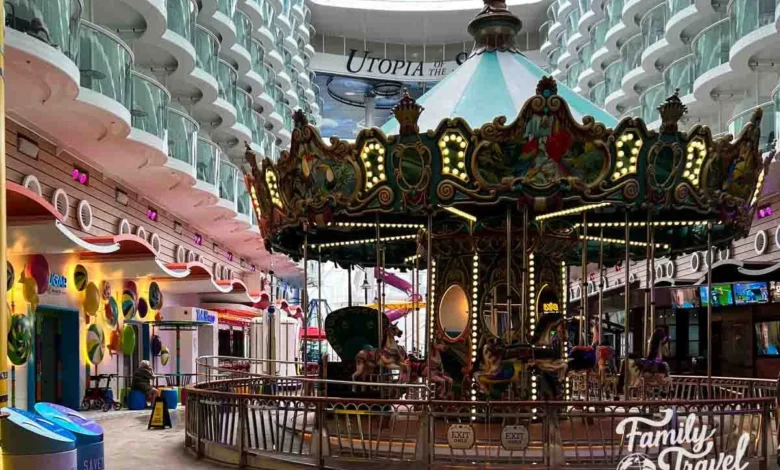
Adjacent to Central Park is the Boardwalk, a nostalgic nod to classic seaside amusement piers. Complete with a handcrafted, full-sized carousel, arcade games, casual eateries like Johnny Rockets, and candy shops, the Boardwalk anchors the aft section of the ship. It also frames the AquaTheater, a high-tech aquatic performance venue featuring two 30-foot high-diving platforms and the deepest pool at sea.
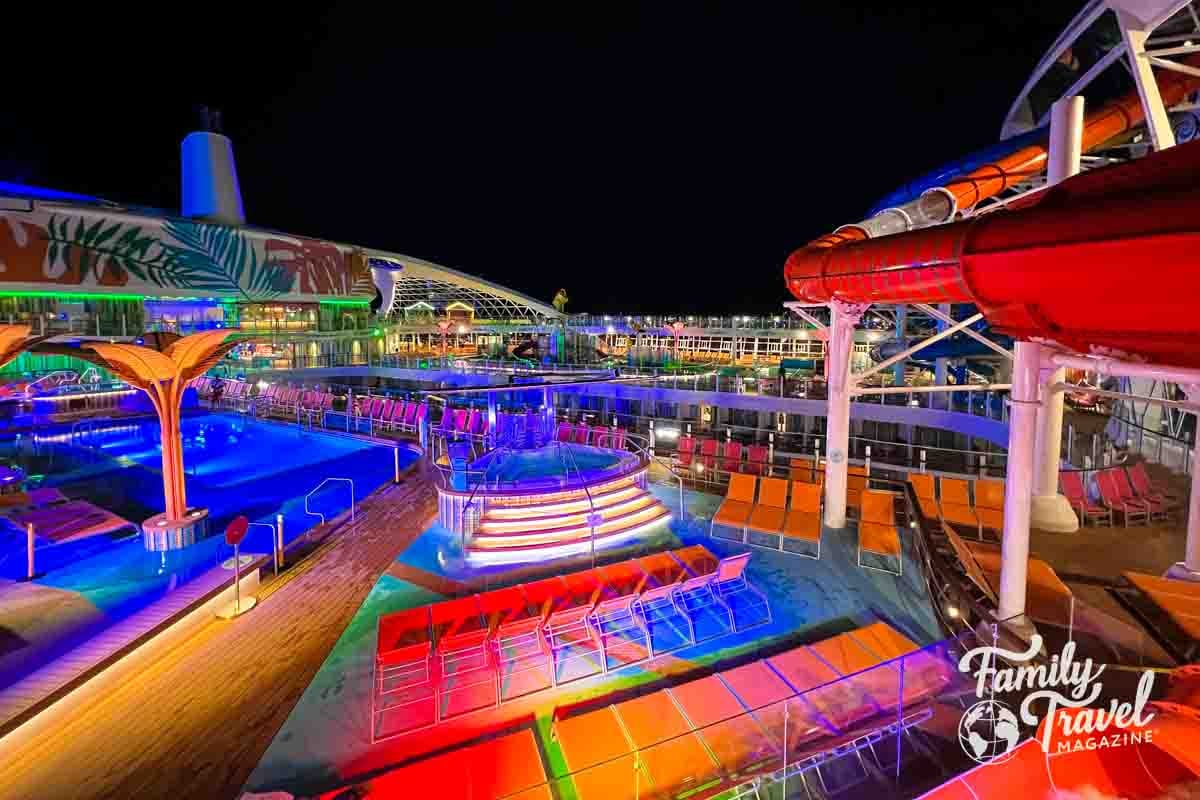
Other notable neighborhoods include the vibrant Royal Promenade, functioning as the main indoor thoroughfare lined with duty-free shops, pubs, and cafes; the Pool and Sports Zone, housing multiple resort-style pools, whirlpools, surf simulators, and high-speed waterslides; the Youth Zone, dedicated entirely to Adventure Ocean programming for children and teens; and the Vitality Spa and Fitness Center.

Culinary Landscape and Dining Infrastructure
Feeding thousands of passengers daily requires a massive logistical operation supported by diverse culinary infrastructure. Oasis Class ships typically feature over 20 distinct dining venues, balancing large-scale complimentary operations with specialized, fee-based specialty restaurants.
The cornerstone of the culinary program remains the multi-level Main Dining Room and the expansive Windjammer Marketplace buffet, both of which serve the bulk of passengers across breakfast, lunch, and dinner. These venues offer rotating menus designed to accommodate a wide variety of dietary preferences and international palates.
In addition to the complimentary staples, Oasis Class vessels offer a robust portfolio of specialty dining options that require reservations and an additional cover charge or a-la-carte pricing. Popular venues include Chops Grille, Royal Caribbean’s signature American steakhouse; Izumi, offering sushi and teppanyaki dining; Giovanni’s Italian Kitchen & Wine Bar; and Hooked Seafood. Newer additions across the fleet, such as the Royal Railway on Utopia of the Seas, incorporate immersive digital storytelling into the dining experience, reflecting broader cruise industry trends toward experiential gastronomy.

Entertainment, Recreation, and Logistics
The entertainment apparatus aboard an Oasis Class ship rivals that of major metropolitan cultural centers. Productions are distributed across specialized venues, including the 1,400-seat Royal Theater for Broadway-style musicals and headline performers; Studio B, a regulation-sized indoor ice rink hosting specialized ice-skating revues; and the aforementioned open-air AquaTheater for synchronized swimming, aerial acrobatics, and high-diving spectacles.
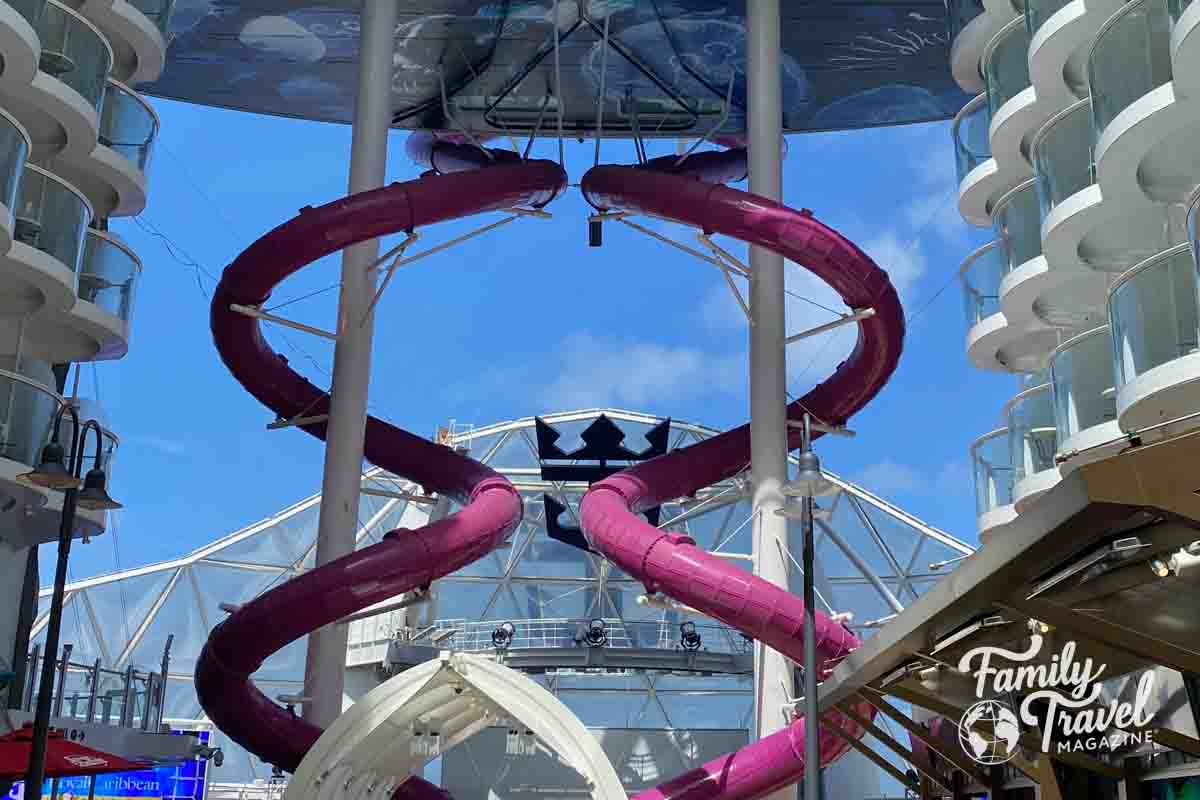
Active recreation options are equally extensive. The ships feature the Ultimate Abyss, a pair of dry slide tunnels that plunge guests down ten decks from the sports deck to the Boardwalk; dual FlowRider surf simulators; rock-climbing walls; miniature golf courses; escape rooms; and laser tag arenas.
Given the high demand for premier entertainment and specialty dining, cruise operations rely heavily on digital infrastructure. Passengers manage their daily schedules through the Royal Caribbean mobile application. Industry analysts note that advance reservation windows—typically opening 30 days prior to departure—are critical for securing seating at high-demand shows and prime dining hours, as walk-up availability is frequently limited.

Stateroom Diversity and Accommodation Strategies
Accommodation options on Oasis Class vessels span standard interior staterooms, ocean-view rooms, traditional balcony cabins, and multi-room suites. However, the class’s signature innovation lies in its inward-facing balcony staterooms overlooking Central Park and the Boardwalk. These cabins offer a unique perspective, allowing guests to observe neighborhood activities from private verandas while maintaining a lower price point than ocean-facing balconies.
For luxury travelers, the Royal Suite Class offers elevated amenities, including dedicated suite sun decks, exclusive lounges, priority boarding, and the services of a Royal Genie—a private butler trained by the British Butler Association.
Maritime industry consultants advise prospective travelers to carefully review deck plans prior to booking. Because of the vast scale of Oasis Class ships, stateroom location plays a significant role in the overall guest experience. Cabins situated directly beneath high-traffic public areas, such as the pool deck or Windjammer buffet, may experience ambient noise, making mid-ship locations on residential decks desirable for noise-sensitive travelers.

Socioeconomic Implications and Market Impact
The introduction and continued dominance of the Oasis Class have generated profound economic ripples throughout the global cruise industry and the port communities they visit. With gross tonnages exceeding 225,000 and passenger capacities surpassing 6,000 guests, these mega-ships require specialized port infrastructure, including deeper berths, enhanced baggage handling facilities, and expanded terminal capacity capable of processing thousands of passengers efficiently during turnaround days.
Ports such as PortMiami, Port Everglades, and Port Canaveral have invested heavily in dedicated terminal facilities—such as Royal Caribbean’s "Crown of Miami" terminal—to accommodate the rapid embarkation and debarkation cycles required by these massive vessels. Furthermore, destinations visited by Oasis Class ships benefit from significant economic influx, as thousands of tourists disembark to participate in shore excursions, dining, and retail shopping.
From a corporate perspective, the Oasis Class has proven to be a highly lucrative asset class for Royal Caribbean Group. The high volume of revenue-generating opportunities onboard—ranging from specialty dining and beverage packages to shore excursions, spa treatments, and casino gaming—drives strong profit margins. To appeal to travelers hesitant about committing to traditional week-long mega-ship vacations, Royal Caribbean has recently deployed newer Oasis Class vessels, such as Utopia of the Seas, on shorter three- and four-night itineraries from Florida to the Bahamas. This strategic shift broadens the demographic appeal, capturing weekend getaway travelers and first-time cruisers looking to sample the mega-ship experience without a long-term commitment.
As the cruise sector continues to evolve, the Oasis Class remains a definitive benchmark for large-scale maritime leisure, demonstrating how structural innovation and meticulous logistical management can successfully scale the cruise vacation experience to new heights.
Related posts: