How to Get Instant Delta Air Lines Medallion Status From Two Credit Cards Without Flying

The calculus of earning airline elite status has undergone a seismic shift over the past decade. Historically, achieving elite tiers with legacy carriers like Delta Air Lines required a grueling commitment of time and distance, measured in tens of thousands of flown miles and countless hours spent navigating airports. Today, the loyalty landscape has shifted dramatically toward a monetization model where status is dictated by financial spend rather than physical presence. Passengers are no longer evaluated solely on the routes they fly, but rather on the capital they are willing to deploy—either directly on airfare or through co-branded financial products.
Despite these increasingly stringent requirements, Delta Air Lines has introduced mechanisms that make acquiring entry-level elite status faster and more accessible than ever before. Through a strategic combination of co-branded American Express credit cards and the airline’s MQD (Medallion Qualifying Dollar) Headstart benefit, frequent flyers can now bypass the traditional flight-based hurdles. By strategically dual-wielding specific high-tier Delta American Express cards, travelers can unlock automatic elite status before ever stepping foot on an aircraft, redefining the cost-benefit analysis of airline loyalty programs.
Understanding the Evolution of Delta’s Medallion Program
The architecture of Delta’s SkyMiles loyalty program was overhauled significantly following a series of unpopular adjustments rolled out by the Atlanta-based carrier. Under the current structural framework, Delta has entirely eliminated traditional Medallion Qualifying Miles (MQMs) and Medallion Qualifying Segments (MQSs). Instead, the airline consolidated its elite qualification metrics entirely around Medallion Qualifying Dollars (MQDs). Under this system, every dollar spent on Delta-marketed flights, vacation packages, and specific co-branded credit card spend directly correlates to elite status progression.
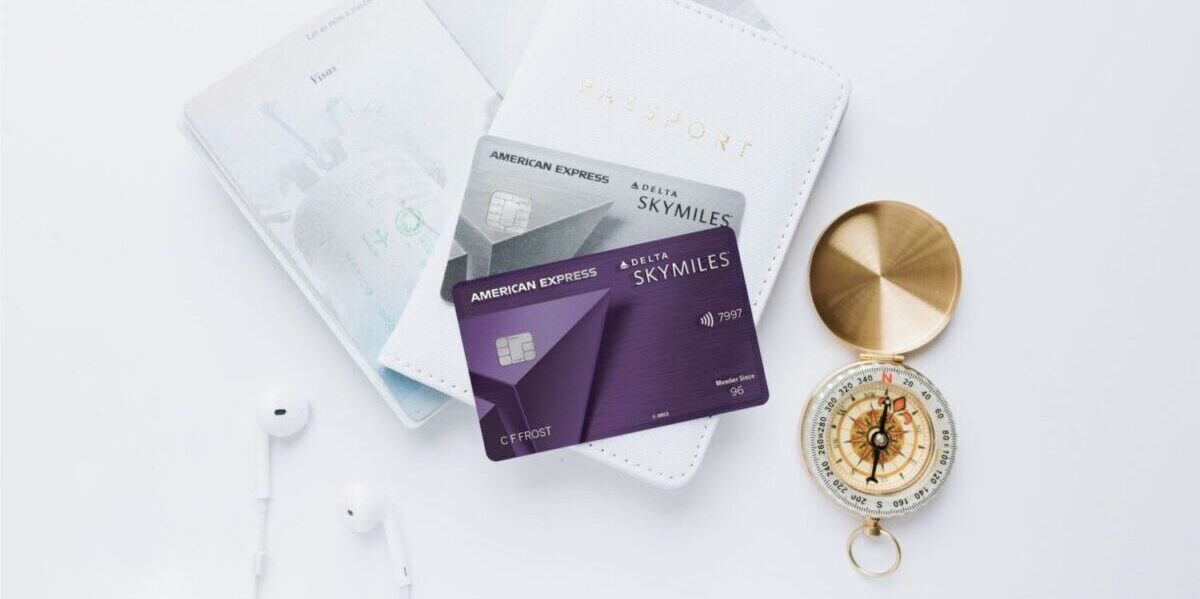
The annual MQD requirements to achieve the four traditional tiers of Medallion status are structured as follows:
- Silver Medallion Status: $5,000 MQDs
- Gold Medallion Status: $10,000 MQDs
- Platinum Medallion Status: $15,000 MQDs
- Diamond Medallion Status: $28,000 MQDs
Requiring $5,000 in direct airline spend just to reach the baseline Silver tier presented a steep barrier to entry for casual or mid-tier travelers. To offset potential backlash from loyal customers, Delta introduced the MQD Headstart benefit. This feature awards cardholders of eligible premium co-branded products an automatic influx of 2,500 MQDs at the beginning of every Medallion qualification year, which runs from February 1 through January 31.
The Mechanics of the Credit Card Status Shortcut
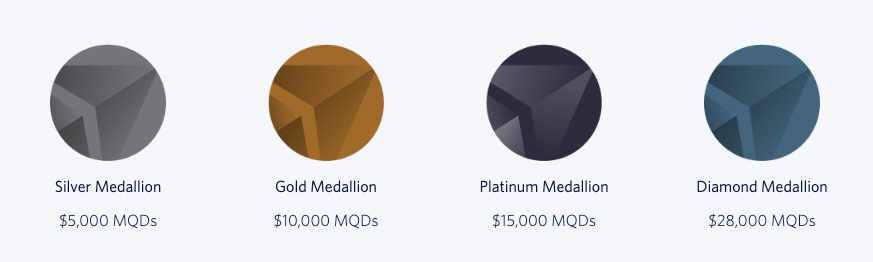
The strategic deployment of the MQD Headstart benefit is where savvy consumers can manufacture elite status. The benefit is exclusively tied to Delta’s mid-to-high-tier cards: the Delta SkyMiles Platinum American Express Card, the Delta SkyMiles Reserve American Express Card, and their respective business counterparts. Neither the entry-level Delta SkyMiles Blue American Express Card nor the Delta SkyMiles Gold American Express Card qualifies for this Headstart allocation.
Because cardholders receive 2,500 MQDs per eligible card, holding a single card instantly clears half the path to Silver Medallion status. However, the true shortcut lies in card stacking. Delta permits consumers and business owners to hold multiple co-branded cards simultaneously. A traveler who holds both a personal and a business version of the Platinum card—or mixes and matches Platinum and Reserve products—can combine their Headstart allocations.
For instance, pairing the personal Delta SkyMiles Platinum Card with the Delta SkyMiles Platinum Business Card yields a combined 5,000 MQDs at the start of the qualification year. This total instantly crosses the threshold required for Silver Medallion status without requiring a single paid flight. For those who opt for the higher-end Reserve cards, or a combination of Platinum and Reserve variants, the accumulated MQDs can scale even higher, pushing cardholders into Gold Medallion territory purely through credit card product ownership and the payment of annual fees.
Evaluating the Financial Investment and Annual Fees
While the prospect of instant elite status is attractive, it requires a careful financial appraisal. Acquiring status through credit cards alone carries substantial overhead in the form of recurring annual fees.
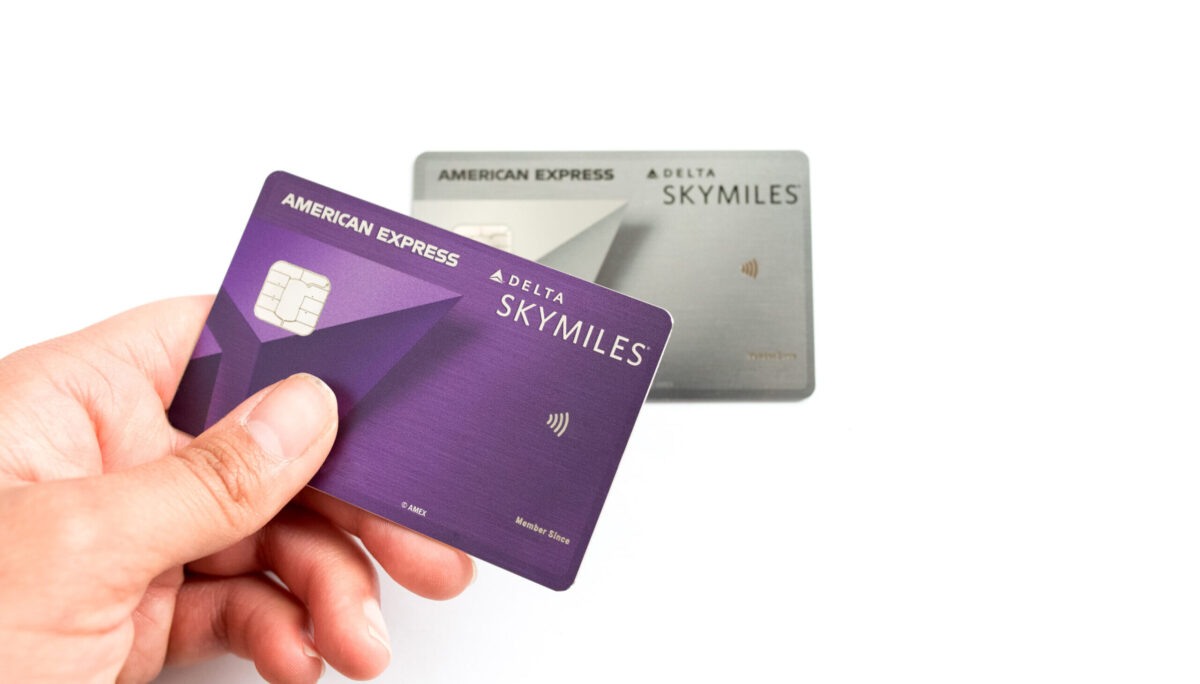
The most cost-effective credit card combination to achieve Silver Medallion status strictly through the MQD Headstart involves the personal Delta SkyMiles Platinum Card and the Delta SkyMiles Platinum Business Card. With each card carrying an annual fee of $350 (see rates & fees), the baseline cost to maintain this status shortcut sits at $700 annually.
For travelers who lack eligibility for business credit cards—or simply prefer not to manage business accounts—the alternative requires pairing the personal Delta SkyMiles Platinum Card with the personal Delta SkyMiles Reserve Card. The Reserve card commands a $650 annual fee (see rates & fees). Consequently, pairing a personal Platinum card with a personal Reserve card elevates the baseline out-of-pocket annual expense to $1,000.
To determine whether this expenditure is justifiable, cardholders must look beyond the status itself and evaluate the accompanying statement credits and lifestyle benefits built into these premium financial products.

Analyzing Statement Credits and Cardholder Perks
American Express and Delta have structured their co-branded portfolios around robust suites of annual statement credits intended to offset their steep costs. The personal Delta SkyMiles Platinum Card includes targeted credits for purchases such as Delta Stays and rideshare services, which collectively can return hundreds of dollars in value if fully utilized. Furthermore, cardholders receive standard perks including a first checked bag free on Delta flights, a 15% discount when booking award travel using SkyMiles via the TakeOff 15 benefit, and an annual companion certificate valid for economy-class tickets upon account renewal.
The Delta SkyMiles Reserve Card scales these offerings upward. It includes expanded statement credits for dining, Delta Stays, and rideshare services, alongside elevated travel perks. Most notably, Reserve cardholders receive access to the Delta Sky Club when flying on a same-day Delta-marketed or operated ticket. Following recent policy updates implemented by Delta to curb lounge overcrowding, access for Reserve cardholders is restricted to 15 visits per Medallion year unless the cardholder reaches $75,000 in annual spending. Additionally, Reserve cardholders receive four complimentary guest passes per year and can access American Express Centurion Lounges when holding a paid Delta ticket purchased with the Reserve card.
Perhaps the most significant differentiator for the Reserve card is its annual companion certificate. Unlike the economy-only certificate provided by the Platinum card, the Reserve companion certificate extends to Delta Comfort+ and domestic first-class cabins, offering significantly higher potential monetary value for travelers who frequently fly with a companion.
Weighing the Real-World Value of Silver Medallion Status
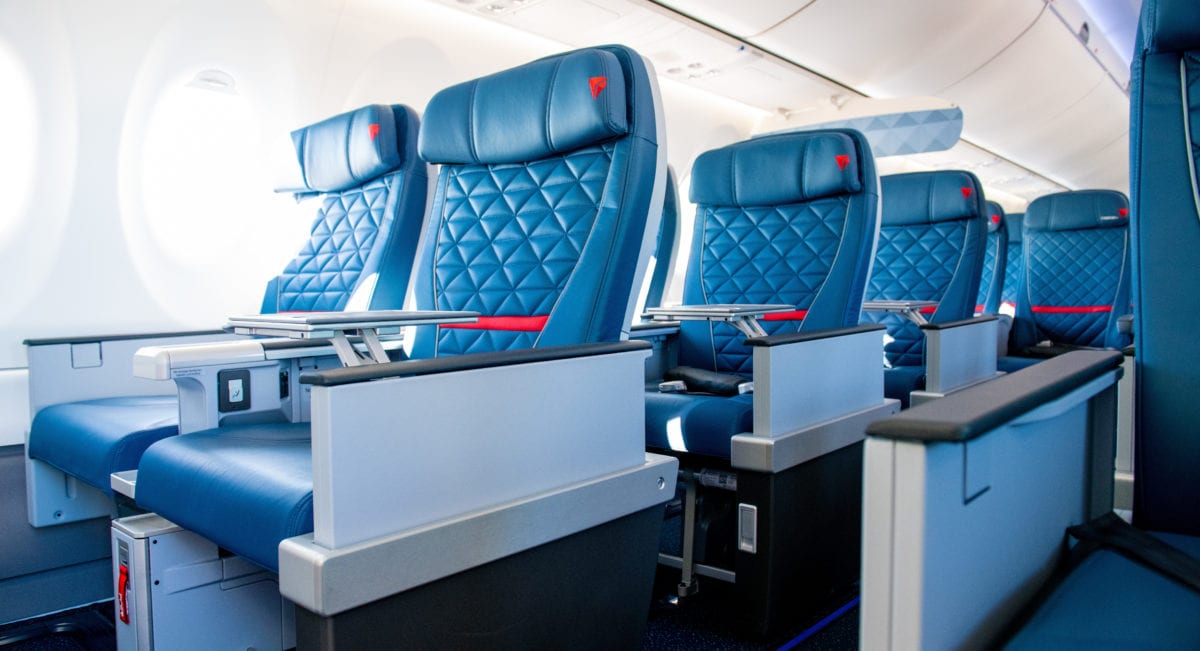
Achieving Silver Medallion status provides a baseline of operational conveniences that appeal to semi-frequent travelers. While top-tier perks like regional and global upgrade certificates are reserved for Platinum and Diamond members, Silver status introduces notable airport efficiencies.
Silver beneficiaries receive priority check-in and boarding via Main Cabin 1, access to preferred seats—including exit rows—at the time of ticketing, and complimentary upgrades to Delta Comfort+ or domestic first class when available within a 24-hour window prior to departure. Additionally, Silver members earn an increased multiplier of redeemable SkyMiles on paid airfare, enhancing the rate at which future award travel is accumulated.
However, industry analysts note that lower-tier elite status has experienced a dilution in upgrade success rates. As millions of credit cardholders achieve Silver and Gold status through heavy spending and card ownership, the pool of elite passengers competing for complimentary premium cabin upgrades has expanded significantly. Consequently, confirmed first-class upgrades for Silver members have become increasingly rare on high-traffic business routes.

Implications for Frequent Travelers and Loyalty Strategists
The strategy of acquiring airline status through credit card portfolios rather than revenue-based flying reflects a broader trend within the commercial aviation sector. Airlines increasingly view their loyalty programs as lucrative financial assets rather than mere ancillary incentives for frequent flyers. Co-branded credit card partnerships generate billions of dollars in revenue for major carriers, often rivaling the profitability of the airline operations themselves.
For the consumer, this monetization model offers a distinct democratic advantage: travelers who reside in non-hub cities or who fly infrequently due to personal or professional constraints can still enjoy a curated suite of premium travel benefits. Conversely, traditional frequent flyers who log hundreds of thousands of flight miles express ongoing concern that the proliferation of credit card-generated elites crowds airport lounges and diminishes the exclusivity of top-tier benefits.
Ultimately, deciding whether to pursue Delta Medallion status through credit card product stacking requires a personalized financial audit. Travelers who organically utilize the statement credits, maximize the companion certificates, and fly Delta often enough to leverage priority boarding and preferred seating will find that the annual fee outlay yields a positive return. For casual flyers who rarely utilize Delta’s network, however, purchasing elite status through annual fees represents an expensive proposition that warrants careful mathematical consideration before submission of a credit application.
Related posts: