Tracking the Ghosts of the Eurasian Steppe: Conservationists Battle Infrastructure Fragmentation to Save the Ancient Saiga Antelope

The modern landscape of Central Asia is increasingly defined by the linear infrastructure of human development—highways, railways, and border fences that slice through ancient ecosystems with little regard for the creatures that depend on them. Among the most vulnerable victims of this rapid industrialization is the saiga antelope (Saiga tatarica), a species that has traversed the Eurasian steppe since the late Pleistocene epoch. Surviving alongside woolly mammoths and saber-toothed cats, these hardy ungulates are now facing an existential crisis brought on by modern fragmentation. A recent field audit conducted in the remote expanse of western Kazakhstan by researchers from the Association for the Conservation of Biodiversity of Kazakhstan (ACBK) sheds light on the precarious balance between infrastructure expansion and the preservation of irreplaceable migratory corridors.
Main Facts and the Reality of Modern Steppe Conservation
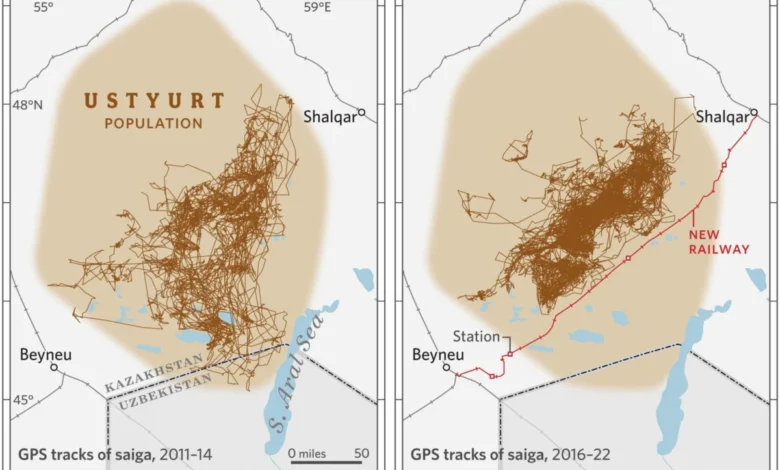
The saiga antelope is instantly recognizable by its bulbous, truncated proboscis—an evolutionary adaptation designed to filter out dust during hot, arid summers and warm the sub-zero air of harsh Siberian winters. Historically, these nomadic animals roamed in massive herds across an expansive range stretching from the Caucasus Mountains to Mongolia. Today, however, their survival is tightly bound to shifting geopolitical boundaries and the intrusion of anthropogenic barriers.
During the seasonal rutting season, field researchers Alexandr and Albert of the ACBK navigate the treacherous terrain of western Kazakhstan to monitor population dynamics and track migratory health. Traveling through the mud-slicked and snow-swept plains near the Russian border, the conservation team utilizes advanced GPS telemetry to study herd movements. This technological leap has revolutionized wildlife management in the region; previously, conservationists spent weeks searching the boundless steppe blindly, whereas modern tracking devices provide a continuous stream of spatial data.
The urgency of these field audits is underscored by the rapid pace of regional development. As the interior steppe becomes increasingly accessible, new infrastructure projects continue to bisect historical migration paths, isolating once-contiguous herds into fragmented populations.
Chronology of a Disrupted Migration
To understand the current plight of the saiga, one must examine the intersection of human history and ecological change across the Eurasian continent:
- Prehistoric Era: Saigas thrive alongside megafauna such as woolly mammoths and giant deer, serving as natural navigators for early human caravans traversing the harsh plains.
- Early Iron Age to Silk Road Peak: Nomadic human tribes establish seasonal migration patterns and trade routes that eventually form the web of pathways known as the Silk Road, utilizing the fertile banks of the Ural River as a transcontinental crossroads.
- 20th Century: The rise of the Soviet Union ushers in mandatory sedentarization policies. Nomadic human populations are forced into agricultural settlements, disrupting millennia-old cultural traditions and grazing practices.
- 2014: A newly constructed railway line in Central Asia severs a vital migratory corridor, abruptly halting the southward movement of a population of GPS-collared saigas that historically wintered in Uzbekistan.
- Present Day: ACBK, in partnership with the Kazakh and Uzbek governments, implements targeted structural interventions—including saiga-friendly rail crossings and modified border fencing—to restore ecological connectivity.
Supporting Data and Ecological Implications
The consequences of habitat fragmentation on migratory species extend far beyond simple physical obstruction. According to spatial analysis conducted by wildlife researchers, barriers such as impermeable railway embankments and high-tensile fences effectively cut animals off from essential seasonal resources, including reliable water sources and winter grazing grounds.
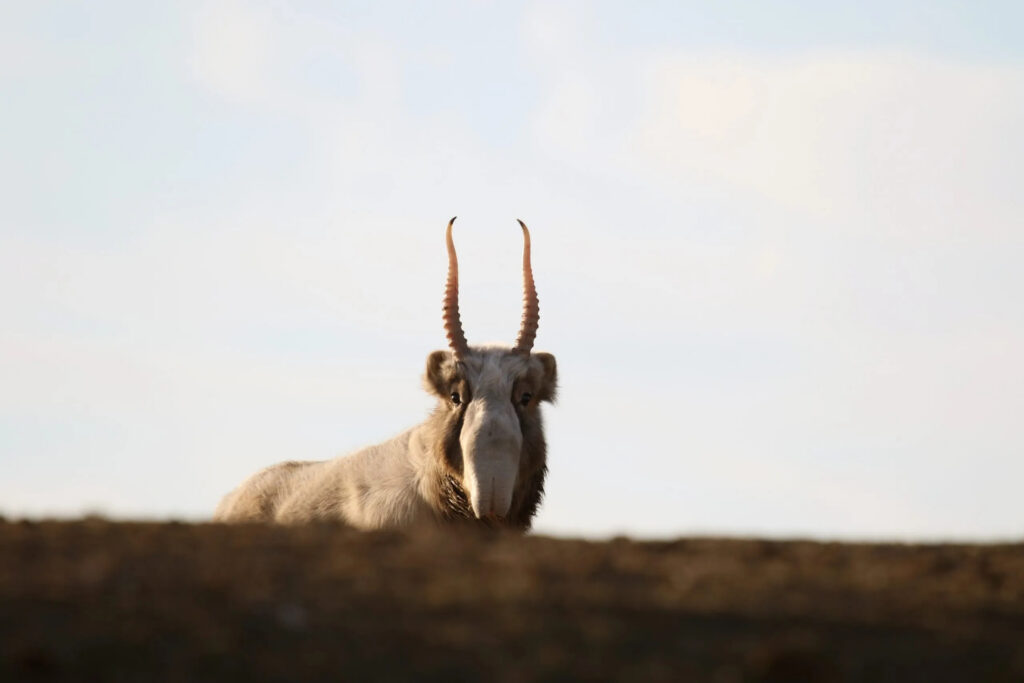
Data collected from GPS-collared saigas demonstrate the immediate behavioral impact of these barriers. Prior to the construction of the 2014 railway line, tracking maps revealed continuous, fluid movement across international borders. Post-construction data show animals congregating despondently on the northern side of the tracks, unable to cross, while vital resources to the south remain inaccessible.
This spatial blockage triggers what conservation scientists describe as a collapse in spatial knowledge. Much like human nomadic cultures that lost their navigational heritage following forced sedentarization, young saigas learn migration routes through active participation and observation of older herd members. When a generation is blocked from traditional routes, the collective memory of the migration—often referred to by conservationists as part of the "Saiga Silk Road"—fades, threatening long-term population viability.
Official Responses and Mitigation Strategies
Recognizing the severity of the threat, conservation organizations and government bodies have initiated collaborative efforts to reconcile modern infrastructure with wildlife preservation. The ACBK has worked closely with the government of Kazakhstan to establish new wildlife sanctuaries, using empirical tracking data to define protected boundaries that encompass core saiga habitats.
Furthermore, engineering solutions are being deployed to mitigate the impact of existing infrastructure:
- Saiga-Friendly Railway Crossings: Teams have constructed dozens of raised earthen ramps that match the elevation of train tracks, creating the optical illusion of a natural gap in the barrier.
- Safe Intersections: Strategically placed cattle-guard fences keep trains and ungulates separated at crossing points, preventing fatal collisions while preserving movement.
- Modified Border Barriers: In cooperation with Uzbek authorities, standard barbed-wire border walls are being replaced with X-shaped barricades. These structures successfully block vehicular traffic while leaving sufficient clearance for saigas to pass underneath.
Broader Impact and Future Outlook
The plight of the saiga antelope serves as a case study for the broader challenges facing migratory species in the 21st century. As global infrastructure demands grow, balancing economic development with ecological preservation requires proactive planning and cross-border cooperation.
The ongoing efforts in Kazakhstan demonstrate that mitigating infrastructure impact is technically feasible, but success ultimately depends on political will and sustained funding for conservation science. Without continued intervention to maintain and restore migratory pathways, iconic species like the saiga risk being permanently confined to isolated pockets of the landscape, erasing a living link to the Pleistocene epoch and diminishing the ecological integrity of the Eurasian steppe.