Beyond Sustainability: How Regenerative Tourism is Redefining the Future of Global Travel

The paradigm of sustainable tourism, long defined by minimalist principles of doing less harm, conserving water, reducing single-use plastics, and lowering carbon emissions, is undergoing a profound conceptual evolution. For decades, the travel industry has operated on an extractive model, encouraging visitors to tread lightly while still consuming environments and local cultures. However, a fundamental shift is underway, moving the industry away from mere sustainability toward regeneration—an approach aimed at actively restoring ecosystems, revitalizing local communities, and reshaping the relationship between humanity and the natural world.
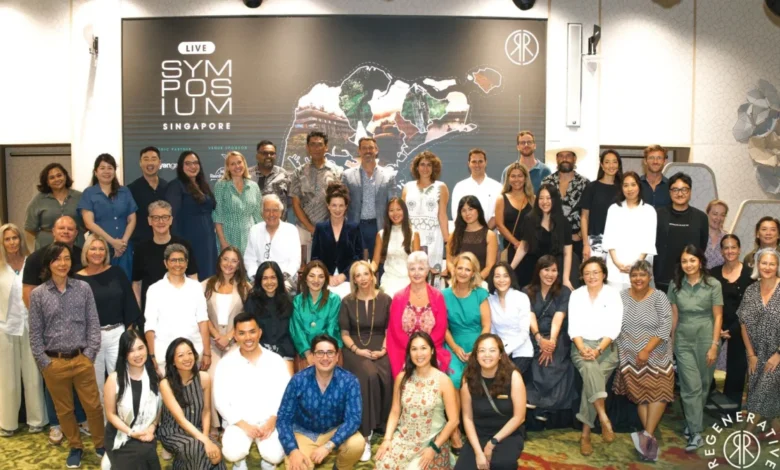
This emerging philosophy took center stage at the recent Regenerative Travel Asia Symposium held in Singapore. Gathering industry leaders, hospitality executives, environmental scientists, and sustainable tourism advocates, the event served as an international forum to address the compounding pressures of global tourism, climate change, and overdevelopment. Against the backdrop of an increasingly automated and digitalized world, the symposium challenged attendees to view tourism not merely as a commercial sector, but as an interconnected ecosystem of mutual dependence between people, places, and nature.
The Genesis of a Movement: From Extraction to Connection
The historical trajectory of global tourism has long prioritized economic growth and consumer convenience over ecological and cultural preservation. For years, the prevailing framework of sustainable travel focused on mitigation—reducing waste, offsetting flights, and managing visitor footprints. While these measures remain critical, experts at the Singapore symposium argued that sustainability is no longer enough to address the scale of contemporary environmental crises.
Amanda Ho, co-founder and CEO of Regenerative Travel, encapsulated this shift during her opening remarks at the symposium. She described regenerative tourism as a fundamental psychological and operational transition: moving from the head to the heart, from scarcity to abundance, and from an individualistic focus to a collective responsibility. Ho challenged participants to redefine tourism as a living relationship rather than a transactional industry.
This sentiment was reinforced by keynote speaker Juliet Kinsman, who highlighted the philosophical underpinnings of the movement. Kinsman reminded delegates that human societies are not external observers of biodiversity, but rather deeply integrated components of a living planetary system. In an era dominated by artificial intelligence and digital connectivity, she emphasized the urgent necessity of "regenerating humanity" by rebuilding tangible, empathetic connections with the planet and local populations.
Consumer Intentions Versus Industry Realities
The push for regenerative travel is not originating solely from industry theorists; it is increasingly driven by a fundamental shift in consumer demand. Data presented at the symposium by Jeremy Tran of Sustainable Travel Asia—citing comprehensive research from Booking.com—revealed that 85% of global travellers now actively seek sustainable travel options. Furthermore, 69% of respondents expressed a desire to leave destinations in a better condition than they found them.
Despite this strong consumer appetite, a significant implementation gap persists. While travellers increasingly want to engage in responsible tourism, many lack the practical knowledge or resources to do so effectively.
Tran pointed to the profound influence of social media in distorting modern travel behaviors. The advent of algorithmic feeds and viral travel trends has transformed once-obscure destinations into overnight hotspots, leading to severe overcrowding and ecological strain. This trend-driven tourism often encourages superficial engagement, prompting critical questions about whether modern travellers are exploring with intention or simply following pre-packaged digital itineraries. To bridge this gap, experts suggest that travellers must interrogate their motivations, evaluate their modes of engagement, and prioritize purposeful travel choices.
The Complexities of Overdevelopment: The Case of Bali
While individual intentions matter, structural challenges continue to threaten fragile destinations. Maitri Fischer, a leader in sustainable design with Eco-Mantra, addressed the stark realities of unmanaged tourism growth during a panel discussion at the symposium. Drawing upon the cautionary tale of Bali, Fischer highlighted the severe friction that occurs when rapid tourism development outpaces local infrastructure and regulatory frameworks.
In Bali, the exponential rise in visitor numbers has generated acute environmental and social pressures, including severe waste management crises, depletion of freshwater tables, and the degradation of local ecosystems. Fischer emphasized that genuine regeneration requires addressing these systemic imbalances. For tourism to be truly regenerative, local communities cannot remain passive recipients of industry policies; they must be positioned as primary decision-makers regarding the management of their land, culture, and economic future.
Real-World Implementation: Case Studies in Regeneration
While systemic challenges remain widespread, several pioneering hospitality groups and eco-resorts presented tangible models of regenerative tourism in action during the Singapore symposium. Organizations such as the Banyan Group, The Datai Langkawi, Potato Head Bali, and Song Saa Private Island demonstrated how luxury and environmental restoration can successfully intersect.
Song Saa Private Island in Cambodia offers a prominent blueprint for commercial regeneration. Established on a tract of degraded land, the resort was conceived with a mandate to rehabilitate the local environment rather than merely develop it. Through the establishment of the Song Saa Foundation, the property played a pivotal role in creating Cambodia’s first official Marine Protected Area. Additionally, the resort prioritizes local economic resilience, employing approximately 75% of its workforce from surrounding villages. On-site operational practices include advanced waste management systems, food waste reduction programs, and rainwater harvesting infrastructure. Importantly, the resort integrates guests into this regenerative framework, inviting visitors to participate directly in marine conservation projects and community outreach initiatives.
Similarly, Nick Hardman, a marine biologist and Head of Sustainability at the Banyan Group, underscored the psychological mechanism necessary for successful conservation. During his address, Hardman asserted that tourism possesses immense potential to spearhead ecological healing, provided that engagement is personalized. "You have to make it personal," Hardman noted, explaining that individuals are far more inclined to protect natural and cultural assets when they establish direct, meaningful connections with them—whether through coral reef restoration dives or immersive exchanges with Indigenous communities.
The Threat of Greenwashing and the Imperative for Transparency
As regenerative travel gains mainstream traction, industry analysts have raised concerns regarding the potential co-optation of the term. Without standardized metrics and verifiable frameworks, "regeneration" risks devolving into another corporate buzzword or marketing label used to greenwash conventional tourism practices.
Experts at the symposium stressed that the integrity of the regenerative movement depends entirely on radical transparency, genuine community participation, and long-term, measurable impact. Neither hotels, tour operators, nor travellers can afford to treat regeneration as a passing trend. Ensuring accountability requires ongoing collaboration across the entire tourism value chain, moving away from empty promises toward verifiable commitments.
Accessibility and Inclusivity in the Regenerative Economy
A critical challenge highlighted throughout the event is the question of socio-economic accessibility. Historically, many high-profile eco-resorts and conservation-focused travel experiences have catered exclusively to luxury demographics.
Speakers cautioned that if regenerative travel remains confined to high-end, exclusive markets, it risks failing its core mission of collective global change. True regeneration must be scalable and economically accessible across diverse travel sectors, empowering budget-conscious travellers and supporting smaller, local independent operators. Democratizing regenerative travel ensures that sustainable behaviors and community-led tourism are not treated as luxury commodities, but as foundational standards for all forms of global mobility.
Implications for the Future of Global Tourism
The discussions at the Regenerative Travel Asia Symposium arrive at a critical juncture. As global tourism volumes rebound to pre-pandemic highs and the impacts of the climate crisis intensify, the structural vulnerabilities of the travel industry are increasingly apparent.
The transition from sustainability to regeneration represents a fundamental philosophical recalibration. It challenges the foundational premise that travel must inherently consume resources, proposing instead a model where every journey contributes positively to local ecologies and economies.
Ultimately, the future of tourism relies on a conscious shift in traveller behavior and industry design. By prioritizing transparency, supporting community-led initiatives, and demanding accountability from tourism operators, stakeholders across the board can help steer the industry toward a collaborative future. Regenerative travel is not defined by perfection, but by deliberate intention—transforming the act of travel from a passive consumption of places into an active commitment to their preservation and renewal.