Finding Solace in the Shadows: How One Traveler Confronted Mortality and Anxiety in Bangkok

The psychological intersection of travel, personal grief, and cultural perspectives on mortality often manifests in unexpected ways. For Australian author and columnist Liv Arnold, a scheduled trip to Bangkok, Thailand, served as an impromptu exercise in exposure therapy. Confronting her lifelong anxiety disorder against the backdrop of her mother’s third diagnosis of liver cancer back home in Melbourne, Arnold sought refuge—and a strange sort of solace—in the Thai capital’s unique philosophical spaces, ranging from high-intensity Muay Thai boxing rings to death awareness cafes.
This journey highlights a growing global interest in death positivity, experiential philosophy, and how international travel can reframe personal trauma. By examining how different cultures process the inevitability of human impermanence, travelers are increasingly turning to unconventional psychological tourism to manage grief, existential dread, and modern anxiety disorders.
The Anatomy of Anxiety and the Reality of Illness
For most of her life, Arnold’s relationship with mortality was defined by preemptive grief. Growing up in Melbourne, she regularly cataloged the physical aging of her parents through family photo albums, mentally calculating timelines and silently bargaining with fate during school camps to ensure her family’s safety. This childhood vigilance eventually crystallized into a clinical anxiety disorder in adulthood.
The baseline of her anxiety—characterized by the habit of trading imagined future disasters for immediate, controlled ones—was severely disrupted when her mother’s liver cancer returned for a third time. While previous medical episodes represented distant fears, the recurrence shifted the family dynamic into a critical phase where medical professionals actively discussed life-extension strategies.
Seeking distance and a reset, Arnold embarked on a pre-planned trip to Bangkok. Rather than sticking to traditional tourist itineraries, her eight-day journey evolved into an accidental immersion therapy focused heavily on physical presence and the confrontation of existential dread.
From Muay Thai to Mindfulness: Physical Presence as Therapy
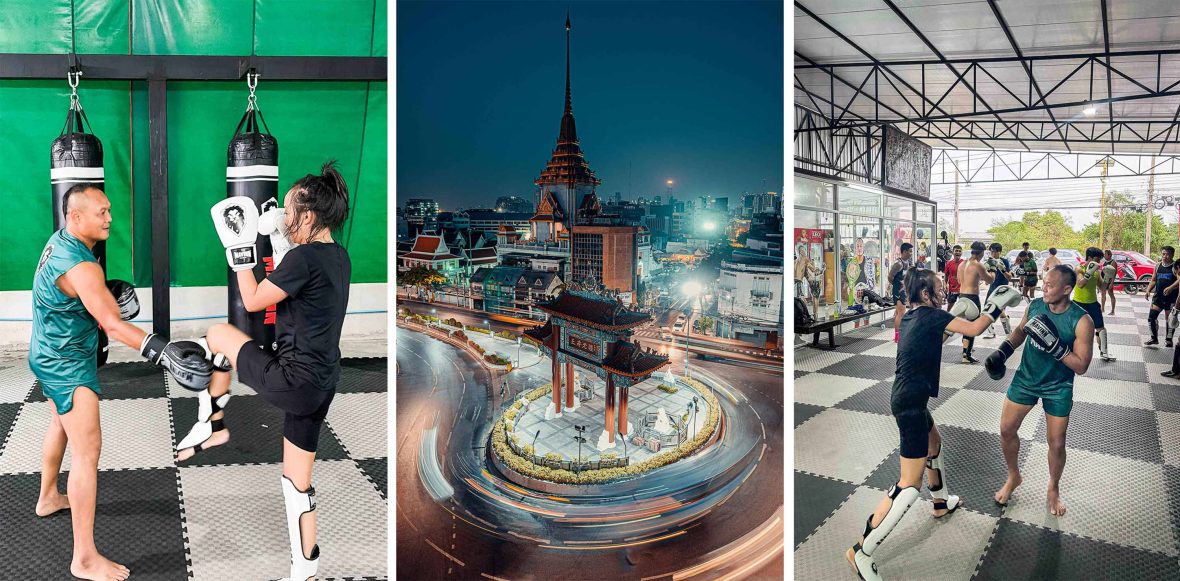
The physical dimensions of Arnold’s trip began in a Muay Thai boxing gym, where a training session with legendary fighter Saenchai provided an immediate antidote to anticipatory anxiety. Engaging in combat sports, where a physical threat demands absolute focus in the present moment, offered a stark contrast to an anxious mind that typically fixates on future catastrophes. In combat, the future is compressed into the next three seconds—the time it takes for a strike to land.
Beyond physical exertion, Bangkok’s cultural landscape provided deeper philosophical engagements with life and death. Thailand, where approximately 90 percent of the population practices Theravada Buddhism, maintains a remarkably open cultural dialogue surrounding mortality. Unlike Western societies that frequently sanitize or hide death, Thai cultural practices openly integrate the concepts of impermanence (anicca) into daily life.
This philosophy is embodied institutionally in spaces like the Kid Mai Death Awareness Café, founded in 2018 by Buddhist philosopher Veeranut Rojanaprapa. Established as fieldwork for his doctoral research, the café aims to use the contemplation of mortality to mitigate human vices such as greed, anger, and corruption. Rojanaprapa’s thesis operates on a straightforward premise: when individuals maintain a constant awareness of their own mortality, they are more inclined to lead ethical, mindful lives.
Experiential Philosophy: Inside the Death Awareness Café
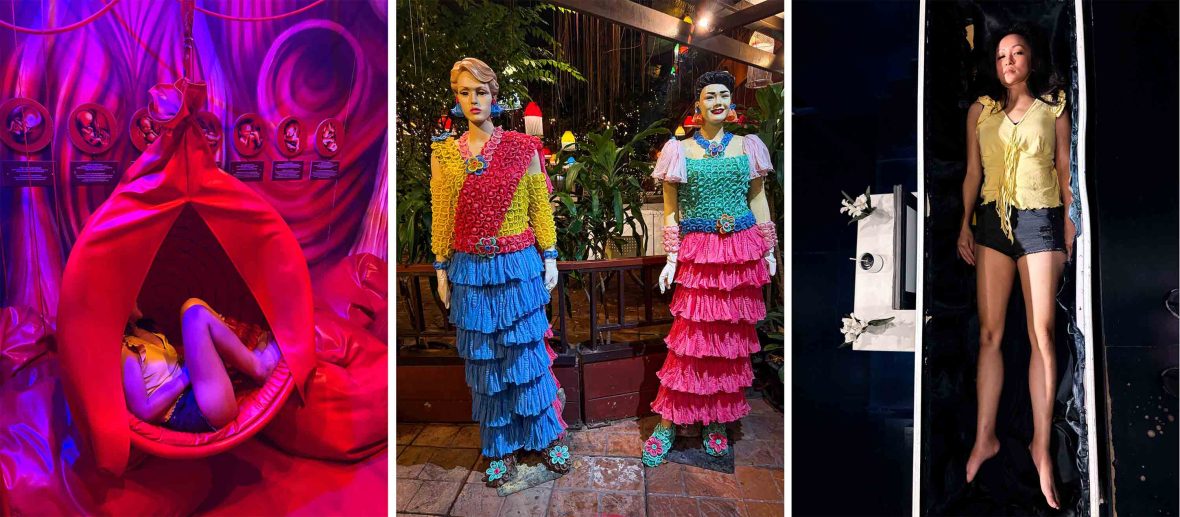
Located adjacent to a horror-themed attraction, the Kid Mai Death Awareness Café confronts visitors with the chronological stages of human existence through four distinct rooms: Birth, Elder, Pain, and Death.
- The Birth Exhibit: Features red, womb-like structures built into the walls, inviting visitors to curl into the fetal position.
- The Elder Exhibit: Simulates the physical degradation of aging through the use of weighted vests, sandbags on the wrists and ankles, clouded glasses, and gray wigs, illustrating the administrative and physical difficulties of advanced age.
- The Pain Exhibit: Places participants in a simulated intensive care unit (ICU) environment complete with surgical gowns, plastic mattresses, rhythmic monitor beeping, and empty IV bags.
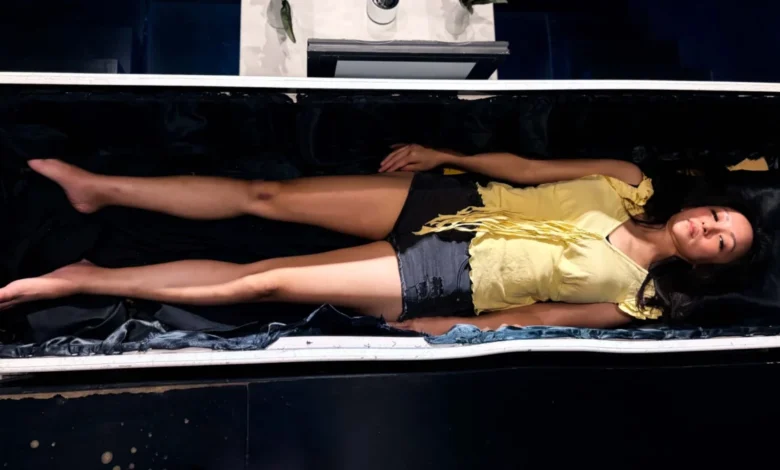
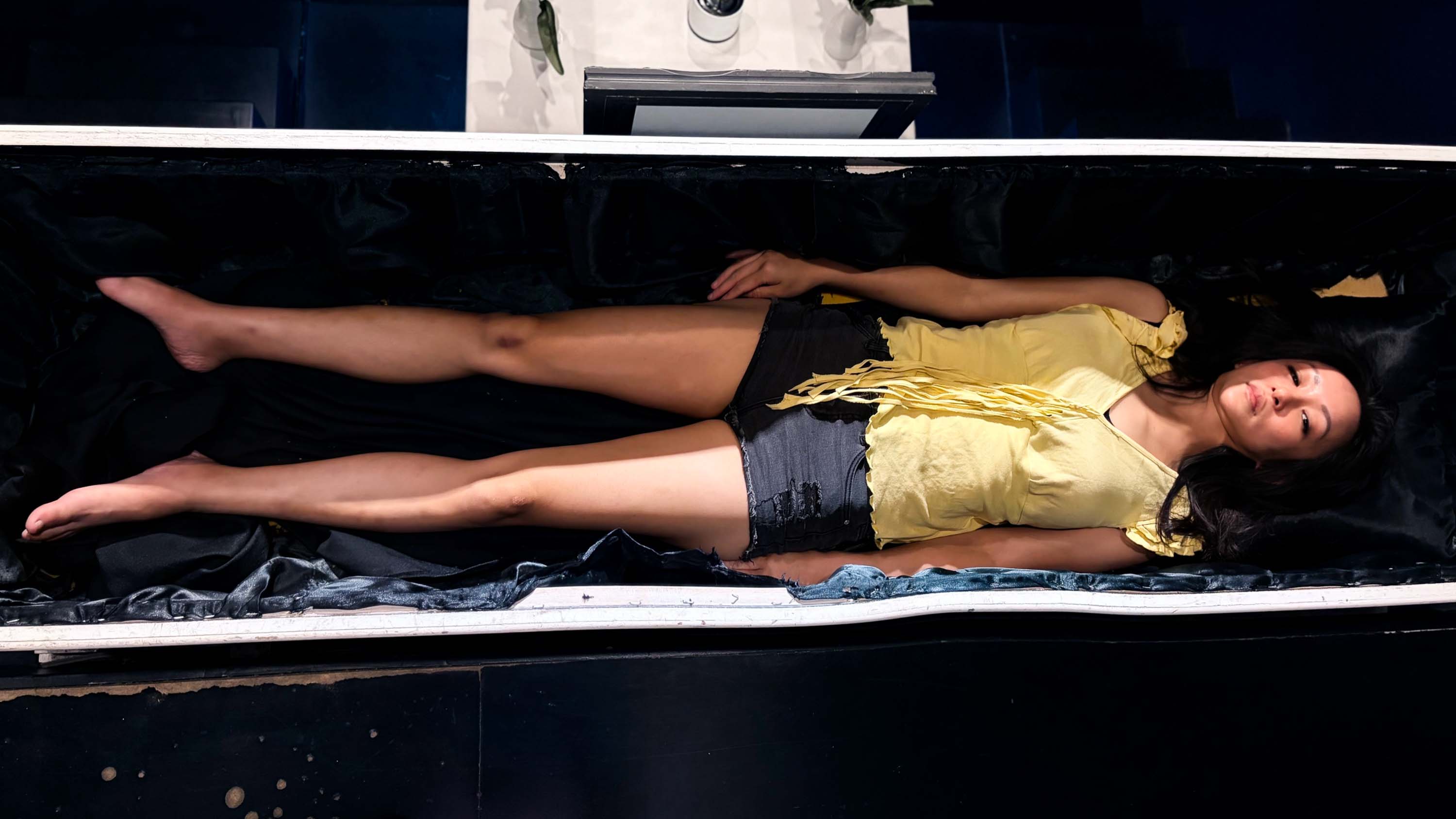
- The Death Exhibit: Concludes the sequence with a traditional wooden coffin. Visitors are invited to climb inside, pull the lid closed, and reflect on what truly matters in life before recording their final thoughts in a ledger.
While many patrons visit the cafe simply for novelty or social media content, the underlying psychological utility is profound. Receptionists and philosophers note that stepping into a casket forces visitors to confront their ultimate isolation and finite timeline, frequently converting generalized fear into emotional acceptance.
For Arnold, engaging with these exhibits mirrored her own familial reality. While she was participating in "ICU cosplay" for a matter of minutes, her mother was navigating the actual, grueling realities of cancer treatments and emergency hospitalizations back in Australia—shielding her children from the scariest details out of maternal instinct.
Cultural Context: Safe Sex, Jasmine Garlands, and Reclining Buddhas
Bangkok’s broader landscape offers continuous reminders of public health advocacy and spiritual acceptance. Earlier in her trip, Arnold visited Cabbages & Condoms, a famous restaurant founded by activist Mechai Viravaidya. Established to combat Thailand’s severe HIV epidemic in the late 20th century, Viravaidya’s campaign successfully destigmatized contraception by introducing condoms into unexpected social spheres, including taxis, police forces, and religious institutions. The public health initiative is credited with reducing new HIV infections in the country by approximately 90 percent, preventing an estimated 7.7 million infections.
Similarly, traditional markets like Pak Khlong Talat showcase the cultural ubiquity of jasmine garlands, which have symbolized maternal love and purity in Thailand since the official designation of Mother’s Day in 1976. Unlike showier blooms, jasmine requires little and offers a subtle, enduring fragrance—much like the quiet resilience of mothers.
At historical sites such as Wat Pho—home to the monumental 151-foot-long Reclining Buddha representing the historical entry into Nirvana—visitors engage in the meditative practice of dropping coins into 108 bronze bowls. These rituals reinforce the central tenets of Buddhist philosophy: that impermanence does not require religious adherence to be understood, and that suffering often stems from a resistance to change.
Broader Implications and Psychological Insights
The narrative of Arnold’s journey underscores a broader shift in contemporary wellness and travel trends. As mental health awareness expands globally, travelers are increasingly seeking destinations that offer psychological utility rather than mere escapism. Death cafes, grief retreats, and mindfulness tourism are transitioning from niche countercultural movements into recognized pathways for processing trauma.
Experts in behavioral psychology note that structured exposure to mortality—whether through philosophical cafes, simulated medical environments, or high-intensity sports—can significantly reduce generalized anxiety. By forcing the human brain to confront its ultimate boundary, individuals often experience a paradoxical release of daily stressors.
Ultimately, Arnold’s expedition to Bangkok did not magically erase her anxiety or solve the impending reality of her mother’s illness. Impermanence remains an unyielding physical law. However, the journey fundamentally altered her relationship with fear. By moving away from silence and avoidance, and toward direct inquiry, she bridged the emotional distance between herself and her mother—exemplified by a simple, long-overdue phone call asking a question that had weighed on her for decades: "Mum, was it hard?"