Building a Legacy in the Pines: Legendary Thru-Hiker M.J. Eberhart Spearheads the Creation of the First-Ever Hiker Trash Old Folks Home

The whine of a chainsaw cuts through the crisp morning air over the Alabama cow pastures, echoing against a dense stand of mature longleaf pines. Standing with the balanced posture of a boxer on a gentle slope, 88-year-old M.J. “Nimblewill Nomad” Eberhart expertly sinks a wedge into a three-foot-wide trunk. His muscular forearms flex beneath a vintage Appalachian Trail Days t-shirt as he maneuvers the blade. With a practiced flick of his wrist, a wide V-shaped notch falls away. Eberhart sights up the towering trunk as it sways gently in the breeze, flashes a grin, and lets out a resounding yodel: “Timber!” Moments later, the massive tree crackles, surges through the canopy, and strikes the earth with a thunderous thud.
Stepping back, Eberhart pauses to offer a quiet, customary tribute. “Thank you for your sacrifice,” he murmurs, resting a hand against the rough bark. “I promise it won’t be in vain, that you will be put to good use and appreciated for a long, long time to come.”
For Eberhart, an octogenarian legend who achieved international fame in 2021 by becoming the oldest person at the time to thru-hike the entire Appalachian Trail, this physical labor is not merely a chore—it is the foundation of his next great adventure. Alongside longtime backpacking partners Randy and LuAnne Anderson, Eberhart is utilizing the freshly felled timber to construct the world’s first independent living community specifically tailored for aging long-distance backpackers: the Hiker Trash Old Folks Home.
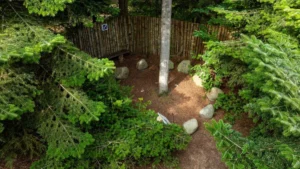
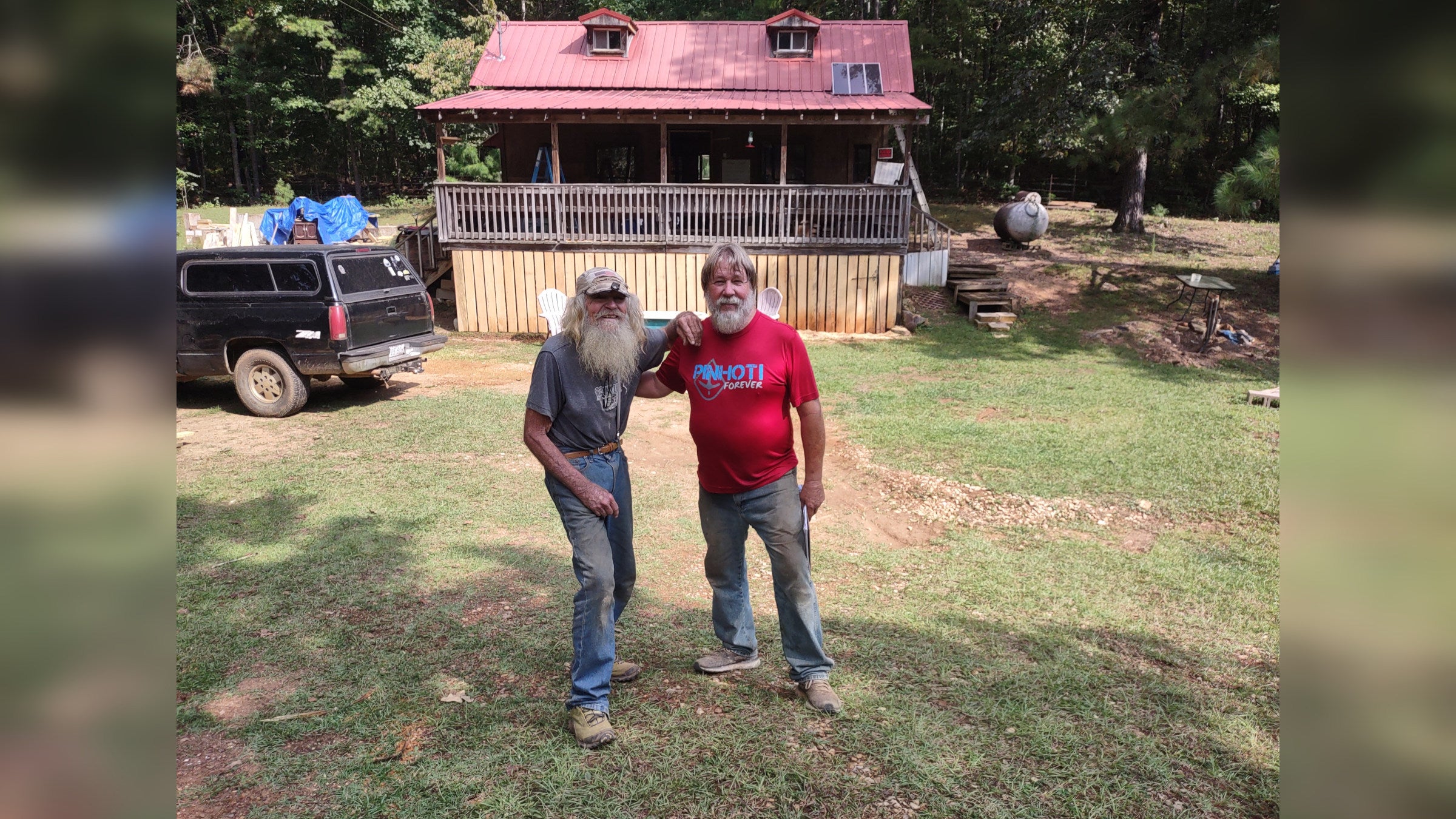
Located on a picturesque 160-acre cattle ranch in Weogufka, Alabama, the emerging senior living facility shares space with the newly established Southern Comfort Hiker Hostel. Situated approximately 8.6 trail miles from the southern terminus of the Pinhoti Trail at Flagg Mountain, the site serves as a strategic crossroads for the outdoor community. The Pinhoti Trail forms the southern gateway to the Appalachian Mountain range, linking directly to the Benton MacKaye Trail in Georgia and ultimately feeding into the extensive Eastern Continental Trail system stretching 220 miles south to Florida.
A Sanctuary for Aging Trekkers
The conceptual architecture of the Hiker Trash Old Folks Home centers on a vital question that plagues countless lifelong outdoor enthusiasts: What happens when the physical demands of long-distance backpacking eventually force weary travelers to hang up their packs?
“We envision this as a place where old hikers like me can come live, stay for a while, or simply visit when their bodies force them to finally hang up their pack,” explains Eberhart, affectionately known to friends as “Sunny.”
By integrating the senior living community with an active hiker hostel, the founders aim to keep elderly trekkers fully immersed in the vibrant, supportive culture of the backpacking community. The location was selected deliberately to balance accessibility with tranquility. Situated in mountainous terrain far enough south to evade harsh winters, the mild climate provides an ideal environment for both senior residents and year-round transient hikers navigating the southern stretches of America’s premier footpaths.
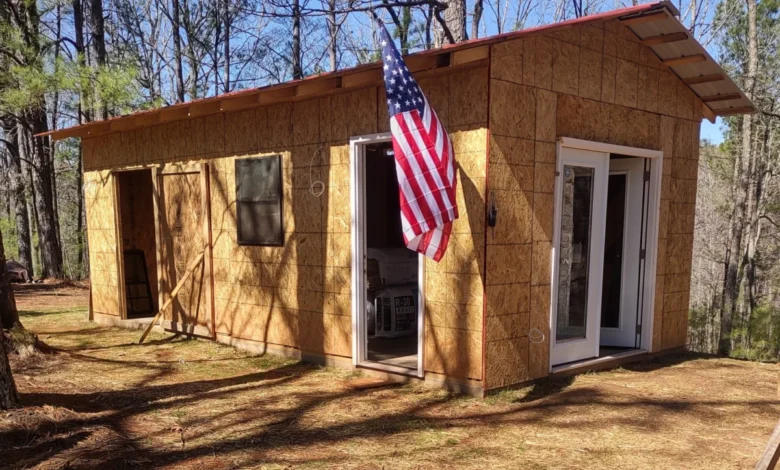
The master plan for the compound includes a village of rustic, studio-style cabins clustered around a central welcome center, a communal pavilion, and a modern bathhouse. Subsequent development phases will introduce dedicated tent pads and RV hookups equipped with electricity and water. Furthermore, organizers plan to coordinate group field trips and volunteer opportunities, enabling residents to remain active in trail stewardship through maintenance projects, day hikes, and “trail angeling”—the practice of providing food, water, and logistical support to passing backpackers.
The Spark of an Idea Around a Campfire
The genesis of the Hiker Trash Old Folks Home traces back to a serendipitous fireside conversation in the mid-2010s along the southern stretches of the Appalachian Trail. Eberhart and the Andersons were gathered around a campfire alongside Janet Hensley, a legendary shuttle driver and former hostel owner widely known across the trekking community as “Miss Janet.”
Hensley, then transporting a van full of college-aged thru-hikers, had been listening to spirited exchanges about trail adventures and the boundless futures envisioned by the youthful trekkers. The conversation naturally shifted toward the philosophical, prompting the seasoned veterans to reflect upon their own long-term trajectories.
“I asked something like, ‘Do any of you think about what we’re gonna do with ourselves when doing this becomes impossible?’” recalls Hensley, now 63. Having spent three decades following the transient migration of thru-hikers up and down the East Coast from the confines of a van, Hensley admits the existential query had crossed her mind countless times without yielding a satisfactory conclusion. “For me, a life without the trail doesn’t seem like much of a life at all.”
Randy “Chuck Norris” Anderson, 67, understood the sentiment intimately. His perspective on humanity was fundamentally altered during his 2007 thru-hike of the Appalachian Trail. According to Anderson, the unique crucible of long-distance backpacking strips away superficial social markers, fostering a culture of radical empathy, mutual aid, and unconditional support among strangers.
“It’s like you’ve been welcomed into this amazing family that gives and gives, and because it is so amazing, you want to pay that forward and do some giving yourself,” Anderson notes.
For Eberhart, backpacking had long served as an escape from the sterile, fluorescent-lit environment of his former career as a Florida optometrist. Following his retirement in 1998, a thru-hike of the Florida Trail blossomed into a grueling 4,000-mile odyssey along the Eastern Continental Trail. That initial transition dissolved his former professional identity, setting the stage for a nomadic chapter that has accumulated more than 50,000 trail miles. Unifying their shared ethos, the group concluded that spending their twilight years in proximity to the trail community was paramount.
A Convergence of Fate and Generosity
The realization of the project was accelerated by a network of enduring relationships forged over decades on the trail. Around 2020, while Eberhart was employed as a full-time state forest caretaker at Flagg Mountain, he reconnected with landowner Lloyd Caperton. The two originally crossed paths in 2000, when Eberhart stumbled upon Caperton’s rural country store and service station during a monumental 4,000-mile trek originating in Newfoundland.
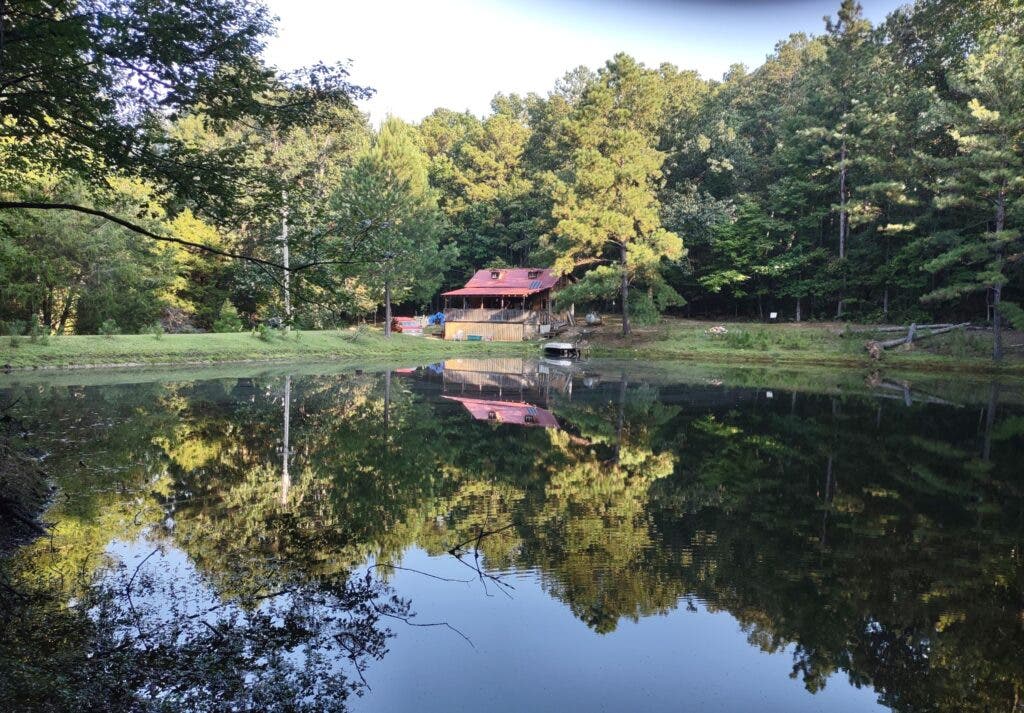
In an era when rural residents often viewed disheveled long-distance backpackers with deep suspicion, Caperton welcomed the weary traveler with coffee, a hot meal, and genuine curiosity. Two decades later, when Caperton offered Eberhart a cabin on his Weogufka cattle ranch, and the Andersons simultaneously sought a permanent base near the Appalachian Trail, the pieces fell into place.
Caperton greenlit the establishment of both the Southern Comfort Hiker Hostel and the Hiker Trash Old Folks Home, granting the trio full authorization to harvest onsite timber for construction. In an unprecedented act of philanthropic foresight, Caperton has pledged to donate the entire 160-acre Caperton Ranch property to The Nature Foundation upon his passing, stipulating that the hostel and senior community must be permitted to operate in perpetuity as long as they remain financially self-sustaining.
Current Progress and Future Outlook
Construction on the compound is already underway. Following the completion of the initial welcome center and a prototype cabin, the founders launched an online fundraising campaign to finance heavy infrastructure requirements, including an expanded well system, an advanced septic framework, and a communal bathhouse. Financial overhead is significantly mitigated by the availability of free timber from the ranch and an influx of skilled volunteer labor from the broader hiking community.
Organizers project that the first cohort of resident seniors will occupy the cabins next year. While legendary thru-hiker George “Billy Goat” Woodard, 87, was initially slated to inhabit the first completed structure, unforeseen health complications have delayed his arrival.
Despite minimal institutional marketing, interest from the national and international trekking community has surged, with the founders receiving a steady stream of inquiries via digital channels. To manage the high volume of interest, administrators are formalizing a standardized application process.
According to Eberhart, prospective residents will not be subjected to rigorous financial audits or conventional retirement community vetting. Instead, the criteria remain refreshingly aligned with the ethos of the footpath.
“Our main requirements are that you be genuinely kind, share a deep love of long-distance hiking, and be able to walk up two or three stairs unassisted,” Eberhart says.
As the sawdust settles over the Alabama pasture and the freshly milled boards are stacked to cure inside the repurposed cattle barn, Eberhart and his companions stand ready to welcome their peers into a golden chapter defined by community, storytelling, and an unbroken connection to the ancient ridges of the Appalachian Mountains.