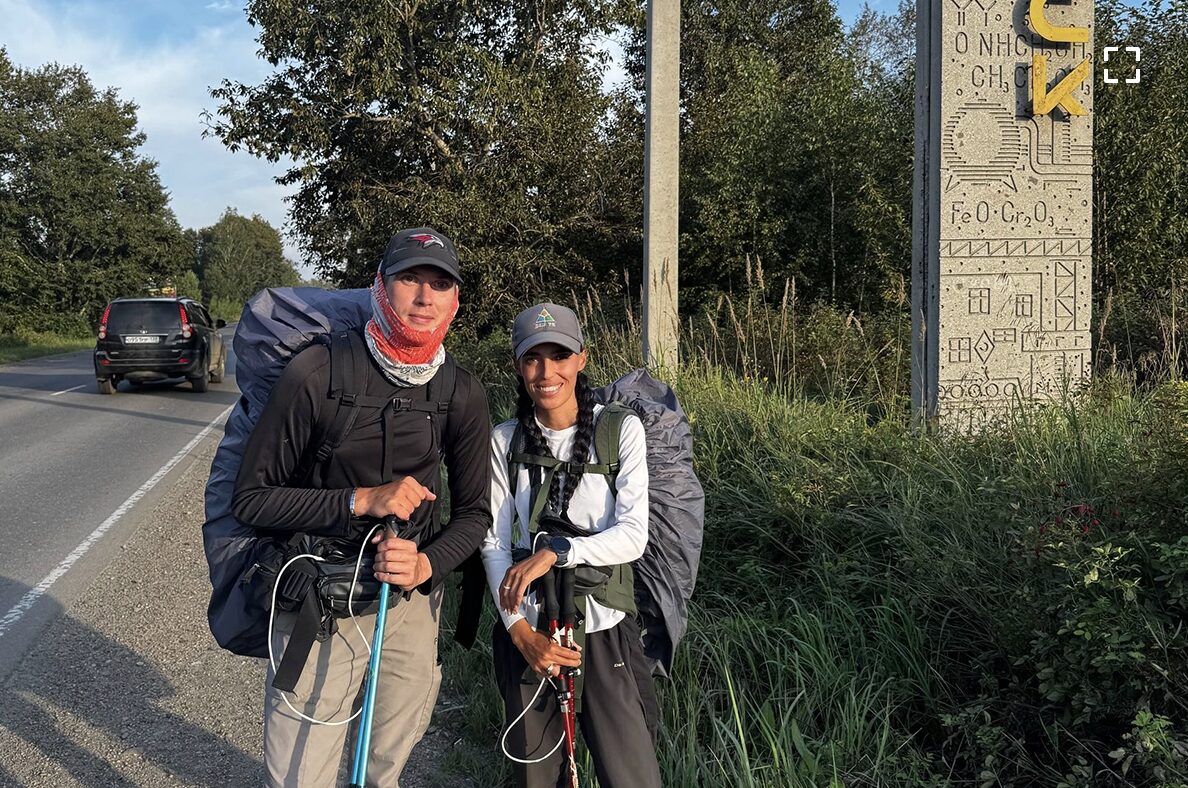
The ambition to traverse the vast expanse of the Russian Federation is a feat typically reserved for hardened expeditionists or long-distance cyclists. However, Tamara Pogosyan, 31, and Pavel Shabalin, 33, have turned the concept of a honeymoon into a continental odyssey. Since January 19, the couple has been trekking across Russia, moving from the capital in Moscow toward the Pacific port of Vladivostok. Having already eclipsed the 6,600km mark, they are currently navigating the rugged landscapes of the Russian Far East, challenging the boundaries of human endurance without prior professional training or specialized expedition experience.
The Genesis of an Unlikely Expedition
The impetus for this journey did not stem from years of planning or a lifelong dream of exploration. Rather, it was a spontaneous reaction to digital inspiration. On January 7, while observing a video documenting long-distance walking, the couple reached a sudden consensus. With only 12 days to prepare, Pogosyan and Shabalin liquidated their immediate schedule, procured necessary outdoor gear, and organized their logistical requirements.
Their preparation was remarkably minimalist. According to Pogosyan, the pair bypassed conventional physical conditioning programs in favor of a singular, 20km test walk around Moscow. During this trial run, they carried the full weight of their planned packs to simulate the daily strain they would encounter. This lack of formal training makes their current progress—averaging 30 to 40km per day—all the more statistically significant within the realm of endurance athletics.
A Chronology of the Continental Crossing
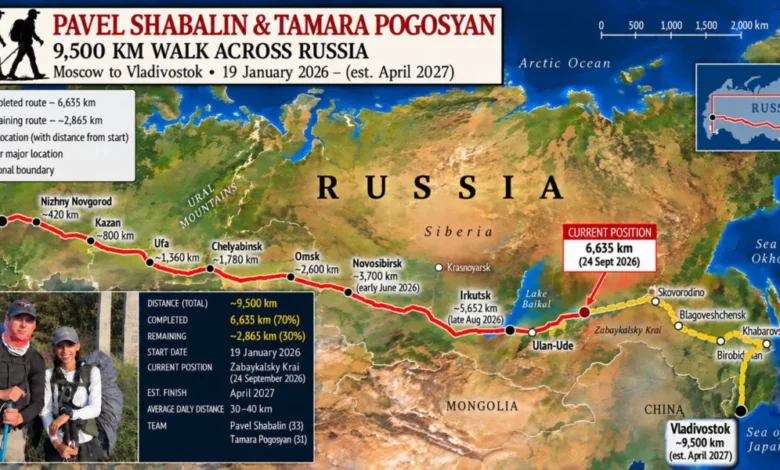
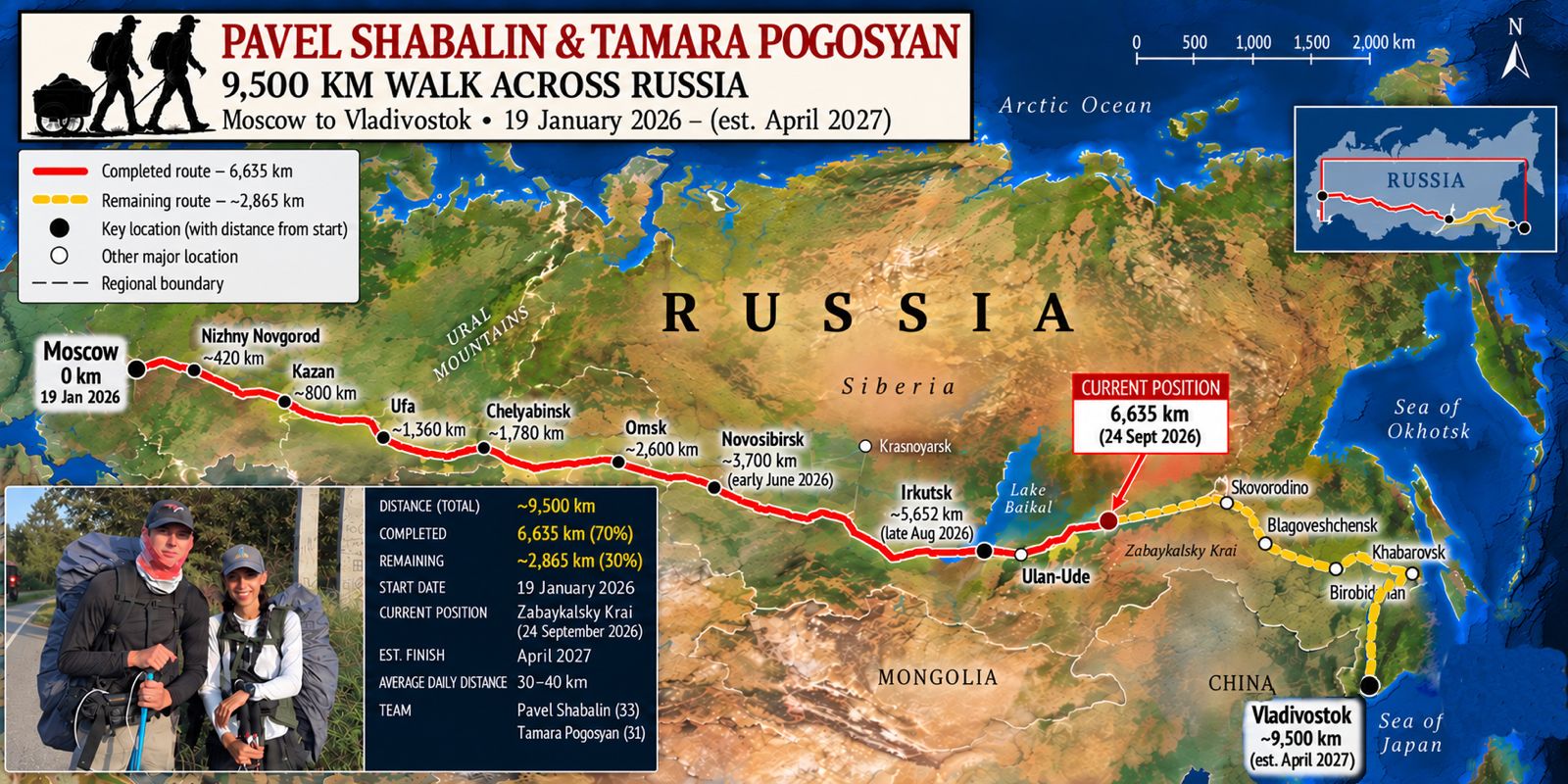
The route selected by the couple is a direct, linear path across the southern corridor of the country, tracking closely with the Trans-Siberian geography. Their journey has been divided into distinct geographical phases, each presenting unique challenges in terrain and climate:
- January 2026: Departure from Moscow. The couple faced the severe challenges of a Russian winter, requiring specialized cold-weather layering and consistent movement to mitigate the risks of frostbite and exposure.
- Spring 2026: Transit through the Volga and Ural regions. As the snow melted, the pair transitioned from sub-zero conditions to the muddy, unpredictable terrain of the Russian spring, a period known locally as rasputitsa.
- June 2026: Arrival in Novosibirsk. By this milestone, the pair had covered approximately 3,700km, officially crossing into the Siberian heartland.
- August 2026: Reaching Irkutsk. The trek surpassed 5,500km, marking the transition toward the mountainous regions surrounding Lake Baikal.
- September 2026: Crossing into the Republic of Buryatia. On September 2, the duo entered the administrative territory of Buryatia, leaving behind the shores of Lake Baikal and moving into the Zabaykalsky Krai province.
Current projections suggest that the total distance of the journey will approximate 10,000km. While initial timelines estimated a conclusion by the end of 2026, their current pace suggests an arrival in Vladivostok in the early months of 2027.
Logistical Realities and Physical Demand
The logistical burden of a self-supported walk of this magnitude is significant. Pogosyan and Shabalin do not utilize motorized support vehicles, meaning every supply, tent, and food ration is transported in their backpacks. This requires careful management of calories, hydration, and equipment maintenance.
From a physiological perspective, a sustained daily average of 30-40km places the couple in an elite category of endurance performance. Typically, such distances lead to high rates of soft-tissue injury, joint stress, and metabolic depletion. The couple’s ability to avoid chronic injury thus far is a testament to the effectiveness of their gradual build-up and their capacity for sustained, low-intensity exertion.
Social Dynamics and Community Integration
A noteworthy aspect of this expedition has been the role of digital connectivity in facilitating local support. Through their presence on platforms like Telegram, the couple has cultivated a dedicated following. This digital trail has transformed their journey from a private endeavor into a public event.
In many of the rural communities they traverse, the arrival of the couple is treated as a social occasion. The tradition of "bread and salt"—a symbol of hospitality and peace in Russian culture—has been extended to them in numerous villages. The visit to Ablatuysky Bor serves as a case study in this phenomenon. The local mayor, representing the provincial government, met the couple to provide a guided tour of local sites, highlighting the importance of the journey in connecting disparate rural populations with the travelers.
Broader Implications and Sociological Context
The journey of Pogosyan and Shabalin offers a unique glimpse into the vastness of the Russian landscape and the connectivity of its people. Historically, such long-distance treks have been used as a lens to examine national identity, resilience, and the geographic reality of a nation that spans eleven time zones.
From an academic standpoint, the couple’s experience highlights the "democratization of adventure." In the past, such an expedition would have required institutional backing, sponsorships, and professional reconnaissance. Today, the accessibility of mapping technology, social media for real-time updates, and the global outdoor equipment market allows non-professional individuals to attempt feats that were previously deemed impossible.
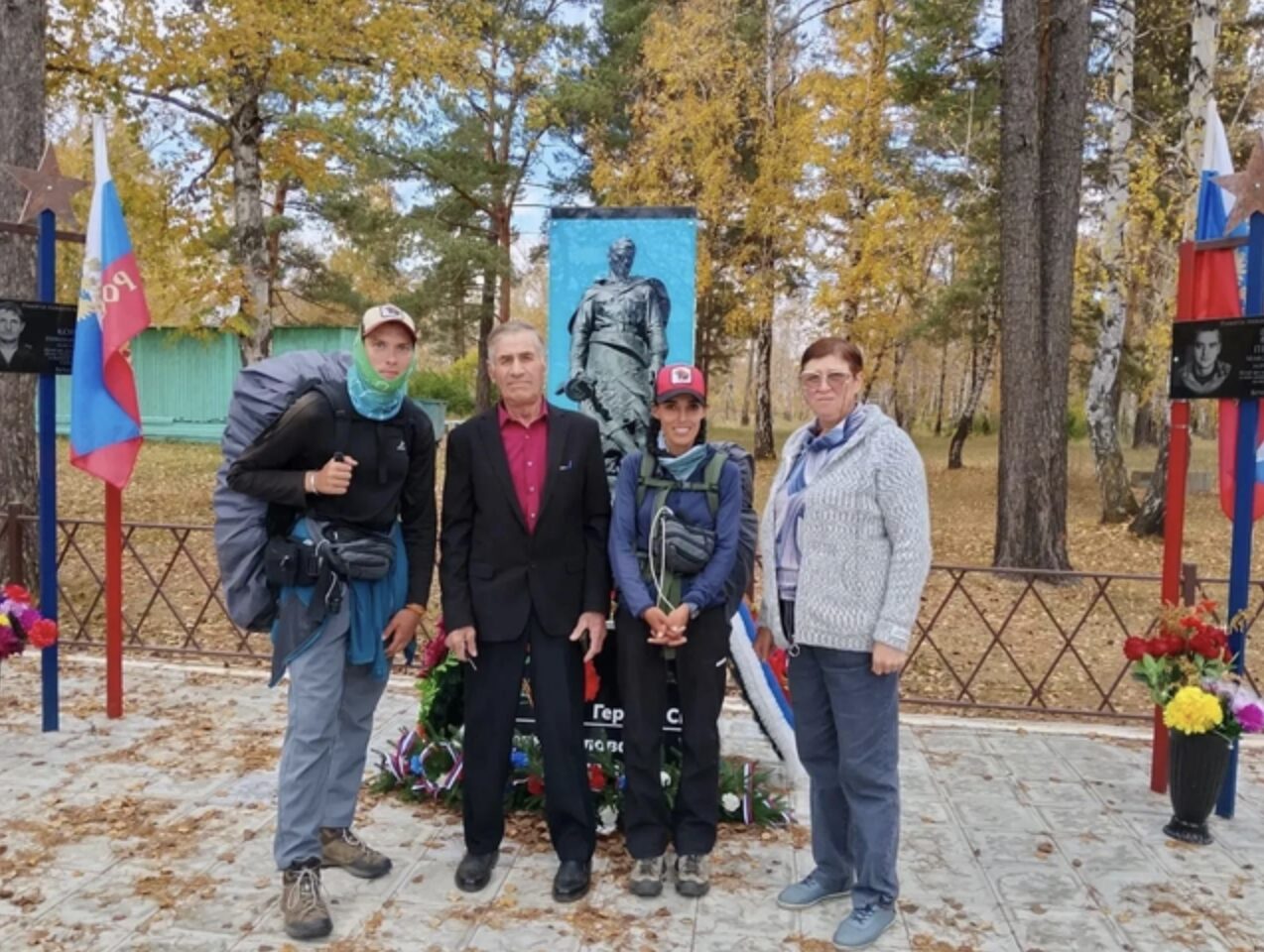
Furthermore, the public reaction to their journey—specifically the integration into local life and the welcoming nature of regional leaders—indicates a strong cultural appreciation for individual perseverance. By documenting their path in real-time, the couple has essentially created a living map of contemporary Russia, showcasing both the physical topography and the human element of the interior regions that are often overlooked in mainstream media.
Analytical Outlook: The Final Stretch
As the couple prepares to enter the final stages of their trek, they face the changing climate of the autumn and potentially the early onset of winter in the Russian Far East. The Zabaykalsky Krai and the subsequent regions leading to the Pacific coast are characterized by complex mountain ranges and unpredictable weather patterns.
The successful completion of this journey will not only establish a significant personal milestone for the couple but will also provide valuable data for endurance researchers regarding long-term, self-supported human locomotion. Whether they reach Vladivostok by the end of this year or early next, the expedition stands as a remarkable study in the capacity for human adaptation when faced with the sheer scale of the natural world.
As they continue, the global community watching their progress is presented with a reminder of the scale of the earth and the persistence of the human spirit. Their honeymoon has evolved from a simple walk to an ethnographic exploration, bridging the distance between the urban center of Moscow and the coastal extremity of the Pacific. For now, the focus remains on the path ahead, the daily rhythm of the road, and the upcoming transition into the final phase of their 10,000km journey.