Slothee Still Wants Coffee Expands Global Children Literature Series with Educational Journeys Across Continents

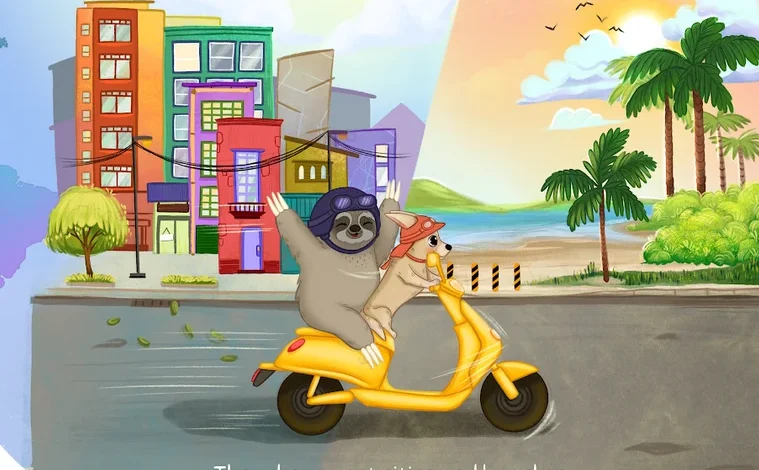
The landscape of children literature is witnessing a renewed emphasis on geography, cultural diversity, and global awareness through the official release of Slothee Still Wants Coffee, the second installment in the acclaimed Slothee and Friends series. Designed to engage both young readers and adult caregivers, the publication chronicles the ongoing international journey of its titular character, Slothee, as he traverses multiple continents in pursuit of the ultimate artisanal brew. Following the foundational success of the initial volume, this latest release broadens its educational scope by introducing readers to diverse international traditions, agricultural practices, and social customs associated with one of the worlds most consumed commodities.
Main Facts of the Release
Authored as part of an expanding franchise that utilizes animal protagonists to simplify complex worldly concepts for juvenile audiences, Slothee Still Wants Coffee shifts its narrative focus from localized exploration to a broad, multi-nation itinerary. The core narrative follows Slothee as he departs from the lush rainforests of Costa Rica and embarks on a comprehensive expedition spanning Peru, Mexico, Jamaica, Uganda, Vietnam, and Australia.
Throughout this geographic sweep, the character interacts with local communities, encounters unique regional wildlife, and observes traditional methods of coffee cultivation, harvesting, and preparation. Rather than functioning solely as a fictional narrative, the book integrates educational geography and cultural anthropology into its plotline, aiming to foster early global citizenship among readers aged four through ten. The publishers have confirmed that the release is available globally in multiple formats, including hardcover, paperback, and digital editions, accompanied by interactive reading guides designed for classroom and homeschool environments.
Chronology of the Slothee and Friends Series
The development of the Slothee and Friends literary universe reflects a calculated trajectory from conceptualization to an established global educational brand. The developmental timeline highlights the careful planning required to balance entertainment with multicultural education:
Initial Concept Phase (2018–2019): Creators conceptualized the character of Slothee as a slow-moving, deliberate observer who could model patience and curiosity for children. The decision to center the narrative around coffee and tea culture stemmed from a desire to explore global agricultural supply chains in an accessible manner.
Debut Publication (2020): The release of the first book established the core premise of the series, introducing readers to Slothee and his immediate social circle, laying the groundwork for international travel.
Expansion and Research Phase (2021–2022): Authors and illustrators conducted extensive field research across major coffee-producing nations, consulting with agricultural experts and cultural advisors to ensure authentic representation of each featured country.
Second Installment Release (Current Period): Slothee Still Wants Coffee officially debuts, marking a significant expansion of the fictional universe by incorporating seven distinct nations across four continents into a single narrative arc.
Future Roadmap (2025 and Beyond): Publishers have outlined a projected pipeline that includes subsequent volumes focusing on alternative beverage explorations, notably tea traditions in Asia and Europe, alongside companion activity books and digital learning modules.
Supporting Data and Market Context
The launch of Slothee Still Wants Coffee occurs within a rapidly evolving children publishing sector that increasingly prioritizes diversity, geography, and STEAM (Science, Technology, Engineering, Arts, and Mathematics) integration. According to recent publishing industry statistics, children books that incorporate multicultural elements and global geography have seen a steady year-over-year increase in demand, driven largely by educators and parents seeking to broaden childrens worldview in an interconnected economy.
To provide context for the target demographic, global coffee production involves more than 25 million smallholder farmers, primarily located in developing nations across Latin America, Africa, and Asia—the exact regions highlighted in Slothee journey. By introducing young readers to nations such as Uganda, Vietnam, and Peru, the publication aligns with broader educational initiatives that seek to familiarize students with global trade routes and agricultural origins at an early age. Market analysts note that illustrated books featuring localized cultural elements tend to achieve higher adoption rates in international school curricula and bilingual learning programs.
Official Responses and Creative Intentions
While fictional characters do not issue traditional corporate statements, the creative team behind the Slothee and Friends series has articulated clear pedagogical goals for the publication. In interviews regarding the development of the series, the authors emphasized that the choice of coffee as a unifying theme was deliberate, bridging the gap between adult routines and childrens natural curiosity about the world around them.
Educational consultants who have reviewed early advance copies of Slothee Still Wants Coffee have praised its structured approach to cultural introduction. Dr. Elena Vance, a specialist in early childhood literacy and curriculum development, noted that the book successfully utilizes narrative scaffolding to introduce complex geographic concepts. According to Vance, stories that transport characters across physical borders help young readers develop spatial awareness and empathy for cultures outside their immediate environment. Furthermore, librarians have reported a high demand for narrative non-fiction and culturally immersive fiction, positioning the new release favorably within public and school library acquisition cycles.
Broader Impact and Implications for Early Childhood Education
The release of Slothee Still Wants Coffee carries notable implications for how cultural geography is taught in primary education. Traditional geography curricula often rely on abstract maps and statistical data, which can fail to engage younger demographics. By embedding geographical data within an engaging narrative framework, the publication offers a complementary tool for educators aiming to stimulate curiosity about international cultures without overwhelming cognitive loads.
Moreover, the books emphasis on friendship and cross-cultural dialogue addresses contemporary priorities in social-emotional learning (SEL). As classrooms become increasingly diverse, literature that normalizes international travel, varied customs, and cross-border communication plays a vital role in reducing cultural biases among developing minds. The inclusion of diverse ecosystems—from the highlands of Peru to the coastal landscapes of Jamaica—also introduces foundational ecological concepts, encouraging children to observe how geography shapes local lifestyles, architecture, and traditions.
As the Slothee and Friends franchise looks toward future expansions involving global tea traditions and extended worldly adventures, this latest installment sets a rigorous benchmark for educational storytelling. By maintaining a balance between narrative engagement and factual cultural representation, Slothee Still Wants Coffee transcends the traditional boundaries of juvenile fiction, establishing itself as a valuable resource for parents, educators, and young explorers alike.
Related posts: