The Unexpectedly Tough Challenge of Living in Pakistan’s Mountains and the Strategy for Integration

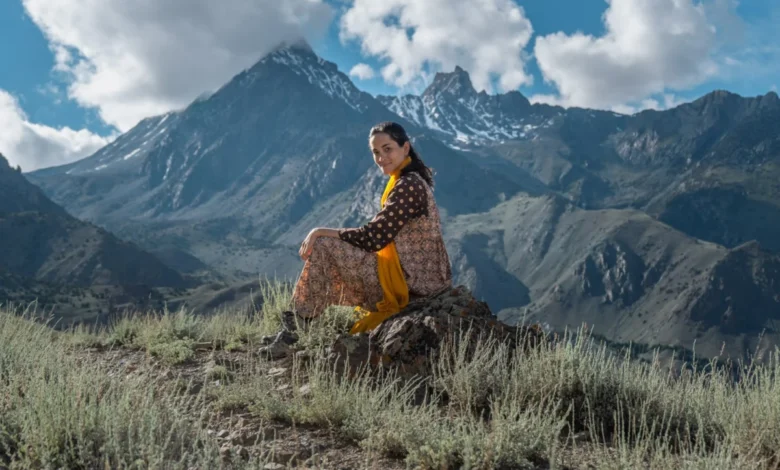
Establishing a sustainable business in the remote Ishkoman Valley of Pakistan presents a unique confluence of logistical, financial, and cultural challenges. For entrepreneurs operating in regions characterized by extreme topography, such as the high-altitude landscapes of the Karakoram and Hindu Kush, the barriers to entry extend far beyond traditional market competition. Recent developments in the region highlight a growing trend of foreign investment in eco-tourism, yet success in these isolated zones remains tethered to a founder’s ability to bridge the profound socio-linguistic divide between local traditions and modern business practices.
The Geography of Isolation and Entrepreneurial Risk
The Ishkoman Valley, located in the Ghizer District of Gilgit-Baltistan, is defined by its rugged terrain and relative obscurity on the global tourism map. Infrastructure in the region is subject to the volatility of mountain environments, where landslides and seismic activity frequently disrupt supply chains and construction timelines. Entrepreneurs attempting to build hospitality ventures in these areas must navigate a complex regulatory environment, high-altitude logistics, and the necessity of earning the trust of conservative, tight-knit communities.
For expatriate business owners, the primary challenge is not merely physical survival but social integration. In urban centers like Islamabad, the presence of a cosmopolitan, English-speaking professional class allows for seamless navigation of political and social discourse. In contrast, the mountains of Northern Pakistan operate under a distinct set of social norms where language—often a mosaic of Khowar, Shina, Pashto, and regional dialects of Urdu—serves as the primary gatekeeper to community acceptance.
A Chronology of Linguistic Integration
The trajectory of language acquisition for an expatriate in Northern Pakistan typically follows a non-linear path. Initially, survival depends on basic, functional Urdu—the lingua franca of Pakistan. However, as business operations mature, the limitations of "market-level" language skills become apparent.
- Phase 1 (The Foundational Period): Initial arrival and establishment of infrastructure. During this time, the focus remains on physical construction, permit acquisition, and basic operational logistics. Communication is often transactional, relying on interpreters or simplified Urdu.
- Phase 2 (The Socio-Cultural Friction): As the business begins to host guests and engage with local officials, the lack of nuanced linguistic ability leads to social isolation. Misunderstandings regarding cultural etiquette, gender roles, and business negotiations often stem from a failure to grasp local vernacular and social cues.
- Phase 3 (Structured Intervention): Recognizing that immersion is insufficient for professional-grade communication, the shift toward formal language instruction becomes necessary. Recent data indicates that utilizing digital platforms for remote learning has become the standard for professionals working in remote, high-altitude regions where local tutors may not be available or specialized in academic grammar.
Linguistic Diversity and the Professional Barrier
The Ishkoman Valley represents a microcosm of Pakistan’s linguistic diversity. With a population of approximately 30,000, the valley sustains more than ten distinct languages. For a business owner, this creates an environment where communication is rarely standardized. While Urdu serves as the national bridge, the professional environment demands a level of sophistication that allows for the drafting of contracts, the navigation of land tenure disputes, and the mediation of cultural grievances.
The reliance on English by foreign investors is a vestige of colonial history, yet in the interior of Pakistan, it is largely ineffective for daily operations. Formal training through digital platforms has recently emerged as a vital tool for bridging this gap. By selecting tutors from regions like Lahore—where Urdu is spoken with a standardized, formal accent—expatriates are able to achieve a level of fluency that commands respect from local administrative officials.
Implications of Digital Language Integration
The shift toward virtual, app-based learning, such as the use of the Preply platform, offers significant implications for the future of sustainable tourism in Pakistan. By utilizing high-latency, low-bandwidth internet connections, entrepreneurs in remote areas are now able to maintain consistency in their studies.
The integration of video conferencing, whiteboard tools, and digital document sharing has allowed for a structured curriculum that was previously impossible in isolated mountain settlements. For the local economy, this shift is positive; as foreign owners become more fluent, their ability to mentor local staff, resolve labor disputes, and integrate into the local community increases. This, in turn, fosters a more stable, long-term business environment.
Socio-Economic Analysis and Future Outlook
The success of foreign-owned enterprises in Gilgit-Baltistan is inextricably linked to the perception of the owner within the local community. In a region where reputation is currency, a failure to speak the language is often interpreted as a lack of respect for the culture. Consequently, language training is not merely a professional development expense; it is a critical investment in risk mitigation.
The current trend suggests that as digital connectivity improves in Northern Pakistan, the barrier to entry for international business owners will decrease, provided they are willing to undergo the arduous process of linguistic assimilation. The "mountain-accented" Urdu—a colloquial blend of regional dialects—is becoming a recognized feature of the northern professional landscape, signaling a shift toward a hybrid culture that respects local heritage while adopting modern, global business standards.
Ultimately, the challenge of operating in the mountains remains substantial. However, the move toward systematic language acquisition signifies a maturation of the tourism sector in Northern Pakistan. By replacing the reliance on translation with direct communication, entrepreneurs are not only securing their businesses but are also fostering deeper, more resilient ties within the communities that host them. This development serves as a blueprint for future investment in emerging, remote markets globally, where the human element remains the most significant variable in the success of any operation.
Related posts: