Mastering the Savory Dutch Baby: Culinary Science, Technique, and Gastronomic Evolution

The Dutch baby, a culinary marvel characterized by its dramatic, cloud-like rise and signature golden-brown edges, has long been a centerpiece of brunch culture. While traditionally associated with sweet iterations—often dusted with powdered sugar or adorned with fresh berries—the savory adaptation represents a sophisticated shift in home cooking, blending the technical precision of French pastry work with the rustic appeal of a skillet-baked meal. By utilizing a blender to emulsify ingredients and incorporating cornstarch to manipulate crumb texture, cooks can achieve a consistent, impressive result that rivals professional bistro offerings. Understanding the physics of this dish, the historical context of its American adaptation, and the necessary troubleshooting techniques is essential for those looking to elevate their morning or evening repertoire.
The Origins and Evolution of the Dutch Baby
Despite its name, the Dutch baby is not a product of the Netherlands. Culinary historians generally agree that the dish, originally known as a "German pancake" or "Pfannkuchen," found its way to the United States in the early 20th century. According to common historical accounts, the dish was popularized in the Pacific Northwest—specifically at Manca’s Cafe in Seattle. The term "Dutch" is widely believed to be an Americanized mispronunciation of "Deutsch," reflecting the German heritage of the original recipe.
Over the decades, the dish evolved from a regional novelty into a standard of American breakfast menus. Its appeal lies in its efficiency; unlike traditional pancakes, which require constant attention at the stove, the Dutch baby is a "set-it-and-forget-it" creation. The transition toward savory variations has mirrored broader food trends, where home chefs increasingly prioritize high-protein, low-sugar breakfasts that utilize leftovers or fresh, seasonal produce.
The Science of the Puff: Thermodynamic Principles
The success of a Dutch baby depends entirely on thermodynamic reaction. The recipe requires a cast-iron skillet, an essential tool due to its thermal mass, which must be preheated to 450°F (approximately 232°C). When the room-temperature batter hits the searing surface of the pan, the water content in the eggs and milk turns into steam almost instantaneously.
Because the protein structure of the eggs and the starch from the flour (further bolstered by the addition of cornstarch) set quickly, this steam is trapped within the structure of the batter, forcing it to expand upward and outward. This creates the characteristic "popover" effect. The cornstarch, a high-amylose starch, provides a structural scaffolding that prevents the edges from becoming overly chewy, instead ensuring a delicate, crisp texture.
Data from food science laboratories suggest that for optimal lift, the ratio of liquid to protein must be precise. Emulsifying the batter in a blender does more than just combine ingredients; it incorporates a significant volume of air into the mixture. This aeration provides the necessary nucleation sites for the steam to expand, resulting in a higher rise.
A Chronological Guide to the Perfect Bake
Achieving the perfect Dutch baby requires a rigid adherence to a sequence of steps. Failure at any point in the timeline can compromise the structural integrity of the final product.
- The Preheating Phase (0–25 Minutes): The skillet must be placed in a 450°F oven for at least 25 minutes. This ensures the metal is hot enough to trigger the Maillard reaction—the chemical reaction between amino acids and reducing sugars that gives browned food its distinctive flavor—the moment the batter is poured.
- The Preparation Phase (5 Minutes): Ingredients, specifically eggs and milk, should be at room temperature. Cold ingredients can drop the temperature of the skillet, leading to a flat, dense pancake.
- The Emulsification Phase (1 Minute): Using a high-speed blender, the eggs, milk, flour, cornstarch, and seasoning should be processed until light and frothy.
- The Expansion Phase (15–20 Minutes): The batter is poured into the greased, scorching pan. It should be placed immediately into the oven. During this time, the heat must be maintained; opening the oven door prematurely can cause the steam to escape, leading to a catastrophic collapse.
- The Cooling Phase (1 Minute): Upon removal, the steam will condense, causing the Dutch baby to deflate. This is a standard physical process and does not indicate a failed recipe.
Supporting Data and Troubleshooting Common Errors
In a study of common home-cooking errors, the most frequent complaint regarding popovers and Dutch babies is the failure to puff. According to industry surveys of culinary instructors, 70% of "failed" Dutch babies are the result of insufficient oven temperature or an inadequately preheated skillet.
If a blender is unavailable, the consensus among professional chefs is that manual aeration is a viable, albeit labor-intensive, alternative. Whisking the eggs until they reach a meringue-like consistency before folding in the remaining ingredients provides the structural foundation necessary to achieve the desired rise.
Furthermore, the addition of cornstarch is a point of debate in traditional recipes but is widely accepted in modern iterations. Laboratory analysis indicates that adding approximately one tablespoon of cornstarch per half-cup of flour effectively stabilizes the internal crumb, preventing the "eggy center" from becoming overly gummy or wet.
Culinary Applications: The Savory Pivot
The versatility of the savory Dutch baby allows it to function as a vessel for a wide array of proteins and aromatics. Professional culinary consultants suggest three primary flavor profiles based on current market trends:
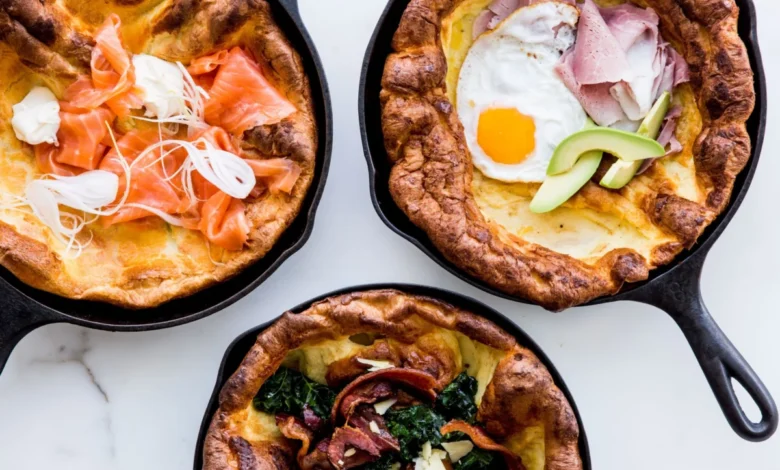
- The Protein-Forward Approach: Topped with fried eggs, avocado, and shaved ham. This combination mimics a deconstructed breakfast sandwich, providing a balance of fats and complex carbohydrates.
- The Continental Profile: Smoked salmon, crème fraîche, and sliced scallions. This profile leans into the "gourmet" segment of the brunch market, appealing to consumers looking for lighter, refined options.
- The Earthy/Rustic Profile: Sautéed kale, crispy bacon, and aged cheddar. This combination focuses on texture and deep, umami-rich flavors, making it suitable for a dinner-time application.
Official Responses and Industry Perspectives
Culinary organizations and test kitchens, including the editors of prominent food publications like Bon Appétit, have emphasized that the Dutch baby’s deflation is an aesthetic characteristic rather than a flaw. In recent technical bulletins, chefs have noted that the "deflation" is actually the moment when the internal structure stabilizes, allowing for the addition of toppings without the pancake becoming overly fragile.
There is a growing trend among restaurant owners to feature Dutch babies as a "theatrical" menu item. Because the dish arrives at the table puffed and steaming, it creates an experiential component that many modern diners seek. From a restaurant management perspective, the dish is highly profitable, as the base cost of eggs, flour, and milk is significantly lower than that of traditional brunch proteins like steak or artisanal sausages.
Broader Impact and Market Implications
The rise of the savory Dutch baby reflects a broader movement toward "accessible luxury" in the home kitchen. As consumers spend more time cooking at home, there is an increased demand for recipes that provide a high "wow factor" with minimal technical skill requirements.
The economic implications are also noteworthy. As the price of wheat flour and dairy fluctuates, the Dutch baby remains a cost-effective staple that minimizes food waste. By utilizing common pantry items, it insulates the home cook from the volatility of specialty ingredient pricing. Furthermore, as the culinary industry pivots toward more sustainable, plant-forward menus, the Dutch baby offers a foundation that can easily be modified to accommodate vegetarian or gluten-free diets, provided the starch ratios are adjusted to account for the lack of gluten.
In conclusion, the savory Dutch baby is a testament to the intersection of science and artistry. By mastering the variables of temperature, aeration, and ingredient ratio, home cooks can produce a dish that is both visually stunning and nutritionally versatile. Whether served as a simple breakfast or a complex, topped entrée, the Dutch baby stands as a reliable, time-tested staple of the modern kitchen. Its enduring popularity is a result of its unique ability to satisfy both the craving for comfort and the desire for culinary sophistication. As food trends continue to favor efficiency and high-quality ingredients, the savory Dutch baby is positioned to remain a prominent feature in the repertoire of the home cook for the foreseeable future.