The high-altitude slopes of Austria’s Grossglockner, a peak reaching 3,798 meters, served as the site of a harrowing survival ordeal this past November. Two German nationals, aged 15 and 18, were rescued in a high-stakes aerial operation on November 15, 2026, after becoming stranded in severe alpine conditions for nearly 20 hours. The incident, which has reignited national debates regarding mountain safety and the influence of social media on amateur mountaineering, underscores the profound dangers inherent in the Eastern Alps when ambition outpaces technical expertise.
A Chronology of the Incident
The sequence of events began on the evening of Saturday, November 14. According to initial reports, the two climbers set out with the intention of navigating one of the most prestigious yet demanding routes in the Austrian Alps. While they were equipped with essential gear—including crampons, ice axes, helmets, ropes, and appropriate clothing—they lacked the years of practical experience required to manage the rapid shifts in weather and terrain that define the Grossglockner environment.
Discrepancies remain regarding their exact progress. While police authorities initially indicated that the pair had successfully summited the peak before losing their way on the descent, the younger climber has contested this account. He asserts that the duo made the decision to retreat near an alpine hut located at the 3,454-meter mark, specifically because the older companion began exhibiting symptoms of altitude-related illness.
By the time the pair realized they were navigating a path beyond their capabilities, the light had faded and temperatures had plummeted. Their navigation became increasingly erratic. At one point, in an attempt to bypass a technical section they deemed too dangerous, the pair opted to follow a set of tracks in the snow. When those tracks abruptly ended, the duo found themselves trapped in deep, unstable snow with no clear route forward or backward.
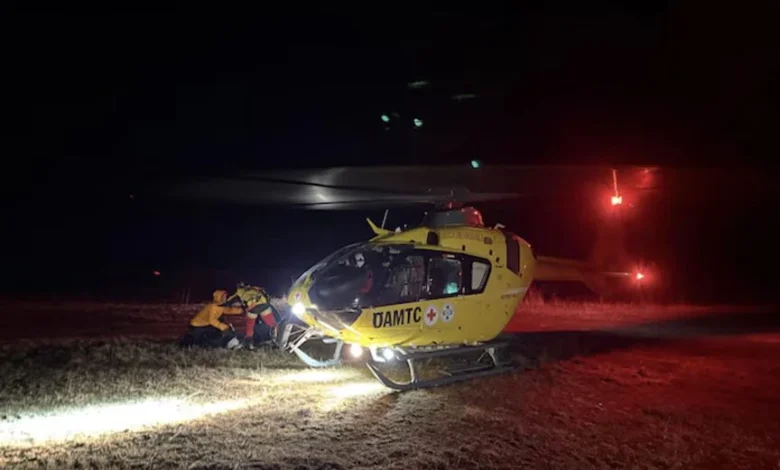
It was not until approximately 6:30 pm on Sunday, November 15, that the older climber managed to establish contact with emergency services. The subsequent rescue operation, coordinated by the Mountain Rescue Kals (Bergrettung Kals), was complicated by the onset of night and the extreme physical depletion of the victims. Initial attempts by dispatchers to guide the climbers down via telephone proved futile, forcing the deployment of a rescue helicopter into the dark, freezing conditions. At an elevation of roughly 2,800 meters, search teams finally located the teens, who were suffering from extreme exhaustion, disorientation, and the early stages of hypothermia.
The Problem of "Instagram-Alpinism"
The rescue of the two teens has drawn sharp criticism from veteran mountaineers and rescue coordinators. Peter Tembler, the head of the local mountain rescue unit, expressed frustration regarding the duo’s approach to the mountain. Tembler highlighted that the pair had seemingly ignored warnings from more experienced climbers they encountered on the trail.
"They were completely out of their depth," Tembler stated in interviews following the event. He pointed to the fact that a route segment typically requiring four to five hours for a skilled climber had taken the teenagers nearly twelve hours to negotiate.
This incident is viewed by many in the mountaineering community as a symptom of a growing trend often dubbed "Instagram-Alpinism." In this phenomenon, prospective climbers are lured to high-altitude peaks by curated, filtered, and often misleading social media content that simplifies the reality of technical climbing. By focusing on the aesthetic rewards of the summit, these platforms frequently omit the grueling physical toll, the necessity of glacial navigation skills, and the critical importance of reading weather patterns. The result is an influx of visitors who possess adequate physical fitness but lack the "mountain sense"—the intuitive ability to recognize danger before it becomes life-threatening—that is only developed through years of guided experience.

Statistical Context and Mountain Risk
The Grossglockner is not merely a mountain; it is a complex, high-stakes environment that demands respect. As the highest point in Austria, it attracts significant foot traffic, with an estimated 8,000 to 9,000 ascents attempted annually. However, this popularity comes with a heavy toll.
Data from the Austrian Alpine Club and regional authorities indicate that the mountain is the site of approximately two dozen major rescue operations every year. Between 2005 and 2025, the mountain claimed 29 lives. These incidents range from accidental falls and avalanche entrapment to exposure-related fatalities.
The tragedy in January 2025, in which a climber was convicted of manslaughter after abandoning his partner to die in the cold on the Grossglockner, remains a grim reference point for local authorities. It serves as a reminder that the mountain does not tolerate mistakes, and that the duty of care in an alpine environment is a legal and moral imperative. The recurring nature of these incidents has forced local governments to consider stricter regulations on who can access certain routes during the shoulder seasons, though enforcement remains difficult across the vast, open terrain of the Hohe Tauern National Park.
Implications for Future Rescue Operations
The cost of rescuing untrained hikers and climbers is a significant point of contention in Austria. Helicopter-assisted extractions in high-altitude environments are astronomically expensive and place rescue personnel at significant risk. When those rescues are necessitated by poor decision-making or a refusal to heed the advice of more experienced climbers, the debate over financial liability often enters the public sphere.
While rescue services in the Alps operate on a humanitarian basis, prioritizing the preservation of life over the investigation of culpability, there is an increasing push for better education. Mountain safety organizations are advocating for a standardized "safety certification" or more robust informational signage at trailheads that explicitly details the current conditions and the specific equipment required for a safe descent.
Furthermore, the incident raises questions about the responsibility of the climbing community to intervene. While the two teens were warned by others, there is no formal mechanism to stop a climber from attempting a route they are clearly not prepared for, unless they are trespassing on restricted land.
Moving Toward a Culture of Safety
The ordeal on the Grossglockner serves as a sobering lesson in the limits of digital research. The teens had, by all accounts, done their "homework"—they had studied websites, watched instructional videos, and engaged in physical training. However, the gap between theoretical knowledge and practical execution in a high-alpine environment is vast.
The incident highlights that climbing is as much a mental discipline as a physical one. It requires the ability to turn back when conditions change, the judgment to identify when a route is too technical, and the stamina to endure long hours of exposure. As the tourism industry continues to promote the Austrian Alps as a premier adventure destination, the responsibility falls on both the authorities and the climbers themselves to ensure that the allure of the summit does not outweigh the fundamental necessity of survival.
For now, the two teenagers have returned home, physically recovered but likely shaken by their experience. Their rescue concludes yet another chapter in the long, often dangerous history of the Grossglockner, leaving behind a reminder that while the mountain may be accessible to many, it is mastered by very few. The broader question remains: how can the climbing community bridge the gap between the aspiration for adventure and the reality of alpine risk? Until a consensus is reached, rescue teams in Kals and beyond remain on standby, preparing for the next inevitable call on the slopes of Austria’s highest peak.