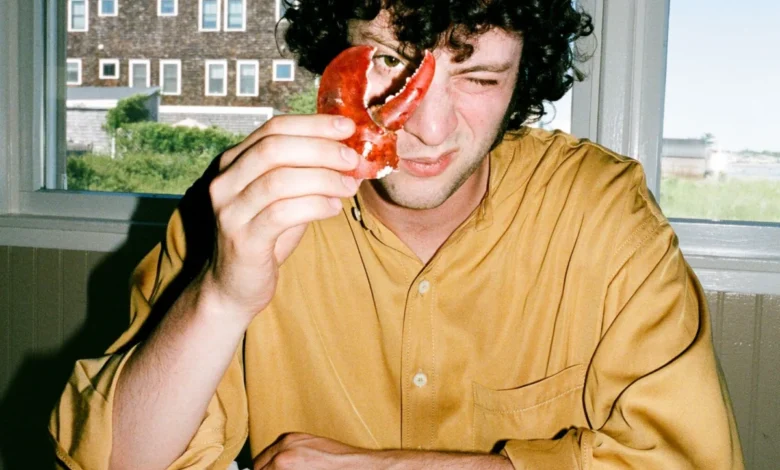
In the upcoming biopic "Tony," actor Dominic Sessa steps into the shoes of a teenage Anthony Bourdain, a character tasked with appearing profoundly out of his depth. The film’s narrative arc meticulously portrays a young Bourdain’s initial swagger as a college freshman at Vassar, where his arrogance leads to academic failure. The subsequent pivot to a humbling dishwashing position at a Provincetown seafood restaurant starkly reveals his inexperience, highlighting that his sharpest tool has, until then, been his wit. Yet, for Sessa, the transition to embodying this culinary neophyte was anything but unfamiliar. His pre-existing immersion in professional kitchen environments provided him with an authentic understanding of the demanding pace and precise skills required in such settings, offering a unique advantage in his portrayal.
From Bakery Bench to Silver Screen: Sessa’s Kitchen Credibility
Dominic Sessa’s preparation for the role of young Anthony Bourdain transcended mere acting. His personal history includes significant summer employment at Cathy’s 14th Street Bakery in Ocean City, New Jersey. His journey began at the age of thirteen, initially washing dishes. Under the tutelage of owner Cathy Greene, Sessa rapidly progressed, learning the intricacies of donut preparation, frying, icing, and eventually mastering the delicate art of croissant making. Greene lauded his work ethic, describing him as a "very quick learner and hard worker," so much so that she entrusted him with the responsibility of opening the bakery solo at 4:30 a.m. to manage the morning rush.
Sessa candidly recounts a formative mistake during his bakery tenure: "One time I put the wrong dough mix in the bowl," he admitted with a self-conscious laugh. "There was too much yeast in it. I turned around and it had become this massive dough monster, spilling out of the machine." Faced with limited time before Greene’s arrival, he attempted to conceal the mishap by disposing of the overflow in outdoor trash cans. His ruse was discovered when the dough, still actively expanding, erupted from the bins. "I had to admit what I’d done," Sessa recalled. Greene’s response, "I would have been much less disappointed if you’d just told me, and we could have fixed the problem. Now my trash cans are destroyed," imparted a crucial lesson: "Cathy taught me that it was okay to make mistakes, as long as I didn’t lie about it." This early exposure to the realities of food service, including its potential for error and the importance of honesty, proved remarkably prescient for his role as Bourdain.
Thematic Resonance: Honesty as a Cornerstone in "Tony" and Bourdain’s Life
The film "Tony," a coming-of-age story set against the backdrop of a summer in Provincetown, is deeply rooted in Anthony Bourdain’s complex relationship with truth. In his seminal memoir, "Kitchen Confidential," Bourdain himself described his younger self as "a spoiled, miserable, narcissistic, self-destructive, and thoughtless young lout, badly in need of a good ass-kicking." The film leverages this self-assessment, depicting his inability to be honest with his family, employers, and romantic interests as a catalyst for a series of cinematic misadventures. It underscores Bourdain’s eventual realization that embracing truth was the only path to self-discovery and authenticity.
This thematic core of honesty and reinvention resonates with Sessa’s own life trajectory. While Bourdain famously stumbled through academia before finding his calling in the culinary world and subsequently becoming a celebrated author and television personality, Sessa’s journey also involves unexpected pivots.
Parallel Paths: From Hockey Dreams to Theatrical Triumphs and Cinematic Stardom
Anthony Bourdain’s post-college path led him to the Culinary Institute of America after his formative Provincetown summer. His book, "Kitchen Confidential," initially intended for a small audience of culinary professionals, unexpectedly catapulted him to literary fame and paved the way for his iconic travel and food television shows, including "A Cook’s Tour," "No Reservations," and "Parts Unknown."
Similarly, Dominic Sessa’s early aspirations were far removed from the kitchen. He envisioned a future as a hockey player at the prestigious Deerfield Academy, where he held a scholarship and was a member of the school’s team. However, a pre-season skateboarding accident resulted in a fractured femur, abruptly ending his hockey aspirations. This setback prompted a significant redirection towards the school’s theater department. His first major role was that of the power-mad King Creon in a production of "Antigone."

Sessa confessed his initial reluctance to take on the significant role, stating, "I almost didn’t do it, because I didn’t want a big role. I was so nervous." He contrasted his experience on the ice with his theatrical debut: "I distinctly remember I was not the best hockey player. I was always jealous of the kids who scored goals every game. It makes you really fucking cool. When I did Antigone, people came up to me after, telling me I was doing something that they wanted to do but didn’t have the courage. That was power. It changed my life." This pivotal experience in theater ignited a passion that would ultimately lead him to a serendipitous encounter. A few years later, a casting agent introduced Sessa to director Alexander Payne, who cast him in a leading role opposite Paul Giamatti in the critically acclaimed 2023 film "The Holdovers," an Oscar-nominated success.
Director’s Vision: Capitalizing on Sessa’s Authentic Connection to Bourdain’s Narrative
Director Matt Johnson, known for his work on "Nirvanna the Band the Show the Movie" (2025) and "BlackBerry" (2023), recognized the profound parallels between Sessa’s life and Bourdain’s. Working with screenwriters Todd Bartels and Lou Howe to bring "Tony" to fruition, Johnson strategically leveraged these connections. "Dom being from New Jersey, his relationship to education, his relationship to a kind of newfound fame that had just discovered him—it ambushed him," Johnson explained. "The persona that I’m interested in showing is a young man trying desperately to seem like an adult. Dom is the reason I made the movie." This assertion highlights Johnson’s belief that Sessa’s own experiences with unexpected career shifts and the overwhelming nature of sudden success provided him with an authentic lens through which to interpret Bourdain’s early struggles.
Immersive Preparation: Deepening the Culinary Connection
Sessa developed a genuine affection for Provincetown during the filming of "Tony." He expressed a desire to own a beach house there in his later years, describing the town as "really magical and so well-preserved, it’s kind of insane the place still exists. You can imagine that it’s still 1975 when you’re there."
Despite his nascent acting career and a busy schedule that has led him to rarely cook for himself in his New York City apartment (his oven, he once believed, was broken until a friend used it), Sessa dedicated himself to understanding the culinary world. He frequented downtown Manhattan eateries such as 7th Street Burger, Cafe Mogador (Moroccan), Miss Lily’s 7A (Jamaican), and Ayat (Palestinian). Before heading to the Cape Cod set in the summer of 2025, Sessa spent time in Prospect Park, honing his skills in the kitchen at Gertrude’s, a local bistro. There, under the guidance of chef-partner Eli Sussman, he learned the crucial techniques of oyster shucking and observed firsthand the dynamic, high-speed environment of a busy restaurant kitchen during service.
"At a bakery, you make everything and then you put them out. The pace is a lot different in a restaurant," Sessa observed. "Eli introduced me to restaurant owners in New York. I hung out with them so I could understand that world. You really have to love it and have a passion for it." This immersive experience provided Sessa with invaluable insights into the demanding realities of professional kitchens, far beyond the idealized image often presented.
Beyond the Rebellion: Understanding Bourdain’s Professionalism
While "Tony" concludes as Bourdain stands on the precipice of formal culinary education, Sessa’s deep dive into the restaurant industry illuminated the multifaceted nature of the chef and author’s character. "I think what a lot of people forget, or lose sight of, is the fact that Tony was a calculated professional," Sessa asserted. "You want to see him as this rebellious, drinking, smoking, globetrotting kind of guy, but at the end of the day, he ran restaurant kitchens very effectively, which is a really difficult thing to do. There are two sides: he’s this cool guy, but he’s also a very professional, capable person. That’s the dichotomy of his life. It’s both chaos and control.”
This understanding of Bourdain as a figure who masterfully balanced a rebellious spirit with rigorous professional discipline is central to Sessa’s portrayal. His personal experiences in the culinary world, coupled with his own journey of unexpected career shifts and newfound recognition, allow him to embody the complex evolution of a young man finding his authentic voice and purpose, mirroring Bourdain’s own transformative path. The film "Tony" promises to explore this critical juncture in Bourdain’s life, with Sessa’s lived experiences lending a profound depth and authenticity to his performance.