The Strategic Pivot to Short-Duration Cruises Signals a New Era for Megaship Profitability

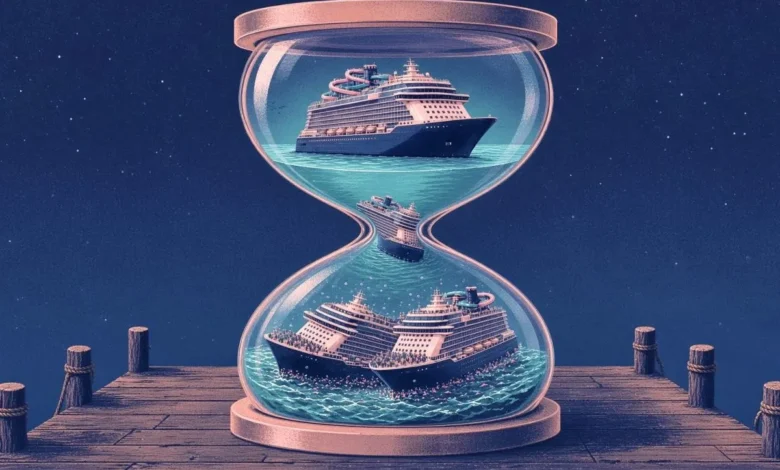
The global cruise industry is currently undergoing a structural transformation as major operators reposition their largest, most technologically advanced vessels from traditional week-long itineraries to three- and four-night excursions. This strategic shift reflects a broader effort to capture a younger, more time-constrained demographic, yet it introduces significant financial volatility. While cruise lines are successfully driving higher passenger volumes, the math behind these abbreviated voyages suggests that increased guest counts do not automatically translate into improved per-diem profitability.
The Evolution of Cruise Duration
For the better part of the last forty years, the cruise industry operated on a foundational model: the seven-night Caribbean or Mediterranean vacation. This duration was long considered the "sweet spot" for operators, as it allowed enough time for passengers to settle into the onboard culture, engage in high-value excursions, and maximize onboard spending across specialty dining, spa treatments, and premium beverage packages.
Historically, shorter cruises—those lasting three or four nights—were relegated to the oldest, least efficient ships in a company’s fleet. These vessels served as entry-level products, often marketed at a lower price point to first-time cruisers or those on stricter budgets. However, the post-pandemic recovery has flipped this logic on its head. As the demand for travel surged, operators recognized that the modern consumer, particularly the millennial and Gen Z segments, prioritizes "micro-vacations" over traditional week-long annual leave.
Chronology of the Short-Cruise Shift
The move toward putting premium assets on shorter routes was not an overnight decision but rather an acceleration of trends observed since 2021:
- 2021: Virgin Voyages entered the market with a disruptive model, focusing exclusively on shorter, "adults-only" Caribbean itineraries from Miami. This forced established players to re-evaluate the viability of the four-night segment for younger, affluent travelers.
- 2022: Disney Cruise Line launched the Disney Wish, an Oasis-class-sized vessel that was immediately deployed on short-duration routes. This proved that brand loyalty could sustain high price points even on three-night itineraries.
- 2024: Royal Caribbean International made the most significant commitment to this strategy by placing the Utopia of the Seas—a massive, state-of-the-art Oasis-class vessel—exclusively on three- and four-night itineraries to the Bahamas.
- 2025-2026: The industry-wide adoption of this model has solidified, with Norwegian Cruise Line (NCL) and Carnival Cruise Line adjusting their fleet deployment maps to ensure that at least one major vessel per hub is dedicated to short-haul trips.
Financial Performance and the Per-Diem Dilemma
The central tension in this new business model lies in the discrepancy between occupancy rates and net yields. In recent quarterly reports, Norwegian Cruise Line Holdings noted a 24% increase in total guest capacity, largely driven by the compression of cruise durations. While the volume of passengers moving through the turnstiles has surged, the financial metrics tell a more nuanced story.
When a cruise is shortened, the "fixed costs" of the voyage—fuel for the departure and return, port fees, and the logistics of turning a ship around in a single day—do not scale down linearly. A ship that sails two three-night cruises in a week requires two complete embarkation and debarkation processes, doubling the labor requirements for guest services, cleaning, and terminal operations compared to a single seven-night voyage.
Consequently, NCL and other operators have reported a slight dilution in revenue and gross margin per passenger-day. The challenge is that while a passenger might be willing to pay a higher daily rate for a three-night trip than they would for a seven-night trip, that premium is often insufficient to offset the increased operational costs and the reduction in time available for passengers to spend on ancillary onboard revenue streams.
Operational Challenges and Infrastructure
The shift to short-haul megaships places immense pressure on cruise terminals and port infrastructure. A ship like the Utopia of the Seas requires a seamless, high-velocity turnaround. In Miami or Port Canaveral, this has necessitated investments in automated check-in systems, faster baggage handling, and more efficient boarding procedures.
Furthermore, the environmental impact of increased port calls is under scrutiny. Shorter cruises mean more frequent arrivals and departures. For local port authorities, this requires a delicate balance between maximizing revenue from port fees and managing the environmental footprint and traffic congestion associated with constant vessel movement.
Stakeholder Perspectives
Industry analysts remain divided on the long-term sustainability of the trend. Proponents argue that short cruises are a vital "customer acquisition engine." By lowering the initial barrier to entry, cruise lines are attracting a younger demographic that might not otherwise consider a cruise. The logic is that these "first-timers" will eventually transition to longer, more lucrative sailings once they have been converted to the cruise lifestyle.
Conversely, skeptics point to the "weekend math." If a passenger spends less time on board, they are less likely to book a specialty dining package or a high-end shore excursion. The window of opportunity to capture discretionary spending is compressed, forcing cruise lines to shift their focus toward high-volume, low-margin revenue streams.
"The industry is currently in a testing phase," notes one industry consultant familiar with the matter. "Operators are betting that the lifetime value of the customer gained through a short cruise outweighs the current dip in per-diem margins. However, if the broader economy softens, these short-duration trips could be the first to see pricing pressure, as they are often viewed as discretionary ‘extra’ vacations."
The Road Ahead: Optimization vs. Scale
To make the weekend math work, cruise lines are increasingly looking at "private island" strategies. By owning the destination—such as Royal Caribbean’s Perfect Day at CocoCay—the cruise line retains a larger share of the passenger’s spend. These islands act as an extension of the ship, allowing the operator to monetize the "vacation" even when the ship is not at sea.
Looking forward, the success of the short-cruise model will depend on three factors:
- Operational Efficiency: Reducing the cost of turnarounds through technology.
- Ancillary Monetization: Finding ways to sell more services within the limited 72-to-96-hour window.
- Customer Retention: Successfully migrating short-cruise guests to longer, more profitable itineraries.
The transition of megaships to short-duration routes is not merely a change in scheduling; it is a fundamental reconfiguration of the cruise product. While the strategy has successfully flooded the market with passengers, the upcoming fiscal cycles will determine whether this pivot serves as a profitable evolution or a cautionary tale of over-extending assets in the pursuit of volume over value. For now, the industry continues to bet that the modern traveler’s preference for flexibility will override the inherent logistical inefficiencies of the short-haul model.
Related posts: