Miracle in the Wilderness: Missing Hiker Craig Berg Found Alive After 11 Days in Isle Royale National Park

An extensive and multi-agency search operation in Michigan’s rugged Upper Peninsula concluded in dramatic fashion when two passing kayakers stumbled upon a 70-year-old solo hiker who had been missing in the remote expanses of Isle Royale National Park for 11 days. Craig Berg, a recent retiree hailing from Royal Oak, Michigan, was discovered alive on September 12, 2026, more than a mile away from any established trail near Intermediate Lake. Despite battling the elements, hypothermia, and physical injuries for over a week, Berg was found alert and communicative, ultimately bringing a tense and grueling search-and-rescue mission to a miraculous and joyful close.
The incident highlights both the unpredictable hazards of backcountry exploration in North America’s least-visited national park and the critical importance of coordinated emergency response efforts involving federal, state, and civilian search parties.
Chronology of the Disappearance and Search Operation
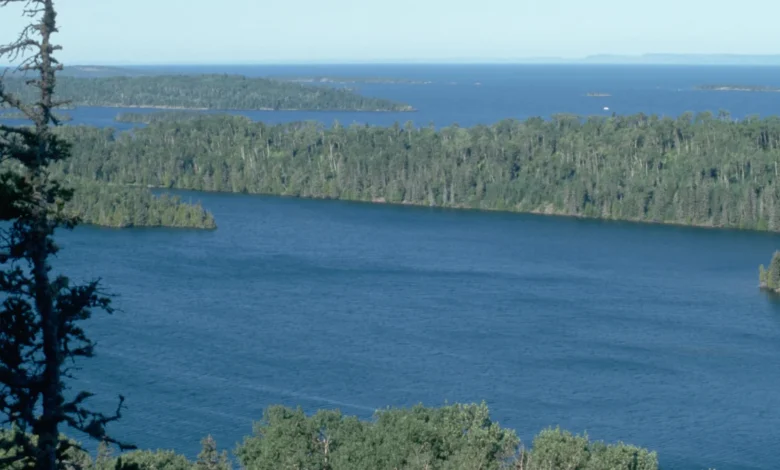
Craig Berg’s ordeal began in early September when he embarked on a planned multi-day solo hiking trip within Isle Royale National Park, an isolated archipelago nestled in the northwest corner of Lake Superior. Known for its dense boreal forests, rugged terrain, and unpredictable weather, the park presents formidable challenges even to experienced outdoor enthusiasts.
Berg was officially reported overdue on Sunday, September 6, after failing to return from his trek or check in with family members as scheduled. The National Park Service (NPS), recognizing the severity of the situation in such a remote location, immediately initiated a comprehensive missing person investigation. Over the next several days, the search operation escalated into a massive collaborative effort.
Rescue coordinators deployed a wide array of resources across the island’s interior. Ground search teams combed dense brush and rugged ridgelines, while canine units tracked potential scents. Simultaneously, marine units patrolled the island’s jagged shoreline and inland waterways, and aerial assets—including airplanes, helicopters, and advanced unmanned aerial systems (drones)—scanned the unbroken forest canopy from above.
Despite the exhaustive deployment of personnel and technology, by Thursday, September 11, search teams had failed to find any definitive trace of Berg, intensifying fears for his safety as temperatures dropped and days accumulated.
The Chance Encounter and Dramatic Rescue
The breakthrough in the operation occurred purely by chance on Saturday, September 13. Two civilian kayakers—identified by family members as National Guard personnel from Saginaw and the Detroit metropolitan area—were navigating the interior waterways of the park near Intermediate Lake. Venturing off the beaten path, the paddlers crossed paths with Berg, who was stranded more than a mile from the nearest maintained trail system.
Recognizing the vulnerable state of the missing man, the kayakers immediately provided immediate assistance and relayed his exact coordinates to park authorities. The response was swift; a U.S. Coast Guard aircrews operating an MH-60 Jayhawk helicopter from Air Station Traverse City was dispatched to the scene. Operating in the challenging environment of the Lake Superior archipelago, the rescue team successfully hoisted Berg from the wilderness.
Initial medical assessments revealed that Berg was suffering from the effects of hypothermia and sustained injuries, but he was conscious and alert throughout the extraction. He was promptly transported to a medical facility in Marquette, Michigan, where he began receiving comprehensive care and physical recovery.
Family Reactions and Public Gratitude
The sudden shift from despair to elation reverberated deeply through the Berg family. Evan Berg, the missing hiker’s son, described the emotional moment he received word that his father had been located alive during an interview with local media outlet Detroit Local 4.
“I yelled at the top of my lungs, ‘He’s alive!’” Evan Berg recounted, capturing the profound relief felt by relatives who had endured nearly two weeks of agonizing uncertainty. “Wonderful feeling. [When I spoke to him], he was definitely shaken up; he was rattled. But he said, ‘Man, I have enough stories for you to fill a book.’”
Debbie Berg, the hiker’s wife, took to social media to express her overwhelming gratitude to the community, emergency responders, and particularly the two service members who made the fateful discovery. In a statement posted to Facebook on Thursday following the rescue, she offered a lighthearted gesture of appreciation to the kayakers: “To the two gentlemen kayakers, who were National Guard from Saginaw and Metro D, who found him, my husband would like to buy you a beer. Say when.”
According to family statements, Craig Berg is a father of two and a recent retiree who had long harbored ambitions of tackling the legendary Appalachian Trail. As part of his physical preparation and conditioning for longer expeditions, he had focused on completing shorter regional treks, including the challenging terrain of Isle Royale. However, the expedition took a disastrous turn when he inadvertently fell into a marshy area, an accident that resulted in the loss of essential personal items, including his mobile phone and wallet, leaving him without means of electronic communication or navigation.
Official Responses and Multi-Agency Coordination
While representatives for the National Park Service and the Michigan State Police deferred immediate extensive commentary, the federal agency issued a formal statement acknowledging the unprecedented level of cooperation required to execute the mission.
“The successful outcome reflects the combined efforts of search teams, partner agencies, and members of the public who assisted throughout the operation,” the National Park Service stated, praising the synergy between federal rangers, state law enforcement, volunteer search-and-rescue organizations, and civilian bystanders.
The successful conclusion of the search underscores the vital role played by inter-agency collaboration in wilderness rescue operations. Isle Royale National Park, due to its insular geography and lack of vehicular infrastructure, poses severe logistical hurdles for emergency responders. Communication is notoriously difficult across the island’s heavily forested ridges and valleys, making every hour a critical factor in survival scenarios involving exposure, dehydration, or trauma.
Broader Impact and Wilderness Safety Implications
The miraculous survival of Craig Berg serves as both an inspiring testament to human resilience and a cautionary case study in backcountry risk management. Outdoor safety advocates and park officials frequently emphasize the unpredictable nature of wilderness environments, where minor missteps—such as losing footing in a marsh or misplacing navigation tools—can rapidly escalate into life-threatening emergencies.
Search-and-rescue experts emphasize several key takeaways from incidents of this magnitude:
- The Value of Redundancy: Solo hikers are routinely advised to carry multiple independent signaling devices, such as personal locator beacons (PLBs) or satellite messengers, which function independently of cellular networks.
- Staying Put vs. Mobility: While survival protocols often dictate staying in one place to aid detection by aerial search teams, dynamic environments like wetlands and dense forests often necessitate movement to secure water, shelter, or visibility.
- Civic Vigilance: The role of the civilian kayakers highlights how backcountry travelers can serve as an invaluable extension of organized search efforts, particularly in vast parks where systematic grid searches can take days to cover every square mile of wilderness.
As Craig Berg continues his recovery in Marquette surrounded by his family, his ordeal stands as a remarkable chapter in the history of Isle Royale National Park—a reminder of the thin margin between peril and safety in the American wilderness, and a testament to the enduring power of hope against overwhelming odds.