Finding Solace and Facing Mortality: Inside Bangkok’s Death Cafes and the Universal Quest to Understand Impermanence


Lying flat on her back inside a wooden casket in a Bangkok death-awareness café was not part of the itinerary Liv Arnold envisioned for her Thai holiday. Yet, thousands of miles away from her home in Melbourne, Australia—where her mother is battling liver cancer for a third time—Arnold found an unexpected sense of calm within the grim exhibits of the Thai capital. Confronting mortality through immersive experiential tourism has become an increasingly popular cultural phenomenon in Southeast Asia, offering visitors a stark physical reminder of life’s impermanence.
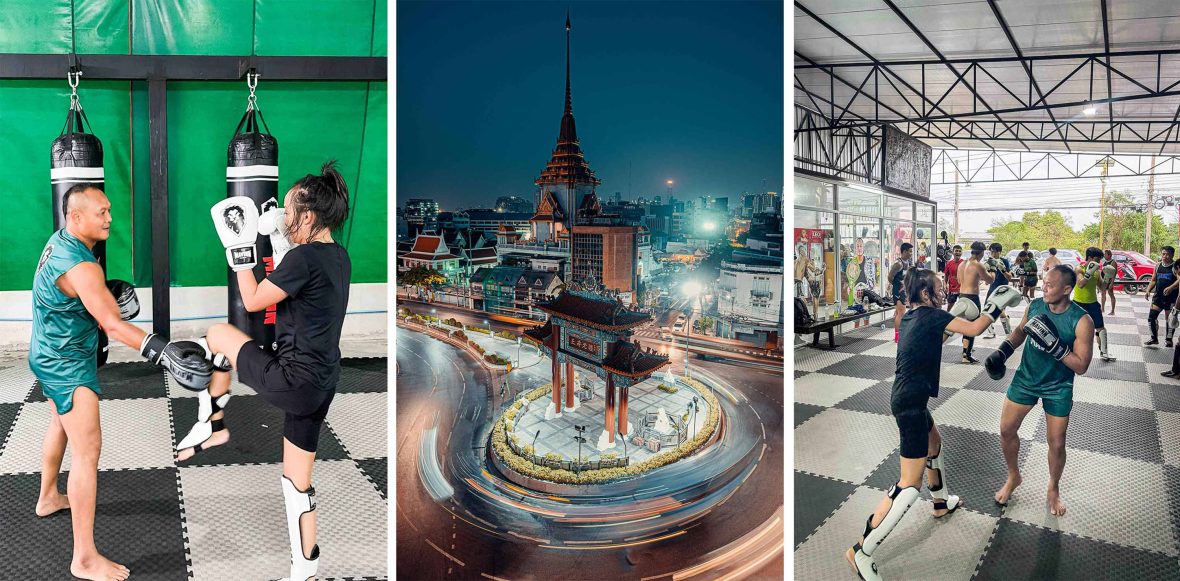
For Arnold, who manages a generalized anxiety disorder, the journey to Bangkok served as an accidental exercise in exposure therapy. The trip intertwined physical trials—such as absorbing blows in Muay Thai training rings under the guidance of legendary fighters—with philosophical reckonings at institutions like the Kid Mai Death Awareness Café. Through these encounters, Arnold’s personal narrative highlights a broader psychological struggle shared by millions navigating anticipatory grief: the overwhelming compulsion to trade the present moment for endless worry about an uncertain future.
The Anatomy of Grief and the Burden of Anticipatory Mourning

Growing up in Melbourne, Arnold’s relationship with mortality was established early through the quiet observation of aging family members. Leafing through old photo albums, she measured time not by achievements, but by the physical decline of her parents. This early-onset existential dread manifested as a childhood coping mechanism, where she would mentally bargain with the universe during school camps, promising good behavior in exchange for her parents’ continued safety.
As an adult, this hyper-vigilance evolved into chronic anxiety, a condition temporarily subdued only by high-intensity physical disciplines. Training at Muay Thai gyms in Bangkok provided a fleeting reprieve from abstract future-tripping; when a fighter’s fist or knee is aimed at one’s ribs, the human brain is forced squarely into the present tense. However, this temporary mental shield shattered when her mother’s liver cancer recurred. The existential dread of a distant future collided with an immediate medical crisis, shifting the dialogue from whether her mother might eventually die to how medical professionals could keep her alive day by day.
The Philosophy of Mortality: Bangkok’s Kid Mai Death Awareness Café
To understand how different cultures process the inevitable, Arnold visited the Kid Mai Death Awareness Café, situated in Bangkok and founded in 2018 by Buddhist philosopher and scholar Veeranut Rojanaprapa. Established initially as empirical fieldwork for his doctoral research, the cafe operates on a straightforward, if jarring, premise: reminding individuals of their mortality fosters a society that is measurably less driven by greed, anger, and corruption.

Thailand’s cultural landscape, deeply rooted in Theravada Buddhism, provides fertile ground for such public meditations on death. While approximately 90 percent of the Thai population identifies as Buddhist—a belief system that views death not as a terminal absolute, but as part of an ongoing cycle of rebirth—Western visitors often approach the exhibits with a mixture of morbid curiosity and profound emotional distress.
The café features a progression of interactive installations representing the four stages of human existence: Birth, Elder, Pain, and Death. Visitors can curl into fetal positions inside womb-like structures, don weighted vests and clouded glasses to simulate the administrative frustrations of old age, or lie down in intensive care unit (ICU) mock-ups complete with beeping monitors and fake intravenous drips. The culmination of the experience is an invitation to climb inside a wooden coffin, pull the lid closed into absolute darkness, and write down what truly matters on a person’s final day.
While local neighborhood residents initially protested the deliveries of caskets to the establishment, Rojanaprapa welcomed the community outrage. In his view, even complaints demonstrate that people are actively thinking about their inevitable demise, breaking the societal taboo that renders death an unspeakable subject in many modern cultures.
Cultural Context: Thailand’s Unique Approach to Public Health and Awareness
Bangkok’s penchant for confronting heavy social taboos through unorthodox public spaces is not limited to existential philosophy. Earlier in her travels, Arnold visited Cabbages & Condoms, a famed restaurant and social enterprise founded by Thai activist Mechai Viravaidya. Established to combat the nation’s HIV epidemic in the late 20th century, the venue normalizes safe sex by festooning its premises—from lamps to mannequins—with contraceptive devices.
Viravaidya’s unconventional public health campaigns, which famously distributed condoms to taxi drivers, traffic police, and Buddhist monks, are credited with helping reduce new HIV infections in Thailand by roughly 90 percent, preventing an estimated 7.7 million infections. Just as Cabbages & Condoms uses humor and pervasive visibility to demystify sexual health, Bangkok’s death cafes employ physical immersion to strip away the paralyzing fear associated with the end of life.
The Broader Implications of Confronting Impermanence
From a psychological perspective, immersive grief tourism and death cafes serve a vital modern function. In fast-paced, highly digitized societies, death has been largely institutionalized and hidden away in hospitals and morgues, leaving individuals ill-equipped to process loss when it strikes close to home.

Mental health professionals note that spaces encouraging voluntary engagement with mortality can help alleviate anticipatory grief by shifting an individual’s focus from catastrophic rumination to radical acceptance. For Arnold, lying in the dark confines of the café’s wooden coffin did not magically cure her anxiety, nor did it erase the harsh reality of her mother’s failing health. Instead, it served as a catalyst for emotional honesty.
Rather than maintaining the protective silences that had defined her family dynamic—where her mother routinely minimized her own suffering to shield her children—Arnold recognized the necessity of breaking the mold. Her journey culminated in a simple yet profound paradigm shift: refusing to spend today actively grieving tomorrow.
Reconnecting Across Distances: Shifting from Silence to Vulnerability
Standing among the golden spires and monumental iconography of Bangkok’s historic temples, such as the 151-foot Reclining Buddha at Wat Pho—which symbolizes the ultimate transition into nirvana—Arnold contemplated the universal human resistance to impermanence. Whether viewed through the lens of Buddhist reincarnation, Western secularism, or agnostic uncertainty, the physical reality of aging and loss remains absolute.
The true transformation of Arnold’s trip did not stem from achieving sudden spiritual enlightenment, but from shedding the protective armor of silence. Returning to the traditional practices of the city—such as purchasing jasmine garlands at the historic Pak Khlong Talat flower market, where blooms are woven into fragrant offerings honoring mothers—reinforced the tangible connections of daily life.
By the conclusion of her travels, the emotional barrier that had long separated Arnold from her mother began to dissolve. Stepping outside the role of the perpetual child being shielded from harsh realities, she placed an international phone call to Melbourne. Moving past the superficial reassurances of daily check-ins, she posed a direct, vulnerable question to her mother: "Was it hard?"
In breaking the generational silence surrounding suffering and decline, Arnold demonstrated that while mortality cannot be negotiated away, confronting it head-on offers a pathway toward deeper empathy, presence, and unvarnished human connection.