Exploring the Wild Heart of Guanacaste: A Comprehensive Family Review of Rio Perdido Hotel and Thermal River

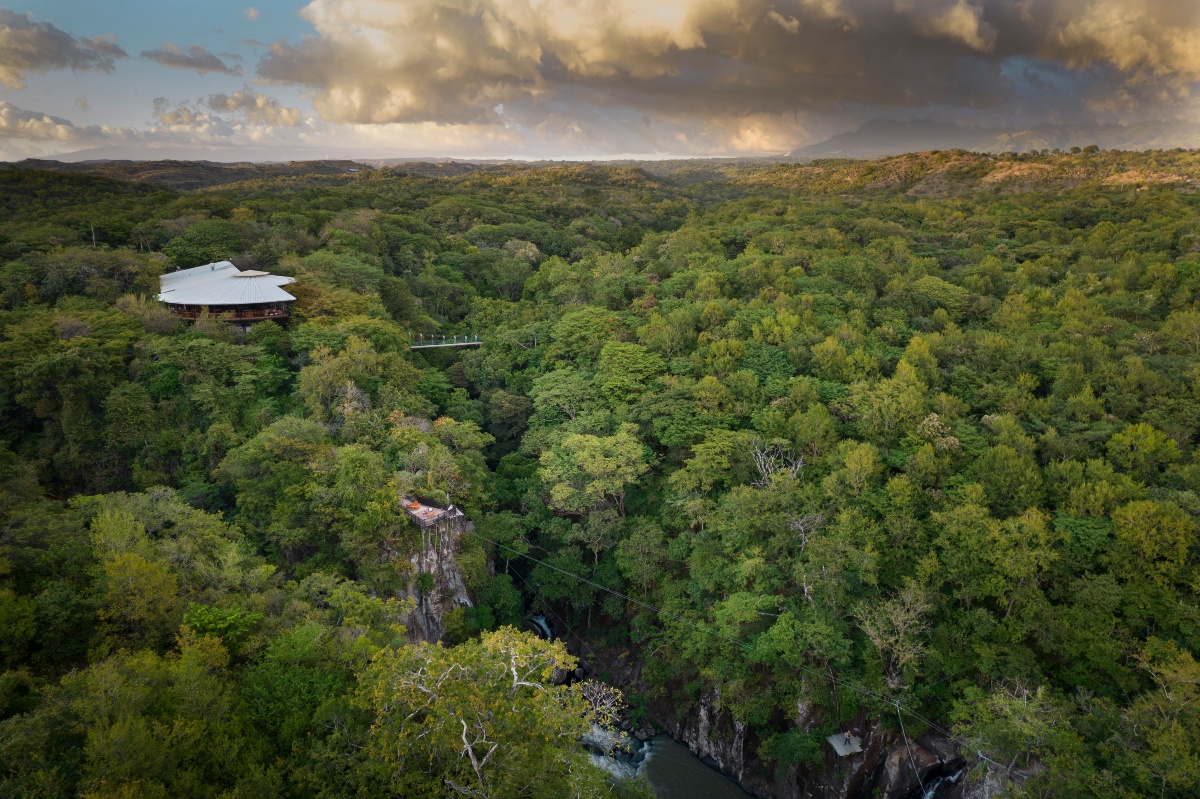
For travelers seeking an authentic immersion into Costa Rica’s untamed wilderness rather than the polished predictability of commercial beach resorts, the country’s western Guanacaste province offers a compelling alternative. Far from the bustling coastal developments of the Papagayo peninsula, the Rio Perdido Hotel & Thermal River redefines the eco-luxury travel sector. Situated deep within a sprawling 1,000-acre private reserve near the rural town of Bagaces, this intimate boutique property operates on the principles of ecological preservation, geothermal wellness, and low-impact adventure. Designed around the convergence of two distinct river canyons—the mineral-rich thermal Rio Perdido and the steep-walled Rio Blanco—the resort functions as an isolated sanctuary where travelers can experience Costa Rica’s natural topography away from mass tourism.
Location, Geography, and Regional Ecosystem
Positioned roughly an hour’s drive from Liberia International Airport (LIR) and approximately 90 minutes from the high-end coastal resorts lining the Gulf of Papagayo, Rio Perdido occupies a strategic yet remote geographical footprint. The property’s vast acreage serves as a private biological corridor, with only a minute fraction of the land developed for hospitality infrastructure while the remainder undergoes active rewilding.
Unlike the misty, high-altitude cloud forests of Monteverde or the humid lowland rainforests characteristic of Costa Rica’s Caribbean coast, the Guanacaste region presents a tropical dry forest ecosystem. This unique geography features a dense, jungle-like environment within the shaded depths of the river canyons, contrasting sharply with a rare dwarf forest found on the higher, rockier plateaus. During the dry season, the deciduous trees shed their foliage, naturally thinning the forest canopy and affording visitors exceptional opportunities for wildlife observation. Throughout the reserve, native fauna—including iguanas, diverse avian species, and vocal troops of mantled howler monkeys—thrive undisturbed. The physical landscape is fundamentally shaped by the adjacent river gorges, setting the stage for an itinerary centered entirely around hydrotherapy, geological exploration, and terrestrial adventure.
Accommodations and Architectural Design
Comprising 38 freestanding bungalows, the resort’s architectural blueprint emphasizes a harmonious coexistence with the surrounding natural elements. The accommodations are divided into three distinct categories—East, Center, and West Bungalows—each tailored to accommodate varying traveler demographics, from couples to multi-generational families.
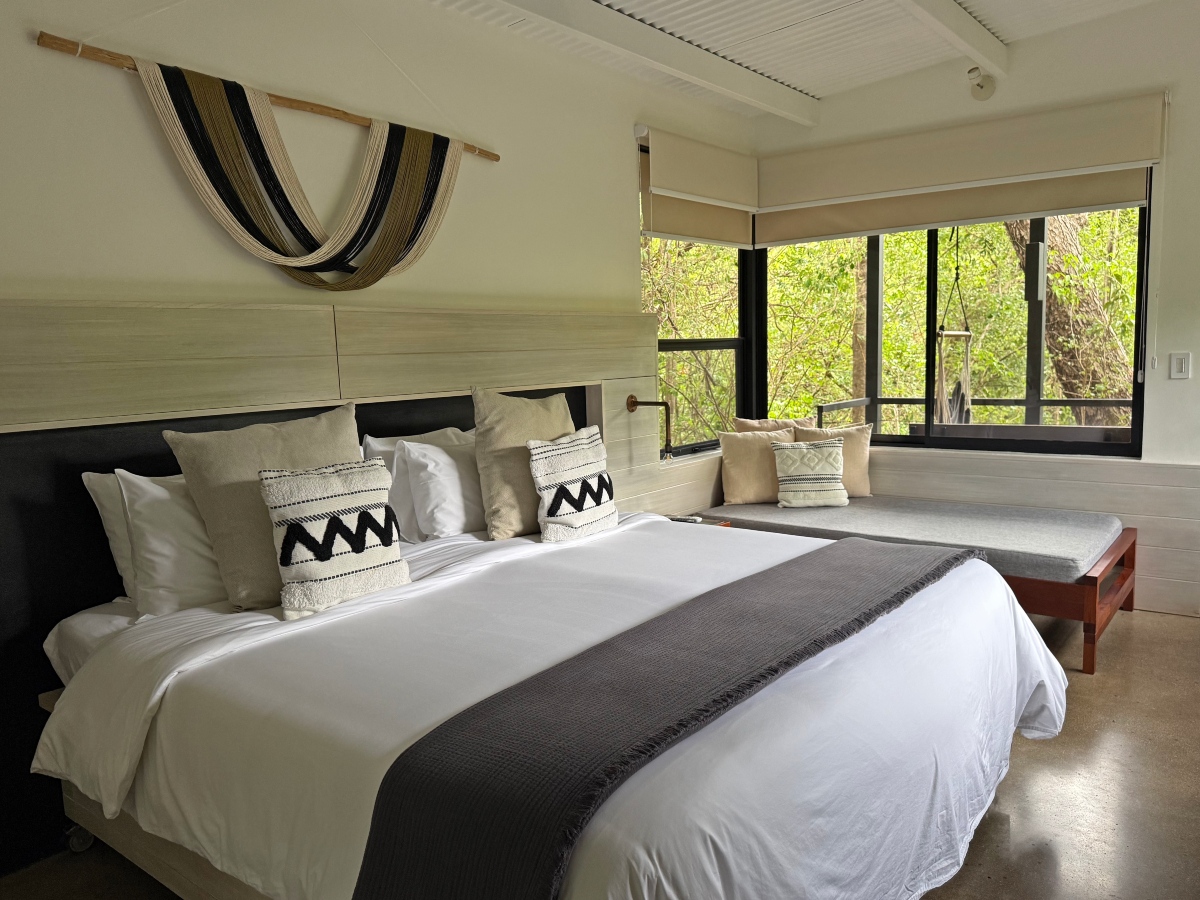
The East Bungalows represent the original and most compact tier of the property. Featuring flexible bedding arrangements that convert from twin configurations into king-sized beds, alongside a small daybed suitable for a child, these units are notable for being the sole accommodations on-site equipped with traditional indoor showers.
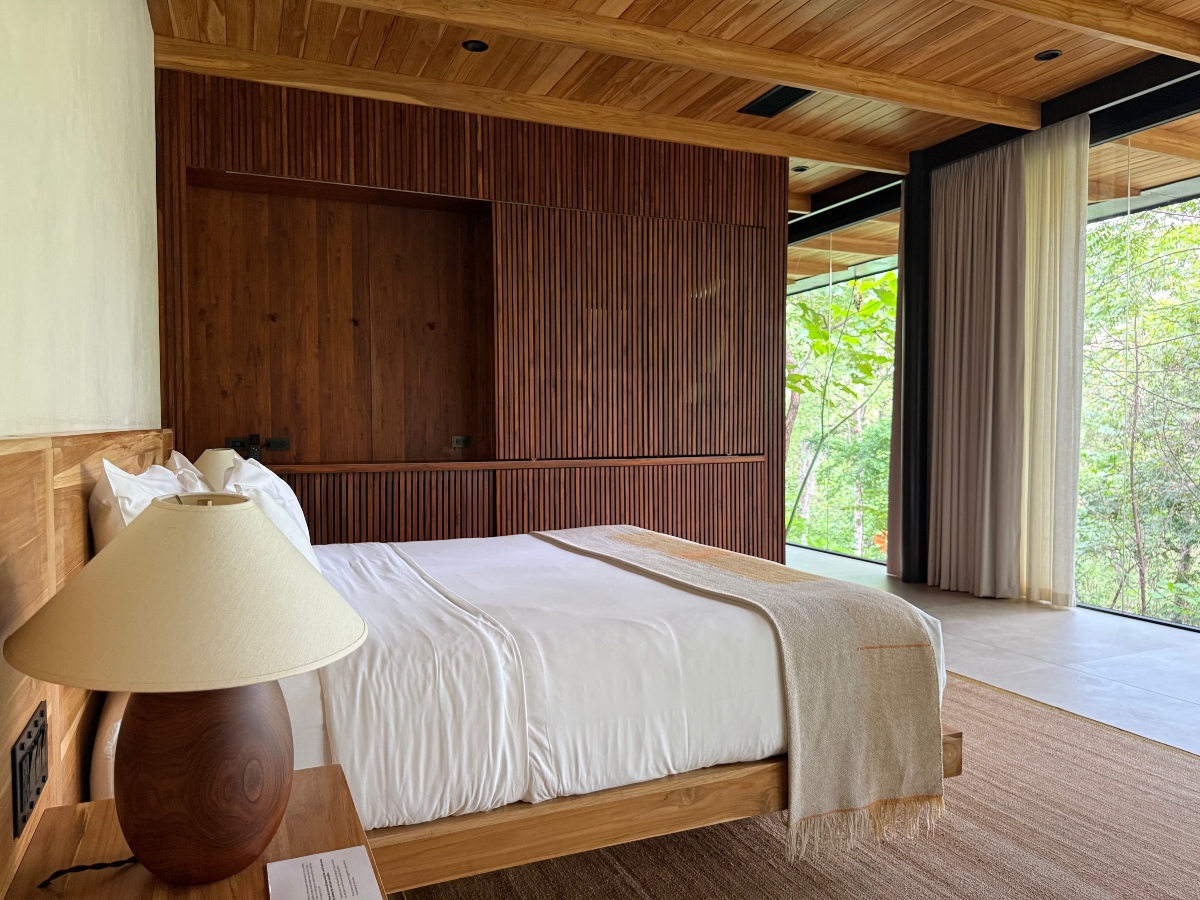
Positioned centrally, the Center Bungalows utilize a sophisticated material palette incorporating volcanic rock, blackened concrete, and structural wood treated via an ancient Japanese timber-charring technique known as yakisugi. These dark, calming interiors are framed by expansive floor-to-ceiling windows that merge indoor and outdoor spaces, complemented by private, enclosed double outdoor showers.
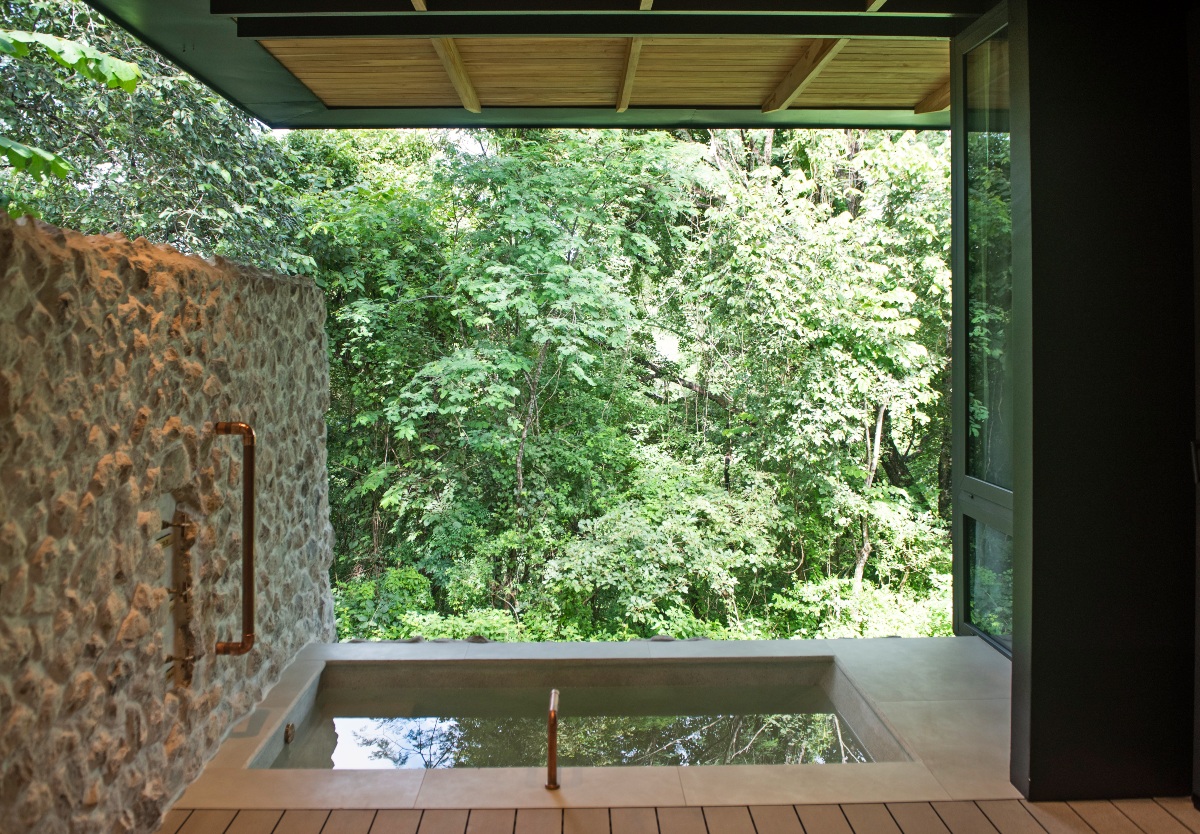
Representing the newest and most spacious addition to the property, the eight West Bungalows are situated near the edge of the Rio Blanco canyon. Constructed with sustainable hardwoods, these units feature open-air front terraces designed for private dining, alongside covered rear terraces containing double outdoor showers and oversized tubs plumbed directly with natural thermal mineral water. Multiple spigots allow guests to customize the temperature of these soaking tubs by blending hot thermal water with cold spring water. Furthermore, guests residing in the West Bungalows receive value-added amenities, including complimentary room service, a one-time stocked minibar, and a dedicated laundry service. While connecting rooms are unavailable across all categories, resort operations ensure that families requiring multiple units are assigned adjacent accommodations.
Gastronomy and Farm-to-Table Initiatives
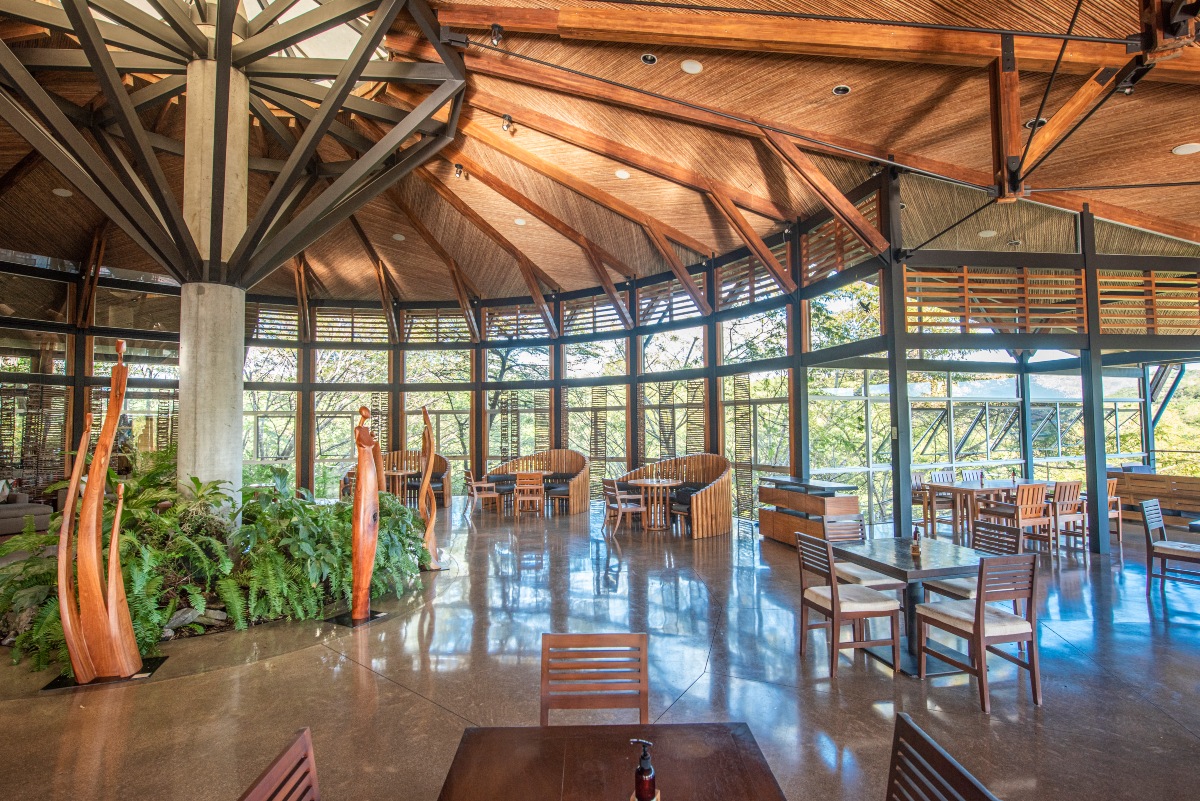
Culinary operations at Rio Perdido are anchored by the Perdido Pass Restaurant, situated within the circular main architectural pavilion overlooking the convergence of the two rivers. The open-air dining room, featuring a soaring vaulted ceiling of woven wood panels and structural steel trusses, extends onto a terrace completely surrounded by native flora.
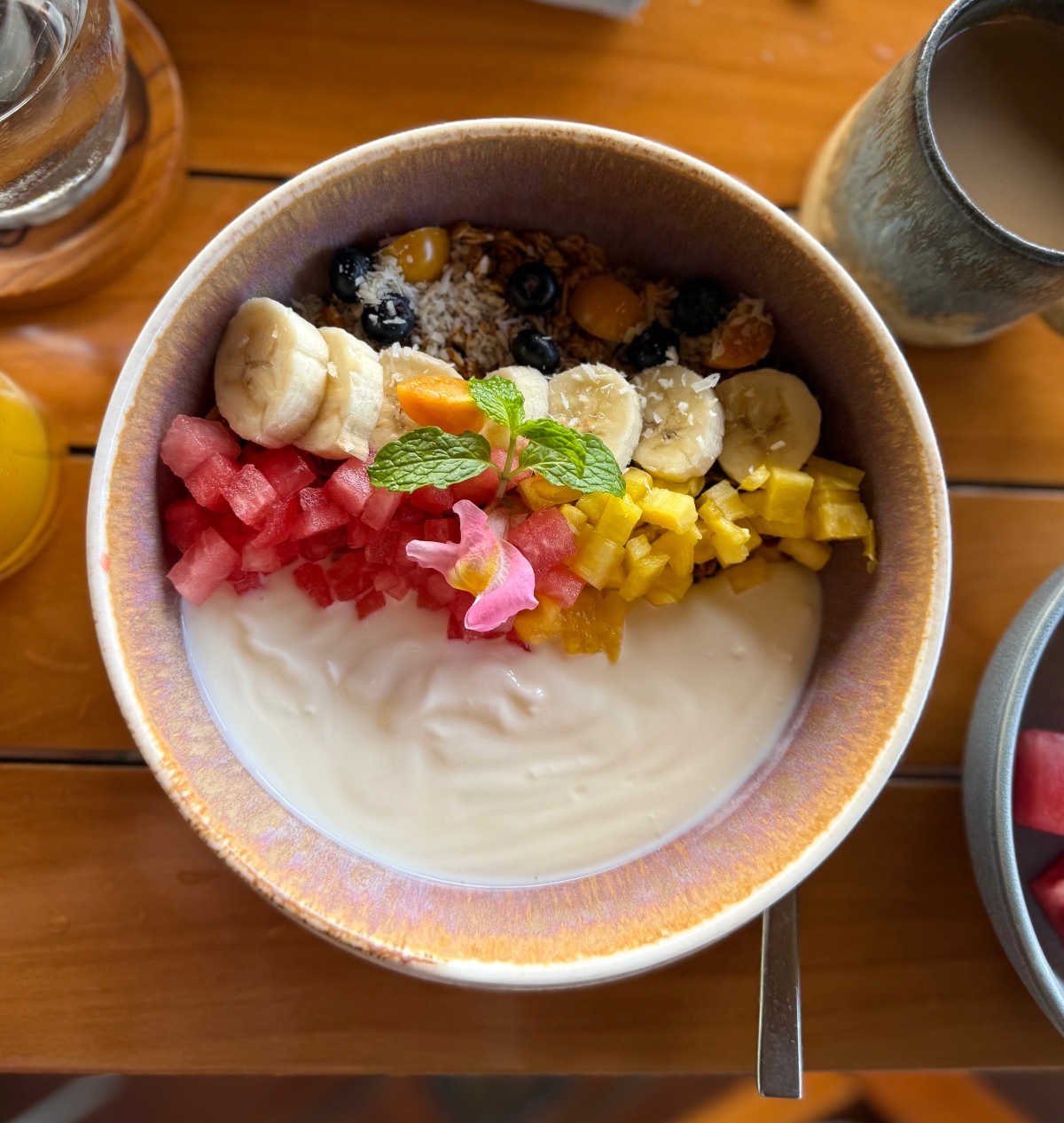
The resort’s culinary philosophy heavily emphasizes sustainability and regional sourcing. A significant portion of the produce utilized in the kitchen originates directly from La Huerta, the property’s on-site organic garden, as well as independent agricultural producers within the local Bagaces community. Breakfast, included in the standard room rate, highlights traditional Costa Rican staples such as gallo pinto alongside health-conscious creations like artisanal granola bowls garnished with edible flowers. Lunch and dinner menus offer a diverse array of regional specialties—including ceviche, handmade tacos known locally as gallos, and traditional fried pastries called prestiños—alongside international comfort foods and house-made sorbets.
For daytime lounging, a secondary poolside kitchen provides casual fare, including wood-fired pizzas during weekends. Additionally, the property features a high-end specialty dining option: a suspended floating platform situated approximately 50 meters above the river gorge, available for private reservations and bespoke events.
Adventure Tourism and On-Site Canyoning Infrastructure
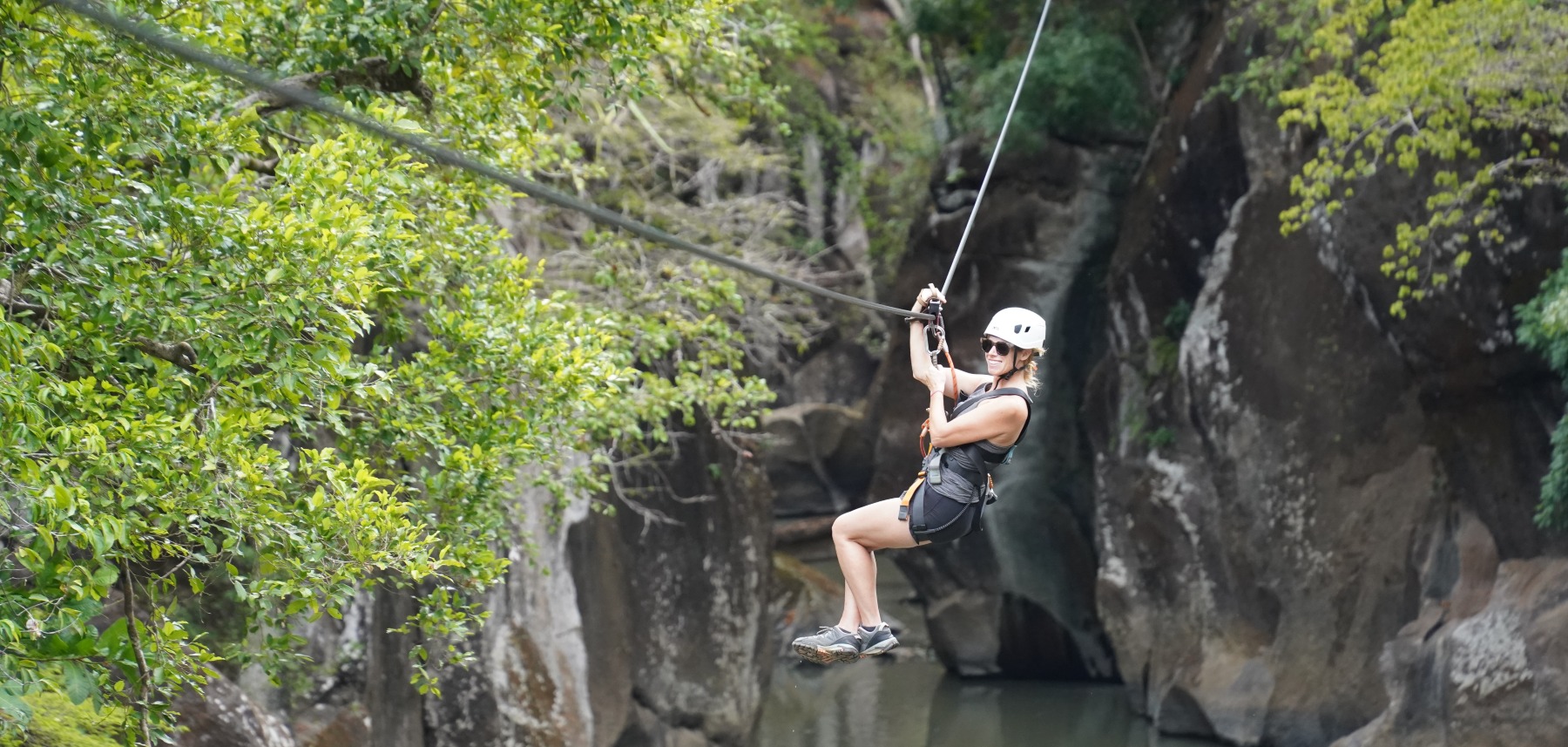
Rio Perdido capitalizes on Costa Rica’s global reputation for adventure tourism by integrating high-adrenaline activities directly onto its private grounds, eliminating the need for off-site transit. The signature attraction is a comprehensive canyoning course routed through the rugged topography of the Rio Blanco.
Managed by certified wilderness guides, the hour-long circuit comprises five ziplines, four distinct via ferrata climbing sections, a pendulum cable, and an aerial rope swing. Designed to deliver an exhilarating experience without inducing undue alarm, the course adheres to strict international safety standards while navigating the sheer rock faces of the gorge. A professional photography service is available on-site to document participants in motion, while non-participating family members can observe the action from a designated viewing platform positioned above the canyon rim.
Beyond the immediate canyon circuit, the reserve maintains an extensive network of approximately 20 miles of trails dedicated to hiking, trail running, and mountain biking. For guests seeking broader regional expeditions, the resort facilitates external excursions, including seasonal whitewater tubing along regional waterways, guided wildlife night tours, specialized birdwatching expeditions, and volcano-trekking tours to nearby Arenal and Miravalles.
Geothermal Wellness and Holistic Programming
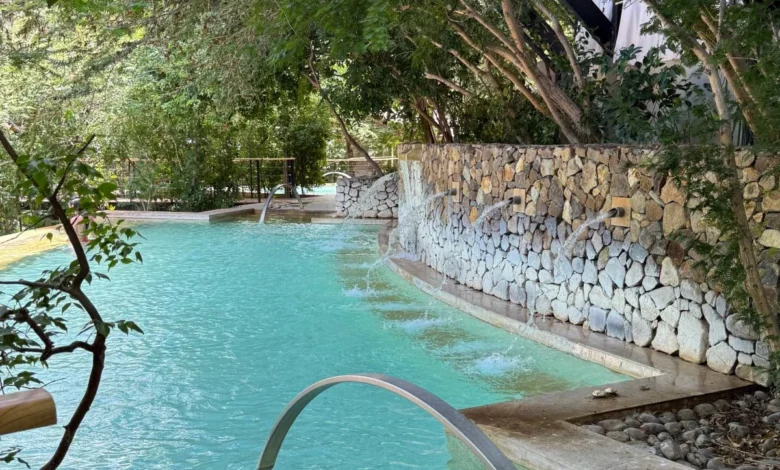
The cornerstone of the resort’s operational philosophy is what management defines as “Passive Wellness”—the concept that the natural environment, mineral composition of the water, and detachment from urban stimuli provide inherent therapeutic benefits. The thermal river system serves as the primary instrument of this philosophy, featuring dozens of naturally occurring pools where geothermally heated mineral springs mix with the cool waters of the main river. Guests frequently utilize these pools in conjunction with local volcanic clay applications for traditional, self-directed spa therapies.
For formal wellness services, the resort operates an open-air spa facility situated within a forested enclave accessible via a suspension bridge. Treatment casitas feature screened walls that open directly onto the forest canopy, offering therapeutic massages and botanical facials utilizing locally sourced aloe vera and volcanic mud. A dedicated yoga shala and specialized cliffside yoga pods perched above the thermal river host daily wellness programming, including Hatha yoga, sound therapy, Reiki sessions, and guided meditation. These facilities are complemented by three swimming pools fed directly by the thermal spring system, maintained at graduated temperatures to encourage relaxation.
Broader Industry Implications and Sustainable Tourism Trends
The operational model demonstrated by Rio Perdido reflects a broader, highly profitable shift within the global hospitality industry toward low-density, sustainable eco-tourism. As traditional mass-market resort destinations experience environmental strain and traveler saturation, properties that champion reserve rewilding, community-integrated agriculture, and carbon-conscious infrastructure are increasingly viewed as benchmarks for future development. By deliberately limiting its physical footprint to 38 bungalows across more than 1,000 acres, Rio Perdido illustrates that luxury hospitality can successfully intersect with rigorous environmental conservation, offering a scalable blueprint for sustainable travel in ecologically sensitive regions worldwide.