Tragedy on Mount Baden-Powell: Hiker Loses Life After 500-Foot Fall in Southern California’s San Gabriel Mountains

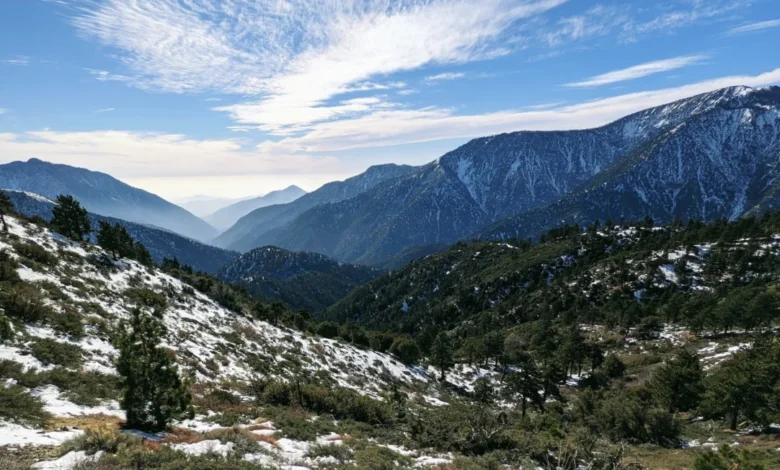
The dangers of transitioning mountain environments turned fatal on November 22, 2026, when a Southern California hiker lost his life while attempting to rescue his son on Mount Baden-Powell. Guillermo Alejandro Batres, an experienced outdoor enthusiast, suffered a catastrophic 500-foot fall down a steep, icy gulch after slipping on frozen terrain. The incident has once again cast a harsh spotlight on the deceptive nature of Southern California’s high peaks during the late-autumn and winter months, when popular, family-friendly summer trails transform without warning into hazardous mountaineering routes.
The fatal accident unfolded on a 9,399-foot peak located within the Angeles National Forest northeast of Los Angeles. According to statements shared by the victim’s family via a verified online fundraising platform, Batres and his son were pushing toward the summit when the younger man lost his footing on the treacherous surface. In a reflexive act of paternal instinct, Batres rushed to assist his son, only to lose his own footing on the slick ice, plunging hundreds of feet down the mountain’s unforgiving north-facing slopes.
Chronology of the Emergency Response
Emergency dispatch logs and local monitoring groups, including AV Scanner News, indicate that the initial distress call regarding the incident was placed at approximately 10:09 a.m. local time on November 22. The hikers had encountered hazardous snow and ice roughly three miles past the popular Vincent Gap trailhead.
First responders from the Los Angeles County Fire Department and the Los Angeles County Sheriff’s Department swiftly mobilized, staging near mile marker 71 along the winding Angeles Crest Highway. Recognizing the extreme verticality and remote nature of the terrain, ground crews requested aerial support. The Los Angeles County Sheriff’s Department dispatched its specialized Air Rescue 5 helicopter crew to locate and recover Batres’s body from the steep ravine.
While family accounts detailing the sequence of events have been widely circulated, formal investigative bodies and the Los Angeles County Sheriff’s Department have continued standard administrative procedures to independently verify the exact mechanics of the fall. Requests for official comment prior to publication yielded no immediate statements from law enforcement agencies, as inquiries into high-altitude mountain rescues and fatalities undergo routine review.
The Deceptive Geography of Mount Baden-Powell
Mount Baden-Powell is a staple of the Southern California hiking community, drawing thousands of visitors each year during the dry, warm months. The standard route to the summit begins at Vincent Gap—situated at a pass elevation of 6,585 feet along the Angeles Crest Highway—and follows a segment of the Pacific Crest Trail (PCT).
The climb covers roughly four miles each way, gaining more than 2,800 vertical feet as it winds through 35 distinct wooded switchbacks across the mountain’s steep northern face. Because this side of the mountain receives minimal direct solar radiation during the shorter days of late autumn and winter, snow packs down quickly and lingers long after storms clear.
Cris Hazzard, a prominent Southern California hiking expert and guide who has summited Mount Baden-Powell dozens of times, emphasized the radical physical shift the mountain undergoes as temperatures drop.
"On this mountain, there’s no room for error if you slip when it’s snowy or icy out," Hazzard explained. "If you slip in the summer, you probably just fall on your butt, maybe go down some gravel. You slip in the winter, you’re going down hundreds, if not thousands, of feet."
Hazzard noted that daytime warmth frequently melts accumulated snow, which then reframes into sheets of hard, polished ice overnight. This freeze-thaw cycle creates micro-climates along the trail that can easily trick unprepared hikers. Even individuals who have successfully navigated the mountain during optimal summer conditions find themselves vastly underequipped when facing these winter conditions without specialized alpine gear such as crampons, ice axes, and microspikes—coupled with the technical mountaineering skills required to use them safely.
A Rapidly Escalating Pattern of Winter Incidents
The fatal accident involving Batres did not occur in isolation, highlighting an alarming sequence of high-altitude emergencies in the San Gabriel Mountains over a remarkably short window. Just two days prior to the tragedy, emergency services executed another harrowing rescue on the very same slopes of Mount Baden-Powell.
On November 20, a hiker slid more than 300 feet down an icy alpine chute on the mountain. The Los Angeles County Sheriff’s Department detailed the rescue in an official statement released on X (formerly Twitter) on November 21. Responders faced severe operational hurdles during the mission, hampered initially by inaccurate GPS coordinates provided from the field. Ground and air teams raced against time, ultimately completing the extraction moments before rapidly deteriorating weather conditions would have grounded the rescue helicopter indefinitely.
These recent events align with historical safety data for the region. In February 2016, a 69-year-old hiker narrowly survived a 100-foot slide down an icy chute on Baden-Powell before being airlifted to a trauma center by a sheriff’s helicopter. Furthermore, neighboring Mount Baldy—widely regarded as one of the deadliest peaks in the region—has recorded multiple severe and fatal winter incidents over recent years, including a cluster of three separate hiking fatalities during the first week of January alone.
Expert Warnings and Recommendations for Seasonal Recreation
The stark contrast between summer recreation and winter mountaineering often escapes casual hikers who live in the mild urban basins of Southern California. Mountain weather can change from pristine sunshine to blizzard conditions within hours, leaving unprepared visitors trapped in sub-freezing temperatures on exposed ridges.
Hazzard pointed out that even seasoned outdoor enthusiasts face exponentially elevated risks once winter sets in, regardless of how cautious or familiar they are with a specific trail system.
"If you are experienced and you know the dangers, there’s still a higher risk of something going wrong than there would be without that snow or ice, regardless of how careful you are," Hazzard said. "Each winter, we get people going up there who don’t really understand that the hike they did in the summer is now a mountaineering exercise. It’s so steep, and there are dangerous runouts. If you slip, you might hit your head. There’s a lot you can bang into on the way down."
For hikers seeking to transition safely through the changing seasons, regional safety advocates recommend pursuing formal winter mountaineering and self-arrest training before attempting any snow-covered summits. Alternatively, experts advise shifting outdoor recreation routines entirely during the colder months—steering clear of high-altitude alpine peaks like Mount Baden-Powell and Mount Baldy, and instead exploring lower-elevation desert trail systems in areas such as Joshua Tree National Park and Palm Springs, where winter conditions present far fewer vertical hazards.
As the investigation into the Mount Baden-Powell accident concludes and the community rallies around the surviving family members through support initiatives like the established GoFundMe page, authorities and outdoor guides alike are issuing a unified plea to the public: respect the seasonal boundaries of local peaks, check mountain forecasts meticulously, and recognize that familiar summer trails require an entirely different level of respect, preparation, and gear when winter claims the high country.