Navigating airport security during peak travel periods has historically tested the patience of even the most seasoned flyers, but recent nationwide disruptions—including a rare federal ground stop issued by the Federal Aviation Administration (FAA)—have pushed airport terminals to their absolute limits. As holiday passenger volumes surge, standard security queues stretch endlessly across departure halls, rendering even the traditional TSA PreCheck lanes increasingly congested. However, a lesser-known operational upgrade offers eligible travelers a way to bypass the bottlenecks entirely: TSA PreCheck Touchless ID.
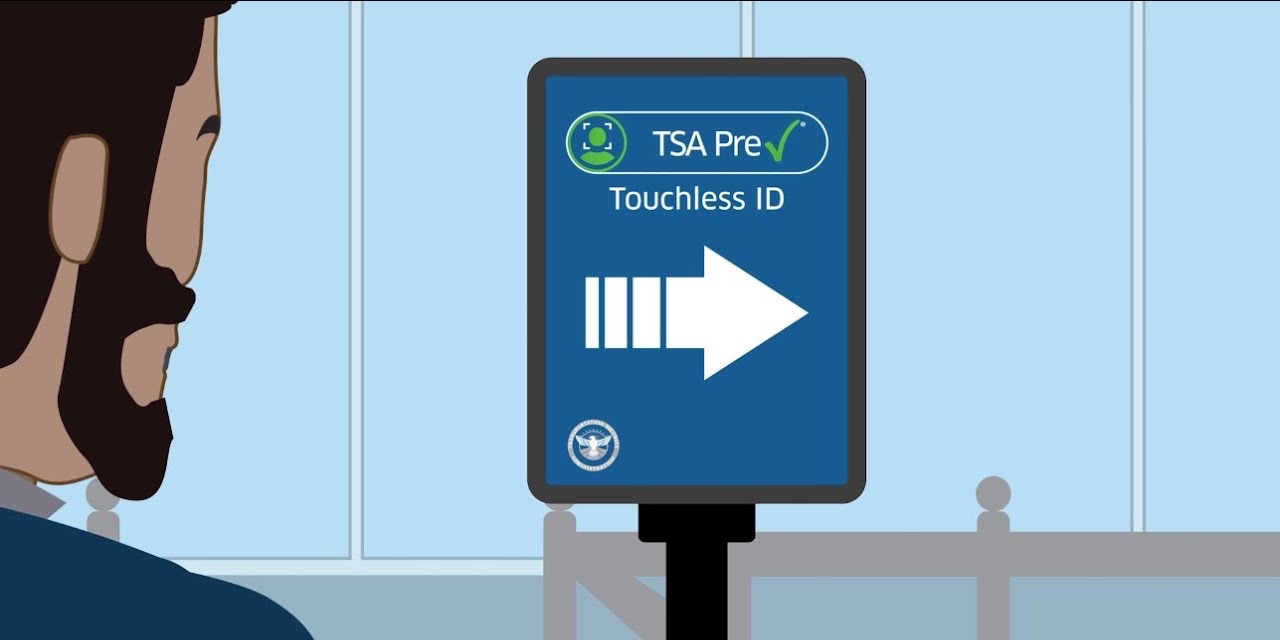
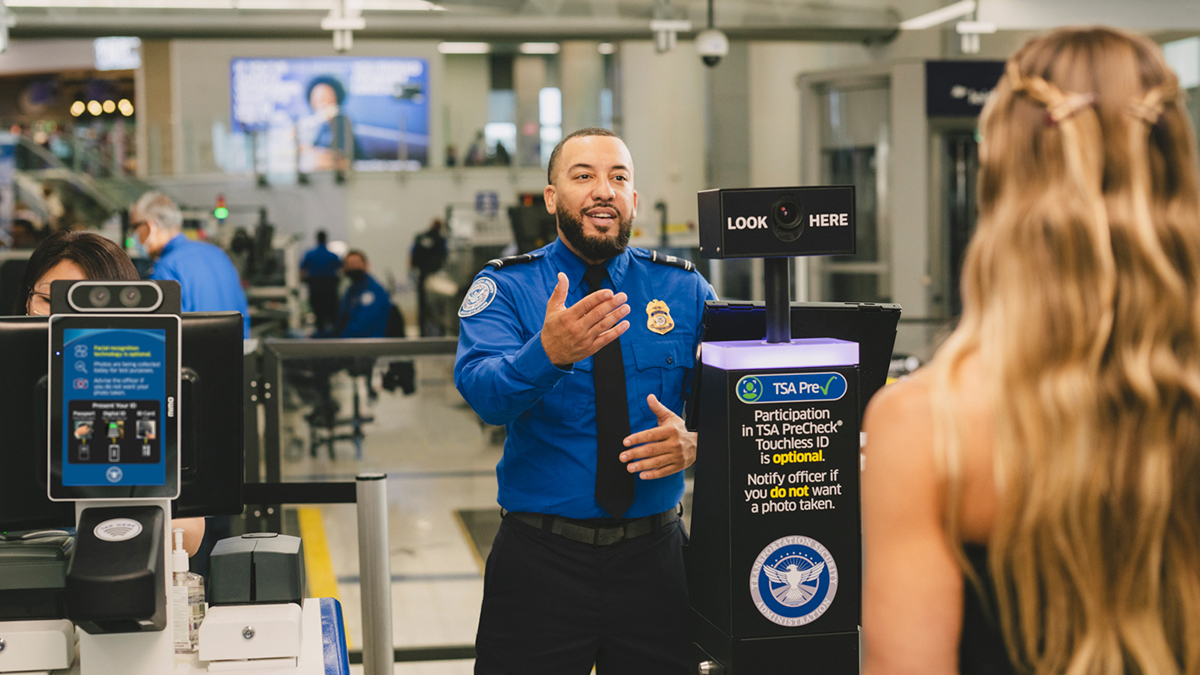
While standard PreCheck already spares travelers the hassle of removing footwear, belts, lightweight jackets, laptops, and compliant liquids from carry-on luggage, Touchless ID revolutionizes the identification verification process itself. By deploying advanced facial recognition technology, the system matches a pre-screened passenger’s face against secure government databases at the checkpoint. This eliminates the requirement to present a physical driver’s license, state identification card, or passport to a Transportation Security Administration (TSA) agent before loading bags onto the conveyor belt. Because consumer awareness remains low, the specialized lanes dedicated to Touchless ID processing are frequently empty or moving at a fraction of the wait time seen in adjacent queues.
The Chronology and Evolution of Biometric Screening in Aviation
The deployment of touchless identity solutions across United States airports did not happen overnight; it represents the culmination of a multi-year technological modernization initiative led by the TSA, Department of Homeland Security (DHS), and major commercial carriers.
In the years following the expansion of biometric boarding for international flights, the TSA began testing facial matching technology for domestic security checkpoints on a voluntary basis. Early pilot programs launched selectively at major hubs like Hartsfield-Jackson Atlanta International Airport (ATL) and Dallas/Fort Worth International Airport (DFW), primarily utilizing carrier-specific platforms such as Delta Digital ID. Over subsequent years, the scope of these trials expanded incrementally as airlines integrated the technology into their proprietary mobile applications.
A significant milestone occurred when federal authorities broadened the architecture to encompass multiple domestic carriers, including American Airlines, Alaska Airlines, United Airlines, and Southwest Airlines. The operational footprint expanded steadily, bringing the total number of participating airports to approximately 65 nationwide by late 2024 and 2025. The most recent advancement in this timeline is the integration of digital wallet platforms—specifically Google Wallet—which allows Android users to bypass individual airline sign-up procedures in favor of a centralized, device-level opt-in system that interfaces with over a hundred participating carriers.
Core Requirements and Eligibility Parameters
Despite the operational advantages, utilizing TSA PreCheck Touchless ID requires careful preparation prior to arriving at the departure terminal. Travelers cannot simply walk up to a biometric lane without prior system enrollment.
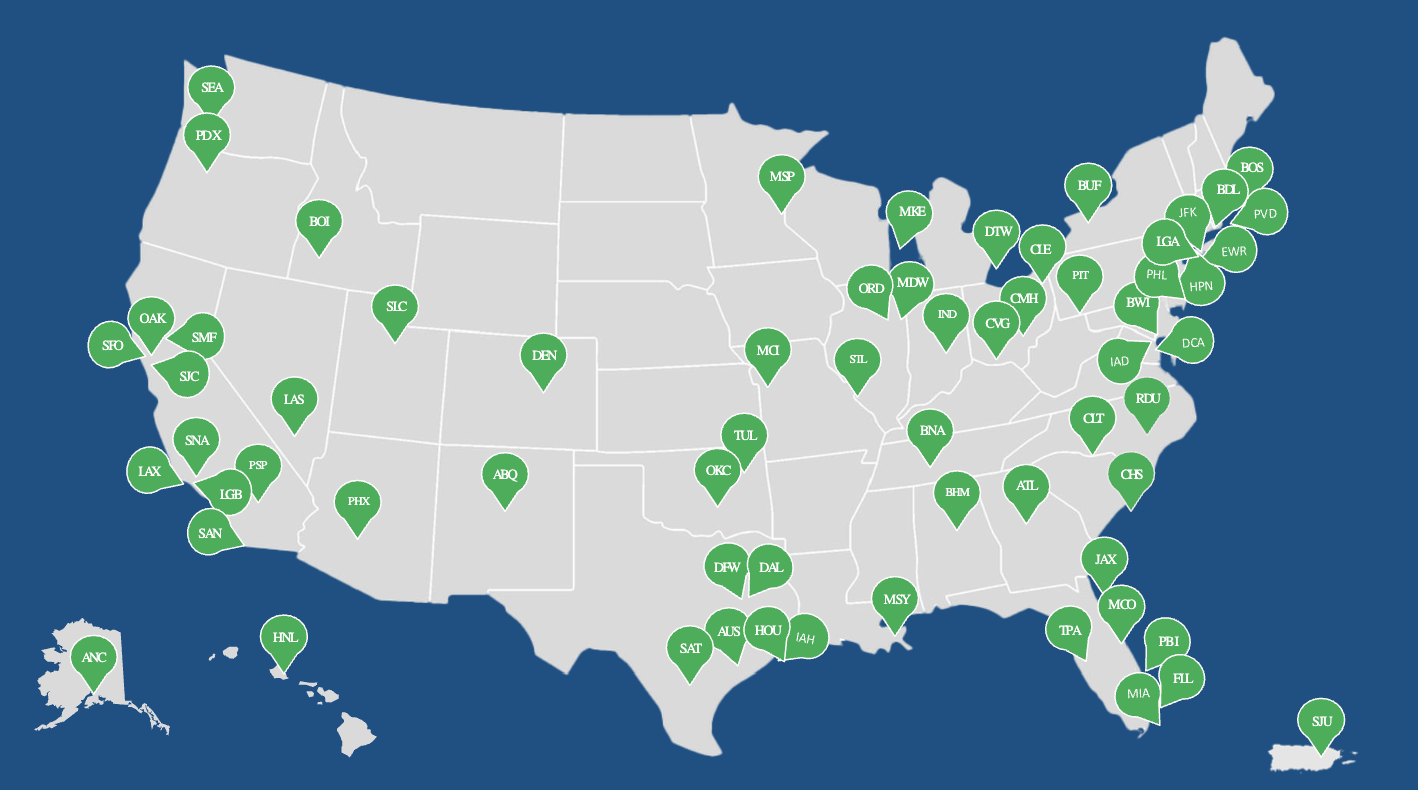
First, participants must possess an active, valid TSA PreCheck membership or a Global Entry credential, which automatically incorporates PreCheck privileges. Second, flyers must hold an active frequent flyer or loyalty account with a participating carrier and explicitly opt into the biometric screening program. Essential to this process is ensuring that valid passport details and the traveler’s unique Known Traveler Number (KTN) are accurately populated within the airline or digital wallet profile.
Geographic and airline-specific constraints also dictate eligibility. Although Touchless ID is currently deployed across roughly 65 U.S. airports, availability depends heavily on the specific airline and terminal infrastructure. For instance, at Raleigh-Durham International Airport (RDU), legacy carriers operating out of Terminal 2 support the technology, while airlines housed in alternative terminals may not. Passengers must verify that a Touchless ID indicator icon appears directly on their digital mobile boarding pass prior to heading toward security. Furthermore, federal regulations mandate that all passengers continue to carry a physical, TSA-compliant REAL ID or valid passport during travel, as biometric systems can occasionally experience technical downtime or require secondary manual verification.
Step-by-Step Enrollment Procedures by Carrier
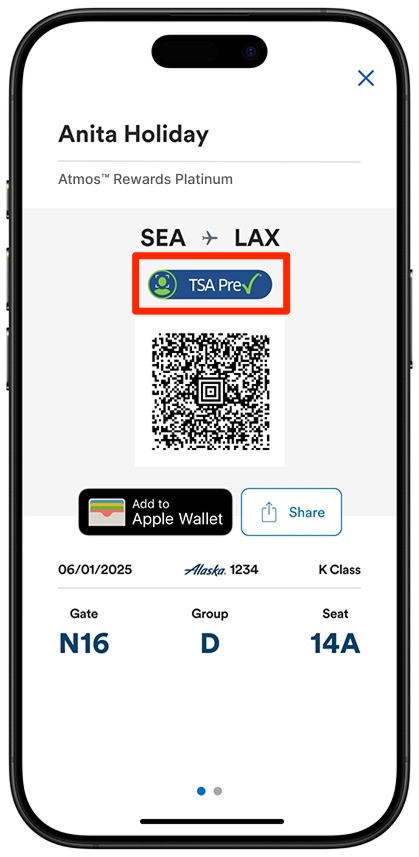
Because enrollment parameters differ between platforms, travelers must complete the opt-in process according to their specific carrier or digital ecosystem.
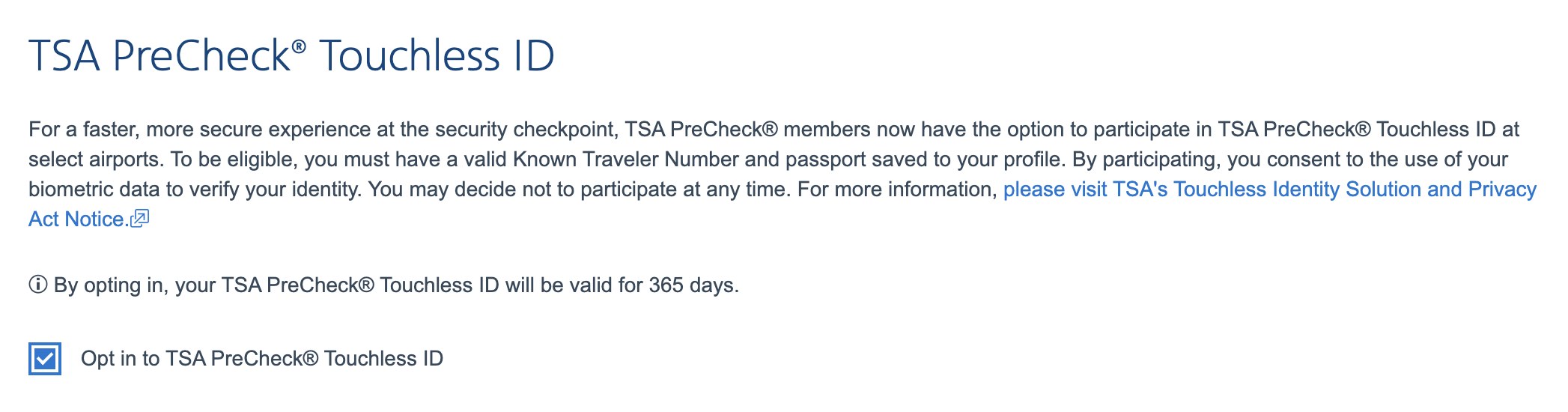
For Alaska Airlines passengers, enrollment requires logging into an Atmos Rewards account, navigating to profile settings, and verifying that both the KTN and passport details are stored. Users must then select the prompt to add TSA PreCheck Touchless ID, check the required consent box, and save the configuration.
American Airlines customers utilize their AAdvantage profiles via the web platform or mobile application. By accessing the settings menu under information and security credentials, members can verify their travel documents and check the opt-in box for Touchless ID near the bottom of the interface, or complete the prompt during mobile check-in.
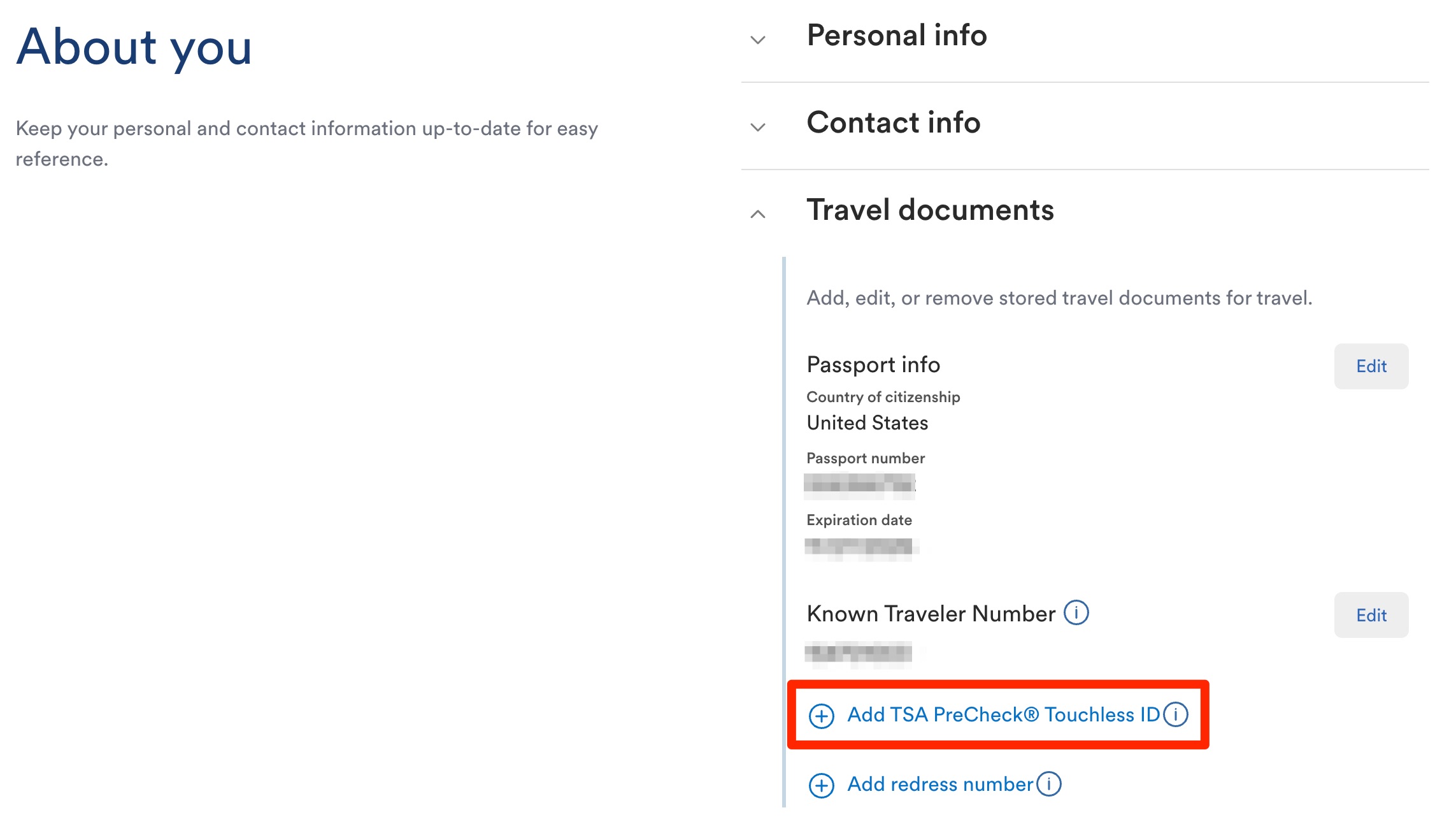
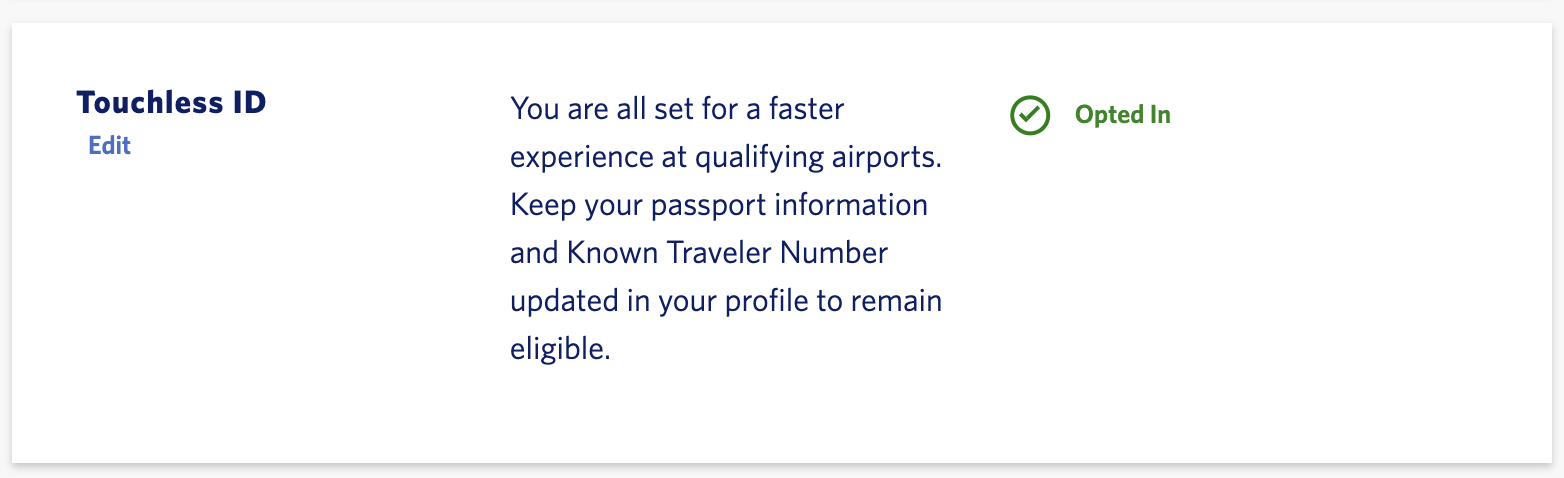
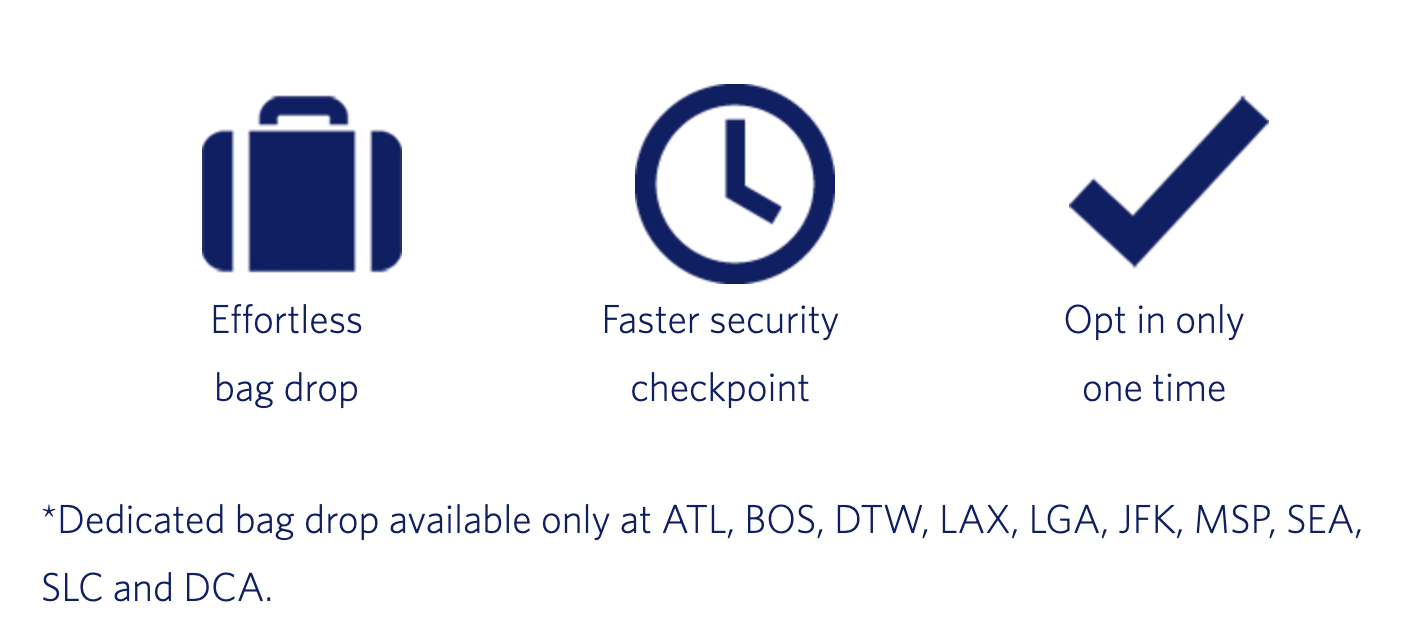
Delta Air Lines incorporates biometric screening through its proprietary "Delta Digital ID" framework. SkyMiles members access personal profile settings on the Fly Delta app, confirm passport and KTN data, and opt in. Notably, this registration simultaneously grants eligible flyers access to Delta’s touchless bag drop services at participating stations.
Southwest Airlines passengers must complete the process directly within the Southwest mobile application. By accessing the Rapid Rewards profile section, users select the Touchless ID feature, scan their passport using the phone’s camera, input their KTN, and confirm their consent.
United Airlines integrates the feature within its MileagePlus app architecture. Travelers navigate to profile settings, select the TSA PreCheck and travel documents section, verify their data, and activate the biometric opt-in prompt.
Centralizing Enrollment via Digital Wallets
A major barrier to broader adoption has been the requirement to register separately with each individual airline. To address this friction point, technology partners and federal agencies have introduced centralized alternatives.
Android users leveraging Google Wallet can now bypass airline-specific registrations entirely. By establishing a verified digital identity linked to an official passport within Google Wallet, the system interfaces automatically with over 100 airlines that participate in TSA PreCheck. This integration extends biometric security access to regional carriers, low-cost operators, and foreign airlines that do not offer native app-based opt-in tools. However, this functionality remains exclusive to Android devices, meaning iPhone users must continue utilizing individual carrier applications. Additionally, digital state driver’s licenses or standard REAL IDs stored in mobile wallets cannot be substituted for passport data during the initial Touchless ID configuration.
Official Perspectives and Agency Objectives
Federal security officials emphasize that the expansion of biometric verification aligns directly with the TSA’s broader mandate to enhance aviation security while optimizing passenger throughput. According to TSA leadership, automated facial matching significantly reduces the margin for human error associated with manual document inspection, while simultaneously hardening security protocols against fraudulent boarding passes and identity substitution.
From an operational standpoint, deploying touchless technology allows security lanes to process significantly higher volumes of travelers per hour without requiring a proportional expansion of physical checkpoint real estate. This efficiency is viewed as critical as commercial aviation passenger numbers continue to break historical records. Privacy advocates, meanwhile, have monitored the deployment of biometric screening closely; however, federal agencies maintain that images captured at the checkpoint are encrypted, utilized solely for immediate identity verification against official travel documents, and permanently deleted shortly after processing concludes.
Broader Implications for the Aviation Industry
The widespread adoption of TSA PreCheck Touchless ID carries substantial economic and logistical implications for the commercial aviation sector. As airport congestion intensifies due to infrastructural constraints and shifting travel patterns, technological solutions that decouple processing speed from staffing levels are becoming essential.
Airlines that invest heavily in seamless digital ecosystems—such as integrated bag drops, biometric boarding gates, and touchless security lanes—gain a competitive advantage by reducing pre-flight friction for premium and frequent flyers. For the passenger, the proliferation of biometric lanes introduces a new tier of predictability into airport transit times. Ultimately, as more travelers complete the one-time registration process and utilize platforms like Google Wallet or airline apps, biometric screening is poised to transition from an exclusive travel hack into the standard baseline for expedited airport security across the United States.
Related posts: