The Evolution of Luxury Interiors: Why 2027 Marks a Departure from Uniformity Toward Radical Personalization

The holiday season often serves as a catalyst for domestic reflection, prompting homeowners to evaluate their living spaces with an eye toward the coming year. Historically, this transition has been marked by a standardized impulse to declutter, refresh, or implement a cohesive design overhaul. However, as 2027 approaches, a significant shift is occurring within the upper echelons of global interior design. The industry is moving away from the "all-neutral" aesthetic—characterized by soft, cool-toned palettes and uniform luxury—toward a philosophy of radical individualism, deep emotional resonance, and a conscious rejection of showroom-perfect homogeneity.
This transition represents a pivot from the visual language of the late 2010s and early 2020s, which prioritized Instagram-friendly, monochromatic environments. Leading designers now argue that the true marker of contemporary luxury is no longer the ability to procure pieces from the most recognizable showrooms, but rather the capacity to curate a home that serves as a unique repository of the inhabitant’s personal history and emotional landscape.
A Chronology of the Shift: From Minimalism to Maximalist Soul
The trajectory of interior design over the last decade has been defined by distinct phases. From 2015 to 2020, the industry saw the dominance of "Millennial Minimalism," a trend driven by open-plan living, muted greys, and Scandinavian-inspired functionalism. By 2021, the global pandemic forced a reevaluation of domestic space, leading to a focus on comfort and "cocooning," which evolved into the soft-neutral luxury aesthetic that has defined the last few years.
As we look toward 2027, the design narrative is shifting once more. According to Madelynn Hudson, founder of M.H. Interiors, the exhaustion of the "particular visual language of luxury" has created a vacuum. "We’ve spent the last several years subscribing to a very particular visual language of luxury," Hudson notes. "As beautiful as that can be, I think people are craving something more personal, expressive, and emotional."
This transition is not merely a stylistic preference; it is a structural change in how wealth is manifested in the home. The focus has moved from "buying into" a trend to "investing in" a legacy. This involves a renewed interest in antiques, bespoke craftsmanship, and the integration of diverse design movements within a single spatial context.
The Art of Juxtaposition: Mixing Eras and Origins
The emerging standard for 2027 is the "curated room," a concept championed by Katharine Pooley, whose work spans international palaces and superyachts. Pooley observes that clients are increasingly requesting spaces that blend eras, arguing that the mix provides a more comfortable, lived-in character than a singular, period-specific scheme.
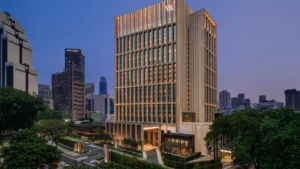
This approach is echoed by Charu Gandhi of Elicyon. Her work at The Bryanston, overlooking London’s Hyde Park, serves as a blueprint for this new methodology. By juxtaposing vintage pieces, such as a 1950s-era Roger Capron coffee table, with contemporary collectible design and custom-made furniture, Gandhi’s team achieved a level of depth that is difficult to replicate with entirely new inventory. "The juxtaposition of different periods and design movements gives an interior a richness that is difficult to achieve when everything is new," Gandhi explains.
Data and Palette: The Nuance of Earthy Complexity
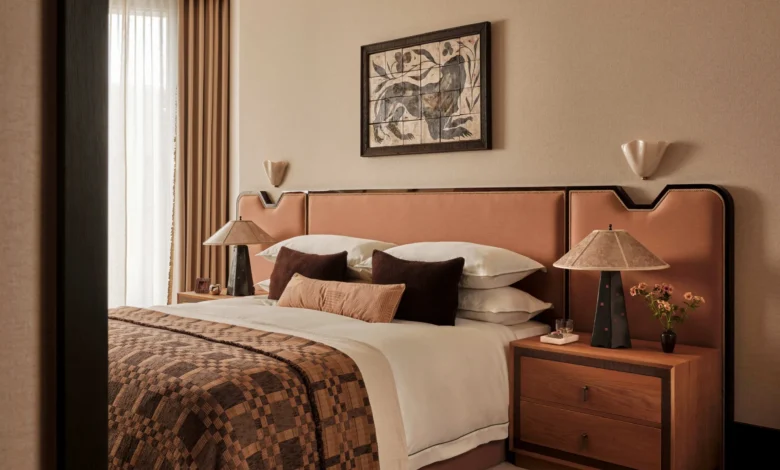
Designers are moving away from the "Color of the Year" mentality, which often dictates a single dominant hue for global markets. Instead, 2027 is projected to favor complex, layered palettes. Professional color analysis suggests a move toward "muddy" and "buttery" tones—tobacco browns, aubergine, oxblood, dusty lilacs, and aged whites.
Data from recent design summits indicates a decline in demand for "cool" greys and high-contrast black-and-white schemes. In their place, there is an 18% increase in requests for warm-toned, earth-based colors in high-end residential projects. Courtney Brannan of Champalimaud Design supports this, noting that she prefers creating palettes that are "collected, slightly surprising, and specific to the story of the project." This move toward warmer, enveloping colors—terracottas, ochres, and rust—aligns with a broader societal desire for spaces that feel protective and grounded.

Materiality and the Ethics of Longevity
The conversation around materials for 2027 has evolved beyond aesthetic choice to include the lifecycle of the object. There is a marked interest in materials that develop a patina or "character" over time. Materials such as richly grained woods, hand-worked metals, colored glass, and expressive natural stones are gaining traction over more pristine, synthetic alternatives.
Glenn Pushelberg of Yabu Pushelberg has emphasized a growing interest in repurposing existing materials. His studio, known for high-profile hospitality projects like the Aman Residences in Tokyo, is pushing the industry toward a more rigorous definition of "renewable." Rather than simply selecting materials with an "eco-friendly" label, the focus is shifting to how existing architectural elements—such as reclaimed basalt or antique stone—can be integrated into new environments to extend their utility. This represents a significant shift in luxury consumption, where the longevity of a material is seen as a hallmark of quality.
The Rise of Sensory and Analogue Living
Perhaps the most profound change in interior design is the transition from "visual-first" to "sensory-first" spaces. As digital saturation continues to increase, the home is becoming a sanctuary for analogue living. Designers are now prioritizing acoustics, the movement of natural light, and the tactile quality of surfaces.
This is most evident in the evolution of the primary bedroom and bathroom. These rooms are no longer viewed merely as functional zones but as "inner sanctums" and "wellness destinations." The incorporation of lighting that synchronizes with the body’s circadian rhythms is becoming a standard feature in high-end residential builds, reflecting a growing awareness of the intersection between interior design and physical health.
Divergent Paths: The Minimalist-Maximalist Debate
Despite the trend toward maximalism and layering, there remains a segment of the design community that rejects the "more is more" philosophy. Glenn Pushelberg argues for a 180-degree turn toward what he calls "less with soul." This is not a return to the clinical minimalism of the early 2000s, but rather a pursuit of "soulful restraint"—a design aesthetic that is harder to achieve because it relies on the absolute necessity of every element within a space.
Whether the design leans toward the layered, eclectic maximalism of Pooley or the atmospheric, restrained minimalism of Pushelberg, the common thread is a rejection of the "mood board" look. The goal is to move beyond interiors that appear to have been sourced from a single catalog or a trending social media aesthetic.
Implications for the Luxury Market
The implications of these shifts for the broader market are substantial. Manufacturers and luxury retailers must adapt to a client base that is increasingly educated, selective, and interested in the narrative behind an object. The demand for bespoke and artisanal goods is expected to rise, placing a premium on partnerships between interior designers and local craftspeople.
Furthermore, the "investment" aspect of home furnishing is likely to become more prominent. As consumers move toward items that age well and possess historical or artisanal value, the secondary market for high-quality vintage and antique goods will likely see continued growth.
Ultimately, the defining characteristic of 2027 design is its resistance to categorization. As the industry moves away from the need for a singular, cohesive "look," the power dynamic shifts back to the inhabitant. The best homes, as Hudson suggests, are those that offer a glimpse into the personality of the owner, making the space a reflection of a life lived rather than a designer’s portfolio. In a world that is increasingly interconnected and digital, the luxury of 2027 will be defined by the quiet, tactile, and deeply personal intimacy of the physical home.