Norse Atlantic Airways collapses as Norwegian subsidiary files for bankruptcy and operations cease globally

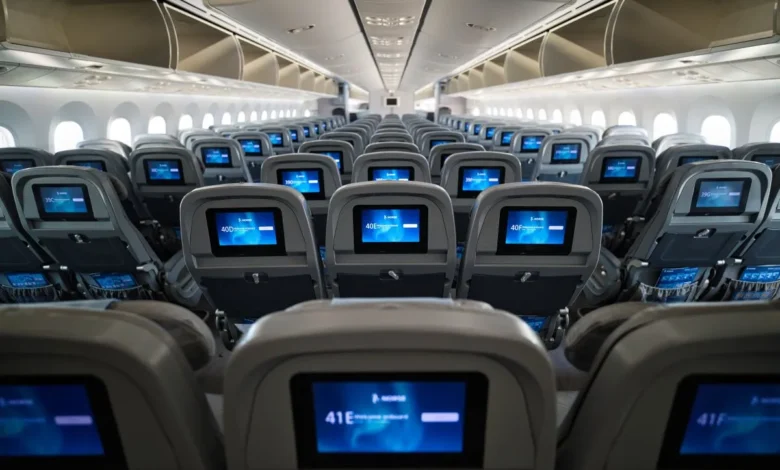
Norse Atlantic Airways, the low-cost, long-haul carrier that once promised to fill the void left by the demise of Norwegian Air Shuttle’s long-haul division, has effectively collapsed. On Friday, the airline confirmed that its Norwegian operating subsidiary, Norse Atlantic Airways AS, has initiated bankruptcy proceedings, leading to the immediate grounding of its entire fleet and the cessation of all ticket sales. The collapse marks a somber end to a high-profile attempt to democratize trans-Atlantic travel, as the airline failed to sustain the capital-intensive nature of international long-haul operations in an increasingly volatile macroeconomic environment.
The announcement came following a tumultuous 48-hour period during which the airline’s management described its fiscal health as “critical.” While the parent company, Norse Atlantic ASA, remains technically distinct from the bankrupt subsidiary, the operational paralysis has hit both the Norwegian and UK-based branches of the airline, leaving passengers stranded and travel agents scrambling to rebook thousands of travelers across multiple continents.
The Chronology of a Financial Freefall
The deterioration of Norse Atlantic’s financial position did not occur in a vacuum, though the final collapse was swift. Launched in 2021 by Bjørn Tore Larsen, the airline was conceived in the shadow of the COVID-19 pandemic. By utilizing a fleet of fuel-efficient Boeing 787 Dreamliners, the airline aimed to capture the pent-up demand for leisure travel between Europe and the United States.
The final descent began in earnest earlier this week. By mid-week, internal indicators within the company signaled that liquidity had reached a point of no return. On Wednesday, the airline issued a formal warning to the Oslo Stock Exchange, characterizing its financial state as "critical." This admission sent shockwaves through the aviation industry, as investors and creditors began to assess their exposure.
By Thursday, the situation had deteriorated further, leading the airline to suspend all flight operations. The suspension was initially framed as a temporary pause intended to allow management time to secure emergency bridge financing. However, by Friday morning, the board of directors for the Norwegian operating subsidiary concluded that the fiscal deficit was insurmountable. The decision to file for bankruptcy was finalized, and the news was communicated to the stock exchange, confirming that there was no longer a viable basis for continued operations.
Understanding the Corporate Structure
A critical component of this crisis is the distinction between the various corporate entities involved. The bankruptcy filing specifically concerns Norse Atlantic Airways AS, the Norwegian subsidiary that held the air operator’s certificate (AOC) for the bulk of the carrier’s fleet.
The parent company, Norse Atlantic ASA, remains listed on the Oslo Stock Exchange. Furthermore, the UK subsidiary, which operated under a separate AOC, is also navigating the fallout. Despite these legal distinctions, the operational reality is one of total shutdown. Because the parent company relies on the operational efficiency and revenue streams of its subsidiaries, the bankruptcy of the Norwegian arm has created a contagion effect. While the company stated that efforts are "continuing to find a solution" for the remaining parts of the business, aviation experts suggest that the loss of the primary operational subsidiary makes a full restructuring highly improbable.
Financial Pressures and Market Realities
Norse Atlantic’s business model was predicated on the low-cost, long-haul (LCLH) theory—a model notoriously difficult to master in the aviation industry. Airlines like Laker Airways in the 1970s and, more recently, Norwegian Air, have struggled to balance the low-margin reality of budget travel with the high-margin requirements of long-haul aviation.
Several factors converged to suffocate Norse Atlantic’s operations:
- Fuel Price Volatility: As an operator of wide-body Boeing 787s, Norse Atlantic was highly sensitive to the price of Jet A-1 fuel. Despite the efficiency of the Dreamliner, sustained high fuel costs throughout 2024 eroded the thin margins the airline needed to remain competitive against legacy carriers.
- Operational Costs: Long-haul flights involve significant overhead, including airport fees at major hubs like London Gatwick, New York JFK, and Berlin. Unlike short-haul low-cost carriers (LCCs) that utilize secondary airports to save on landing fees, Norse Atlantic’s model required access to primary gateways, which are inherently expensive.
- Competitive Pressure: Legacy carriers, including United, Delta, and British Airways, have significantly expanded their premium-economy and low-fare offerings in recent years. By unbundling their fares, these legacy airlines effectively competed with Norse on price while offering the reliability of vast route networks and global frequent-flyer programs.
- Capital Constraints: The airline relied heavily on external capital to fuel its growth. As interest rates remained elevated throughout the year, the cost of servicing the debt associated with leasing its fleet of 787s became unsustainable.
Broader Industry Implications
The collapse of Norse Atlantic serves as a stark reminder of the fragility of the aviation sector. For the consumer, the immediate impact is the frustration of cancelled plans. For the industry, the implications are more systemic.
The exit of a major low-cost, long-haul player often leads to a short-term reduction in capacity on specific trans-Atlantic routes. While this may provide a temporary opportunity for legacy carriers to raise prices, it also limits consumer choice. Analysts at aviation consultancy firms note that the failure of Norse highlights the limitations of the "point-to-point" long-haul model when not supported by a robust feeder network. Most successful long-haul airlines rely on short-haul connectivity to feed passengers into their international hubs; Norse Atlantic, lacking a short-haul network, had to rely entirely on origin-and-destination (O&D) traffic, which is a significantly more difficult market to capture.
The Human and Economic Cost
The bankruptcy filing triggers a legal process that will likely see a trustee appointed by a Norwegian court to oversee the liquidation of assets. This will involve the return of leased aircraft to their lessors, the settlement of outstanding obligations to vendors, and, critically, the handling of passenger claims.
Under European Union Regulation 261/2004, passengers are entitled to compensation for flight cancellations; however, in the event of a bankruptcy, the ability for passengers to recover funds—or even receive refunds for tickets purchased—is often limited. Passengers who booked using credit cards are generally advised to contact their card issuers to initiate "chargeback" procedures under Section 75 of the Consumer Credit Act (in the UK) or similar regional protections.
Looking Ahead
As of this writing, the future of the Norse Atlantic brand remains uncertain. While the parent company has indicated it is exploring avenues to preserve the remaining business, the grounding of the fleet has already caused significant damage to the brand’s reputation.
For the aviation sector, the story of Norse Atlantic will likely be studied as a case of high ambition met with harsh economic reality. The airline entered the market with a vision of disruption, offering high-quality service on modern aircraft at budget prices. However, the combination of high fixed costs, an inability to scale effectively without feeder traffic, and an unforgiving macroeconomic environment proved to be a barrier that the airline could not overcome.
In the coming weeks, the focus will shift to the liquidation process. Observers will be watching to see if any assets—or perhaps the remaining corporate structure—are acquired by larger entities, or if Norse Atlantic will become another footnote in the long and complex history of failed trans-Atlantic aviation ventures. For now, the runways are clear, the Dreamliners are parked, and a chapter in low-cost aviation has come to an abrupt and costly end.