AJ 42 Recommended Reading Explores Indigenous Stewardship, Conservation, and Environmental History Through Six Essential Books

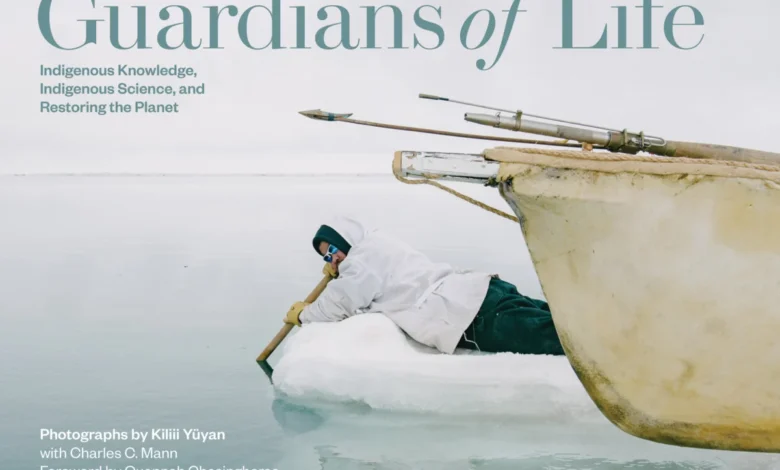
The intersection of modern environmentalism, historical reckoning, and traditional ecological knowledge forms the bedrock of the latest literary selections featured in AJ 42. Among a curated list of six indispensable contemporary works—ranging from the ecological importance of bogs and a sixteenth-century maritime survival account to the arboreal metaphor of global ecosystems—Kiliii Yüyan’s Guardians of Life emerges as a pivotal photographic and journalistic contribution. Published by Braided River in 2026, the volume captures a profound paradigm shift in how global conservationists view land management, sovereignty, and the preservation of global biodiversity.
Main Facts of Indigenous Land Management and Biodiversity
At the core of Yüyan’s thesis is a staggering empirical reality: Indigenous territories currently comprise approximately 37 percent of all remaining natural, unfragmented lands on Earth. Furthermore, these legally and culturally protected regions harbor an estimated 80 percent of the planet’s remaining terrestrial biodiversity. Guardians of Life leverages these figures to challenge the traditional Western fortress-conservation model, which historically sought to protect nature by displacing Indigenous populations. Instead, Yüyan presents a comprehensive argument for returning stewardship responsibilities to the original inhabitants of these landscapes, supported by nearly 200 striking photographs gathered from nine distinct Native communities across North America and the Arctic.
The visual narrative documents a symbiotic relationship wherein human communities do not merely inhabit ecosystems, but actively maintain their vitality. Through meticulous documentation of daily life, subsistence practices, and ceremonial traditions, the book illustrates that the health of Native populations is inextricably linked to the biological health of the surrounding flora, fauna, and waterways.
Chronology and Historical Background: The Iñupiat Legal Battle
To understand the weight of modern Indigenous stewardship, Guardians of Life contextualizes contemporary environmental battles within a historical framework. A prominent historical case study highlighted in the text dates back to 1977, a watershed moment for Arctic Indigenous rights and marine mammal management.
In 1977, the International Whaling Commission (IWC) imposed a strict ban prohibiting the Iñupiat people of Alaska from hunting bowhead whales. For the Iñupiat, bowhead whale hunting is not merely a dietary practice or economic endeavor; it is the cornerstone of their social structure, spiritual identity, and cultural continuity, dating back millennia. The ban was enacted amid widespread international concern over declining global whale populations, but it failed to account for local, sustainable subsistence practices managed through traditional ecological governance.
Recognizing the existential threat the ban posed to their culture and food security, Iñupiat leaders organized a robust legal and political defense. Rather than accepting external management that treated them as a threat to wildlife, they argued that their traditional stewardship practices inherently promoted conservation. In a landmark legal victory, the Iñupiat successfully secured the right to self-manage the bowhead whale hunt under scientific quotas overseen by local institutions.
The results of this Indigenous-led management model stunned international observers. Over the subsequent three decades, under the careful monitoring and traditional stewardship of the Iñupiat, the bowhead whale population tripled. This success story serves as the empirical backbone for Yüyan’s broader argument: that local, Indigenous management consistently outperforms centralized, bureaucratic oversight.
Supporting Data and Ecological Implications
The data compiled by environmental researchers and echoed in Yüyan’s work provide a compelling case for policy shifts on a global scale. According to reports from organizations such as the Intergovernmental Science-Policy Platform on Biodiversity and Ecosystem Services (IPBES), deforestation and environmental degradation occur at significantly lower rates on Indigenous-managed lands than in conventional protected areas or state-run parks.
Key statistical indicators include:
- Indigenous lands store massive amounts of carbon, playing a critical role in mitigating global climate change.
- Traditional fire management practices, historically suppressed by colonial governments, have proven essential in preventing catastrophic wildfires in regions like the North American West and the Australian bush.
- Watershed protection in Indigenous territories yields cleaner freshwater supplies for downstream municipal areas, reducing water treatment costs and ecological strain.
Environmental economists and conservation scientists note that integrating Indigenous knowledge systems (IKS) into mainstream climate policy is no longer optional, but mathematically necessary if international bodies hope to meet biodiversity targets such as the 30×30 initiative—a global commitment to protect 30 percent of Earth’s lands and oceans by 2030.
Official Responses and Institutional Perspectives
While mainstream conservation organizations have historically been slow to relinquish centralized control, recent years have marked a noticeable shift in institutional policy. Representatives from international conservation bodies, including the International Union for Conservation of Nature (IUCN), have increasingly acknowledged that human rights and biodiversity conservation are mutually dependent.
In recent policy briefings, international environmental officials have noted that land titling—the legal recognition of Indigenous land ownership—is among the most cost-effective carbon capture and biodiversity preservation strategies available. Governments in countries such as Canada, the United States, and various South American nations have slowly begun co-management agreements with Native tribes, handing over day-to-day regulatory powers of national parks and wildlife refuges to Indigenous councils.
Critics of these transitions, typically rooted in traditional state-centric conservation models, occasionally raise concerns regarding regulatory oversight and jurisdictional clarity. However, proponents point to decades of successful co-management models in places like Glacier Bay National Park in Alaska and various Indigenous Protected and Conserved Areas (IPCAs) across Canada as proof that collaborative governance is legally viable and ecologically superior.
Broader Impact and the Future of Global Conservation
The inclusion of Guardians of Life in the AJ 42 recommended reading list highlights a broader literary and cultural movement toward decolonizing environmentalism. Alongside explorations of bogs, Yosemite’s complex history, reindeer-herding elegies, sixteenth-century maritime accounts, and arboreal philosophies, Yüyan’s work anchors the collection in urgent, contemporary reality.
As policymakers grapple with compounding ecological crises—including rapid species extinction, habitat fragmentation, and accelerating climate change—the lessons of the Iñupiat whale hunt and the broader global Indigenous land rights movement offer a clear path forward. By shifting the paradigm from resource extraction and fortress conservation to reciprocal stewardship, modern societies have an opportunity to learn from cultures that have successfully sustained their environments for millennia.
The publication of Guardians of Life arrives at a critical juncture. Through powerful visual storytelling and rigorous factual grounding, the book bridges the gap between abstract environmental statistics and human reality, reminding readers that the stewardship of the Earth is most safely entrusted to those who view themselves as part of the ecosystem, rather than masters over it.