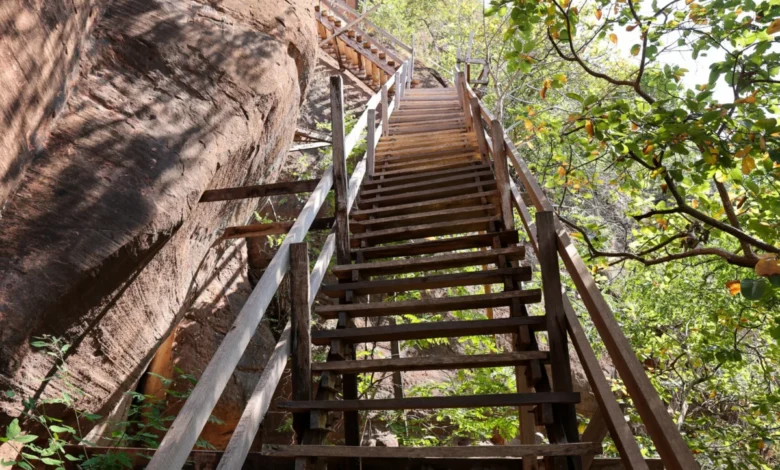
Nestled in the tranquil northeastern province of Bueng Kan, Thailand, lies Wat Phu Tok, a temple complex that defies conventional architectural norms and offers an unparalleled spiritual and adventurous experience. Locally known as Phu Tok, meaning "lonely mountain," this sacred site, officially named Wat Jetiyakhiri, is carved into and ascends a dramatic red rock formation, presenting visitors with a thrilling journey through seven distinct levels. The temple’s unique construction, a labyrinth of rickety wooden stairs, ladders, and suspended walkways clinging to the sheer cliff face, has earned it a reputation as one of Thailand’s most adventurous, and for some, most terrifying, destinations. This article delves into the history, structure, and visitor experience of Wat Phu Tok, offering a comprehensive guide to this extraordinary pilgrimage site.
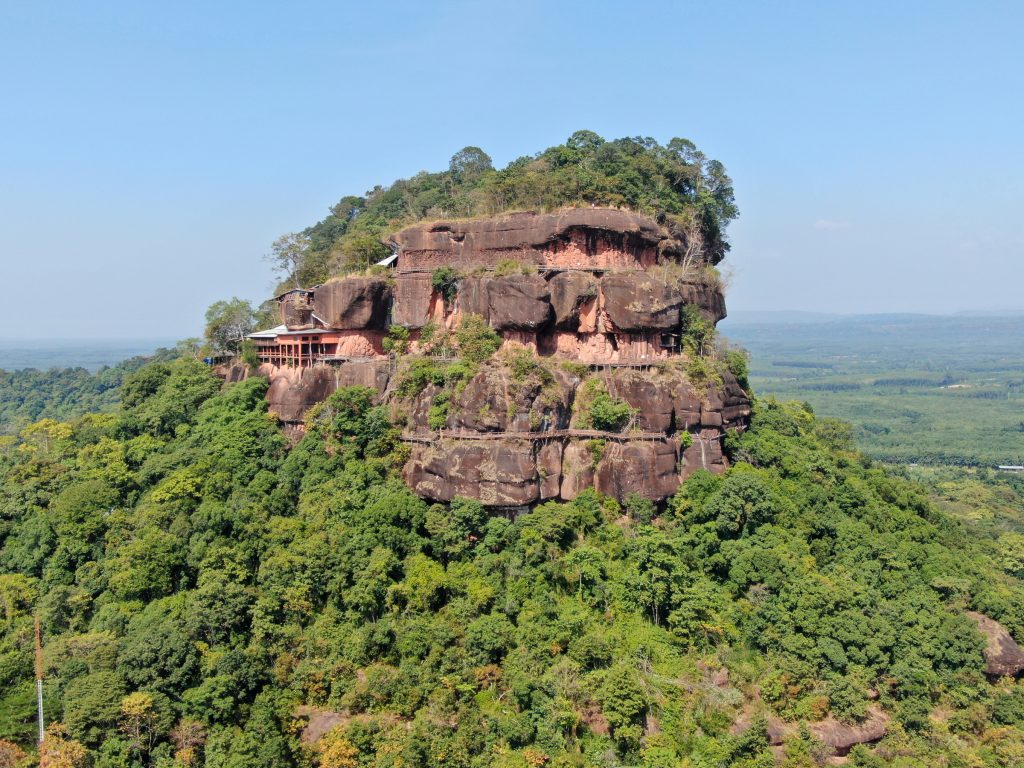
Bueng Kan province, situated in the Isan region, remains one of Thailand’s less-trodden paths, appealing to travelers seeking serenity, expansive natural landscapes, and off-the-beaten-path attractions. Wat Phu Tok stands as a testament to this region’s unique charm, drawing visitors with its sheer audacity and spiritual depth. The temple’s ascent is not merely a physical climb but a symbolic journey through the seven stages of Buddhist meditation, a concept that imbues the entire structure with profound meaning.
Historical Context and Founding

The origins of Wat Phu Tok trace back to the vision of Monk Luang Pu Juan, who recognized the spiritual potential of the isolated and rugged Phu Tok mountain. Historically, the mountain’s remote location and challenging terrain made it a habitat for wildlife, including venomous snakes, contributing to its formidable reputation. However, this very isolation and the element of overcoming natural obstacles also made it an ideal sanctuary for meditation and spiritual practice. Luang Pu Juan envisioned a temple that would not only provide a space for contemplation but also offer a tangible representation of the spiritual path.
Beginning in the mid-20th century, Luang Pu Juan initiated the ambitious project of constructing a network of wooden structures that would allow pilgrims to ascend and explore the mountain. Over time, these efforts evolved into the seven distinct levels, each representing a stage in the Buddhist journey towards enlightenment. Tragically, Luang Pu Juan’s life was cut short in an airplane accident, but his legacy endures through the continued maintenance and spiritual significance of Wat Phu Tok, which is meticulously preserved by monks and devotees. The temple’s construction is a remarkable feat of engineering, blending seamlessly with the natural contours of the rock formation.

Structure and Levels of Ascent
The ascent of Wat Phu Tok is divided into seven levels, each offering a unique perspective and experience.

The Lower Levels (1-4): The Approach and Foundation
The journey begins at the base of the mountain, where a substantial temple complex, a serene lake, and expansive park grounds are situated. Ample parking is available for visitors. The entrance to the mountain trail is clearly marked, leading directly towards the imposing rock face. Initially, the path transitions to wooden plank staircases that are relatively gentle, allowing visitors to acclimate to the climb. As one progresses through the first few levels, the primary focus is on the physical ascent. While some smaller shrines may be present, the main objective at this stage is to continue upwards, with the architectural marvel of the temple slowly revealing itself. The construction here, though appearing rustic, is designed to be sturdy, with planks often angled and supported to ensure safety.

The Fifth Level: Expanding Spiritual Hub
Upon reaching the fifth level, the temple complex truly begins to expand. This level is characterized by numerous temples, shrines, and meditation halls. Unlike the precarious cliff-side structures, much of the trail on the fifth level is on solid ground, allowing for a more leisurely exploration of the various spiritual sites. It is believed that the largest ordination hall of Wat Phu Tok is located here, serving as a central point for religious ceremonies and gatherings. A notable highlight on this level, often considered a significant detour from the main circumference trail, is a small rock temple. Reached via an elevated rock walkway and a charming wooden bridge, this secluded sanctuary offers a unique sense of discovery and spiritual introspection. This section exemplifies the temple’s integration with the natural rock formations, creating a sense of hidden wonder.

The Sixth Level: The Pinnacle of Adventure and Spectacle
The sixth level is widely regarded as the most thrilling and visually striking part of Wat Phu Tok. Ascending another set of wooden stairs leads visitors to this renowned section, where approximately half of the circumference is comprised of wooden plank walkways. These walkways are ingeniously anchored into the sheer cliff face, creating a breathtaking and somewhat unnerving experience for those with a fear of heights. Despite their precarious appearance, the construction is remarkably stable and well-maintained, providing a sense of security.

The panoramic views from the sixth level are spectacular. Visitors can gaze out over the vast Mekong River basin, the lush green landscapes of Bueng Kan province, and the surrounding natural beauty. The constant gentle breeze adds to the sensory experience, making the walk around this level a truly immersive encounter with both nature and human ingenuity. The juxtaposition of the sturdy wooden structures against the raw, imposing rock face creates a powerful visual impact, underscoring the spiritual endeavor of harmonizing with the natural world. While the construction feels secure, the sheer drop below serves as a constant reminder of the adventurous nature of this pilgrimage.
The Seventh Level: The Summit and Its Mysteries

The final level, the seventh, represents the summit of Phu Tok mountain. Historically, this level has been associated with the presence of venomous snakes, and visitors are often advised to proceed with caution. The ascent to the seventh level is undertaken at one’s own risk. Unlike the preceding levels, there are no extensive wooden walkways or elaborate shrines at the very top. Instead, it is the natural peak of the mountain, offering further expansive views. While the 6th level is generally considered the most architecturally unique and visually arresting, the seventh level provides a sense of ultimate achievement and a different vantage point for appreciating the surrounding scenery. The climb here is more about reaching the natural apex and experiencing the raw essence of the "lonely mountain."
Visitor Experience and Practical Tips

A visit to Wat Phu Tok typically involves a drive of approximately 30 minutes from Bueng Kan city. The temple grounds are well-equipped to handle visitors, with ample parking and facilities at the base. The climb itself can take anywhere from one to three hours, depending on the visitor’s pace and how much time they spend exploring each level.
For those planning a visit, several practical tips can enhance the experience:

- Attire: Comfortable walking shoes are essential, as the terrain involves stairs, ladders, and uneven surfaces. Lightweight, breathable clothing is recommended due to the tropical climate.
- Hydration: Carrying water is advisable, especially during warmer months, as the climb can be physically demanding.
- Respect: As a religious site, visitors are expected to dress modestly and behave respectfully. Remove shoes before entering temple buildings.
- Safety: While the structures are generally safe, vigilance is key, particularly on the wooden walkways and stairs. Those with severe acrophobia may find certain sections challenging.
- Timing: Visiting early in the morning or late in the afternoon can offer more comfortable temperatures and potentially fewer crowds.
- Photography: The scenic beauty and unique architecture offer numerous photo opportunities.
The unique character of Wat Phu Tok is not solely defined by its physical structure but also by the spiritual atmosphere it cultivates. The remote location fosters a sense of peace and introspection, while the challenging ascent symbolizes the spiritual journey. The integration of Buddhist philosophy with the natural landscape creates a profound and memorable experience for all who venture to this extraordinary temple.
Broader Implications and Cultural Significance

Wat Phu Tok stands as a remarkable example of human devotion and ingenuity in harmony with nature. Its existence in a less-visited region of Thailand highlights the country’s diverse attractions beyond the typical tourist trails. The temple serves not only as a pilgrimage site for Buddhists but also as a unique cultural landmark, drawing international visitors intrigued by its adventurous architecture and spiritual narrative. The continued upkeep of such an ambitious structure speaks to the dedication of the local community and religious orders.
The concept of building sacred spaces on challenging natural formations is not unique to Wat Phu Tok, but its scale and execution are particularly striking. It represents a profound commitment to creating accessible pathways for spiritual exploration, even in the most imposing environments. The temple’s story also underscores the enduring influence of spiritual leaders like Luang Pu Juan and the collective effort required to preserve such significant heritage sites for future generations.

In conclusion, Wat Phu Tok is more than just a temple; it is an architectural marvel, a spiritual sanctuary, and an adventurer’s dream. Its seven levels, intricately woven into the fabric of a lonely mountain, offer a journey of physical challenge and spiritual reflection. For travelers seeking an authentic and exhilarating experience in Thailand, Wat Phu Tok in Bueng Kan province is an essential destination, promising breathtaking views and an unforgettable encounter with faith and nature.