The Ultimate Guide to Luxury Accommodations in Zermatt, Switzerland: 10 Stays for Families and Travelers

Zermatt, Switzerland, stands as a singular destination within the global alpine tourism landscape. Nestled at the foot of the iconic Matterhorn and flanked by the Visp River, this historic resort town maintains a strict car-free policy designed to preserve its pristine mountain air, traditional architecture, and tranquil environment. Rather than standard passenger vehicles, the streets teem with pedestrians, horse-drawn carriages, and fleets of quiet electric vehicles that shuttle arriving guests from the central Zermatt Railway Station to their respective accommodations. Despite its compact footprint and pedestrian-only infrastructure, Zermatt punches well above its weight class in hospitality, boasting an exceptionally dense collection of five-star properties, boutique alpine lodges, and historic retreats.
Navigating the logistics of a high-end mountain vacation requires an understanding of the town’s unique geography, seasonal dynamics, and transit networks. Whether planning a winter ski expedition or a summer alpine trekking holiday, selecting the proper property is vital to an optimal guest experience. Below is an exhaustive examination of ten premier luxury hotels in Zermatt, alongside essential travel logistics, regional background context, and expert guidance for travelers.
Navigating Zermatt: Geography, Transit, and Arrival Logistics
Because standard motor vehicles and commercial buses are legally barred from entering Zermatt municipal limits, traveling to the village requires careful planning. Visitors arriving by automobile must drive to the nearby terminal town of Täsch, where extensive multi-story parking garages are available. From Täsch, travelers board a dedicated shuttle train operated by the Matterhorn Gotthard Bahn, which whisks passengers directly into the heart of Zermatt station in approximately twelve minutes. These high-frequency shuttles operate throughout the day and night, ensuring seamless connectivity.
For international travelers arriving by air, the primary aviation gateways are Zurich Airport (ZRH) and Geneva Airport (GVA). Both major transport hubs feature underground railway stations with direct or easily transferrable rail connections to Zermatt, utilizing the world-renowned Swiss rail network. To streamline transit, many international visitors utilize the Swiss Travel Pass, an integrated ticketing system providing unlimited access to trains, buses, and boats across Switzerland.
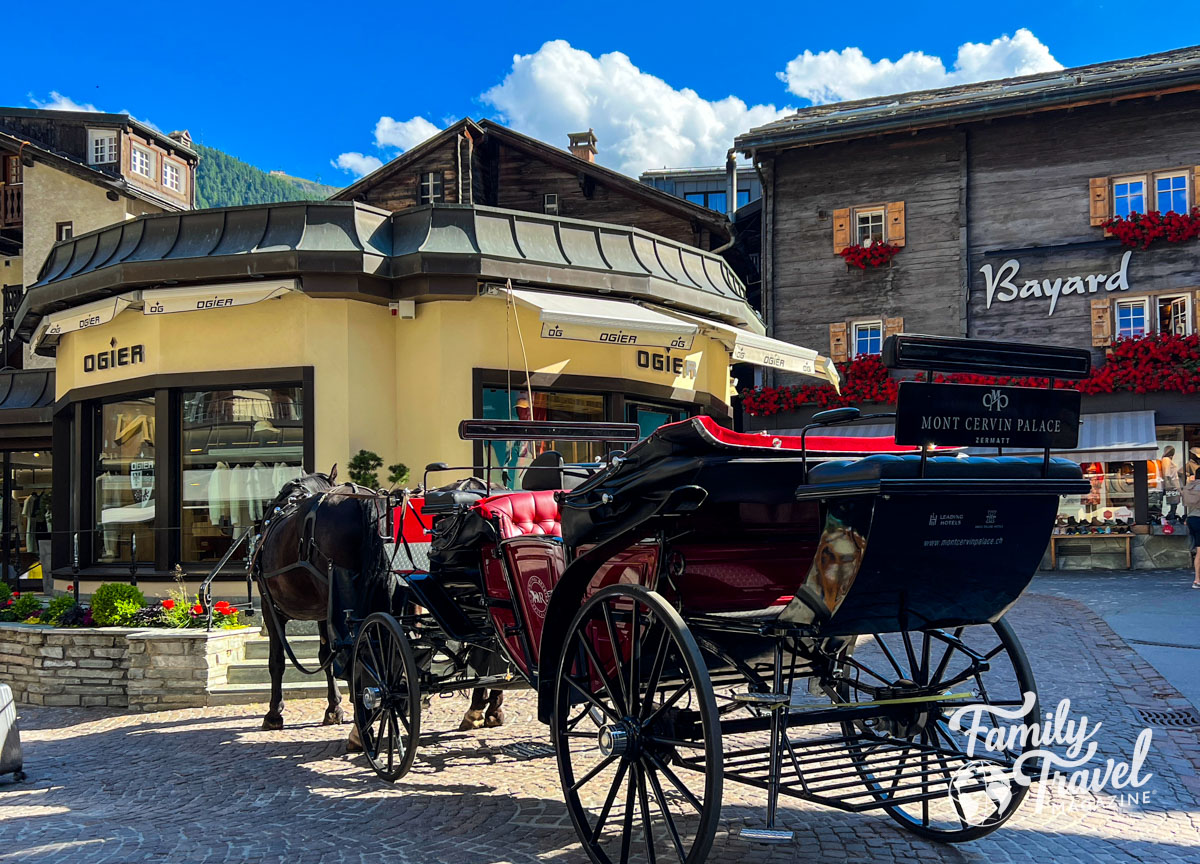
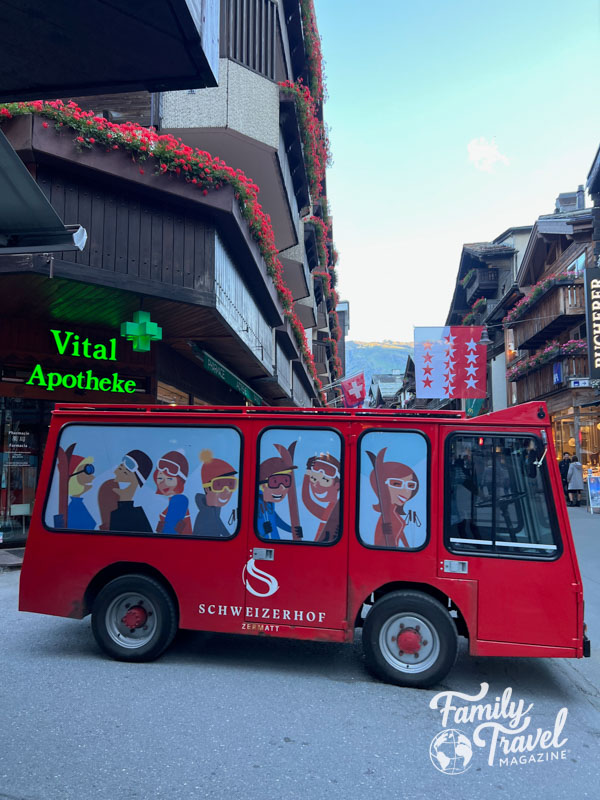
Upon arrival at the Zermatt Railway Station, travelers encounter the town’s signature transit fleet: battery-powered electric micro-taxis and horse-drawn carriages. The vast majority of luxury hotels maintain complimentary courtesy vehicles to meet arriving guests, bridging the gap between the station and the hotel lobby.
Seasonal Profiles: Summer Versus Winter in the Alps
Zermatt operates as a dual-season powerhouse, offering distinct yet equally compelling visitor experiences depending on the time of year.
The Summer Alpine Season
Running roughly from June through September, the summer months bring mild daytime temperatures ranging from the upper 60s to low 70s Fahrenheit in the village center. This climate allows visitors to explore local boutiques, cafes, and outdoor terraces in lightweight clothing. However, travelers venturing to higher elevations via the resort’s extensive cable car and funicular network—such as the Matterhorn Glacier Paradise—frequently encounter significantly cooler alpine conditions, necessitating layers, sweaters, and windproof outerwear. Summer in Zermatt appeals strongly to hikers, mountaineers, mountain bikers, and families seeking clear panoramic views of the surrounding peaks without the hazards of winter weather.
The Winter Ski Season
From late November to April, Zermatt transforms into a premier global capital for winter sports. Interlinked with Breuil-Cervinia in Italy, the Zermatt ski area offers year-round skiing on the Theodul Glacier alongside hundreds of kilometers of pristine groomed runs. The destination attracts elite skiers, snowboarders, and winter lifestyle travelers who prioritize ski-in/ski-out convenience, high-altitude dining, and traditional après-ski culture.
Key Considerations for Selecting a Zermatt Hotel
When booking high-end accommodations in Zermatt, several structural and environmental factors warrant consideration:
- Climate Control: Traditional building regulations and the historic nature of many properties mean that even top-tier luxury hotels in Zermatt generally do not feature central air conditioning. During peak summer heatwaves, rooms can feel warm during the afternoon hours, though temperatures drop precipitously overnight once windows are opened to capture the crisp alpine air.
- Matterhorn Views: Properties charging a premium for direct Matterhorn-facing rooms deliver unobstructed vistas of the iconic peak. While travelers who plan to spend their days exploring the outdoors may opt for village- or courtyard-facing rooms to reduce costs, those prioritizing in-room relaxation often find the investment in a mountain view worthwhile.
- Family Accommodations: Similar to many historic European destinations, standard hotel rooms in Zermatt are frequently designed for couples or single travelers. Multi-person family groups often find it more practical to book adjoining rooms, interconnected suites, or specialized family apartments rather than attempting to fit multiple children into a single standard room.
- Wellness and Spa Infrastructure: Given the physical demands of high-altitude hiking and skiing, comprehensive wellness centers, indoor-outdoor swimming pools, and extensive spa circuits are standard expectations among luxury travelers.
10 Premier Luxury Hotels in Zermatt
1. Chalet Hotel Schönegg
Operating as a distinguished Relais & Châteaux property, Chalet Hotel Schönegg combines intimate boutique luxury with classic alpine hospitality. Perched on an elevated hillside overlooking the village, the hotel provides effortless access to the town center via the subterranean Sunnegga Express funicular mountain elevator. The property comprises 39 rooms in its main building and 9 stylized alpine rooms housed in the adjacent Petit Chalet. Accommodations range from classic double rooms to expansive multi-room suites and quadruple family configurations, many framing dramatic perspectives of the Matterhorn. On-site culinary venues include a traditional bar, a dedicated wine bar, and a fine dining restaurant. The exclusive guest spa features two whirlpools, a Finnish sauna, a steam room, an adventure shower, and a traditional Kneipp hydrotherapy basin.
2. CERVO Mountain Resort
Situated roughly a ten-minute walk from the central railway station, CERVO Mountain Resort offers a contemporary take on alpine hospitality, accessed via a dedicated hillside elevator leading to the main lobby. The estate features 54 rooms and suites alongside 7 standalone lodges, categorized into distinct design philosophies: Nomad, Alpinist, and Huntsman. CERVO is widely recognized for its holistic Mountain Ashram Spa, which integrates traditional alpine wellness with modern therapies, including customized facials, therapeutic massages, daily yoga, and guided meditation. The resort also functions as a culinary hub, housing diverse dining concepts such as Bazaar, Madre Nostra, and Ferdinand.
3. Mont Cervin Palace
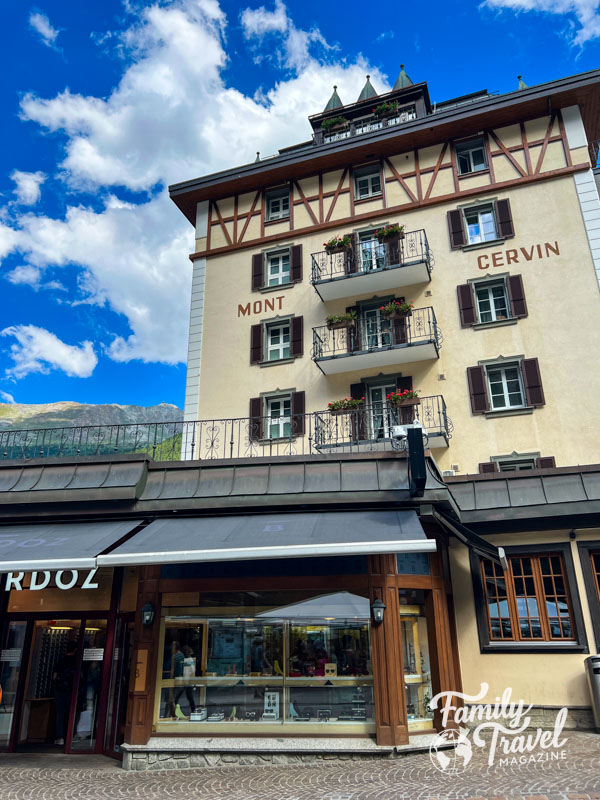
As a cornerstone of Zermatt’s luxury hotel sector, the historic Mont Cervin Palace occupies a prime central location just steps from the village’s main commercial thoroughfares and the railway station. Offering a diverse portfolio of Alpine-style rooms, Chalet-style quarters, and spacious family apartments, the property caters heavily to multi-generational travelers. Notable facilities include private balconies oriented toward the Matterhorn and the sprawling Spa Nescens Zermatt, which houses an expansive indoor pool, twin whirlpools, a dedicated children’s pool, Finnish saunas, biosaunas, and comprehensive steam bath installations. Gastronomic outlets include Grill Le Cervin, Le Restaurant, and Joseph’s Bar & Terrace, complemented by an extensive daily breakfast buffet featuring both hot à la carte items and cold selections.
4. The Omnia
Perched dramatically on a wooded rock outcropping high above the bustling village street level, The Omnia presents a minimalist, modern architectural interpretation of the classic mountain lodge. Guests reach the property via a dramatic rock-hewn tunnel housing a glass elevator that surfaces in the sleek, art-filled lobby. The hotel’s wellness center offers an exclusive sanctuary for registered guests, featuring an indoor-outdoor swimming pool, a cliffside outdoor hot tub oriented directly toward the Matterhorn, a steam room, bio and Finnish saunas, and a state-of-the-art fitness facility.
5. Hotel Schweizerhof Zermatt
Positioned in the pulsing center of Zermatt village, Hotel Schweizerhof Zermatt delivers contemporary elegance within a family-friendly framework. The property offers a range of accommodations from cozy single rooms to expansive junior suites, family suites, and high-altitude attic suites, many featuring crisp modern aesthetics and mountain vistas. Culinary diversity is a core hallmark of the hotel, featuring the specialized Cheese Factory for authentic Swiss fondue alongside the Schweizerhof Kitchen, which serves an international menu. The wellness level includes a heated swimming pool, twin whirlpools, a steam bath, two saunas, a fitness center, and dedicated family spa hours.
6. Grand Hotel Zermatterhof
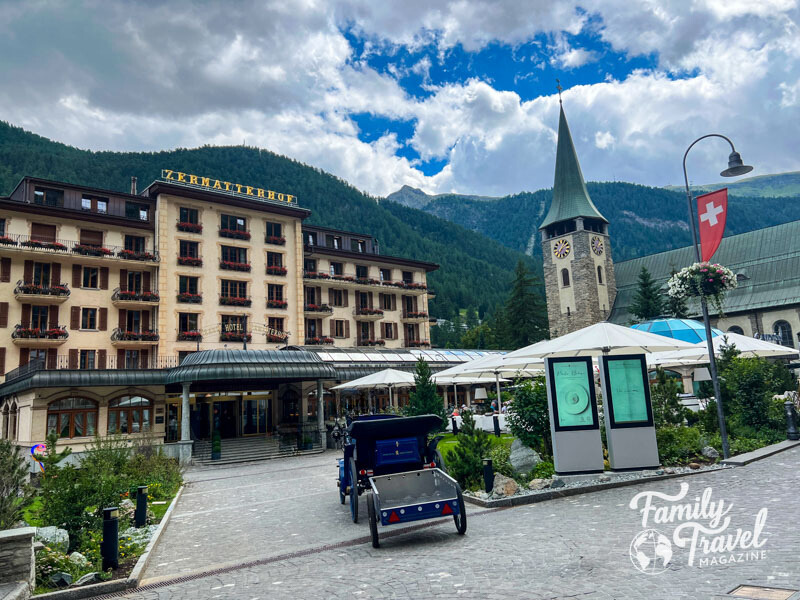
Widely regarded as one of the most prestigious and architecturally striking properties in the Swiss Alps, the Grand Hotel Zermatterhof sits directly in the municipal heart of Zermatt. As a member of Preferred Hotels & Resorts, the property features 69 classically appointed rooms and suites, with numerous connecting configurations designed specifically for family travel. Beyond its traditional horse-drawn carriage service, the hotel maintains private stables where guests can interact with and groom Lipizzaner horses. The Vita Borni Alpine Spa provides a comprehensive wellness journey, complete with an indoor swimming pool, ice grotto, and multiple thermal facilities. Dining options range from the lively piano lounge bar and the saycheese! fondue restaurant to the Michelin-starred fine dining establishment, Alpine Gourmet Prato Borni.
7. Christiania Mountain Spa Resort
Situated peacefully along the banks of the Visp River, the Christiania Mountain Spa Resort is celebrated for housing one of the largest wellness and pool complexes in Zermatt. The family-owned property features a diverse spectrum of lodgings, ranging from compact single "cosy rooms" tailored for solo travelers to multi-room family suites with unobstructed Matterhorn views. The resort’s massive spa infrastructure includes a large indoor swimming pool, beauty salon, whirlpools, Finnish sauna, steam bath, ice cave, bio sauna, and a fully equipped fitness center, supplemented in the warmer months by an expansive outdoor sunbathing terrace.
8. Matterhorn Focus Design Hotel
Located on the northern periphery of the village in a tranquil residential neighborhood directly adjacent to the Matterhorn Glacier Paradise cable car station, the Matterhorn Focus Design Hotel offers a hip, avant-garde aesthetic. Conceived primarily by celebrated local architect Heinz Julen, the thirty rooms across three interconnected buildings utilize abundant glass, exposed concrete, and warm natural timber. The hotel caters to families with a policy allowing children under nine years of age to stay free of charge in their parents’ rooms. On-site wellness amenities include an indoor swimming pool, a saline thermal bath, an outdoor whirlpool, a traditional caldarium, and a Finnish sauna.
9. Riffelalp Resort 2222m
Positioned at an altitude of 2,222 meters above sea level on the mountainside between the Gornergrat railway line and the valley floor, the Riffelalp Resort serves as the ultimate high-altitude retreat for winter ski enthusiasts and summer alpine trekkers. Accessible via a historic mountain tram connecting from the Riffelalp station stop, the resort operates as a true ski-in/ski-out facility during the winter months, while offering guided hiking excursions with resident alpine guides during the summer. The property houses Spa 2222m—Europe’s highest luxury spa—which provides indoor and outdoor heated pools, saunas, steam rooms, and fitness installations exclusively for hotel residents.
10. 22 Summits Boutique Hotel
Named in honor of the twenty-two prominent alpine summits visible from its immediate vicinity, the 22 Summits Boutique Hotel delivers an intimate, design-forward lodging experience. Comprising just 22 meticulously styled alpine rooms and suites, the property blends natural larch wood finishes with modern comforts. The wellness center, accessible to both hotel guests and external visitors via regional guest passes, offers a restorative circuit including a Finnish sauna, a fitness room, a vitarium, an authentic alpine hay bath, and an outdoor jacuzzi, alongside customizable therapeutic massage treatments.
Broader Impact, Regional Economics, and Tourism Dynamics
Zermatt’s strict adherence to an automotive-free model has proven to be a masterclass in sustainable mountain tourism management. By restricting fossil-fuel-fueled vehicles within municipal boundaries, the town has preserved its acoustic tranquility and maintained air quality standards far superior to most comparable alpine ski resorts in Europe. Economically, this commitment to high-end infrastructure and stringent environmental controls has positioned Zermatt as a high-yield tourism market, attracting affluent global travelers who prioritize environmental stewardship alongside elite hospitality.
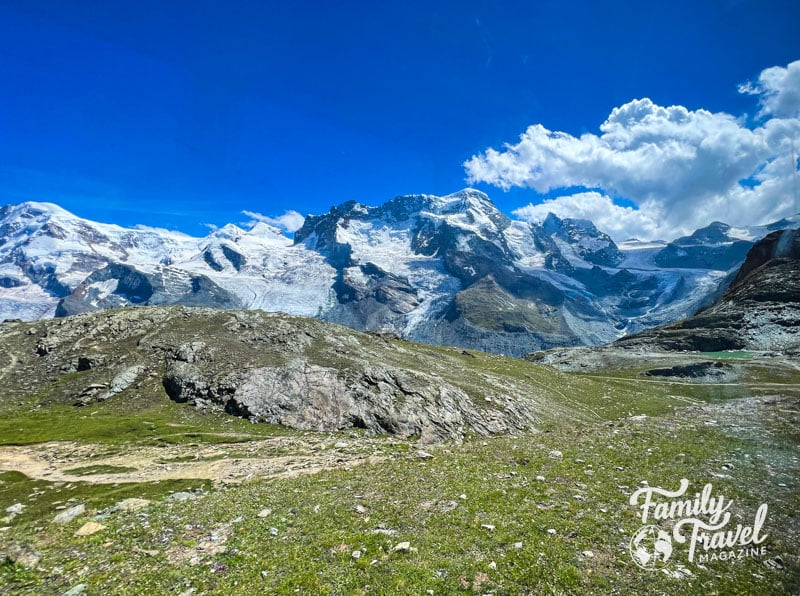
Local municipal data and regional tourism boards consistently report high occupancy rates across both winter and summer seasons, driven largely by the diversification of summer adventure tourism. As climate shifts impact traditional snow-pack durations across lower-altitude European ski resorts, Zermatt’s extreme high-altitude geography—with glaciers reaching up to 3,883 meters—secures its long-term viability as a year-round capital for international leisure and sports tourism.
Related posts: