Returning to a destination after a long absence often forces a confrontation between memory and reality. For the traveler, Seville serves as a case study in this phenomenon: a city that has evolved through gentrification and urban development while retaining the sensory hallmarks that define its Andalusian character. Beyond the shifting landscape of Plaza Nueva and the arrival of modern infrastructure, a more profound personal transformation often occurs for the frequent visitor: the transition from the apprehension of a language learner to the functional fluency of an active participant.

The history of language acquisition for adult travelers is marked by a common trajectory of frustration. Many begin with phrasebooks and high expectations, only to be met with the reality of rapid-fire native speech, leading to a reliance on English as a defensive mechanism. However, recent trends in language learning suggest that the integration of one-to-one tutoring, combined with immersive exposure, significantly reduces the "confidence gap" that often stalls adult learners.
The Psychology of Language Barriers and Cognitive Development
The linguistic barrier is rarely about vocabulary alone; it is a psychological hurdle. When a traveler attempts to speak a second language, they often experience a sense of reduced self-identity, feeling that they cannot convey their true personality in the target tongue. Clinical research into second language acquisition highlights that the "affective filter"—the psychological barrier that prevents input from reaching the language acquisition centers of the brain—is at its highest when a learner feels anxious or embarrassed.

In the case of Seville, the city provides a high-stakes environment for learners. The local dialect, characterized by rapid cadence and the omission of certain consonants, can be daunting. Yet, data from language learning platforms indicates that immersion in these "high-pressure" environments is the most effective way to transition from passive knowledge to active usage. When a learner moves from a controlled classroom setting to a real-world scenario—such as a bustling tapas bar—they are forced to utilize "circumlocution," or the ability to explain a concept using the vocabulary they possess, which is a critical milestone in fluency.
A Chronology of Linguistic Integration
The journey to conversational proficiency typically follows a three-stage timeline:

- The Preparation Phase: The initial reliance on rote memorization and digital tools. At this stage, the learner often experiences "the waitress effect," where an attempt to communicate in the local language results in the native speaker immediately pivoting to English, effectively ending the learner’s practice opportunity.
- The Structured Transition: The implementation of targeted, one-to-one instruction. By engaging with tutors who provide unpredictable prompts and force the learner to navigate complex, non-rehearsed conversations, the learner develops the cognitive flexibility required for real-world interactions.
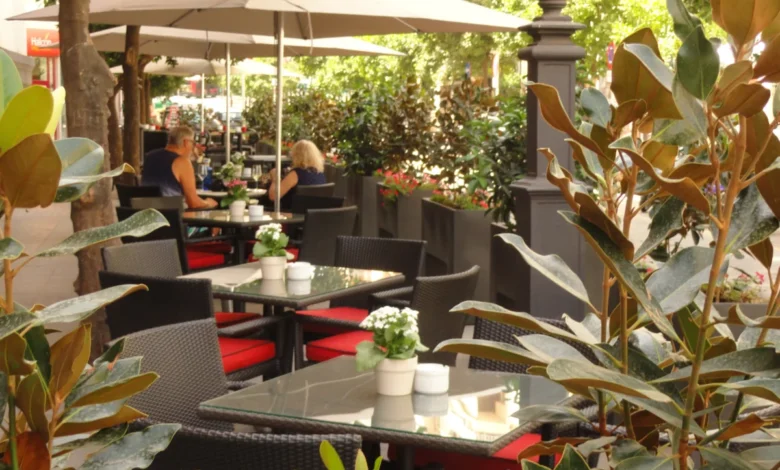
- The Application Stage: The return to the target environment. This is where the, at times, uncomfortable lessons from the tutoring phase are tested. In Seville, this manifested in settings like Las Teresas, where the simple act of ordering a meal—and responding to an unexpected follow-up question—signifies a shift in the learner’s internal confidence.
Supporting Data on Adult Language Acquisition
According to studies on adult cognitive performance, the ability to process a second language without the "mental translation" delay is a hallmark of reaching an intermediate-mid level of proficiency. The transition occurs when the brain stops treating the language as a mathematical equation to be solved and starts treating it as a primary medium for communication.
For many travelers, the "Plaza del Museo" experience—where the environment is relaxed, aesthetic, and conducive to unhurried interaction—serves as the ideal testing ground. When a traveler engages an artist about their work in the local tongue, the focus shifts from the act of speaking to the content of the conversation. This shift is the most significant indicator of progress; the language has effectively become a transparent tool rather than a deliberate, labored effort.

Expert Perspectives on Immersion and Travel
Language educators emphasize that the value of speaking a local language extends beyond basic utility. It changes the nature of the traveler’s experience. By engaging in the local vernacular, the traveler gains access to nuanced cultural exchanges that are otherwise shielded by the "tourist bubble."
"The goal is not perfection, but rather the ability to sustain an interaction," says one linguistic consultant specializing in travel-based acquisition. "When a native speaker does not feel the need to switch to English, the power dynamic of the interaction changes. The learner is no longer a guest struggling to understand, but a participant in the social fabric of the city."

The Broader Implications for Sustainable Tourism
This evolution in language capability has significant implications for responsible tourism. As global travel becomes more accessible, the tendency to create "enclave tourism"—where travelers remain within their own linguistic and cultural comfort zones—can diminish the local character of historic cities like Seville.
By actively learning and employing the local language, travelers contribute to a more authentic exchange. This is not merely about ordering food; it is about respecting the cultural heritage of a region. When a traveler takes the time to navigate the intricacies of a foreign tongue, they signal a commitment to the place they are visiting, which often results in a more welcoming response from local residents.

Moving Toward Long-Term Fluency
It is critical to note that this level of engagement does not imply total fluency. Even experienced speakers encounter "blank spots"—moments where complex grammar or rapid regional slang causes a communication breakdown. However, the difference for the experienced learner is the reaction to these moments. Where the novice might retreat to the safety of English, the proficient learner views the gap as a natural part of the process.
The journey from the frustration of being misunderstood in a restaurant to the relative ease of discussing art in a public square is not a straight line. It requires persistent, often repetitive, practice and the resilience to endure the discomfort of being wrong. Yet, for those who commit to the process, the reward is a deeper, more profound connection to the destination.

As Seville continues to adapt to the demands of 21st-century tourism, the individual traveler’s effort to learn the language remains one of the most effective ways to preserve the city’s unique, seductive soul. It is a reminder that while cities change, the human connection facilitated by language remains a constant. The fear of speaking is not eliminated; it is simply managed, transformed into a bridge that allows the traveler to step beyond the role of an observer and into the role of a participant in the "la buena vida" that defines the Andalusian experience.