Korean Alpine Federation Embarks on Challenging Expedition to Unclimbed, Enigmatic Sato Peak in Kangchenjunga Region

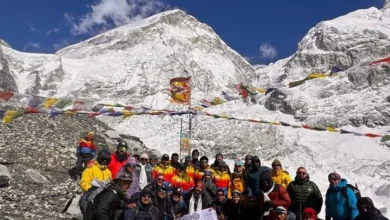
A seven-member team from the Korean Alpine Federation (KAF), led by veteran mountaineer An Chi-young, has commenced a high-stakes expedition to attempt the first verified ascent of the elusive Sato Peak, nestled within the remote and challenging Kangchenjunga region of eastern Nepal. The expedition, which began with the team’s flight to Taplejung, the primary gateway to the formidable Kangchenjunga massif, is slated to continue until May 10. This ambitious endeavor is drawing significant attention within the international mountaineering community, not only due to the peak’s unclimbed status but also for the team’s commitment to tackling it in pure alpine style, entirely without the traditional support of high-altitude Sherpa porters. This approach underscores a commitment to self-sufficiency and minimal impact, a hallmark of modern elite mountaineering.
The KAF team, comprising Euijoon Lee, Hyungwook Choi, Jiho Choi, Jongmin Baek, Sangkug Lee, and Seoyeong Bae, alongside leader An Chi-young, represents a formidable contingent of experienced climbers. Their arrival in Nepal was met with official reception by the Korean embassy in Kathmandu, highlighting the diplomatic interest in the expedition. Embassy officials expressed hope that the venture would not only achieve its sporting objective but also contribute to strengthening bilateral ties between South Korea and Nepal, nations with a growing history of cultural exchange and collaboration, including in the realm of adventure tourism.
The Geographic and Historical Enigma of Sato Peak
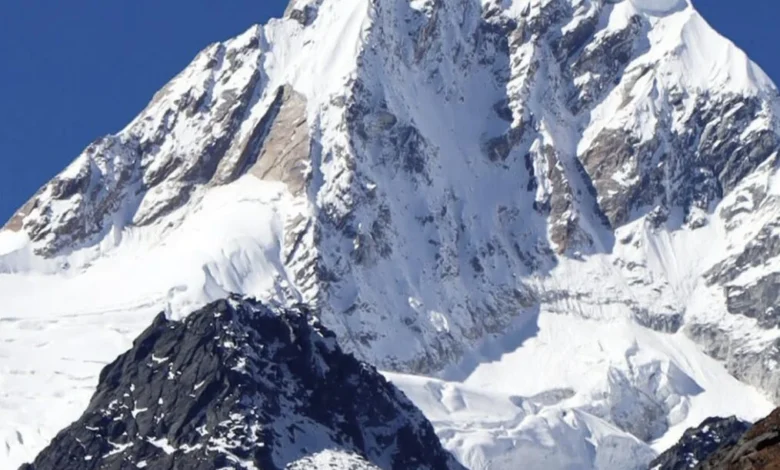
Sato Peak, often referred to as Sat Peak, is situated within the rugged Janak Himal range, specifically northwest of the imposing Kangchenjunga massif, the third-highest mountain in the world. Its precise altitude remains a subject of ongoing debate and confusion among cartographers and mountaineering chroniclers, with published figures varying significantly from 6,164 meters to 6,220 meters. This discrepancy is indicative of the broader challenges associated with accurately mapping and documenting peaks in this exceptionally complex and remote Himalayan sub-range. The Janak Himal, known for its jagged ridges, deep valleys, and often severe weather conditions, presents a formidable environment even for seasoned climbers.
The region’s climbing history is equally convoluted. The peaks within the Janak Himal, including Sato and its six adjacent Sharphu peaks (all exceeding 6,000 meters), were initially opened to international expeditions in the 1960s. However, they were subsequently closed for several decades, limiting exploration and definitive ascents. The reopening of these peaks in 2022 sparked renewed interest, attracting elite climbing teams eager to tackle some of the last remaining unclimbed challenges in the Himalayas. This recent history has, however, done little to resolve the persistent issues of peak identification and accurate altitude measurement, leading to numerous instances of misidentification by climbing teams and considerable "headaches" for authoritative record-keepers like The Himalayan Database and 8000ers.com.
A History of Attempts and Misinterpretations
The status of Sato Peak as "unclimbed" is not without its own historical footnotes and queries. The Himalayan Database, the meticulously curated chronicle of Himalayan expeditions, notably tags Sato Peak with an "unclimbed?" designation. This cautious skepticism stems from a belief that a Japanese team in the 1960s might have inadvertently summited Sato Peak, mistaking it for Nupchu Peak, another high point in the vicinity. Such misidentifications were not uncommon in an era preceding modern GPS technology and high-resolution satellite imagery, where navigation relied heavily on less precise maps, compasses, and visual recognition in often obscured conditions. The challenging terrain and similar appearances of multiple peaks in close proximity often led to genuine confusion, a legacy that continues to impact contemporary mountaineering history.
More recently, since the reopening of the Janak Himal peaks, Sato Peak has seen direct attempts. In 2022, Italian climbers Stefano Ragazzo and Silvia Loreggian made a notable push on Sato, reaching what they identified as a foresummit, dubbed "Sato Pyramide," at approximately 6,100 meters. While a significant achievement, a foresummit is distinct from the true main summit, leaving the ultimate goal still unconquered. The following year, in 2023, another highly experienced Japanese team, led by Piolet d’Or winner Yasuhiro Hanatani, also attempted Sato Peak. Hanatani’s participation underscores the high regard in which Sato Peak is held within the global climbing community as a legitimate and challenging objective. Despite these concerted efforts by elite mountaineers, the main summit of Sato Peak has eluded confirmed ascent, setting the stage for the current Korean expedition.
The Korean Alpine Federation’s Strategy and Preparation
While the Korean Alpine Federation has maintained a degree of strategic discretion regarding the specifics of its expedition, they have confirmed that all team members have undergone "rigorous training." This typically implies a comprehensive preparation regimen for high-altitude alpine-style climbing. Such training would encompass extensive physical conditioning, including endurance training, strength building, and acclimatization protocols at progressively higher altitudes. Technical skills development would also be paramount, covering ice climbing, rock climbing, crevasse rescue, glacier travel, and advanced rope techniques. Furthermore, wilderness first aid, navigation skills, and psychological conditioning for extreme environments are crucial components. The decision to climb without Sherpa support means the team must be entirely self-sufficient, capable of carrying all their gear, establishing their own camps, fixing ropes, and executing self-rescue if necessary. This significantly increases the physical and mental demands on each individual.
The KAF’s decision not to divulge specific details about their climbing strategy or chosen route could be multi-faceted. It might be a tactical move to maintain an element of surprise, preventing other teams from potentially attempting the same line. Alternatively, it could reflect the inherent flexibility required in alpine-style ascents, where the chosen route often evolves based on real-time conditions, weather patterns, and the team’s assessment of objective hazards. Given the peak’s disputed altitude and complex geography, a cautious and adaptive approach to route planning is undoubtedly prudent.
Alpine Style: A Testament to Skill and Self-Reliance
The commitment to climbing Sato Peak in alpine style, as noted by Nepal’s Tourism Board, is a significant declaration of intent. Alpine style contrasts sharply with expedition style, which typically involves large teams, multiple fixed camps, extensive rope fixing, and substantial Sherpa support to ferry supplies and establish infrastructure. In alpine style, a small team carries all its gear from base camp to the summit and back, moving quickly and efficiently, often in a single push or with minimal bivouacs. This method is lauded for its purity, speed, and reduced environmental impact, but it demands an extraordinary level of skill, endurance, and judgment. Without the safety net of a larger support system, every decision and every move carries magnified consequences. The choice reflects a purist ethos within mountaineering, valuing the challenge of complete self-reliance against the raw power of the mountain.
Diplomatic Ties and Nepal’s Mountaineering Economy
The engagement of the Korean embassy in Kathmandu with the KAF team underscores the broader socio-economic and diplomatic implications of such expeditions. Mountaineering in the Himalayas is not merely a sport; it is a vital component of Nepal’s tourism industry and an avenue for international relations. Successful expeditions generate positive media attention, drawing more tourists and climbers to the region, thereby boosting the local economy through permits, logistics, and services. The Korean embassy’s expressed hope for deepening bilateral ties through this expedition is a common sentiment, as shared endeavors in challenging environments often forge unique bonds and mutual respect between nations. South Korea has a growing presence in the global adventure sports scene, and its mountaineers are increasingly making their mark on the world’s highest peaks. This expedition can further cement South Korea’s reputation as a nation capable of undertaking highly demanding scientific and sporting ventures, while simultaneously showcasing Nepal’s unparalleled natural beauty and its role as a global mountaineering hub.
Challenges and Risks in the Janak Himal
Climbing in the Kangchenjunga region, and particularly within the Janak Himal, presents a multitude of extreme challenges. The weather patterns are notoriously unpredictable, characterized by sudden blizzards, high winds, and rapidly fluctuating temperatures. Objective hazards such as avalanches, rockfall, and hidden crevasses are constant threats. The remote nature of Sato Peak means that rescue operations, should they be required, would be incredibly complex, time-consuming, and resource-intensive. Altitude sickness, including Acute Mountain Sickness (AMS), High-Altitude Cerebral Edema (HACE), and High-Altitude Pulmonary Edema (HAPE), remains a significant physiological risk, requiring careful acclimatization and constant vigilance. Frostbite and hypothermia are ever-present dangers in the extreme cold. The absence of Sherpa support places additional logistical burdens on the KAF team, including route finding, camp establishment, and carrying heavy loads, all while operating in a severely oxygen-depleted environment.
The Imperative of Verification in Mountaineering History
The ongoing debate surrounding Sato Peak’s "unclimbed?" status highlights the critical role of independent verification in mountaineering. Organizations like The Himalayan Database, founded by the late Elizabeth Hawley and now continued by Billi Bierling, and resources like 8000ers.com, are indispensable for maintaining accurate historical records. Their work involves meticulously cross-referencing expedition reports, interviewing climbers, analyzing photographic and video evidence, and, in modern times, examining GPS data. This rigorous process is essential for validating claims of first ascents, establishing precise peak altitudes, and resolving historical ambiguities. The integrity of mountaineering achievements hinges on such verification, ensuring that credit is accurately assigned and that future generations of climbers have a reliable historical context for their endeavors. The KAF expedition, if successful, will not only aim to achieve a first ascent but also to provide definitive proof to settle Sato Peak’s status once and for all.
As the Korean Alpine Federation team presses deeper into the remote fastness of the Janak Himal, the mountaineering world watches with keen interest. Their journey to Sato Peak is more than just an attempt to conquer a summit; it is an expedition into a geographical enigma, a test of pure alpine skill, and a contribution to the evolving narrative of Himalayan exploration. The hopes for a safe and successful ascent are high, not only for the team’s personal achievement but also for the clarification of a long-standing mystery in the annals of high-altitude mountaineering.