In a significant achievement for international mountaineering, a team of five German alpinists successfully established a new route on the northwest ridge of Sharphu VI, a 6,076-meter peak located in the remote Kangchenjunga region of eastern Nepal. This expedition, conducted under the auspices of the German Alpine Club (DAV), marks only the second successful ascent in the history of the mountain. The accomplishment serves as the capstone project for the German Alpine Club’s intensive three-year women’s training program, demonstrating the effectiveness of structured high-altitude mountaineering development for female climbers.
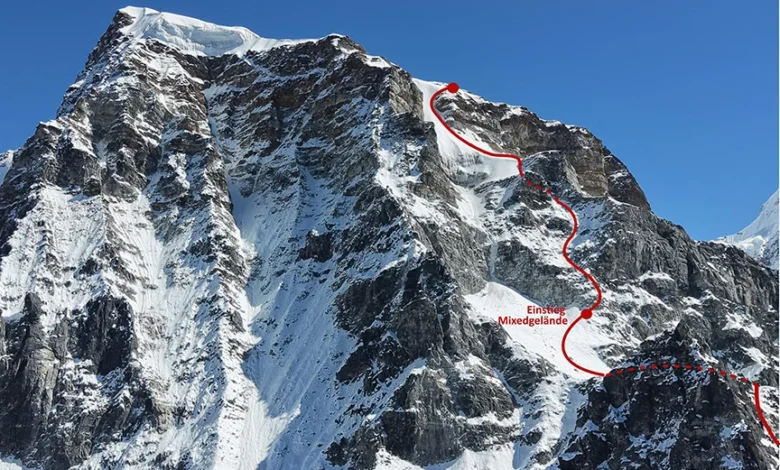
The successful team consisted of Steffi Feistl, Anna Gomeringer, Kristin Hinkelmann, Kathi Huber, and Fenja Kochl. Their expedition, which took place throughout October, highlights the technical challenges inherent in Himalayan mountaineering, particularly when navigating peaks that remain largely unmapped or rarely visited. The team’s route, which covers 1,300 meters of elevation gain and is graded at M5, 55°, represents a bold step forward in technical exploration within the region.
A Strategic Pivot: Navigating Himalayan Instability
The expedition’s original objectives were more ambitious, with the team initially targeting both Sharphu II and Sharphu VI. However, the realities of the post-monsoon Himalayan environment forced a pragmatic change in strategy. Upon arriving at their base camp at 4,000 meters in early October, the team conducted thorough reconnaissance missions to assess the stability of the surrounding peaks.
Their assessment of Sharphu II revealed conditions that were deemed too dangerous for a safe ascent. The mountain was plagued by unstable rock formations, active and threatening seracs, and highly unpredictable snow conditions that increased the risk of avalanche. Recognizing that the hazards far outweighed the potential gains, the team made the difficult decision to abandon the Sharphu II attempt. This decision underscores the importance of risk management and environmental awareness in modern mountaineering, where the ability to retreat or redirect is often as critical as the summit bid itself.

The northwest ridge of Sharphu VI, by contrast, presented a more viable, albeit challenging, path. By shifting their focus to this objective, the team was able to concentrate their resources and training toward a singular, achievable goal.
Chronology of the Ascent
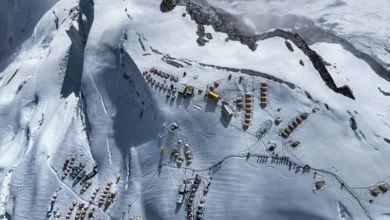
The climb was a methodical process involving multiple phases of acclimatization and exploratory efforts. After establishing their base camp, the team conducted several reconnaissance trips to familiarize themselves with the terrain and the structural integrity of the northwest ridge. They established an advanced base camp on a moraine ridge at 4,800 meters, serving as the jumping-off point for their push to the summit.
The initial phase of the ascent was handled by Fenja Kochl, Kristin Hinkelmann, and Kathi Huber. The trio navigated through deep, snow-covered terrain that had been exacerbated by heavy snowfall earlier in the season. As they progressed, the technical nature of the climb intensified. At approximately 5,300 meters, the climbers encountered a steep section characterized by powder snow overlying bare rock, which made the placement of secure protection nearly impossible.
Kathi Huber later described the frustration of this section, noting that the mixed pitches were significantly steeper than their initial observations suggested. The team struggled with granular snow that offered no purchase, forcing them to proceed with extreme caution. After successfully navigating these technical hurdles, the trio rappelled down to the advanced base camp to conserve energy and regroup.
The following day, Steffi Feistl and Anna Gomeringer took the lead, tackling a difficult mixed pitch that required precise footwork and intense focus. They were then forced to endure 200 vertical meters of strenuous work, burrowing through waist-deep powder snow to clear a path. After a mandatory rest day to recover from the physical exertion of the climb, the entire team of five launched their final summit bid.

On October 21, the team successfully traversed a previously unclimbed sub-peak at 5,800 meters, reaching a glacier plateau where they established a bivouac. The final two-kilometer push to the summit was aided by favorable conditions; recent sunlight had hardened the snowpack, reducing the depth of the snow and allowing for more efficient movement. Upon reaching the summit ridge, the group found the space so constrained that they were required to take turns standing on the peak, a testament to the narrow, razor-like structure of the summit.
Contextualizing Sharphu VI
The history of Sharphu VI is relatively short, characterized by mystery and limited human presence. The peak was first climbed on March 25, 2025, by a combined Chilean-Nepalese team. Interestingly, that group initially believed they had summited a different peak entirely, reflecting the historical ambiguity surrounding the geography of the Kangchenjunga sector. Their ascent was completed via the east flank, a path distinct from the route taken by the German team.
Before the 2025 ascent, Sharphu VI had seen only one documented attempt in 2023, which failed to reach the summit. The success of the German team in establishing a new route on the northwest ridge not only provides valuable data for future climbers but also clarifies the technical requirements for ascending this specific peak.
Training and Institutional Support
The expedition was not merely a recreational climb but the culmination of a rigorous three-year training program organized by the German Alpine Club (DAV). This initiative was specifically designed to provide women with the skills necessary to handle high-altitude, technical, and remote expeditions. By providing training in areas such as route finding, gear placement, hazard assessment, and team management, the DAV has sought to increase the participation and success rates of women in elite alpinism.
The success of Feistl, Gomeringer, Hinkelmann, Huber, and Kochl is being viewed by the alpine community as a validation of this program. The ability of the team to function cohesively under the pressure of unpredictable weather and difficult terrain suggests that the training provided a robust framework for autonomous, high-level decision-making.

Broader Implications for Mountaineering
The ascent of Sharphu VI carries several implications for the future of Himalayan mountaineering. First, it highlights the ongoing importance of "pioneer" climbs. As popular peaks become increasingly crowded, the focus is shifting toward smaller, technical, and remote objectives. These peaks offer a unique opportunity for alpinists to test their skills in environments where there is little to no existing infrastructure or established route data.
Second, the environmental challenges faced by the team—the unstable rock on Sharphu II and the deep powder on Sharphu VI—serve as a reminder of the shifting climate patterns in the Himalayas. Increased snowfall and rising temperatures are altering the structural integrity of mountains, necessitating a more dynamic and cautious approach to route selection.
Finally, the expedition reinforces the move toward more inclusive representation in high-altitude sports. By providing institutional support, organizations like the DAV are effectively lowering the barriers to entry for professional-grade mountaineering, allowing for a broader diversity of experience and perspective on the world’s most challenging peaks.
As the team returns to Germany, their successful ascent stands as a record of both technical proficiency and institutional investment. The northwest ridge of Sharphu VI will likely remain a challenging objective for future parties, but the path carved by the five women provides a necessary map for those who seek to follow in their footsteps in one of the most remote corners of the planet.
Related posts: