Beyond the Bird: How Boxed Stuffing Became a Year-Round Culinary Staple for the Modern Home Cook

The humble box of dry bread cubes, dried herbs, and dehydrated aromatics, long synonymous with the American Thanksgiving table, is undergoing a significant culinary repositioning. While once relegated to the status of a once-a-year convenience product, market data and evolving consumer habits suggest that boxed stuffing has emerged as a versatile pantry staple for weeknight cooking. This transition from a holiday-specific side dish to an essential kitchen building block reflects broader trends in domestic cooking, where speed, cost-effectiveness, and flavor-optimization have become the primary drivers of household menu planning.
The history of the boxed stuffing category is rooted in the post-World War II era, a period defined by the rapid expansion of the convenience food market. In 1972, General Foods introduced the Stove Top brand, fundamentally altering the Thanksgiving landscape by providing a product that could be prepared in under ten minutes. According to industry analysts, this product solved a perennial problem for home cooks: the labor-intensive process of drying bread, chopping fresh mirepoix, and sourcing specific poultry seasonings. For decades, the product held a distinct, seasonal market position, with sales peaking significantly in November. However, recent internal data from major food publications and retail consumer behavior studies indicate a shift in consumption patterns, with a growing demographic of “maximalist” home cooks utilizing these products across all four seasons.
The Evolution of Convenience Cooking
The current shift toward the year-round use of stuffing mix is largely driven by the professionalization of the home kitchen. As culinary content platforms—such as Bon Appétit and Epicurious—have increasingly focused on “unfussy” cooking, the definition of a pantry staple has expanded. Where a home cook might have previously viewed a box of stuffing as a singular, static ingredient, modern culinary methodology now treats it as a seasoned, pre-toasted bread component.

This approach aligns with a broader movement toward “pantry-first” cooking, which emphasizes the use of shelf-stable goods to mitigate the time pressures of modern life. For the time-poor consumer, the ability to repurpose a holiday staple into a Tuesday evening meal—often requiring less than 20 minutes of active prep time—provides a tangible utility that outweighs the traditional holiday-only association.
Chronology of a Culinary Pivot
The professionalization of the “stuffing hack” can be traced through the following developments in food media and culinary testing:
- Early 1970s – 1990s: The dominance of the "Thanksgiving-only" model. Boxed stuffing is marketed exclusively as a shortcut for holiday labor, focusing on nostalgia and traditional flavor profiles.
- 2010s: The rise of social media-driven recipe development. Small-scale food bloggers begin experimenting with unconventional uses for stuffing, such as using it as a crust for fish or a base for breakfast dishes.
- 2020 – 2022: The global pandemic mandates a shift in household food purchasing behavior. Supply chain instabilities and increased home-cooking frequency force consumers to find creative uses for existing pantry inventory.
- 2023 – 2024: Institutional adoption. Major food publications begin commissioning recipes that explicitly feature stuffing mix as a year-round ingredient, cementing its status as a versatile culinary tool.
Technical Applications and Culinary Utility
The versatility of boxed stuffing lies in its composition. It is, by definition, a pre-seasoned, dehydrated starch. When viewed through this lens, its utility in a modern kitchen is vast. Culinary experts have identified several key applications that elevate the product beyond its intended use:
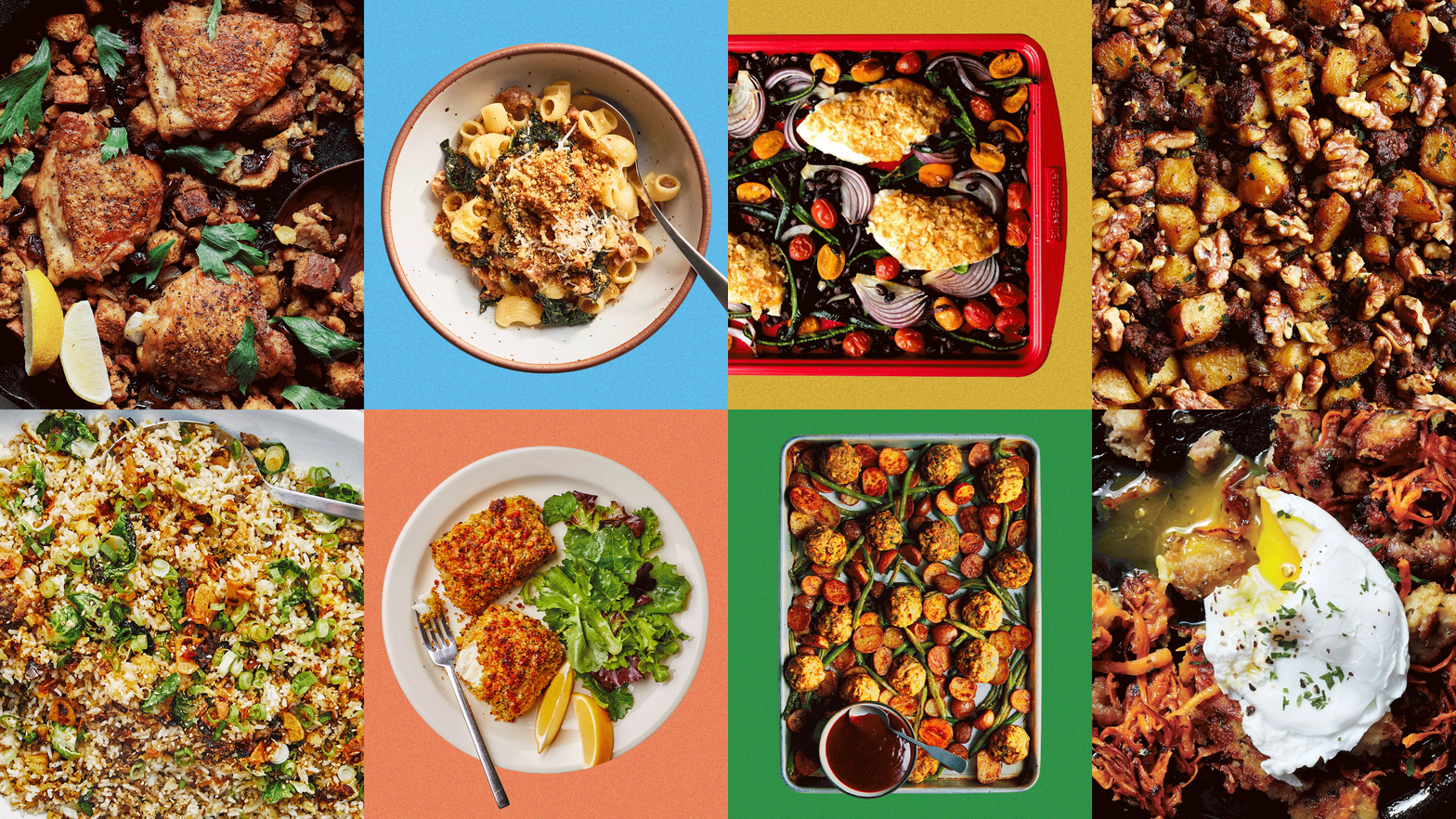
- The Savory Panade: By acting as a carrier for moisture and seasoning, stuffing mix can be incorporated into ground proteins. When mixed with lean ground turkey or chicken, the dehydrated bread absorbs the juices of the meat, resulting in a significantly more tender meatball than those made with standard breadcrumbs.
- Texture Modification: When blitzed in a food processor, stuffing mix becomes a coarse, highly seasoned crumb. This acts as a functional replacement for traditional breadcrumbs in pasta dishes, providing both texture and an infusion of aromatic depth (sage, thyme, and onion) that would otherwise require additional preparation.
- The Crisping Agent: As a crust for seafood, such as cod or tilapia, the mix provides a high-heat-resistant barrier that remains crisp even when the underlying protein is delicate. This removes the need for complex breading stations, reducing the cleanup burden on the home cook.
- Skillet Integration: The "one-pan" meal model relies on ingredients that cook at different rates but finish simultaneously. Stuffing mix, when introduced to the rendered fat (schmaltz) of seared chicken, absorbs the flavor profile of the meat while simultaneously cooking to a desired texture within the same skillet.
Economic and Logistical Analysis
The broader implications of this trend are significant for both manufacturers and consumers. From an economic perspective, the year-round utilization of stuffing mix represents a strategy for grocery budget optimization. As food inflation remains a concern for many households, the ability to stretch a high-quality protein with a low-cost, high-flavor-impact starch is a practical solution.

Furthermore, the data suggests that the "holiday shortcut" category is becoming increasingly resistant to seasonal downturns. Retailers have noted that off-season promotions—often focused on "cozy season" or "comfort food" branding—have begun to yield higher year-over-year growth in the stuffing category compared to the traditional holiday peak, which had previously reached a saturation point.
Professional Perspectives and Industry Impact
Industry observers note that the resistance to these methods, often rooted in the traditionalist view of holiday cooking, is steadily declining. Test Kitchen editors, who traditionally prioritized scratch-made ingredients, have increasingly validated the use of "hacked" pantry items. This validation is critical; when recognized experts incorporate processed staples into sophisticated recipes, it removes the social stigma associated with "shortcut" cooking.
"The goal is not to replicate the labor of a scratch-made dressing, but to utilize a seasoned product for its structural properties," notes one industry analyst. "When you strip away the branding and the holiday context, you are left with a highly functional, stable, and flavor-dense ingredient. The home cook of today is far more pragmatic than the home cook of 1980."
Future Outlook
The trajectory of boxed stuffing suggests that it will continue to move toward a status similar to that of canned beans or dried pasta: a reliable, flavor-forward base that can be customized to fit any meal profile. As technology in food manufacturing continues to advance, the flavor profiles of these mixes may evolve to be less "holiday-specific," potentially leading to new variations that lean into Mediterranean, spicy, or neutral-savory profiles.

For the modern consumer, the "outside the box" mentality represents a fundamental change in how we perceive the contents of our cupboards. The success of these culinary applications highlights a broader, ongoing transformation in the American kitchen—one that prioritizes ingenuity, efficiency, and the breakdown of rigid, tradition-based cooking boundaries. Whether it is a tray of breakfast eggs baked into a nest of crispy stuffing or a pasta dish topped with herb-infused breadcrumbs, the future of this classic product is firmly rooted in the daily routine of the 21st-century home.