Bay Area Artists and Activists Launch Burma Spring Benefit Film Festival to Support Nonviolent Resistance Following Military Coup

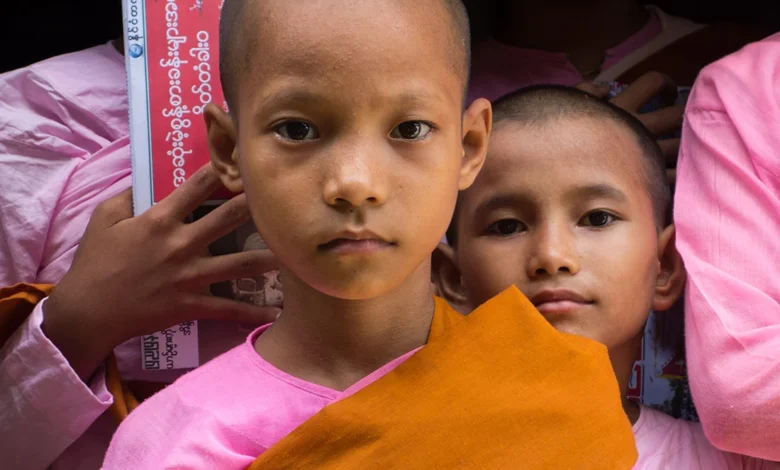
The San Francisco Bay Area has emerged as a prominent hub of international solidarity in response to the ongoing humanitarian and civil rights crisis in Myanmar, formerly known as Burma. Sparked by the military coup of February 2021, a dedicated collective of local activists, filmmakers, and academics has banded together to organize the Burma Spring Benefit Film Festival. Running virtually from June 3 through June 20, the festival delivers a carefully curated selection of independent cinema, documentaries, and live panel discussions designed to spotlight the plight of the Southeast Asian nation while raising crucial funds for grassroots humanitarian organizations operating inside Myanmar.
By marrying artistic expression with political activism, the festival aims to channel all net proceeds directly toward groups supporting the country’s expansive nonviolent democracy movement. While attendance and streaming are free, donations are strongly encouraged, though entirely optional. Featuring over thirty cinematic works originating from or focusing on Myanmar, the program is complemented by daily public forums featuring prominent activists, journalists, and regional observers. According to the organizing committee, the overarching objective is to pay tribute to the profound courage and unwavering dignity displayed by ordinary citizens who continue to wage a nonviolent struggle to reclaim their nation’s political destiny.
A Diverse Cinematic and Cultural Program
The expansive film lineup spans a vast thematic and geographic landscape, incorporating documentaries, experimental short films, and fictional dramas. Programmatic topics address urgent contemporary concerns, including systemic human rights abuses, environmental degradation, the historical struggles of diverse ethnic minority groups, Buddhist traditions, and intersectional advocacy for LGBTQ rights and women’s empowerment.
Among the standout programming is Burma Spring 21, a collaborative short-form documentary that captures the immediate aftermath of the coup and the subsequent rise of the Civil Disobedience Movement (CDM). Festival co-organizer Kenneth Wong, a Burmese-American author, translator, and language instructor at the University of California, Berkeley, highlights the deliberate juxtaposition of modern digital-age resistance with historical retrospection.
"Watching this alongside Burma VJ, about the brave video journalists who documented the uprisings that predated the digital age, might give the audience a way to contrast the different resistance movements separated by decades," Wong noted.
Other notable entries include I Am Rohingya: A Genocide in Four Acts, a powerful feature in which fourteen young refugees reenact the harrowing experiences of their families amid the systematic persecution of Burmese Muslims. The Black Zone follows a covert medical team navigating perilous jungle terrain to deliver humanitarian aid under the constant threat of military atrocities. Additionally, A Peaceful Land offers an intimate look at rural resistance, chronicling how farmers mobilized against a state-mandated agricultural campaign that resulted in widespread land confiscations and forced labor.
Contextualizing the Crisis: The February 2021 Coup
To fully understand the urgency driving the Burma Spring Benefit Film Festival, observers must examine the sudden collapse of Myanmar’s fragile democratic experiment. On the morning of February 1, 2021, the military junta—formally known as the Tatmadaw—launched a pre-dawn sweep that seized absolute control of the government. The military deposed the civilian leadership, notably de facto leader Aung San Suu Kyi and President Win Myint. Suu Kyi’s National League for Democracy (NLD) had secured a resounding landslide victory in the November 2020 general elections, capturing an overwhelming majority of parliamentary seats.
The Tatmadaw justified its seizure of power by alleging widespread voter fraud in the general election, an unproven claim rejected by domestic and international election monitors alike. This familiar playbook abruptly terminated Myanmar’s decade-long, albeit flawed, transition toward civilian-led democratic governance. Lee Morgenbesser, an expert on authoritarian politics in Southeast Asia at Griffith University’s School of Government and International Relations in Australia, observed that the coup successfully shattered the political liberalization that had slowly developed since roughly 2010.
The military’s initial sweep targeted far more than high-ranking elected officials. Prominent cultural figures, intellectuals, and human rights defenders were swiftly rounded up. Kenneth Wong points out that Min Htin Ko Gyi, founder of the annual Human Rights Human Dignity Film Festival, was detained alongside President Win Myint on the very morning of the coup. In the weeks and months that followed, the junta widened its net to encompass popular public figures, including well-known comedian Zarganar, action and romantic comedy star Min Lu—who was reportedly incarcerated in the notorious Insein Prison—and high-profile male model Paing Takhon.
The artistic and literary communities were deliberately targeted for their outspoken opposition. More than thirty poets were imprisoned, with reports confirming that some had been summarily executed. Over one hundred professionals from Myanmar’s domestic film industry found themselves in the crosshairs of military intelligence, forcing hundreds of citizens, famous and obscure alike, to flee into hiding or across international borders.
According to data compiled by the Assistance Association for Political Prisoners (AAPP), a prominent human rights monitoring organization, the Tatmadaw’s violent crackdown on subsequent nationwide protests resulted in the deaths of well over 800 demonstrators. Furthermore, nearly 12,000 individuals have been arrested, charged, or sentenced under draconian penal codes since the military takeover.
The Evolution of the Resistance: From Disobedience to the Spring Revolution
By May 2021, the swelling tide of domestic dissent had coalesced into a unified, highly coordinated national mobilization known as the Spring Revolution. Embracing the rallying cry "Shake the world with the voice of Myanmar people’s unity," organizers leveraged digital networks, labor strikes, and decentralized protests to challenge military authority.
Throughout this period, Myanmar’s cultural sector stepped decisively onto the front lines. Filmmakers, actors, and musicians transitioned from passive supporters to active resistance participants, enduring severe personal and professional consequences for their defiance. Analysts note that while the February coup served as the immediate catalyst for the uprising, decades of unaddressed sociopolitical grievances—particularly regarding the marginalization of ethnic minorities in border regions—created fertile ground for a nationwide revolution.
The recognition of these historical grievances forms a cornerstone of the festival’s intellectual programming. Daily speaker forums delve into complex sociopolitical dynamics through sessions such as Myanmar Diaspora and the Milk Tea Alliance, Refugees and the Humanitarian Crisis, and Special Guests: National Unity Government Ministers. The latter features prominent members of the National Unity Government (NUG), a parallel administration formed by elected lawmakers operating in defiance of the junta.
Kenneth Wong emphasizes the profound significance of panels like Ethnic Nationalities and the Rohingya: A Search for Justice and Peace. He notes that these discussions reflect a crucial shift in national consciousness. Having personally witnessed the Tatmadaw’s unrestrained brutality in urban centers, the ethnic Bamar majority population has grown significantly closer to ethnic minority groups who endured identical forms of state-sponsored violence in remote borderlands for decades.
A Grassroots Collaborative Effort
The realization of the Burma Spring Benefit Film Festival is the product of tireless coordination by a volunteer organizing committee comprising prominent artists, educators, and human rights advocates based primarily in the San Francisco Bay Area.
The steering team includes Kenneth Wong; Gaetano Kazuo Maida, executive director of the Buddhist Film Foundation; Ellen Bruno, an award-winning documentary filmmaker; Jeanne Marie Hallacy, a filmmaker and director specializing in digital storytelling projects for refugees and migrant youth; Hozan Alan Senauke, abbot of the Berkeley Zen Center; and Gregg Butensky, operations director of Kirana Productions, co-founder of Ethical Traveler, and principal at Code Refactory.
Reflecting on his motivation to spearhead the initiative, Gaetano Kazuo Maida explained that his initial connection to Myanmar stemmed from its deep historical Buddhist traditions and the architectural marvels of the ancient Bagan valley. However, Maida emphasized that the contemporary resistance movement fundamentally broadened his perspective.
"The burgeoning resistance to the military government over the past several years has helped make me aware of the diversity in Burma, of the many ethnic communities, religions, languages, and creative energies," Maida stated. "The Burma Spring Benefit Film Festival embraces all of that as we try to raise awareness and support for the movement to establish a democracy there."
Looking Beyond the Headlines
While the curated films and speaker panels provide vital educational perspectives on the immediate political crisis and the nation’s broader historical trajectory, organizers harbor long-term aspirations for public perception. Kenneth Wong expresses hope that international audiences will ultimately come to view Myanmar through a lens that transcends narratives dominated exclusively by violence, military oppression, and geopolitical isolation.
Wong paints a vivid picture of the nation’s rich cultural fabric: "It’s the country where George Orwell was inspired to write his anticolonial novel Burmese Days; where people in bright sarongs and sweat-stained T-shirts spend hours in teashops talking about books and poetry; where spirit-possessed mediums dance in delirium as they quaff down glasses of whiskey offered by the worshipers."
Looking ahead, organizers remain steadfast in their commitment to supporting those on the ground. They express cautious optimism that international solidarity will help sustain the pro-democracy movement through its darkest hours. Ultimately, Wong envisions a future where artistic platforms like the benefit film festival serve as an introduction to a liberated society:
"In the not-so-distant future, when the military’s guns are silent and the people no longer feel the need to protest, I hope the viewers who are first introduced to Burma by the Film Festival get to experience that other Burma—the enchanting country beyond the news headlines."