The Heathrow Expansion Dilemma: Can Aviation Growth Coexist with UK Net Zero Commitments

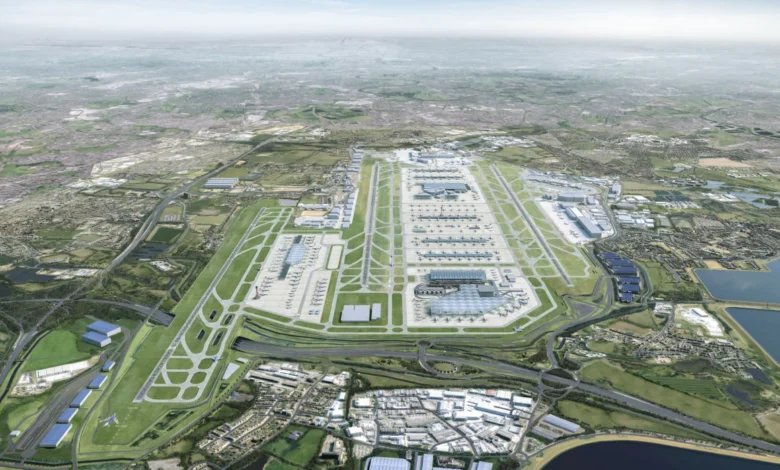
One way to curb emissions while expanding Heathrow could be by throttling the very thing its sprawling infrastructure would be built to serve: passenger demand. As the aviation industry navigates the post-pandemic recovery, the proposed expansion of London Heathrow Airport—the United Kingdom’s busiest aviation hub—has ignited a fierce debate between economic necessity and climate responsibility. With the Climate Change Committee (CCC) now formally questioning the compatibility of such infrastructure projects with national legislative targets, the future of the third runway remains in a state of precarious uncertainty.
The tension centers on the inherent contradiction between the government’s legally binding commitment to reach net-zero carbon emissions by 2050 and the projected growth of the aviation sector. Nigel Topping CMG, chair of the Climate Change Committee, has been unequivocal in his assessment, stating that the Heathrow expansion is not currently compatible with the UK’s Net Zero target. This stance reflects a growing consensus among environmental scientists and policy analysts that without a fundamental shift in how the industry operates, expansion is effectively a step backward for the nation’s climate agenda.
A Chronology of the Expansion Controversy
The debate over Heathrow’s expansion is not new; it is the culmination of decades of political maneuvering and legal challenges. The chronology of this project highlights the difficulty of balancing regional infrastructure needs with global environmental standards.
- 2003: The government publishes a White Paper, "The Future of Air Transport," which initially suggests the need for a third runway at Heathrow.
- 2010: The newly elected Coalition government cancels the expansion plans, citing environmental concerns and local opposition.
- 2015: The Airports Commission, chaired by Sir Howard Davies, concludes that a third runway at Heathrow is the best option for increasing UK aviation capacity.
- 2018: Parliament votes overwhelmingly in favor of the expansion, approving the Airports National Policy Statement.
- 2020: The Court of Appeal rules that the government’s plans were unlawful because they failed to take into account the Paris Agreement on climate change.
- 2020 (December): The UK Supreme Court overturns the Court of Appeal’s ruling, declaring the expansion legal, provided it meets strict future climate targets.
- 2024: The Climate Change Committee intensifies its scrutiny, arguing that the industry lacks a credible decarbonization plan, effectively stalling momentum once more.
The Mathematics of Aviation Emissions
Aviation accounts for approximately 2.5% of global carbon dioxide emissions, a figure that appears deceptively small when compared to sectors like energy production or agriculture. However, the true impact of aviation on the climate is significantly higher when factoring in non-CO2 effects, such as nitrogen oxides, water vapor, and contrail-induced cirrus clouds. These factors are estimated to double or even triple the warming effect of aviation over the long term.
Within the UK, the pressure is mounting as the aviation sector is one of the hardest to decarbonize. Unlike the automotive industry, which has a clear roadmap toward electrification, long-haul aviation remains tethered to fossil-fuel-based jet fuel. Sustainable Aviation Fuel (SAF) is currently touted as the primary solution, but current production levels cover less than 0.1% of global demand. Even with optimistic scaling, the cost-prohibitive nature of SAF suggests that ticket prices would rise significantly, naturally suppressing the very passenger demand that Heathrow’s expansion seeks to facilitate.
Official Responses and Industry Stance
The aviation industry maintains that expansion is vital for the UK’s competitive position in a globalized economy. Heathrow’s management argues that a third runway would provide essential connectivity to emerging markets and generate thousands of jobs, fueling the regional economy. Their argument rests on the premise that technological innovation—such as hydrogen propulsion and high-blend SAF—will eventually decouple aviation growth from carbon output.
However, the Climate Change Committee’s recent warnings suggest that this "techno-optimism" is no longer sufficient to satisfy regulatory requirements. Nigel Topping emphasized that the government must ensure the aviation industry takes full responsibility for the emissions it creates. This implies a "polluter pays" approach, where the aviation sector would be required to bear the full financial burden of its decarbonization, including the costs of carbon capture or the high premiums associated with synthetic fuels.
Environmental groups, including Greenpeace and Friends of the Earth, argue that these costs would inevitably lead to a reduction in demand. They posit that the "throttling" of passenger growth is not a policy failure but a necessary climate adaptation strategy. By limiting runway capacity, the government could effectively cap emissions while forcing the industry to prioritize higher-value, lower-frequency flights.
Economic and Strategic Implications
The implications of stalling the Heathrow expansion are far-reaching. Proponents of the project argue that a "no-growth" aviation policy would push transit traffic to European hubs like Amsterdam Schiphol or Paris Charles de Gaulle, resulting in a loss of economic activity without actually reducing global emissions. This "carbon leakage" is a primary concern for the Department for Transport.
Conversely, the economic argument for expansion is increasingly scrutinized. Critics note that the post-pandemic era has seen a permanent shift toward digital communication, reducing the necessity for frequent business travel. Furthermore, the UK’s commitment to "Levelling Up" is often cited as a reason to invest in rail and regional connectivity rather than concentrating infrastructure in the already congested South East of England.
From a geopolitical perspective, the UK government is caught between its desire to showcase leadership in green technology and its need to maintain a robust global trade network. The decision to either greenlight the third runway or force a contraction in demand will signal to the international community whether the UK is prioritizing its climate rhetoric or its traditional economic models.
The Path Forward: Decarbonization or Demand Management?
As the government evaluates the future of the Heathrow project, the focus is shifting toward "demand management." This could involve a variety of policy tools, including:
- Frequent Flyer Levies: Taxing high-frequency travelers to discourage non-essential short-haul flights that could be served by high-speed rail.
- Carbon Pricing: Increasing the cost of emissions trading schemes to make the environmental impact of aviation more visible on balance sheets.
- Mandatory SAF Blending: Setting strict, legally enforceable targets for the percentage of sustainable fuels that airlines must use, regardless of the cost implications.
- Capacity Caps: Limiting the number of annual air traffic movements to ensure that the airport operates within a defined carbon budget.
The message from the Climate Change Committee is clear: the current trajectory of the aviation industry is inconsistent with the UK’s legal obligations. If the Heathrow expansion is to proceed, it must do so under a completely new regulatory framework where the growth of flight numbers is strictly subservient to the maintenance of a net-zero carbon budget.
The aviation industry stands at a crossroads. For decades, the model of success was defined by year-over-year increases in passenger numbers and cargo volume. Today, that model is colliding with the reality of a warming planet. Whether through technological breakthroughs that remain currently out of reach, or through a difficult and unpopular contraction of travel demand, the aviation sector must prepare for a future where growth is no longer the default objective. For Heathrow, and for the UK government, the path ahead requires a level of transparency and stringency that has yet to be fully realized. The debate over the third runway is no longer just about construction; it is about the fundamental nature of the UK’s economy in a decarbonized future.