Navigating Uncertainty: How Family Travel Teaches Children and Parents to Confront the Unknown Together


International family travel frequently serves as a crucible for personal growth, challenging both children and adults to confront deeply rooted anxieties. While the logistical complexities of journeying abroad are well-documented, the psychological dimensions—specifically how families manage anticipation, fear, and resilience—represent a vital component of the modern tourism experience. Industry insights and child development research consistently indicate that structured group tours provide a stabilizing framework, allowing travelers of all ages to transform abstract anxieties into tangible milestones of emotional maturity.
The Psychology of Anticipation: Framing the Unknown
For many families embarking on their first overseas expedition, the planning phase is often accompanied by a cascade of hypothetical scenarios. Psychological studies on travel anxiety suggest that children frequently project their internal uncertainties onto dramatic external elements of an itinerary. This phenomenon was recently observed during an Intrepid Travel family holiday in Italy, where seven-year-old traveler Noa fixated on the impending hike up Mount Vesuvius weeks before departure.
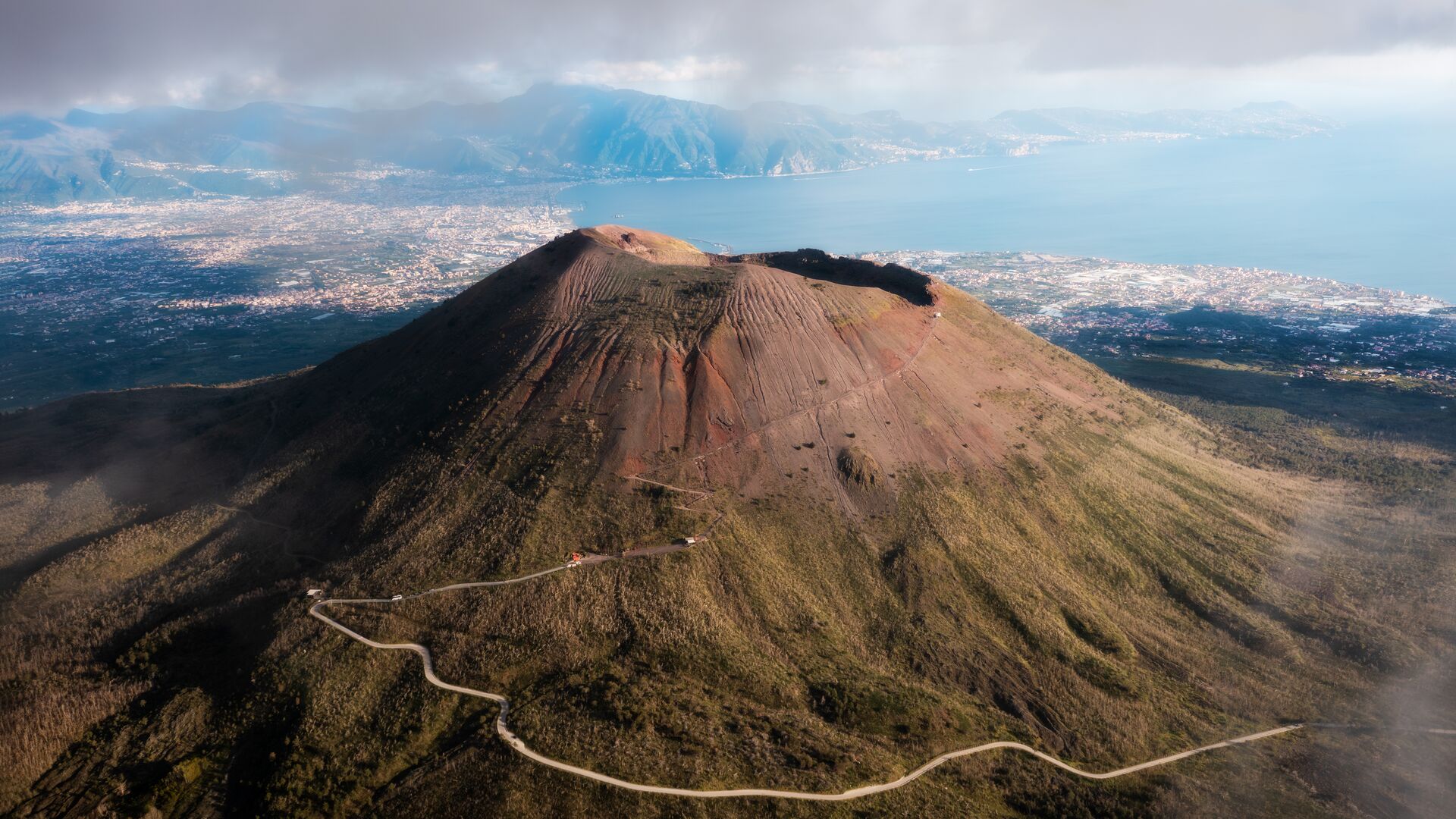
The core of Noa’s apprehension centered on the active nature of the volcano, a geological feature that last erupted in 1944. According to volcanological monitoring data from the Vesuvius Observatory, the site is under continuous 24-hour surveillance by the Osservatorio Vesuviano, part of the Istituto Nazionale di Geofisica e Vulcanologia (INGV). Modern vulcanology relies on dense networks of seismic, geodetic, and geochemical sensors capable of detecting subterranean shifts weeks or months prior to any potential volcanic unrest.
Despite these reassuring scientific realities, communicating geological risk to a young child requires bridging the gap between abstract probability and concrete safety measures. Parental guidance often relies on reframing fear through metaphors—such as comparing a dormant volcano to a sleeping bear—and emphasizing institutional safeguards, including established evacuation protocols and restricted crater perimeters enforced by local authorities.
Chronology of an Itinerary: From Pompeii to the Amalfi Coast
The structure of organized group travel offers a deliberate pacing mechanism designed to acclimate participants to new environments. The family’s journey followed a carefully planned progression across the Campania region, balancing historical exploration with moderated physical challenges.
Day One and Two: Arrival and Contextualization
The family arrived in the Pompeii region, utilizing the initial days to acclimate to Italian culture, cuisine, and local geography. Guided by a local tour leader, the group engaged in informal discussions regarding the historical destruction of Pompeii in 79 AD, establishing educational context ahead of the physical ascent.
Day Three: The Ascent of Mount Vesuvius
Departing from the base via transport up the authorized switchbacks, the group completed the gravel-path trek to the crater’s rim. Tour operators implemented inclusive strategies, such as designating younger participants as co-leaders, to instill a sense of agency and diminish apprehension. The visit concluded without incident, providing participants with empirical evidence that dispelled catastrophic preconceptions.
Days Four through Seven: Regional Immersion and Cultural Workshops
Following the Vesuvius excursion, the itinerary transitioned to the Amalfi Coast, encompassing stays in Minori and Sorrento. The schedule featured hands-on culinary workshops focusing on regional staples such as gelato, pizza, and limoncello, alongside unstructured seaside recreation. This phase highlighted the structural benefits of guided travel, wherein logistics and daily planning are managed externally, significantly reducing parental travel fatigue.
Data and Industry Trends in Family Group Travel
The demand for guided family adventure tours has experienced steady growth over the past decade. According to market analysis by the Adventure Travel Trade Association (ATTA), multi-generational and family-focused group tours represent one of the fastest-growing segments in outbound tourism.
Key Drivers of Family Adventure Tourism:
- Risk Mitigation: Professional tour operators maintain localized emergency response plans, vetted transportation networks, and experienced local guides who possess deep knowledge of regional hazards and medical infrastructure.
- Educational Integration: Itineraries increasingly blend experiential learning with recreational activities, fostering cognitive development and historical literacy in younger travelers.
- Social Support Structures: Group environments allow children to observe peers navigating similar challenges, fostering normative behavior and collective resilience.
Industry representatives note that tour leaders play a pivotal role beyond logistics. By functioning as cultural liaisons and emotional anchors, guides are frequently trained to identify participant stress and adapt group dynamics accordingly—such as assigning leadership roles to anxious children to build confidence.
Beyond the Guided Tour: Fostering Individual Resilience
When the organized portion of the itinerary concluded, the family transitioned to independent travel along the coast of Sperlonga, incorporating recreational activities such as a boat excursion to a marine grotto. This segment highlighted the stark contrast between structured group dynamics and autonomous travel decisions.

During the boat excursion, a perceived barrier regarding physical size and age restrictions on cliff-jumping triggered a strong emotional response. Developmental psychologists note that children frequently internalize institutional limitations as personal inadequacies, necessitating adaptive coping mechanisms. In this instance, the transition from initial frustration to autonomous problem-solving—utilizing flotation devices to safely execute the jump—demonstrated the development of self-efficacy.
Experts in child psychology emphasize that the willingness to experience discomfort is a foundational component of emotional regulation. Travel acts as a concentrated catalyst for this process, presenting novel physical and social obstacles that cannot be bypassed. When children successfully navigate these environments, the resulting psychological reinforcement translates into broader domains of daily life, reducing generalized anxiety and increasing openness to future challenges.
Broader Implications for Modern Tourism
The intersection of family dynamics and global tourism underscores the evolving role of travel providers. Modern itineraries are no longer evaluated solely by their geographic reach or historical value, but by their capacity to facilitate personal transformation and familial bonding.
As outbound family travel continues to expand post-pandemic, the demand for itineraries that balance safety with calculated risk is expected to rise. Tour operators that successfully integrate emotional support frameworks alongside standard logistical services provide a distinct value proposition for parents navigating the complexities of raising resilient children in an interconnected world.
Ultimately, the shared experience of confronting the unknown—whether peering into the crater of a monitored volcano or leaping from the deck of a boat—reinforces the principle that travel’s most enduring value lies not in the destinations reached, but in the internal capacities developed along the way.