Beyond Sustainability: How the Regenerative Travel Asia Symposium is Redefining Global Tourism

For decades, the mainstream paradigm of sustainable tourism has operated largely on a defensive framework. Travellers and industry operators alike have been urged to minimize harm, reduce single-use plastics, lower carbon footprints, respect local customs, and protect fragile ecosystems from degradation. However, as the compounding pressures of global climate change, overtourism, and resource scarcity accelerate, a growing coalition of industry leaders, conservationists, and hospitality executives argues that doing less harm is no longer enough.
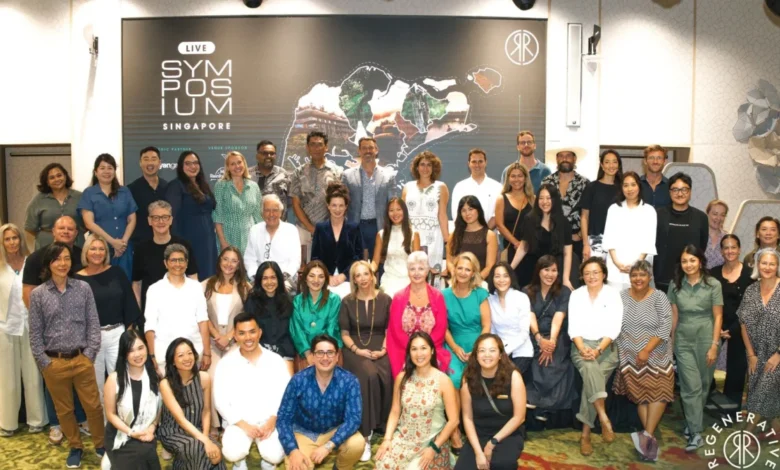
This vital shift in perspective took centre stage at the recent Regenerative Travel Asia Symposium held in Singapore. Gathering at the forefront of modern hospitality discourse, delegates explored a fundamental and provocative question: What if the travel and tourism industry could actively restore ecosystems, strengthen local communities, and fundamentally rebuild our relationship with the natural world? Rather than merely sustaining damaged environments, the emerging movement of regenerative travel challenges the global community to leave destinations demonstrably better than they were found.
The Paradigm Shift: From Consumption to Regeneration
For generations, the global tourism economy has been anchored in models of consumption. Destinations have frequently been treated as finite commodities—packaged, marketed, and consumed by visitors before moving on to the next trending location. The Singapore symposium confronted this extractive legacy head-on, advocating for a profound philosophical transition.
Amanda Ho, co-founder and CEO of Regenerative Travel, set the tone for the multi-day event by describing regenerative tourism as a pivotal evolution: moving from the head to the heart, from a mindset of scarcity to one of abundance, and from an individualistic pursuit to a collective responsibility. Ho challenged participants to reimagine tourism not simply as an economic sector driven by consumer satisfaction, but as an active, dynamic relationship binding people, places, and nature together.
This sentiment was strongly echoed by keynote speaker Juliet Kinsman. In an era increasingly dominated by digital saturation and artificial intelligence, Kinsman emphasized the urgency of "regenerating humanity" by rebuilding visceral connections with the living planet. She reminded attendees that human beings are not separate observers standing outside biodiversity, but rather deeply integrated components of an interconnected living system.
The Traveller’s Dilemma: Intent vs. Action
The appetite for this profound change is undeniably present among consumers. Jeremy Tran of Sustainable Travel Asia presented compelling research from Booking.com during the symposium, revealing that 85% of global travellers actively desire more sustainable travel options. Furthermore, 69% expressed a distinct ambition to leave the destinations they visit in a better condition than when they arrived.
Yet, a glaring disconnect persists within the market: while travellers increasingly want to travel better, the vast majority struggle to understand how to execute these values in practice.
Tran pointed directly to the pervasive influence of social media in distorting modern travel habits. In an age where digital algorithms can transform pristine landscapes or fragile local communities into viral global trends overnight, consumers face difficult choices. The symposium prompted a critical examination of whether contemporary journeys are driven by intentional exploration or mere conformity to algorithmic trends. Moving past superficial travel trends requires consumers to interrogate their underlying motivations and evaluate how they engage with local environments upon arrival.
Wellness, Culture, and the Trap of Over-Development
The intersection of wellness tourism and ecological regeneration emerged as another critical focal point during the multi-day discussions. Historically, wellness travel has focused narrowly on restoring the individual visitor, frequently utilizing local traditions, indigenous knowledge systems, and ancient healing practices. Regenerative tourism broadens this horizon, asking a more demanding question: Can the wellness industry simultaneously restore the vitality of the communities and ecosystems that make those very healing experiences possible?
By its very nature, regeneration is relational rather than transactional. Communities must be recognized not merely as polite hosts providing a service, but as the living centres of culture and wisdom. To achieve true regeneration, local populations cannot be passive recipients of tourism’s financial trickle-down; they must be empowered as active decision-makers steering the future of their lands and heritage.
Maitri Fischer, leader in environmentally sustainable design at Eco-Mantra, underscored the severe tensions that emerge when unbridled tourism growth outpaces community needs. Fischer pointed to the island of Bali as a cautionary case study. Rapid, unchecked over-development has placed immense strain on the island’s municipal infrastructure, creating acute waste management crises, water scarcity, and profound cultural pressures. Without strict regulatory guardrails and community-led planning, tourism expansion risks destroying the very cultural and natural assets that attract visitors in the first place.
Industry in Action: Case Studies from Across Asia
While systemic reform requires broad policy changes, pioneering hospitality brands across the region are already translating regenerative principles into daily practice. Throughout the Singapore symposium, industry leaders—including the Banyan Group, The Datai Langkawi, Potato Head Bali, and Song Saa Private Island—showcased tangible blueprints for success.
Song Saa Private Island in Cambodia stands out as a pioneering example of remediation. Built upon previously degraded land, the resort was conceived with a vision to heal rather than merely develop. Through the establishment of the Song Saa Foundation, the project helped secure Cambodia’s very first official Marine Protected Area. Operationally, the resort maintains deep ties to its surrounding populations, employing approximately 75% of its workforce from nearby villages. Robust on-site infrastructure, including comprehensive waste management, food waste minimization, and rainwater harvesting systems, drastically reduces its environmental footprint. Crucially, guests are invited to transcend the role of passive observers, participating directly in coral reef conservation and community outreach programs.
Nick Hardman, marine biologist and Head of Sustainability at the Banyan Group, articulated the core psychology required for such initiatives to succeed. Addressing the audience, Hardman asserted that "tourism has a huge power to be part of the healing process," but emphasized that engagement hinges on emotional resonance. "You have to make it personal," Hardman noted, explaining that whether through a coral restoration dive or an authentic cultural exchange with Indigenous elders, people naturally fight to protect what they love and feel connected to.
Safeguarding Against Greenwashing
As regenerative travel transitions from an academic concept to a mainstream marketing buzzword, industry experts issued strong warnings regarding authenticity. Without rigorous accountability, transparency, and measurable long-term metrics, "regeneration" risks devolving into little more than a sophisticated rebranding of traditional greenwashing.
Furthermore, accessibility remains a vital social hurdle. If regenerative travel is restricted solely to high-end luxury resorts and exclusive private islands, it will fail to achieve true systemic impact. For the movement to effect widespread change, regenerative practices must scale across the broader tourism spectrum, remaining accessible and relevant to budget-conscious travellers and mid-market operators alike.
Implications and the Road Ahead
The imperative for regenerative tourism arrives at a critical juncture marked by intensifying climate disruptions and a rapidly rebounding global travel market. For both industry stakeholders and everyday travellers, the mandate is clear: travel must evolve from a passive act of consumption into an active contribution to planetary health.
As the insights from the Regenerative Travel Asia Symposium demonstrate, achieving this future does not require perfection; rather, it demands clear intention. By demanding transparency, supporting community-led initiatives, prioritizing local economic investments, and critically examining who benefits from our journeys, the global tourism sector can chart a course toward mutual resilience. At its best, travel possesses the unique capacity not only to transform the individual traveller, but to strengthen, heal, and uplift the communities and ecosystems that welcome them.