Hope on the Wing: Maverick Biologists Guide Critically Endangered Northern Bald Ibises to a New Future

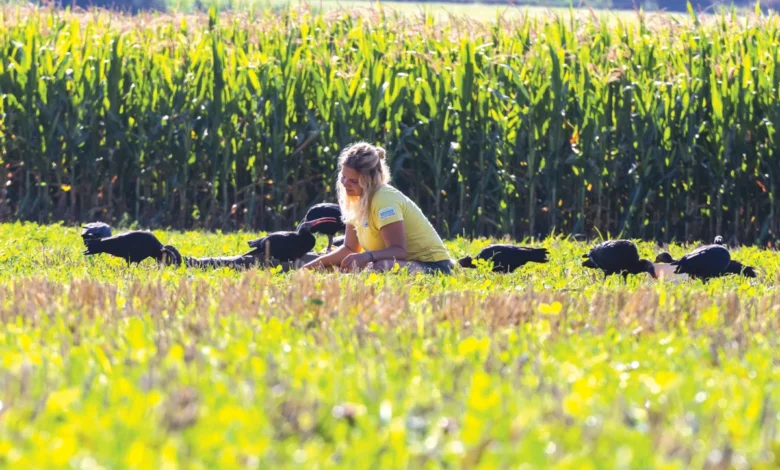
In the rugged yet verdant valleys of southern Austria, a unique conservation battle is unfolding, spearheaded by a dedicated team of biologists employing an audacious strategy to save one of the world’s rarest avian species: the Northern Bald Ibis (Geronticus eremita). This innovative project, centered on imprinting human caregivers as "foster parents" to guide young ibises on a new migratory path, represents a radical, hands-on approach to reversing the fortunes of a species teetering on the brink of extinction. The commitment of individuals like Barbara Steininger and Helena Wehner, who in April 2023 embraced the demanding role of surrogate mothers to thirty-five featherless chicks, underscores the extraordinary lengths to which conservationists are willing to go to rewrite the narrative of a critically endangered bird.
The Northern Bald Ibis: A Storied Past, A Precarious Present
Once a widespread and revered bird across Central Europe, North Africa, and the Middle East, the Northern Bald Ibis, with its distinctive unfeathered, reddish-pink head, glossy black plumage, and long, curved red bill, has faced a catastrophic decline over the past centuries. These highly social, migratory birds, known for their preference for arid and semi-arid habitats near cliffs for nesting, thrived in various ecosystems. Historical records indicate their presence in the Alps as late as the 17th century, with significant populations in countries like Germany, Switzerland, and Austria. However, a combination of factors – including overhunting, habitat destruction, pesticide use leading to food source depletion, and climatic shifts altering traditional migratory routes – led to their complete disappearance from Central Europe by the 1600s.
Globally, the species suffered a similar fate. By the early 2000s, the wild population was fragmented into two main groups: a critically endangered eastern population in Morocco and a smaller, even more precarious semi-wild colony in Turkey (Birecik), which relied on human intervention for winter migration. The Moroccan population, while larger, still faced severe threats from habitat loss and human disturbance, leading the International Union for Conservation of Nature (IUCN) to classify the species as Critically Endangered. At its lowest point, the wild population numbered only a few hundred breeding pairs, primarily confined to specific coastal areas of Morocco. This dire situation spurred international conservation efforts, recognizing the urgent need for intervention to prevent the complete loss of this charismatic bird.
The Waldrappteam Initiative: A Radical Approach to Reintroduction
Against this backdrop of near-extinction, the Waldrappteam project emerged as a beacon of hope. Founded in 2002 by Dr. Johannes Fritz, an Austrian conservation biologist, the initiative began with a bold, almost unprecedented goal: to reintroduce a self-sustaining, migratory population of Northern Bald Ibises to Europe. The core challenge was not just breeding the birds, but teaching them a migratory route – knowledge traditionally passed down from parent to offspring over generations, a link long severed in Europe. Natural migratory behavior had been lost in the European populations for centuries, making conventional reintroduction methods unfeasible.
The project’s methodology is rooted in the concept of "imprinting," a rapid learning process that occurs early in an animal’s life, during which it forms a strong attachment to the first moving object it sees. For the Waldrappteam, this meant human caregivers becoming the "parents" to ibis chicks, fostering an unbreakable bond that would allow them to lead the birds on their inaugural migration. This technique, pioneered by Austrian ethologist Konrad Lorenz with geese, involves intensive human interaction from the moment of hatching, ensuring the chicks view their human handlers as their flock leaders. The ultimate aim is to establish a new, safe migratory route from breeding grounds in Germany and Austria to wintering grounds in Tuscany, Italy, and then allow subsequent generations to follow these established routes independently, without human guidance. The project began with test flights and smaller groups, gradually scaling up as the methodology was refined.
From Chicks to Aviators: The 2023 Cohort and Their Foster Mothers
The spring of 2023 marked a crucial phase for the project, as the next cohort of chicks began their journey. In April of that year, in an aviary nestled amidst the rough mountains and lush valleys of southern Austria, Barbara Steininger, 25, and Helena Wehner, 28, prepared for their demanding new roles. Both biologists, with backgrounds in zoology and wildlife management, had undergone extensive training for this specialized form of animal husbandry. "It’s not an everyday occurrence," Steininger remarked, a hint of nervous excitement in her voice, "especially if your fosterlings are birds, and thirty-five of them!" Moments later, zookeepers from Wildlife Park Rosegg gently placed two tiny, featherless chicks into Steininger’s warm hands, her face lighting up with maternal anticipation. This was just the beginning; thirty-three more chicks were waiting to join their care, arriving in staggered batches to ensure manageable group sizes for imprinting.
From that chilly April day, Steininger and Wehner became the sole caregivers for these delicate lives. Their daily routine mirrored that of human parents, albeit with some unique adaptations. Cuddles, words of encouragement, and affectionate "baby talk" were deemed as essential for psychological development as the precise nutritional intake. Eight times a day, often around the clock in the initial weeks, the foster mothers meticulously hand-fed the chicks. Wehner elaborated on the diet: "Just that it’s not breast milk or formula, but a carefully prepared mix of shredded beef hearts and mice, supplemented with vitamins and minerals to ensure optimal growth and bone development." This rigorous feeding schedule and constant interaction are critical for forging the deep bond necessary for imprinting and subsequent migratory guidance. The devotion shown by these young biologists highlights the profound personal investment required for such a hands-on conservation effort, often blurring the lines between scientific duty and genuine affection for their avian charges.
Learning to Fly: The Preparation for Migration
The transition from fragile chicks to capable fliers is a carefully orchestrated process. As the young ibises grew, developing their distinctive plumage and strengthening their wings, their human foster parents introduced them to the intricacies of flight. Initially, this involved short, supervised practice flights around the aviary and nearby fields, encouraging the birds to stretch their wings and build endurance. The ibises, inherently social creatures, learned to fly in formation, instinctively following their human guides. The unique aspect of the Waldrappteam’s method involves the use of ultralight aircraft. Dr. Fritz and his team, including the "bird moms" like Steininger and Wehner, pilot these specialized planes, with the young ibises flying alongside, imprinting the route visually and experientially.
This aerial training is intensive, requiring months of dedicated effort during the summer months. Starting with short hops and gradually increasing distance, the ibises must develop the stamina and navigational skills necessary for a long-distance migration. The pilots act as substitute parents, leading the flock, signaling turns, and identifying safe roosting and feeding sites. The ultralight aircraft, often brightly colored and equipped with specialized audio systems playing prerecorded calls, serves as a clear visual and auditory cue for the birds, reinforcing the learned migratory path. This critical phase tests the endurance of both the birds and their human mentors, demanding meticulous planning, adaptation to variable weather conditions, and an unwavering commitment to the birds’ welfare and readiness for the epic journey ahead.
The Great Journey: Guiding a New Generation South
By late summer or early autumn, typically in August or September, when the young ibises were strong enough and fully imprinted, the most critical phase of the project commenced: the guided migration south. The goal for the 2023 cohort, like their predecessors, was a wintering ground in Tuscany, Italy, specifically in the WWF Oasi Laguna di Orbetello. This protected wetland area offers abundant food sources and a safe environment for the birds to spend the colder months before their natural instinct prompts them to return north the following spring, ideally on their own. The establishment of this consistent wintering ground is crucial for the long-term viability of the reintroduction program.
The migration itself is a grueling journey, spanning hundreds of kilometers across diverse European landscapes, over mountains and valleys, and often through unpredictable weather fronts. The ultralight aircraft leads the flock, flying at an altitude and speed carefully calibrated to match the ibises’ capabilities, typically around 50-60 km/h at an altitude of 300-500 meters. Stopovers are strategically planned, allowing the birds to rest and feed in designated, safe areas. The "bird moms" and other team members travel ahead by ground vehicle, preparing overnight enclosures, ensuring the birds’ safety from predators, and managing logistical challenges. This intricate logistical dance requires constant vigilance, scientific precision, and an intimate understanding of the birds’ behavior and needs, often demanding 12-14 hour days from the team. Each migration is a testament to human-animal collaboration, a fragile partnership forged in the name of survival.
Challenges and Triumphs on the Migration Path
The path to reintroduction is fraught with challenges. One of the primary hurdles is the high mortality rate inherent in any reintroduction project, particularly for migratory species. Young ibises face natural predators such as raptors, adverse weather conditions, and human-induced threats such as illegal hunting, collisions with power lines, or habitat disturbance. The Waldrappteam mitigates these risks through careful route planning, extensive public awareness and education campaigns in countries along the migratory corridor (e.g., Italy, Germany, Austria), and constant monitoring. Each bird is fitted with a lightweight GPS transmitter, allowing the team to track their movements, identify potential dangers, and intervene if necessary. Despite these precautions, some losses are inevitable, underscoring the precariousness of the endeavor.
Despite these challenges, the project has achieved remarkable successes. Since its inception, the Waldrappteam has guided hundreds of ibises on their first migration, establishing multiple breeding colonies in Germany (e.g., Burghausen) and Austria (e.g., Kuchl). Crucially, a significant number of these hand-reared birds have successfully completed subsequent migrations independently, demonstrating that the learned route can indeed be passed on to future generations. The population of migratory Northern Bald Ibises in Europe, once extinct, is slowly but steadily growing, from zero to over 200 individuals by 2023, a direct result of these painstaking efforts. The 2023 cohort’s successful migration added another vital group to this burgeoning European population, strengthening the genetic diversity and resilience of the nascent colonies, bringing the species closer to a self-sustaining status.
Broader Implications for Conservation
The Waldrappteam’s Northern Bald Ibis project is more than just an effort to save a single species; it serves as a powerful model for innovative conservation strategies globally. Its success demonstrates that direct human intervention, even in complex natural processes like migration, can be a viable and effective tool for species recovery when traditional methods are insufficient. The project highlights the critical role of behavioral ecology in conservation, emphasizing the need to understand and sometimes re-teach fundamental behaviors crucial for survival. This "cultural transmission" of migration routes by human surrogates offers a blueprint for other endangered migratory species.
Furthermore, the initiative fosters extensive public engagement and environmental education. The captivating story of the "bird moms" and their flying charges generates significant media attention and public interest across Europe, raising widespread awareness about biodiversity loss and the importance of conservation. School programs, public events, and citizen science initiatives associated with the project help cultivate a new generation of environmental stewards, fostering a deeper connection between people and wildlife. The project also underscores the importance of transboundary cooperation, as the migratory route traverses several European nations, requiring international collaboration on protection, habitat management, and anti-poaching efforts to ensure the long-term safety of the birds.
A Glimmer of Hope for a Vanishing World
The sight of Northern Bald Ibises soaring across European skies, guided by human hand and ultralight wing, is a profound symbol of hope. It is a testament to the dedication of conservationists like Barbara Steininger, Helena Wehner, and Johannes Fritz, who have committed their lives to reversing the tide of extinction. Their daily grind of hand-feeding chicks, the months of flight training, and the arduous journey south are not just scientific endeavors; they are acts of profound devotion, a collective promise to a species that once vanished from these lands. The success of the Waldrappteam exemplifies how human ingenuity, combined with unwavering passion, can offer a second chance to species on the brink.
As the wild populations of Northern Bald Ibises continue to grow and establish themselves, the ultimate goal is for the European colonies to become self-sustaining, no longer requiring human guidance for migration. The project envisions a future where the established migratory routes are passed down naturally through generations of ibises, ensuring their enduring presence in Europe’s skies. This project, combining cutting-edge science with unwavering human commitment, offers a compelling narrative that even in the face of daunting ecological challenges, with ingenuity and passion, humanity can indeed help heal the wounds inflicted upon the natural world, allowing "hope on the wing" to truly take flight.