Hope on the Wing: Maverick Biologists Guide Endangered Ibises on a New Migratory Path

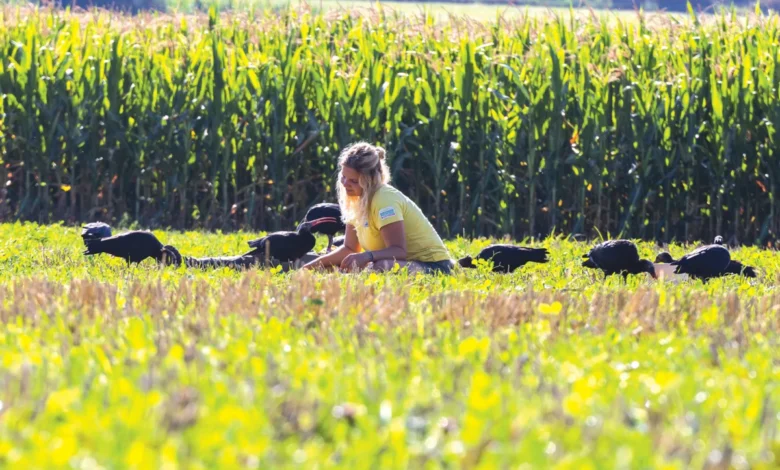
In a remarkable battle against the looming specter of extinction, a dedicated cadre of maverick biologists and conservationists is employing an audacious, deeply personal strategy to resurrect one of the world’s rarest avian species: the northern bald ibis (Geronticus eremita). Their pioneering effort involves nothing less than teaching these critically endangered birds a new migratory route, personally guiding them across continents using ultralight aircraft. This ambitious project, spearheaded by the Waldrappteam, highlights the extreme measures humanity is willing to take to safeguard biodiversity.
Just a few meters from a specialized aviary nestled in the rugged mountains and lush, expansive valleys of southern Austria, a unique form of parenthood was unfolding. Barbara Steininger, then twenty-five, was preparing for an extraordinary role: becoming a foster mother, not to a human child, but to a flock of highly vulnerable bird chicks. "Not an everyday occurrence," she remarked, "especially if your fosterlings are birds." On a chilly day in April 2023, a zookeeper from Wildlife Park Rosegg gently placed two featherless ibis chicks into Steininger’s warm hands. Her freckled face illuminated with a mixture of apprehension and affection. This was just the beginning; thirty-three more chicks awaited their turn.
For Steininger and her colleague, twenty-eight-year-old Helena Wehner, this marked the commencement of an intensive period of care, mirroring the devotion typically afforded to human infants. Their responsibilities as "bird moms" included constant cuddles, words of encouragement, and adoration, all delivered in a soft, reassuring "baby speak." Eight times a day, they would hand-feed the demanding chicks. "Just that it’s not breast milk or formula," Wehner clarified, detailing their specialized diet of shredded beef hearts and mice. This profound level of commitment is reserved for a species teetering on the brink – some of the very last northern bald ibises in Europe.
The Northern Bald Ibis: A Species on the Brink
The northern bald ibis, with its distinctive featherless head, shaggy ruff of feathers, and long, curved red bill, is a charismatic but tragic symbol of avian decline. Once widespread across Central Europe, North Africa, and the Middle East, its population plummeted dramatically over centuries due to habitat loss, hunting pressure, and the intensification of agriculture. By the 17th century, the species was largely extirpated from Europe. The last wild European population vanished from the Austrian Alps around 1629, a victim of changing landscapes and human encroachment.
Today, the species is classified as Critically Endangered by the International Union for Conservation of Nature (IUCN). Wild populations are now restricted to a handful of colonies in Morocco and a critically small, non-migratory population in Syria, whose survival is precarious due to regional conflicts and poaching. The total global population in the wild is estimated to be fewer than 700 individuals, making every single bird invaluable to the species’ future. Without intervention, the northern bald ibis faced a very real possibility of disappearing entirely from the European continent, and potentially the planet.
Pioneering a New Path: The Waldrappteam Project
The genesis of the Waldrappteam project, led by Austrian conservationist Dr. Johannes Fritz, dates back to the early 2000s. Recognizing the dire situation, Fritz and his team embarked on an ambitious reintroduction program with a unique challenge: the ibises, once migratory in Europe, had lost their ancestral knowledge of migration routes. Captive-bred birds, though healthy, lacked the innate navigational skills to undertake the perilous journey between their breeding grounds in Central Europe and their wintering habitats in Tuscany, Italy.
The solution was as innovative as it was demanding: human-led migration. The concept relies on the strong imprinting behavior of ibises. Chicks, raised by human caregivers from birth, imprint on their "foster parents" and subsequently follow them. The Waldrappteam leveraged this biological trait by having human pilots act as surrogate leaders, guiding flocks of young ibises along a newly established, safer migratory corridor using ultralight aircraft. The project’s long-term goal is to establish a self-sustaining, migratory population of northern bald ibises in Europe, ultimately capable of migrating independently.
The Unconventional Nursery: Raising the Next Generation
The scene in southern Austria in April 2023 was a crucial step in this multi-faceted conservation strategy. Barbara Steininger and Helena Wehner, along with other "bird moms" and "dads," were tasked with the meticulous and all-consuming process of hand-rearing the ibis chicks. This intensive care goes beyond mere feeding; it involves establishing a profound bond, essential for the imprinting process. From the moment the chicks hatch, they are exposed exclusively to their human caregivers, ensuring they recognize these individuals as their primary figures of authority and, crucially, their future flight leaders.
The daily routine for Steininger and Wehner was rigorous. Beyond the eight daily feedings of a protein-rich concoction, they spent countless hours interacting with the chicks, talking to them, and providing physical comfort. This constant presence fosters a deep trust, which is paramount when the time comes for the birds to follow their human guides into the sky. The chicks grow rapidly, and within weeks, their downy feathers are replaced by sleek plumage, and their awkward movements transform into increasingly confident steps and wing-flapping exercises. This period of intensive bonding is critical; it is during these early weeks that the birds learn to associate the human pilots, wearing distinct uniforms and operating the ultralight aircraft, with safety and leadership.
Learning to Fly: Guiding a Migration
Once the young ibises are old enough and strong enough to fly, the true spectacle begins. The imprinted birds are trained to follow the ultralight aircraft, which serves as their surrogate parent in the sky. Dr. Johannes Fritz often personally pilots one of these specialized aircraft, leading the flock on practice flights around their breeding grounds before embarking on the epic trans-Alpine journey. The chosen route from their summer breeding sites, typically in Austria or Germany, to their wintering grounds in Tuscany, Italy, is meticulously planned to avoid hazards such as wind farms, busy air traffic corridors, and areas with high poaching risk.
The migration itself is a breathtaking and arduous undertaking. The pilots fly at low altitudes and slow speeds, allowing the ibises to keep pace. The journey, spanning hundreds of kilometers over mountains and valleys, can take several weeks, with daily flights followed by stops in pre-arranged safe havens where the birds are fed and rested. This human-led migration is not without its perils. Weather conditions can be unpredictable, requiring quick decisions to ensure the birds’ safety. Predation, power lines, and illegal hunting remain constant threats, despite the extensive planning and protective measures.
The data gathered from these migrations is invaluable. Each bird is fitted with a GPS transmitter, providing real-time information on their location, speed, and altitude. This allows researchers to monitor their progress, identify potential issues, and refine future migration routes. The transmitters also track the birds’ movements during their independent migrations once they have learned the route, providing crucial insights into their survival rates and behavioral patterns.
Successes, Setbacks, and the Long Road Ahead
The Waldrappteam project has demonstrated significant successes since its inception. By 2023, the project had successfully re-established several breeding colonies in Austria and Germany, with birds consistently migrating to their wintering grounds in Tuscany. The European population of migratory northern bald ibises, once extinct, now numbers over 200 individuals, a testament to the dedication of the project team and its innovative approach. Each year, new cohorts of chicks are hand-reared and guided on their maiden migratory journey, slowly but steadily increasing the population.
However, the path to full recovery is fraught with challenges. Mortality rates, particularly during the first independent migration, remain a concern. Young birds, without direct human guidance, are more vulnerable to unfamiliar routes, adverse weather, and human-related dangers. Illegal hunting, though reduced in key areas through advocacy and enforcement, still poses a threat. Furthermore, the genetic diversity of the reintroduced population needs careful management to ensure long-term resilience. The project also faces ongoing financial hurdles, relying heavily on grants, donations, and the tireless efforts of volunteers.
The ultimate goal is for the ibises to teach each other the migratory route through social learning, rendering human intervention unnecessary. Observations suggest that older, experienced birds are indeed guiding younger, unguided individuals, a crucial step towards establishing a truly self-sustaining wild population. This intergenerational transfer of knowledge is the holy grail of the reintroduction effort.
Broader Implications for Conservation
The Waldrappteam project stands as a shining example of proactive and innovative conservation. It demonstrates that with sufficient ingenuity, dedication, and resources, even critically endangered species facing complex challenges like lost migratory knowledge can be brought back from the brink. The methodology of human-led migration, initially seen as radical, has proven effective and offers a potential blueprint for other species facing similar dilemmas.
The success of the northern bald ibis project has broader implications for ecosystem health and biodiversity. As an indicator species, the ibis’s return signifies improving environmental conditions in its breeding and wintering grounds. Its presence enriches the local ecosystems, contributing to biodiversity and reminding us of the intricate web of life. Moreover, the project fosters a deeper connection between humans and nature, inspiring public engagement and support for conservation efforts across Europe. The captivating story of the "bird moms" and the pilots flying alongside their feathered charges captures the imagination, highlighting the vital role humans can play as stewards of the natural world.
A Future on the Wing
The journey of the northern bald ibis is far from over. The efforts of individuals like Barbara Steininger, Helena Wehner, and Johannes Fritz, alongside countless volunteers and supporters, are slowly but surely rewriting the fate of this magnificent bird. The sight of these striking creatures soaring above the Alps, their ancient migration route re-established through human ingenuity and devotion, is a powerful symbol of hope. It reminds us that while human actions have often led to ecological devastation, they also hold the potential for profound healing and restoration. The future of the northern bald ibis, once bleak, now appears to be firmly on the wing, guided by the unwavering commitment of its human foster parents.