Discover the Historical and Environmental Significance of the Town of 1770 LARC! Tours in Queensland’s Southern Great Barrier Reef Region

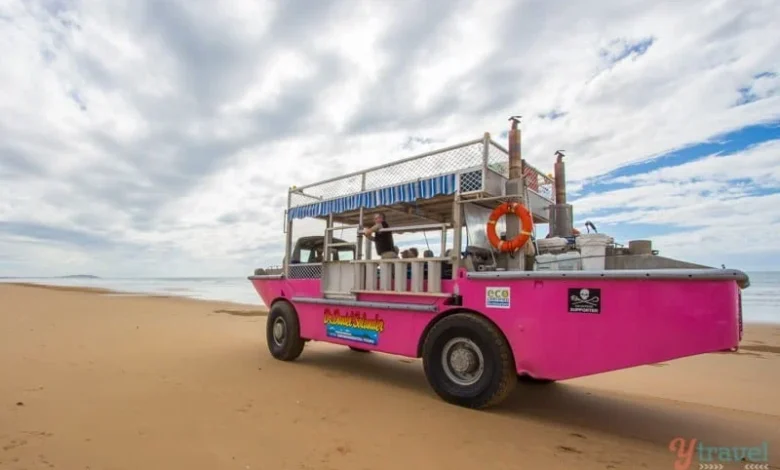
The Town of 1770, a coastal village located in the Gladstone Region of Queensland, Australia, represents a unique intersection of maritime history, indigenous heritage, and environmental conservation. Recognized as the "birthplace of Queensland," the settlement serves as a critical point of interest for both domestic and international tourists. The primary vehicle for exploring this rugged terrain is the LARC! (Lighter Amphibious Resupply Cargo), a specialized amphibious craft that allows for the navigation of both sandy coastlines and tidal estuaries. These tours, operated by 1770 LARC! Tours, have become a cornerstone of the local economy, providing the only viable access to the remote reaches of the Eurimbula National Park and the historic Bustard Head Lightstation.
Historical Context: The Birthplace of Queensland
The nomenclature of the Town of 1770 is derived from the arrival of Lieutenant James Cook and the crew of the HMS Endeavour in May 1770. This landing marked Cook’s second stop on the Australian continent and his first in what is now known as Queensland. The area remains geographically significant as it has preserved much of the natural aesthetic encountered by the European explorers over 250 years ago.
Prior to European arrival, the region was inhabited and cared for by the Gooreng Gooreng people. The indigenous history of the area is deeply rooted in the land and sea, with the estuaries providing a rich source of sustenance for thousands of years. Modern tourism initiatives in the region increasingly aim to integrate these dual histories, acknowledging the long-standing stewardship of the Gooreng Gooreng alongside the colonial maritime milestones.
Located approximately six kilometers north of Agnes Water and 400 kilometers north of Brisbane, the Town of 1770 acts as a southern anchor for the Great Barrier Reef. Unlike the more commercialized northern stretches of the reef, this region offers a more secluded experience, characterized by mangrove-fringed estuaries and untouched coastal dunes.
Engineering and Utility: The LARC-V Amphibious Vehicle
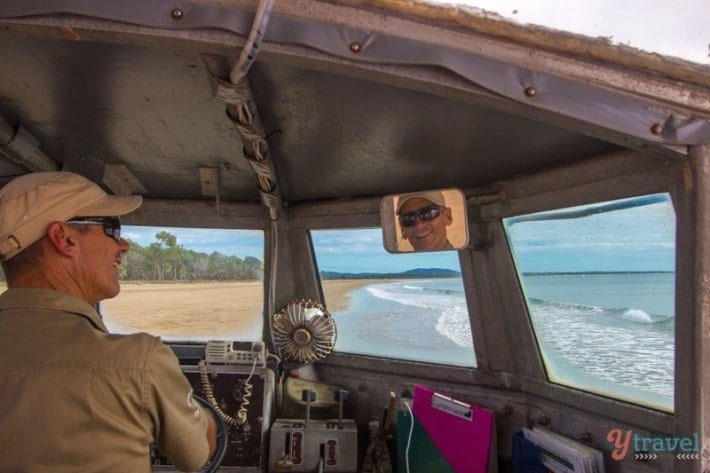
The LARC-V (Lighter, Amphibious Resupply, Cargo, 5-ton) is a vehicle of military origin, originally designed in the United States during the 1950s and utilized extensively during the Vietnam War for transporting supplies from ships to shore. The vessel’s ability to transition seamlessly from water to land makes it an indispensable tool for the geography of Bustard Bay, where shifting tides and soft sands preclude the use of standard four-wheel-drive vehicles.
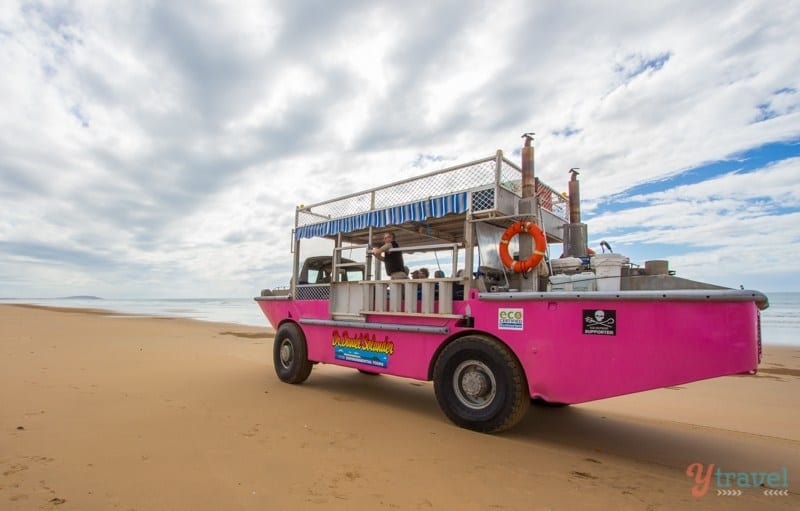
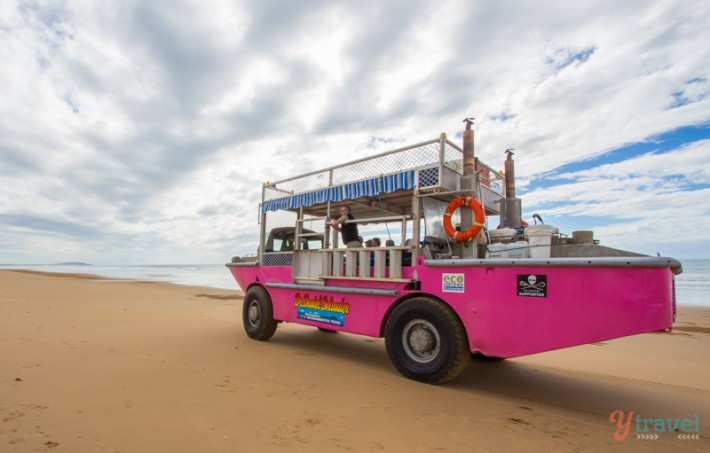
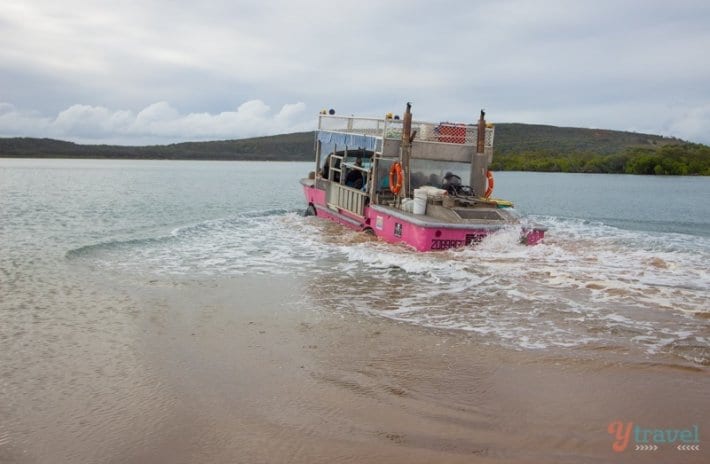
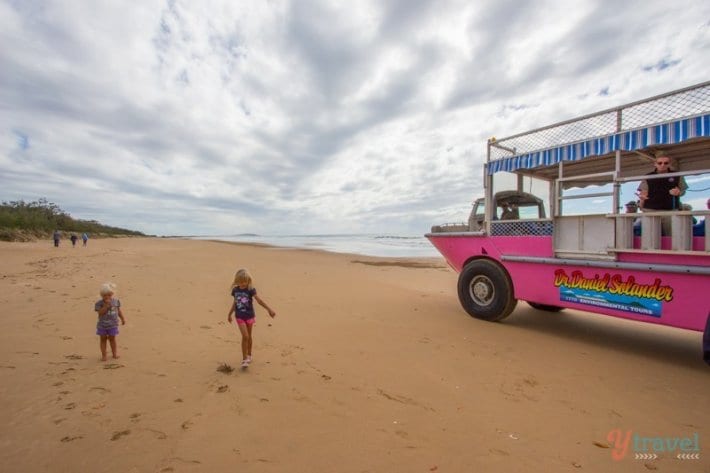
The 1770 LARC! Tours fleet utilizes these refurbished military icons, painted in a distinctive bright pink to serve as a local landmark. From a technical perspective, the LARC is powered by a diesel engine and features a hull design that allows it to chug through tidal creeks like a boat while utilizing massive tires to traverse dunes and sandy flats. For two decades, these vehicles have been the primary mode of transport for researchers, tourists, and maintenance crews heading to the more isolated sections of the coastline.
The Bustard Head Lightstation: A Beacon of History and Tragedy
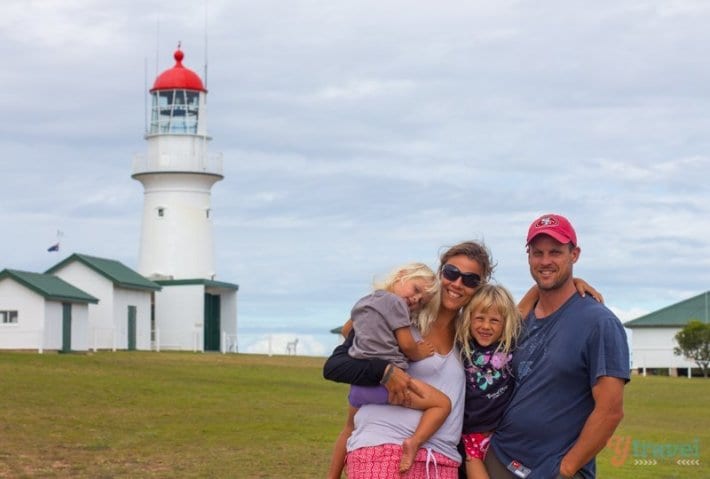
A focal point of the regional exploration is the Bustard Head Lightstation, Queensland’s first coastal lighthouse, established in 1868. Standing on a rocky headland, the lightstation was a vital navigational aid for ships traversing the treacherous waters of the Southern Great Barrier Reef. Today, it remains the only operating lighthouse in Queensland that the public can access internally, offering a rare glimpse into the life of 19th-century lightkeepers.
The Restoration Project
Following the automation of the lighthouse in the late 1980s, the site fell into a state of neglect. The lightkeeper’s cottages were subjected to vandalism and environmental decay. The restoration of the site is largely credited to the efforts of Stuart Buchanan, a former lighthouse keeper and author. Buchanan, devastated by the site’s decline, spearheaded a mission to restore the buildings to their original glory. Today, the station is maintained by a dedicated group of volunteers who live on-site for six-week rotations, ensuring the museum and grounds remain preserved for educational purposes.
The "Lighthouse of Tragedy"
The history of Bustard Head is also defined by a series of grim events that have earned it the moniker "The Lighthouse of Tragedy." Detailed historical records and local lore recount numerous fatalities associated with the site, including shipwrecks, drownings, and violent interpersonal conflicts.
One of the most enduring mysteries involves the death of Kate Gibson, a resident of the lightstation whose death was officially ruled self-inflicted despite forensic inconsistencies noted by local historians. Other tales include the abduction of Edith Anderson, a lightkeeper’s daughter, whose disappearance with a suitor sparked a massive manhunt in the early 20th century. These narratives are integral to the interpretive tours provided by the LARC operators, offering visitors a deeper psychological and social context of the isolation faced by early coastal settlers.
Environmental Stewardship and Wildlife Observations
The LARC tours traverse the Eurimbula National Park, a protected area encompassing a diverse range of ecosystems, from rainforest pockets to coastal heaths. The use of amphibious vehicles allows for minimal impact on the sensitive beach environments, as the craft can navigate water channels instead of creating new tracks through protected vegetation.
Biodiversity of Bustard Bay
The region is a haven for avian and marine life. Observers frequently document the following species:
- Avian Life: Brown kites, sea eagles, and pelicans are common sights, often seen hunting along the shorelines.
- Marine and Intertidal Life: The sandbanks of Round Hill Creek are home to massive colonies of soldier crabs, which march in formation during low tide. The estuaries also support various species of rays and juvenile sharks.
- Flora: The mangroves of Eurimbula play a crucial role in the ecosystem, acting as nurseries for fish and stabilizing the coastline against erosion.
The tours emphasize the importance of the "leave no trace" philosophy, ensuring that the remote beaches of Middle Island and Bustard Bay remain pristine.
Tourism Dynamics and Economic Impact
The tourism industry in the Town of 1770 and Agnes Water is heavily reliant on niche experiences that capitalize on the area’s natural beauty and historical significance. 1770 LARC! Tours, founded by Neil Mergard, has operated for over 20 years, becoming one of the most recognized tour operators in regional Queensland.
Range of Operations
The company offers several tiers of engagement to cater to different demographic needs:
- The Paradise Tour: A full-day excursion covering the lighthouse, national park, and sandboarding.
- The LARC + Lunch Tour: A midday experience focused on the bay’s scenery.
- Afternoon Cruises: Shorter durations focused on the aesthetic of the sunset over the water.
- Custom Group Tours: Tailored for educational groups or private events.
The economic ripple effect of these tours is significant for the Gladstone region. By drawing visitors to the "end of the road" in 1770, the tours support local accommodation providers, cafes, and retail outlets in the neighboring Agnes Water.
Chronology of the Paradise Tour Experience
The flagship experience, the Paradise Tour, follows a structured timeline designed to maximize the educational and recreational value of the landscape:

- Departure: The LARC departs from the 1770 marina, transitioning from the boat ramp into Round Hill Creek.
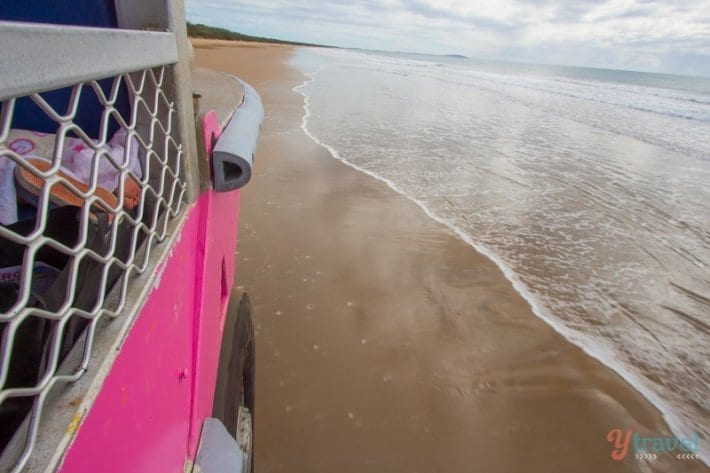
- Coastal Traverse: The vehicle travels along the coastline of Eurimbula National Park, crossing four tidal creeks that are otherwise impassable to standard transport.
- Bustard Head Ascent: The LARC utilizes its 4WD capabilities to climb the steep, rocky track leading to the Bustard Headland.
- Lightstation Interpretive Session: Visitors engage with volunteer guides, tour the museum, and ascend the lighthouse tower.
- Cemetery Visit: A walk to the historical cemetery provides the setting for the "Lighthouse of Tragedy" narratives.
- Middle Island Excursion: The tour moves to the northern tip of Middle Island for lunch and sandboarding on 35-meter dunes.
- Return Journey: The trip concludes with a return across the bay, often timed to coincide with the sunset, which is a rare sight on the Australian east coast as the town’s geography allows for a water-facing sunset.
Broader Implications for Regional Tourism
The success of the LARC tours in the Town of 1770 highlights a growing trend in the travel industry: the demand for low-impact, high-educational-value tourism in remote areas. As travelers increasingly seek "off-the-beaten-path" experiences, the ability to access secluded wilderness areas without the need for extensive infrastructure development is a significant advantage.
Furthermore, the preservation of the Bustard Head Lightstation through a partnership between a private tour operator and a volunteer organization serves as a model for heritage conservation. It demonstrates how sustainable tourism can provide the funding and visibility necessary to maintain historical landmarks that might otherwise be lost to time and the elements.
The Town of 1770 remains a vital link in Australia’s coastal narrative. Through the continued operation of specialized tours and a commitment to historical preservation, the region ensures that the "birthplace of Queensland" remains an accessible and educational destination for future generations. The integration of military engineering, colonial history, and environmental awareness creates a multifaceted tourism product that defines the unique character of the Southern Great Barrier Reef region.