A Comprehensive Guide to Navigating the Top Family Friendly Hiking Trails in Sedona Arizona

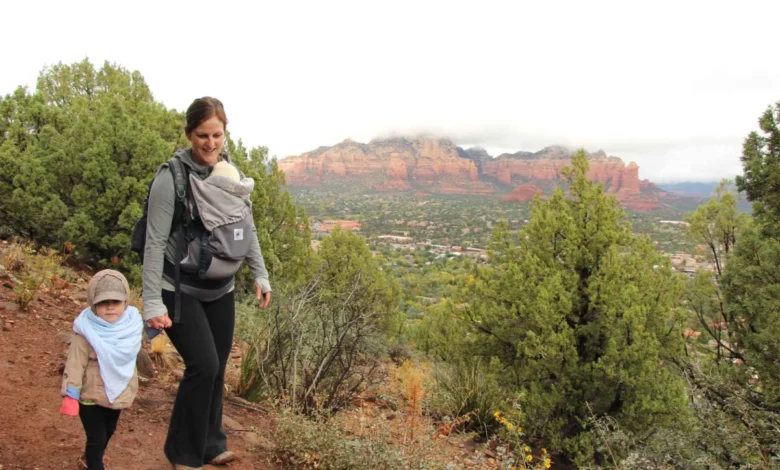
Sedona, Arizona, has solidified its reputation as a premier destination for multi-generational outdoor recreation, offering a unique blend of geological wonder and accessible infrastructure that caters specifically to families with infants, toddlers, and young children. The region, characterized by its iconic Permian-age red sandstone formations, provides a natural playground that is increasingly being utilized by parents seeking to introduce their children to the environment at an early age. According to the Sedona Chamber of Commerce and Tourism Bureau, the area attracts approximately three million visitors annually, a significant portion of whom are families drawn to the Coconino National Forest’s extensive trail system. While the rugged terrain of the high desert can often be intimidating for those with strollers or baby carriers, a specific subset of trails has been identified as ideal for maintaining safety and engagement for the youngest demographic of hikers.

Geological Context and the Appeal of Red Rock Country
The allure of Sedona’s hiking trails is rooted in a complex geological history dating back over 300 million years. The red rocks, primarily composed of the Schnebly Hill Formation, get their distinctive crimson hue from iron oxide (hematite) that stains the sandstone. This visually stimulating environment is often cited by child development experts as a high-engagement setting for toddlers, providing a sensory-rich experience that fosters curiosity. The trails surrounding these formations are managed by the Red Rock Ranger District of the Coconino National Forest. In recent years, the United States Forest Service (USFS) has seen a marked increase in "micro-hiking"—shorter, low-elevation-gain excursions—which aligns with the needs of families managing the physiological limitations of small children and the logistical requirements of carrying infants.

Strategic Trail Selection for Infants and Toddlers
For parents navigating the Sedona wilderness, trail selection is a matter of logistical planning regarding gear and physical endurance. The distinction between "stroller-friendly" and "carrier-essential" trails is the primary factor in a successful family outing.

1. Bell Rock Pathway: The Standard for Accessibility
The Bell Rock Pathway stands as one of the most accessible routes in the Coconino National Forest. Stretching approximately 3.6 miles in its entirety, the most popular segment for families is a one-mile out-and-back section starting from the southern trailhead. This path is notably wide and composed of compacted red shale gravel, making it one of the few locations suitable for all-terrain strollers.

The trail provides unobstructed views of Bell Rock and Courthouse Butte, two of Sedona’s most prominent landmarks. From a navigational standpoint, the pathway is virtually flat, minimizing the risk of exhaustion for parents pushing strollers or toddlers walking independently. However, visitors are advised that the lack of canopy cover makes this trail highly susceptible to the Arizona sun, necessitating rigorous sun protection protocols for infants.

2. West Fork Trail: Riparian Ecology and Shade
Located within the Oak Creek Canyon, the West Fork Trail offers a starkly different environment than the desert floor. This 6.8-mile round-trip trail follows a perennial stream flanked by 1,000-foot canyon walls. For families, the primary draw is the significant shade provided by the canyon and the lush forest of maple and oak trees.

Data from the USFS indicates that West Fork is one of the most visited trails in the Southwest. For parents, it is classified as "carrier-essential" due to the thirteen required creek crossings. These crossings typically involve navigating stepping stones across shallow water, a task that requires a high degree of balance and is unsuitable for strollers. The trail serves as an educational opportunity for older children to observe riparian ecosystems and unique bird species.

3. Baldwin Trail: Sunset Vistas and Water Access
The Baldwin Trail, situated near the Village of Oak Creek, is a 2.7-mile loop that offers a high reward-to-effort ratio. The trail circles a small red rock butte and provides some of the most photographed views of Cathedral Rock. Because the trail surface is uneven and features natural rock "stairs," it is recommended for parents using ergonomic baby carriers.
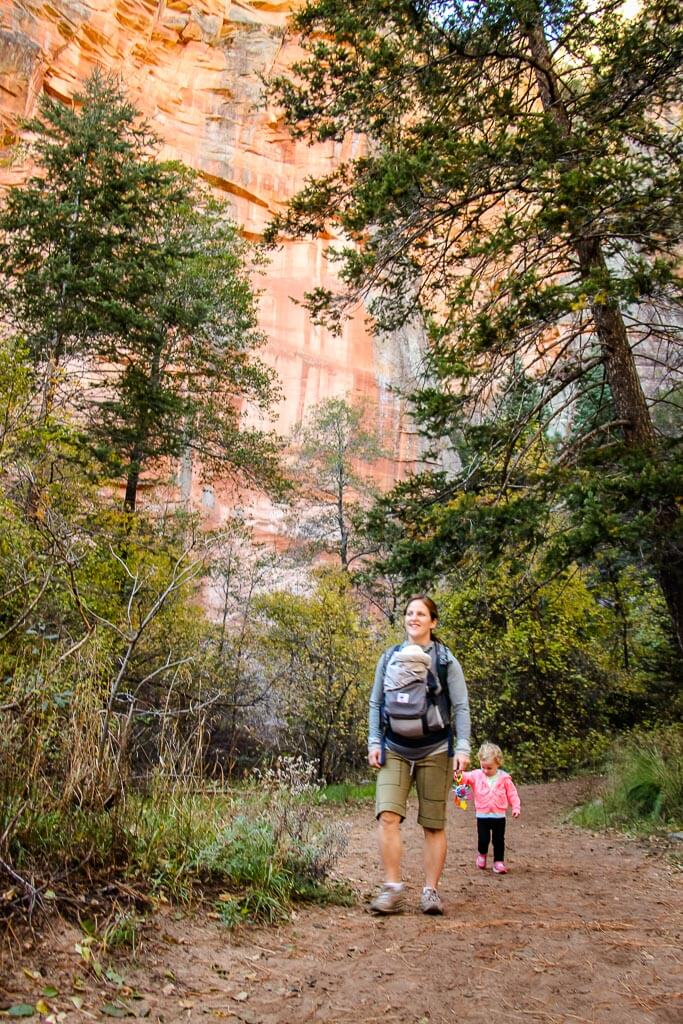
A significant feature of the Baldwin Trail is its proximity to Oak Creek. Side trails lead directly to the water’s edge, providing a natural cooling station for children. This proximity to water is a critical safety factor during the shoulder seasons when temperatures can fluctuate rapidly.

4. Fay Canyon: Geological Arches and Shorter Distances
Fay Canyon is often recommended by local guides as an alternative to the more congested West Fork Trail. The 2.2-mile round-trip hike is relatively flat and leads deep into a box canyon. The trail’s primary attraction is the Fay Canyon Arch, a natural stone bridge located on a short, steep side trail. While the main trail is manageable for most toddlers, the ascent to the arch itself is rocky and requires a carrier. The canyon walls provide substantial afternoon shade, which is a vital consideration for families planning mid-day excursions.

5. Huckaby Trail: Proximity and River Views
The Huckaby Trail provides a more rugged experience while remaining close to the Sedona town center. The trail offers panoramic views of the Sedona skyline and the surrounding wilderness. Due to its rocky and uneven nature, it is not suitable for strollers. The trail descends toward Oak Creek, where children can play in the sand and shallow water. Parents should be aware that this trail has moderate elevation changes, which may be more taxing when using a front or back baby carrier.

6. Sedona Airport View Trail: High-Elevation Perspectives
For families seeking expansive views without a long approach, the Airport View Trail is a strategic choice. Located adjacent to the Sedona Airport, the trail offers a birds-eye view of the town and the Mogollon Rim. The trail is narrow and rocky in sections, making it a "carrier-preferred" route. Its proximity to the city makes it an ideal choice for a "warm-up" hike or a quick excursion between other scheduled activities.

Infrastructure and the Sedona Shuttle System
As tourism in Sedona has increased, the city and the USFS have implemented the Sedona Shuttle to mitigate parking congestion at popular trailheads, including Cathedral Rock and Devil’s Bridge. This public transit solution is free and operates on a frequent schedule, which is a critical piece of information for families. Most shuttle buses are equipped to handle folding strollers, though parents should be prepared to collapse them before boarding. During peak seasons (Spring and Fall), parking at trailheads like West Fork can be full by 8:00 AM, making the shuttle system the most reliable way for families to reach the trails without the stress of circling parking lots.

Safety Protocols and Environmental Stewardship
Hiking in the high desert with minors requires adherence to specific safety guidelines issued by the Arizona Department of Health Services.

- Hydration: The "one gallon per person per day" rule is standard, but for infants and toddlers, parents must ensure frequent electrolyte replenishment.
- Thermal Regulation: Children are more susceptible to heatstroke and exhaustion. Experts recommend hiking during the "golden hours"—early morning or late afternoon—to avoid the peak UV index.
- Leave No Trace: The "Leave No Trace" Center for Outdoor Ethics emphasizes that the red rock environment is fragile. Cryptobiotic soil, a living crust that prevents erosion, is prevalent in Sedona. Parents are urged to keep children on the designated paths to avoid destroying these sensitive biological systems.
Economic and Sociological Impact
The rise of "adventure parenting" has had a tangible impact on the Sedona economy. Local retailers have reported increased sales in high-end child-carrying equipment and technical outdoor gear for toddlers. Furthermore, the focus on family-friendly hiking aligns with the city’s "Sustainable Tourism Plan," which aims to distribute visitors across a wider array of trails to prevent environmental degradation at "Instagram-famous" spots. By promoting trails like Fay Canyon and Baldwin, the city manages to maintain its status as a top-tier destination while preserving the integrity of the land.

Analysis of Implications
The trend toward introducing infants to the Sedona trail system reflects a broader shift in the travel industry toward experiential and nature-based tourism. For the city of Sedona, this demographic represents a loyal, returning visitor base. However, the increased presence of young children on trails also necessitates better signage regarding trail difficulty and more robust emergency response capabilities in remote areas.

The inclusion of the Devil’s Bridge Trail as a "bonus" for older children highlights the necessity of realistic self-assessment for parents. While the 4-mile hike leads to one of the most spectacular natural bridges in the world, the final ascent involves steep, natural rock stairs that can be hazardous for those carrying a child. The popularity of this spot often results in long queues for photos, a factor that parents of impatient toddlers must consider before embarking on the trek.

In conclusion, Sedona’s red rock country offers a diverse portfolio of trails that, when chosen with proper logistical foresight, allow families to experience the wilderness safely. From the stroller-accessible Bell Rock Pathway to the shaded riparian corridors of West Fork, the region provides a vital entry point for the next generation of outdoor enthusiasts. As infrastructure continues to evolve to meet the needs of these visitors, Sedona remains a benchmark for how natural areas can balance high-volume tourism with family-centric accessibility.