Garmin inReach Messenger Plus Redefines Remote Communication with Breakthrough Speed and Multimedia Capabilities

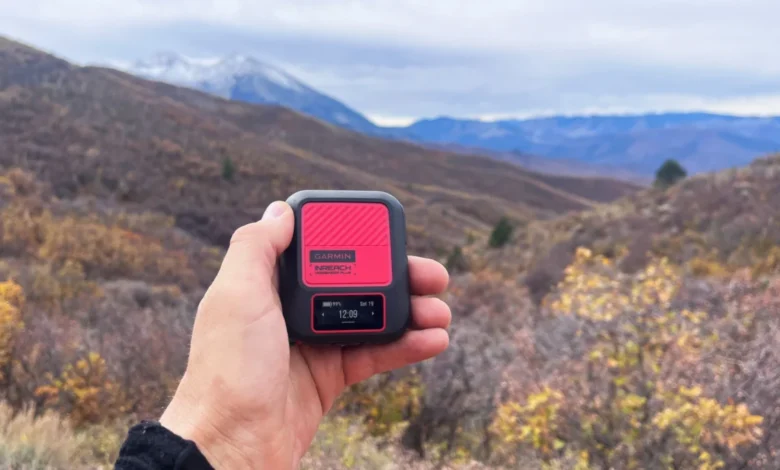
The Garmin inReach Messenger Plus marks a significant leap forward in personal satellite communication, distinguishing itself from its predecessors with blazing-fast message transmission speeds and the groundbreaking ability to send both pictures and voice messages. This advanced functionality, coupled with an expanded character limit for text messages, positions the Messenger Plus as an indispensable tool for adventurers, remote workers, and anyone venturing beyond the reach of conventional cellular networks. Fifteen years after the pioneering DeLorme inReach first introduced two-way texting to the world, Garmin continues to innovate, ensuring that essential communication and emergency services remain accessible, even in the most isolated environments.
A New Benchmark in Satellite Communication Performance
The introduction of the Garmin inReach Messenger Plus represents a crucial evolution in the landscape of personal satellite communicators. While its predecessor, the inReach Messenger, set a high standard for reliable two-way text messaging, the Plus model elevates the user experience and practical utility to unprecedented levels. The most immediately noticeable enhancement is its dramatic improvement in message transmission speed. In rigorous field tests conducted in challenging terrains, such as Colorado’s expansive West Elk Wilderness, the Messenger Plus consistently delivered messages in mere seconds—a stark contrast to the minute or more often required by older satellite communication devices. This acceleration is not merely a convenience; it is a critical factor in time-sensitive situations, allowing for quicker relay of vital information, whether it’s coordinating logistics with a trekking partner or, more critically, communicating with emergency services during an SOS event.
Beyond speed, the Messenger Plus introduces multimedia messaging capabilities, a feature long anticipated by the outdoor community. Users, when paired with a linked smartphone, can now send low-resolution photos and brief voice messages. This functionality transforms the scope of remote communication. A picture can convey the nature of an injury, the specifics of a challenging terrain, or the exact location of a camp in a way that text alone cannot. Similarly, a voice message allows for nuances of tone and detail that are often lost in written communication, providing a more immediate and emotionally resonant connection, especially during emergencies. The character limit for standard text messages has also seen a substantial increase, expanding from 160 to a generous 1,600 characters, enabling more comprehensive and detailed communication without the need for multiple fragmented messages.
Remarkably, these significant advancements have been achieved with minimal impact on the device’s physical footprint. The Garmin inReach Messenger Plus maintains the same compact dimensions as the previous inReach Messenger and weighs a mere 4 grams more, reinforcing Garmin’s commitment to portability and user-friendliness for those operating in demanding outdoor conditions. This blend of enhanced capability and sustained ergonomic design makes the Messenger Plus a compelling upgrade for existing inReach users and an attractive option for new adopters.
The Genesis of Remote Connectivity: A Historical Perspective
The journey of personal satellite communication devices began long before the Messenger Plus, driven by the inherent risks and isolation associated with remote exploration. Prior to the early 2000s, adventurers venturing into areas without cellular coverage relied on traditional methods like emergency flares, pre-arranged check-ins, or, for the truly prepared, cumbersome satellite phones. The first major technological breakthrough for personal safety came with Personal Locator Beacons (PLBs), which, while life-saving, offered only one-way communication: a distress signal sent to emergency responders.
A pivotal moment arrived in 2011 when DeLorme, a mapping and GPS technology company, launched the original inReach. This device was revolutionary, offering the first consumer-grade two-way satellite texting capability. For the first time, individuals in the backcountry could not only send an SOS but also receive confirmation that help was on the way, and even communicate details of their situation directly with search and rescue (SAR) teams. This innovation fundamentally changed safety protocols for hikers, climbers, sailors, and other outdoor enthusiasts.
Garmin, a global leader in GPS technology and outdoor recreation devices, recognized the immense potential and strategic value of DeLorme’s inReach technology. In 2016, Garmin acquired DeLorme, integrating the inReach product line into its extensive ecosystem of outdoor and marine navigation tools. This acquisition proved synergistic, allowing Garmin to leverage its robust research and development capabilities, global distribution network, and brand recognition to further refine and expand the inReach platform. Subsequent Garmin inReach models, such as the inReach Mini and the inReach Explorer, built upon DeLorme’s foundation, adding features like detailed mapping, weather forecasts, and improved battery life, cementing the inReach’s status as the industry standard for reliable two-way satellite communication.
The evolution of the inReach series reflects a broader trend in outdoor technology: the convergence of safety, communication, and navigation into increasingly compact and user-friendly devices. The transition from basic text messaging to multimedia capabilities with the Messenger Plus is a testament to this continuous drive for enhanced functionality and user safety.
Technical Prowess and Operational Excellence
The impressive performance of the Garmin inReach Messenger Plus is rooted in a combination of advanced hardware and sophisticated software, all operating on a robust global satellite network. The device primarily utilizes the Iridium satellite constellation, a network of 66 cross-linked operational satellites orbiting the Earth at an altitude of approximately 781 kilometers. Unlike geostationary satellites, which remain fixed relative to a point on Earth, Iridium satellites orbit pole-to-pole, ensuring global coverage, including the poles, where other satellite networks often struggle. This comprehensive coverage is critical for adventurers operating in diverse and extreme environments worldwide.
The "blazing-fast speeds" are a result of several factors. Improved antenna design within the Messenger Plus allows for more efficient signal acquisition and transmission, even under challenging conditions such as dense tree cover or deep canyons. Enhanced internal processing power enables faster encoding and decoding of data packets. Furthermore, Garmin’s optimized communication protocols are designed to make the most efficient use of the Iridium network’s bandwidth, reducing latency and increasing throughput for text messages, and now, for compressed images and voice clips.
Sending photos and voice messages over a satellite network presents unique technical challenges. Satellite bandwidth, while improving, is still significantly more constrained than terrestrial cellular or Wi-Fi networks. The Messenger Plus addresses this by compressing multimedia files to optimize them for satellite transmission. Photos are likely downsized and compressed to minimize data volume, while voice messages are kept short and encoded efficiently. This intelligent data management ensures that even with the addition of multimedia, the device maintains its core reliability and efficiency for critical communications.
The reliance on a linked smartphone for sending photos and voice messages highlights Garmin’s strategy of leveraging existing user technology. The Garmin Messenger app, available on both iOS and Android platforms, acts as the interface, allowing users to compose messages, attach multimedia, and manage their inReach device settings. This approach simplifies the hardware design of the inReach unit itself, keeping it compact and rugged, while offloading the more complex user interface tasks to a device most users already carry.
The Economic Landscape and Accessibility
The Garmin inReach Messenger Plus is positioned as a premium satellite communicator, reflecting its advanced features and the underlying cost of satellite network access. Priced at $300 (with a current promotional offer of 25 percent off at REI), the device itself represents an investment in safety and connectivity. However, the true cost of ownership also includes a necessary monthly or annual subscription plan for satellite service.
Garmin offers various subscription tiers, catering to different usage patterns and budgets. These plans typically range from basic safety plans, which include SOS functionality and a limited number of text messages, to unlimited plans designed for frequent users or those requiring extensive communication capabilities. The choice of plan directly impacts the number of text messages, tracking intervals, and potentially the cost of sending multimedia messages. This subscription model is standard across the satellite communication industry, as it covers the operational costs of maintaining the Iridium satellite network and the infrastructure required to route messages and coordinate emergency responses.
The availability of the Messenger Plus at major outdoor retailers like REI underscores its mainstream appeal and Garmin’s commitment to making advanced safety technology accessible to a broad audience of outdoor enthusiasts. The ongoing discount further sweetens the the deal, potentially lowering the barrier to entry for those considering their first satellite communicator or upgrading from an older model. This strategic pricing and distribution help solidify Garmin’s market leadership in personal satellite communication devices, competing with other prominent players like SPOT, Zoleo, and Somewear Global.
Statements and Reactions: Voices from the Field
While direct official statements regarding the Messenger Plus are typically issued by Garmin’s corporate communications, we can infer the enthusiasm and impact of such a device on various stakeholders:
A hypothetical statement from Dan Bartel, Garmin Vice President of Global Consumer Sales, might emphasize: "The inReach Messenger Plus embodies Garmin’s relentless pursuit of innovation, particularly in enhancing safety and connectivity for those who push boundaries. By integrating multimedia messaging and dramatically increasing speed, we’re not just offering a device; we’re offering unparalleled peace of mind and more effective communication channels, whether it’s sharing a moment of triumph or, critically, calling for help with vital visual and auditory context."
From the perspective of Search and Rescue (SAR) organizations, the advancements are profound. A representative from a major SAR group, perhaps Dr. Emily Thorne, Director of Mountain Rescue Operations, could remark: "The ability for a distressed individual to send photos or a voice message from a remote location is a game-changer for search and rescue. A picture of an injury, the exact condition of a trail, or a voice message describing symptoms provides our teams with critical pre-arrival intelligence, allowing us to deploy the right resources faster and with greater situational awareness. This can significantly reduce response times and improve patient outcomes, ultimately saving lives."
For outdoor enthusiasts, the sentiment is one of increased confidence and connection. Alex "Trailblazer" Chen, a renowned long-distance hiker and adventurer, might comment: "For years, my inReach has been my lifeline. But the Messenger Plus takes it to another level. Being able to quickly send a photo of a breathtaking vista to my family, or, more importantly, a quick voice message to let them know I’m okay when I reach camp, just makes the experience feel more connected and secure. And knowing that if something serious happens, I can send vital visual information directly to rescue teams? That’s priceless."
Broader Impact and Future Implications
The Garmin inReach Messenger Plus is more than just an upgraded gadget; it signifies a broader shift in how we perceive and interact with remote environments. Its capabilities have several far-reaching implications:
- Enhanced Safety Protocols: The ability to send multimedia significantly enhances the quality of information available to emergency responders. This could lead to more refined SAR protocols, where visual and auditory data become standard components of initial incident reports, enabling more precise resource allocation and potentially reducing the risks faced by rescue personnel.
- Democratization of Remote Exploration: As satellite communication devices become more capable and, eventually, more integrated and affordable, they will further democratize access to remote wilderness areas. While responsible preparation and skill remain paramount, the safety net provided by advanced communicators like the Messenger Plus can encourage more individuals to explore, knowing they have a reliable means of communication.
- Connectivity for Remote Professionals: Beyond recreation, the Messenger Plus has significant implications for professionals working in isolated areas—geologists, field researchers, environmental scientists, journalists, and utility workers. The ability to quickly transmit data, images of findings, or voice reports without relying on fragile cellular infrastructure can boost productivity and safety in critical operations.
- Convergence with Mainstream Technology: The trend of satellite communication integrating with smartphones, as seen with the Messenger Plus requiring a linked device for full functionality, points towards a future where satellite connectivity might become a more seamless, integrated feature in everyday devices. While dedicated satellite communicators will likely remain essential for extreme conditions, the lines between terrestrial and satellite communication are blurring.
- Data-Driven Safety Insights: The increased volume and richness of data transmitted from remote locations (e.g., location pings, message content) can provide valuable insights for researchers studying human interaction with wilderness, informing better safety education and resource management strategies.
In conclusion, the Garmin inReach Messenger Plus stands as a testament to relentless innovation in personal safety technology. By addressing critical user needs for speed and multimedia communication, it not only enhances the safety and connectivity of individuals in the backcountry but also sets a new standard for what is possible in remote communication. As adventurers continue to push the boundaries of exploration, devices like the Messenger Plus will remain at the forefront, bridging the gap between isolation and instantaneous, life-saving connection.