Wat Phu Tok: Thailand’s Astonishing Cliffside Temple Offers Thrills and Spiritual Serenity

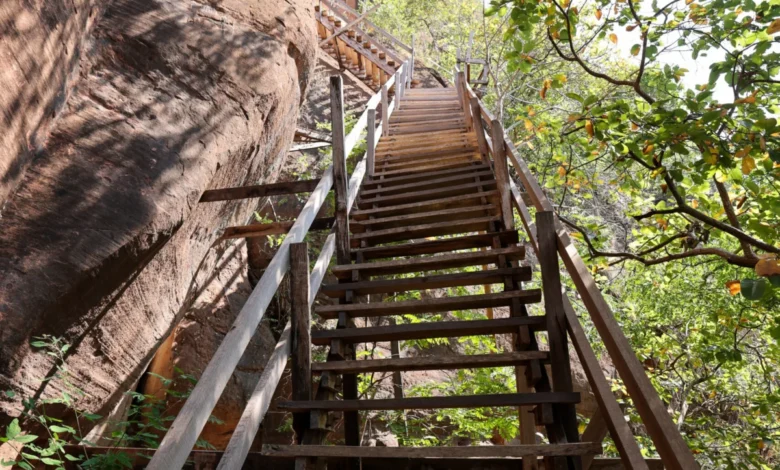
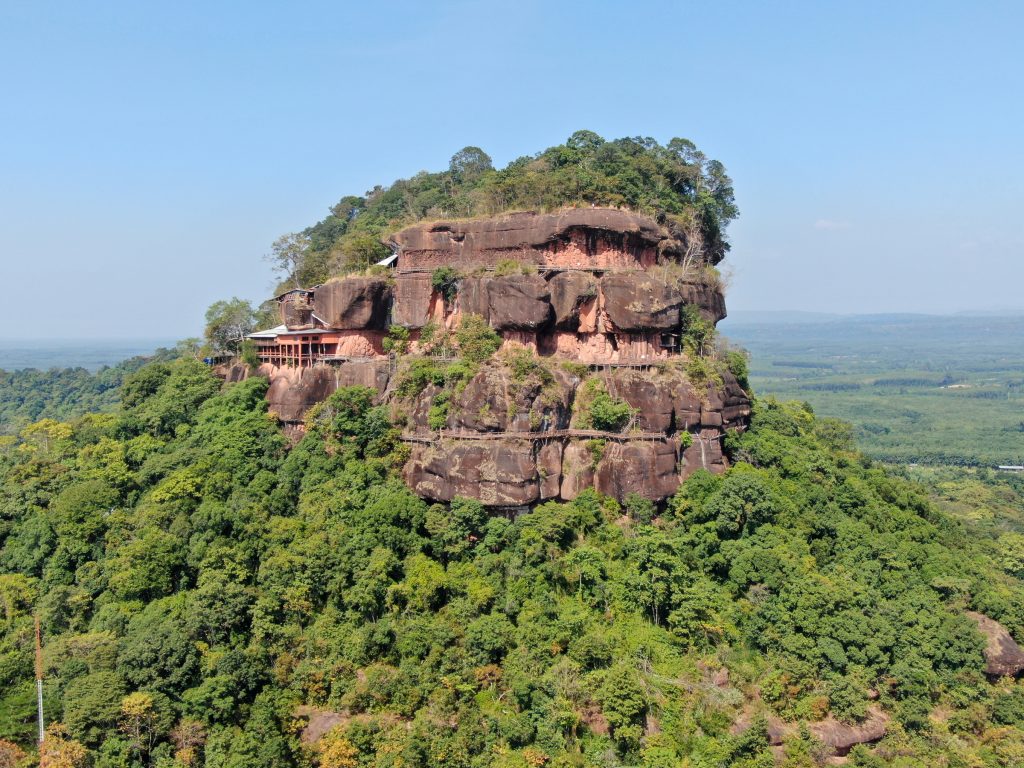
Wat Phu Tok, also known by its official name Wat Jetiyakhiri, stands as a testament to human ingenuity and spiritual devotion, perched precariously on a solitary red rock mountain in the northeastern Isan region of Thailand. This unique temple complex, renowned for its intricate network of wooden stairs, ladders, and walkways clinging to the sheer cliffs, offers visitors an adventurous and awe-inspiring experience. Located in the lesser-visited Bueng Kan province, Wat Phu Tok is a destination for those seeking peace, expansive natural beauty, and attractions far from the typical tourist trails. The temple’s most striking feature, the perilous yet captivating sixth level, has earned it a reputation as one of Thailand’s most adventurous, and for some, most frightening, spiritual sites.
The journey to Wat Phu Tok begins in Bueng Kan city, approximately a 30-minute drive away. The temple complex is situated amidst a tranquil landscape, featuring a substantial temple structure at its base, a serene lake, and an expansive park area, all offering ample parking for visitors. The entrance to the mountain trail is unmistakable, leading directly towards the imposing red rock formation. As one ascends, the terrain gradually transitions from a natural path to a meticulously constructed series of wooden plank staircases, a testament to the vision of its founder.
A History Forged in Solitude and Spirituality
The history of Wat Phu Tok is deeply intertwined with the solitary nature of its location. The mountain, whose local Isan name translates to "lonely mountain," has long been a habitat for wildlife, including venomous snakes, a factor that paradoxically contributed to its appeal as a place for meditation. The remote setting, combined with an element of natural danger, provided a unique environment for spiritual discipline and contemplation.

The temple was founded by Monk Luang Pu Juan, who envisioned a sacred space accessible to all. He embarked on the ambitious project of constructing a series of wooden staircases, ladders, and walkways that would connect various shrines and meditation spots across the mountain. This ambitious undertaking eventually resulted in seven distinct levels, symbolically representing the seven stages of Buddhist meditation. Tragically, Luang Pu Juan’s life was cut short in an airplane accident, but his monumental work at Wat Phu Tok continues to be maintained and revered, drawing pilgrims and tourists alike. The ongoing upkeep and spiritual significance of the temple are a direct legacy of his pioneering efforts.
Ascending the Levels: A Journey of Discovery
The ascent through Wat Phu Tok is a progression of experiences, with each level offering new perspectives and challenges. The initial stages of the climb are relatively straightforward, featuring accessible stairs that gradually become steeper. While the wooden planks can sometimes be angled and may exhibit a slight flex underfoot, the overall construction conveys a sense of safety and stability, a crucial factor given the exposed nature of the pathways.

The First Few Levels: The early levels of the temple are characterized by a more subdued experience, with a focus on the initial climb. While some shrines may be observed, the primary objective for many visitors is to continue their ascent to reach the more prominent and spiritually significant areas of the complex.
The Fifth Level: A Hub of Devotion and Architectural Marvel

Upon reaching the fifth level, the landscape of the temple transforms significantly. This level is marked by a proliferation of temples, shrines, and halls, with a substantial portion of the trail consisting of solid ground rather than precarious cliffside walkways. It is here that visitors will find what is believed to be the largest ordination hall within the complex, a central point of worship and reflection.
A particularly noteworthy feature of the fifth level, and indeed a highlight for many visitors, is a small rock temple situated off the main circumference trail. Reaching this secluded sanctuary involves following a designated path that leads to an elevated rock walkway, connected by a charming wooden bridge. This detour, though brief, offers a unique architectural gem and a moment of quiet contemplation away from the main thoroughfares. The ingenuity of its placement and the serene atmosphere make it a memorable part of the Wat Phu Tok experience.

The Sixth Level: The Pinnacle of Adventure and Breathtaking Vistas
The famed sixth level of Wat Phu Tok is undoubtedly the most anticipated and exhilarating part of the visit. Another flight of wooden stairs leads to this spectacular section, where approximately half of the circumference is comprised of wooden plank walkways. These walkways are ingeniously anchored into the sheer rock face, creating a dramatic and thrilling experience for those who traverse them.

The juxtaposition of the sturdy wooden structures against the rugged, natural rock face is a remarkable feat of engineering. While the walkways are generally perceived as stable and well-maintained, the sheer drop below and the exposed nature of the path can induce a sense of vertigo for those with a fear of heights. However, for many, the thrill of walking along these cliff-hanging structures, with the wind whipping around and panoramic views unfolding, is an unforgettable sensation. The advice to remain attentive to the trail is paramount, as a misstep could have severe consequences.
From the sixth level, visitors are treated to breathtaking vistas of the Mekong River basin and the verdant landscape of Bueng Kan province. The expansive views, coupled with the refreshing breeze, create a truly spectacular panorama. The ability to circumnavigate this entire level allows for an appreciation of the surrounding beauty from every angle.

The Seventh Level: A Test of Courage and Spiritual Summit
The seventh and final accessible level of Wat Phu Tok is whispered to be a place of heightened spiritual significance and, for some, a test of courage. Local lore suggests that this level is known for venomous snakes, and visitors are advised to proceed with caution. While there are no elaborate wooden walkways or shrines to explore at the very summit, reaching this highest point offers a sense of accomplishment and, from specific vantage points, further expansive views. However, many believe that the most unique and visually striking elements of Wat Phu Tok are concentrated on the sixth level.

Supporting Data and Broader Context
The construction of Wat Phu Tok, particularly the extensive network of walkways and stairs, represents a significant undertaking in terms of labor and resources. While specific construction timelines and costs are not readily available, the sheer scale of the project, involving the meticulous anchoring of wooden structures into a natural rock formation, highlights the dedication and perseverance involved. The temple’s development over time, from its inception by Luang Pu Juan to its ongoing maintenance, speaks to a sustained community effort and a deep-rooted spiritual commitment.
The geographical isolation of Bueng Kan province, while contributing to its tranquil atmosphere, also presents logistical challenges for infrastructure development and tourism. However, destinations like Wat Phu Tok are increasingly recognized for their potential to draw visitors seeking authentic and off-the-beaten-path experiences, thereby contributing to local economies and promoting regional development. The temple’s comparison to Sigiriya in Sri Lanka, another ancient rock fortress with extensive man-made structures, underscores its unique place among world heritage sites of similar architectural ambition.

Visitor Experience and Practical Advice
For those planning a visit to Wat Phu Tok, several practical tips can enhance the experience:
- Attire: Comfortable walking shoes are essential, as the climb involves numerous stairs and uneven terrain. Light, breathable clothing is recommended due to the tropical climate.
- Hydration: Carrying sufficient water is advisable, especially during warmer months, as the ascent can be physically demanding.
- Respect: As a place of worship, visitors are expected to dress modestly and behave respectfully.
- Timing: Visiting early in the morning or late in the afternoon can provide cooler temperatures and a more serene atmosphere.
- Safety: While the structures are generally considered safe, exercising caution, particularly on the elevated walkways of the sixth level, is paramount.
The experience of visiting Wat Phu Tok is more than just a tourist excursion; it is a journey that combines physical exertion with spiritual contemplation. The temple’s unique architecture, set against a backdrop of natural beauty, offers a profound sense of awe and wonder. The dedication of the monks and the local community in preserving and maintaining this extraordinary site ensures that Wat Phu Tok will continue to inspire and challenge visitors for generations to come. The adventurous spirit required to ascend its levels mirrors the spiritual journey of overcoming obstacles and seeking enlightenment, making Wat Phu Tok a truly singular destination in Thailand.