The Unprecedented 2026 Wildfire Season: A Nation Grapples with Historic Drought and Looming Catastrophe

With over 60 percent of the United States officially entrenched in drought conditions and nearly twice the average acreage already consumed by wildfires, experts are issuing stark warnings to backpackers and the general public that the 2026 summer will likely see widespread disruptions and significant hazards from escalating fire activity. The nation is bracing for what many fear could be one of the most destructive wildfire seasons in recent memory, driven by a convergence of severe drought, unseasonably warm temperatures, and historically low snowpack.
The scale of the current crisis is already evident. A comprehensive report released by the National Interagency Fire Center (NIFC) on May 1, 2026, revealed that an astonishing 1,615,683 acres of land have been decimated by wildfires this year alone. This figure represents a staggering 94 percent increase over the country’s 10-year average for this period, signaling an alarmingly early and aggressive start to the fire season. With nearly two-thirds of the contiguous U.S. experiencing drought, the conditions are ripe for what many states are preparing for as "megadrought" scenarios and potentially catastrophic wildfires. These grim projections have left numerous trail communities and outdoor recreation sectors deeply concerned about the viability of the upcoming hiking and tourism season.
A Season Already Defined by Fire
The year 2026 has, in many respects, already proven to be a tough year for wildfires, setting a concerning precedent for the months ahead. While wildfire seasons have steadily grown in both scale and duration over the past decade, this year’s forecast is particularly sobering. AccuWeather, a leading meteorological service, projects that the U.S. could experience between 65,000 and 80,000 fires this year, burning an estimated 5.5 to 8 million acres. This projection significantly surpasses the 5.1 million acres scorched in 2025 and indicates a substantial increase in destructive potential.
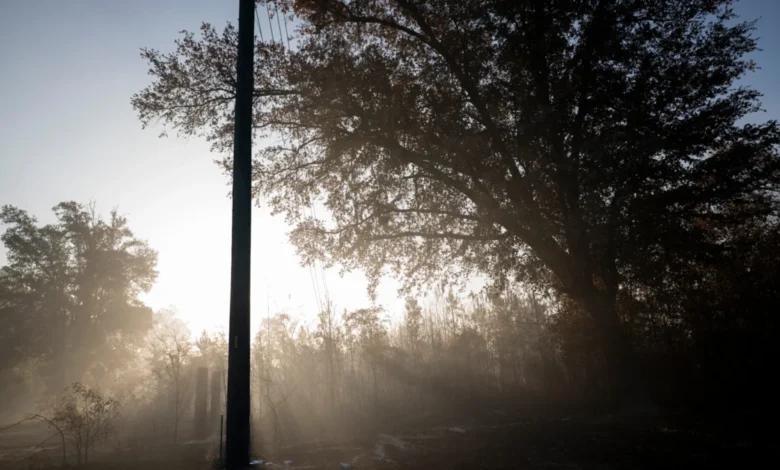
The early onset and intensity of fires have been particularly noticeable in the southeastern United States, a region not typically associated with early-season megafires. For instance, the Brantley Highway 82 Fire in Atkinson, Georgia, captured on April 24, 2026, exemplifies the widespread nature of the threat, with smoke lingering heavily in the air as it burned through extensive tracts of forest. This fire is but one example of many burning across the Southeast, contributing to the elevated national acreage. The National Oceanic and Atmospheric Administration (NOAA) has also indicated that large parts of the South, particularly Florida, Texas, and parts of the Gulf Coast, have been experiencing persistent dry conditions that have primed landscapes for rapid fire spread, further exacerbating the national picture.
The Shadow of Drought: A Decades-Long Crisis
Behind the dire wildfire forecasts lies a historic and pervasive drought. According to analyses by Wildfire Today, the United States has not experienced drought conditions as severe and widespread as these in four decades, leading many experts to express profound concern about the potential scale and intensity of the 2026 fire season. This prolonged period of aridity is not a sudden phenomenon but rather the culmination of several adverse climatic factors.
Key contributors to this extreme dryness include persistently low winter snowpack, which failed to build adequately across critical western mountain ranges. Compounding this, the country has experienced a series of intense heatwaves and higher-than-average winter temperatures. These conditions collectively facilitate earlier ignition and more rapid fire spread than usual. Snowpack, as explained by Larry O’Neill, Oregon’s state climatologist, functions as a vital natural reservoir for water. "It’s a very worrying trend," O’Neill told Oregon Public Broadcasting. "Because it was so warm, our snowpack just really failed to build. Snowpack functionally acts as a reservoir for water. Basically, our largest reservoir of water is nearly empty at this point in time." This depletion of natural water reserves means that landscapes dry out faster and more thoroughly, turning vegetation into readily available fuel for wildfires much earlier in the season.
The current drought is often characterized as a "megadrought," a term used to describe a multi-decade drought that is more severe and longer-lasting than typical droughts. The ongoing megadrought, particularly pronounced in the American West, has been linked by climate scientists to human-caused climate change, which intensifies aridification and increases the frequency and severity of extreme weather events, including heatwaves and prolonged dry spells. The implications for water resources, agriculture, and ecosystem stability are profound and long-lasting, setting the stage for increasingly challenging fire seasons.
Forecasting the Inferno: Projections for 2026
The NIFC’s outlook, combined with independent analyses from meteorological services like AccuWeather, paints a bleak picture for the remainder of 2026. The forecast of 5.5 to 8 million acres burned would place 2026 among the most destructive years on record, potentially surpassing recent challenging years such as 2020 (over 10.1 million acres) and 2017 (over 9.9 million acres). The predicted high number of ignitions (65,000-80,000 fires) suggests that even small incidents have the potential to escalate rapidly into large, unmanageable blazes due to the prevailing dry conditions and abundant fuel loads.
Western states are identified as the most vulnerable. Arizona, New Mexico, Nevada, Idaho, and Montana are particularly susceptible to experiencing widespread catastrophe due to their existing severe drought conditions, vast wildlands, and historical fire patterns. In these regions, a combination of drought-stressed vegetation, strong winds, and high temperatures creates a volatile environment where fires can spread with unprecedented speed and intensity. Conditions in California and Colorado, while perhaps not yet at their peak, are projected to steadily deteriorate throughout the summer months. Persistent droughts, coupled with weakening moisture levels and forecasted above-average temperatures, are expected to lead to a significant increase in fire risk as the season progresses. The potential for large-scale fires in these states, known for their dense populations in the Wildland-Urban Interface (WUI) and critical infrastructure, raises immediate concerns for both public safety and economic stability.
Official Responses and Preparedness Efforts
In anticipation of a relentless fire season, federal, state, and local agencies across the country are implementing a range of preparedness and mitigation strategies. These efforts combine long-standing fire management protocols with innovative approaches tailored to the extreme conditions of 2026.
At the federal level, agencies like the U.S. Forest Service (USFS), Bureau of Land Management (BLM), and the NIFC are coordinating resources, personnel, and aerial assets. The NIFC serves as the central hub for interagency fire management, facilitating resource allocation and providing national predictive services. Discussions are ongoing regarding the deployment of additional national guard units and federal emergency management resources to supplement state efforts.
State governments, particularly in the hardest-hit regions, are enacting proactive measures. In Colorado, mountain communities have initiated mock wildfire evacuation drills to enhance public readiness and refine emergency response protocols. These drills, such as those recently conducted in two Colorado mountain towns, are critical for improving communication, logistics, and community resilience when faced with rapid fire threats. The Colorado Department of Transportation (CDOT) has also begun extensive roadside fire mitigation work, utilizing $12 million in leftover snowplow funds from the state’s mild winter. This initiative focuses on reducing flammable vegetation along critical transportation corridors, thereby minimizing ignition risks from vehicle-related incidents and creating defensible spaces. Furthermore, counties across Colorado are adopting new codes from the Colorado’s Wildfire Resiliency Code Board, mirroring efforts in California and Utah to make new construction and significant renovations more fire-resistant. These codes mandate fire-safe materials, landscaping, and construction practices, aiming to protect communities from the advancing threat.
California, a state perennially at the forefront of wildfire challenges, is also intensifying its preparations. CAL FIRE, the state’s firefighting agency, is expanding its aerial wildfire fighting capabilities and deploying advanced detection systems, including a network of high-definition cameras and artificial intelligence-powered monitoring, in anticipation of a "busy" year. The state has received only about 70 percent of its average precipitation since October, leading to critically dry conditions. CAL FIRE is also significantly expanding fuel reduction projects, including prescribed burns and mechanical thinning, to create fuel breaks and reduce fire intensity in high-risk areas.
Other states, including Arizona, New Mexico, and Nevada, are also ramping up their efforts, focusing on public awareness campaigns, enforcing stricter burn bans, and prepositioning firefighting resources in strategic locations. The interconnectedness of the fire ecosystem means that resources are often shared across state lines through mutual aid agreements, underscoring the collaborative nature of wildfire response.
Impact on Outdoor Recreation and Tourism
The escalating wildfire season carries significant implications for outdoor enthusiasts, particularly hikers and backpackers. Trail closures are already reshaping recreational opportunities across the country. In Los Angeles, for instance, the extensive Eaton and Palisades fires of 2025 led to the shutdown of large swathes of local trail systems, some of which are expected to remain closed through 2026 as ecosystems recover and hazardous conditions persist.
Major long trails are also facing unprecedented challenges. An early season report from the Colorado Trail Foundation (CTF) explicitly warned prospective hikers that forest fires were the organization’s "#1 concern" for the 2026 hiking season. The CTF elaborated, stating, "With record-low snowpack and record-high temperatures, many mountain ranges have already experienced the spring melt. While anyone traveling across the West over the past decade has become accustomed to fire restrictions, this year might be extreme." The organization has urged hikers to monitor real-time fire activity using dedicated apps like Watch Duty and Colorado’s wildfire information page, emphasizing the need to be prepared for poor air quality and sudden route changes.
Similarly, the Continental Divide Trail Coalition (CDTC) issued a warning of "elevated fire risk" along the iconic Continental Divide Trail, strongly advising both weekend backpackers and thru-hikers to forgo campfires entirely. These warnings highlight a critical shift in outdoor recreation: flexibility, constant vigilance, and a commitment to Leave No Trace principles are more essential than ever. Hikers may need to adjust their itineraries, carry extra water, or even abandon trips due to closures, smoke, or dangerous conditions. This also has a cascading effect on local economies that rely on outdoor tourism, from gear shops and outfitters to hotels and restaurants in gateway communities.
Broader Ecological and Economic Implications
Beyond immediate dangers and recreational impacts, the severe 2026 wildfire season carries profound broader implications. Ecologically, intense and frequent wildfires can lead to long-term degradation of ecosystems. High-severity fires can sterilize soils, increase erosion, and alter hydrological patterns, impacting water quality and availability for years. The destruction of vast forest areas also contributes significantly to carbon emissions, exacerbating climate change and creating a feedback loop. Wildlife habitats are decimated, leading to population displacement and potential species loss.
Economically, the impact extends far beyond the direct costs of firefighting. Property damage, infrastructure loss (power lines, communication towers, roads), and agricultural losses can amount to billions of dollars. The tourism industry, a vital economic driver for many western states, faces significant revenue losses due to closures, smoke-filled skies, and cancellations. Insurance premiums in fire-prone areas are skyrocketing, and some insurers are withdrawing from high-risk markets altogether, creating a housing crisis in affected regions. The cost of recovery and restoration after a major fire can be immense, placing a heavy burden on state and federal budgets.
Public Health Concerns: The Reach of Smoke
One of the most insidious and far-reaching impacts of large wildfires is the degradation of air quality. Smoke plumes, laden with fine particulate matter (PM2.5), can travel thousands of miles, affecting populations far from the actual fire front. This smoke poses serious public health risks, particularly for vulnerable populations such as children, the elderly, and individuals with respiratory or cardiovascular conditions. Exposure to PM2.5 can lead to aggravated asthma, bronchitis, heart attacks, and even premature death.
The 2026 season’s early intensity suggests that large parts of the country, not just those immediately adjacent to fires, could experience prolonged periods of unhealthy air quality. Public health advisories are expected to become commonplace, urging residents to stay indoors, use air purifiers, and wear N95 masks when venturing outside. The economic toll of increased healthcare costs, lost productivity due to illness, and reduced outdoor activity will add another layer of complexity to the season’s impact.
Looking Ahead: Long-Term Strategies and Adaptation
The challenges of the 2026 wildfire season underscore the urgent need for a multi-faceted, long-term approach to wildfire management in a changing climate. This includes sustained investment in fire prevention, such as expanded fuel reduction programs, prescribed burning, and community fire adaptation initiatives. It also necessitates a re-evaluation of land use planning, particularly in the Wildland-Urban Interface, to minimize risks to human settlements.
Beyond immediate suppression, there is a growing consensus that society must learn to adapt to a future with more frequent and intense wildfires. This involves fostering greater community resilience, enhancing early warning systems, and developing ecological restoration practices that promote post-fire recovery. The events of 2026 serve as a stark reminder that the era of "fire season" as a confined period is rapidly evolving into a year-round threat, demanding continuous vigilance, strategic planning, and collaborative action from all levels of government and society. The decisions made and actions taken in response to this unprecedented year will undoubtedly shape the landscape and communities of the United States for decades to come.