As the global tourism sector continues its robust recovery, with international arrivals in Europe reaching approximately 94% of pre-pandemic levels according to recent data from the World Tourism Organization (UNWTO), the continent remains the primary destination for millions of global travelers. Europe rewards curiosity, offering a diverse tapestry where a traveler can experience a medieval square for breakfast, a fjord-side lunch, and a dinner in a metropolis that once served as the heart of an empire. However, the complexity of navigating dozens of sovereign nations, each with distinct languages, currencies, and social norms, creates a high-margin for error. Industry experts and veteran travelers warn that even the most enthusiastic itinerary can be sabotaged by avoidable missteps, transforming a dream vacation into a logistical ordeal.
The Pitfalls of Geographic Overextension
The most prevalent error cited by travel consultants is the attempt to compress too much geography into an insufficient timeframe. While Europe appears compact on a map—the entire continent is roughly the size of the United States—the density of its cultural and historical landmarks is unparalleled. A traveler attempting to visit Paris, Amsterdam, Berlin, Prague, Vienna, and Budapest within a single week will inevitably spend a disproportionate amount of time in transit hubs rather than cultural sites.

Data from European rail operators suggests that the average high-speed connection between major capitals takes between three and six hours, not including the time required for hotel check-outs, local transit to stations, and security protocols. This "checklist tourism" often results in a wearying and superficial experience. For example, a journey from London to Rome, while technically possible in a day via low-cost carriers, often leaves travelers remembering the interior of airport shuttles and security lines more vividly than the Colosseum or the Roman Forum. Tourism boards are increasingly advocating for "slow travel," a movement that encourages spending more time in fewer locations to reduce environmental impact and improve the quality of the visitor experience.
Transportation Logistics and the Myth of Spontaneity
The European rail network is frequently lauded as the gold standard for international travel, yet it is neither universally cheap nor always spontaneous. A common misconception among North American and Australian travelers is that rail passes or individual tickets can be purchased at a flat rate on the day of travel. In reality, Europe’s rail system functions similarly to the airline industry, utilizing dynamic pricing models.
A last-minute high-speed ticket from Paris to Barcelona can exceed the cost of a flight to North Africa if not booked weeks in advance. In Italy, the premium Frecciarossa (high-speed) trains frequently sell out during weekends and holidays. Unprepared travelers are often relegated to slow regional trains, which can turn a three-hour commute into a six-hour journey with multiple transfers. Furthermore, the rise of low-cost carriers (LCCs) like Ryanair and EasyJet has introduced a new layer of complexity. While base fares may appear negligible, the hidden costs—ranging from baggage fees to "convenience" charges for printing boarding passes at the airport—can quickly inflate a budget. Experts suggest that a lack of meticulous transportation planning leads to substantial unforeseen expenses and missed connections.

The Economic Reality: Budgeting and Currency Complexity
Budgetary optimism frequently collides with the stark economic reality of Western and Northern Europe. According to the 2023 Cost of Living Index, cities such as Zurich, Copenhagen, and Reykjavik consistently rank among the most expensive globally. A simple lunch in Oslo can cost the equivalent of a multi-course dinner in Lisbon or Athens. Many travelers deplete their funds early in their journey by underestimating the cost of major attractions and daily sustenance.
The evolution of tourism management has also changed the financial landscape of sightseeing. Iconic landmarks such as the Louvre in Paris, the Colosseum in Rome, and the Sagrada Família in Barcelona now mandate timed-entry tickets. These often sell out weeks in advance during peak season, forcing travelers to purchase more expensive "skip-the-line" tours through third-party vendors.
Currency confusion remains a significant hurdle. While the Eurozone includes 20 of the European Union’s member states, significant destinations such as Denmark, Poland, the Czech Republic, Hungary, and Sweden retain their own national currencies. Travelers in Prague often fall victim to unfavorable exchange rates when attempting to pay in Euros, receiving change in Czech koruna at a fraction of the market value. Financial analysts recommend using credit cards with no foreign transaction fees and avoiding "Dynamic Currency Conversion" at ATMs, which allows the machine to set an arbitrary, and usually poor, exchange rate.
Navigating Cultural Nuances and Social Norms
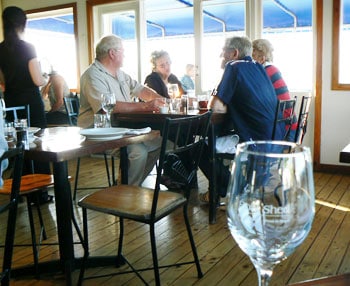
Europe is not a monolith, and assuming cultural homogeneity is a frequent catalyst for social friction. Each nation possesses its own set of customs, traditions, and social protocols. In Portugal and Spain, dining is a protracted, social affair; attempting to rush a waiter for the bill may be perceived as rude. Conversely, in Switzerland or Germany, efficiency is prioritized, and punctuality is a social imperative.
Tipping culture also varies drastically across borders. While a 15-20% tip is standard in the United States, it is often unnecessary or even confusing in parts of Europe where a service charge (service compris) is included in the bill. In some Mediterranean cultures, leaving a few coins is sufficient, while in others, it is not expected at all. Learning these minor distinctions can transform potentially awkward interactions into warm exchanges.
Language remains another area where assumptions can lead to frustration. While English is widely spoken in urban centers and among younger generations, it is not omnipresent. In rural France, Italy, or Hungary, a basic attempt to use local greetings—such as "Bonjour" or "Köszönöm"—is often the difference between a cold reception and genuine hospitality. Language is a core component of European identity, and making a minimal effort to bridge the communication gap is widely respected by locals.

Infrastructure Challenges: Packing and Seasonality
The physical demands of European travel are often underestimated. The continent’s historic centers are characterized by cobblestone streets, narrow stairways, and ancient buildings that frequently lack elevators. Luggage that seems manageable in a modern airport becomes a significant burden when being hauled up five flights of stairs in a Parisian walk-up or across the bridges of Venice. Travel experts consistently advise "packing light" to accommodate narrow luggage racks on trains and the rugged terrain of medieval city centers.
Furthermore, the impact of seasonality on the European experience is profound. The "peak season" of July and August is increasingly defined by extreme heatwaves across Southern Europe, with temperatures in Rome and Madrid frequently exceeding 40°C (104°F). During these months, many locals flee the cities for the coast, leading to the closure of family-owned businesses and a surge in "tourist traps." Conversely, traveling during the "shoulder seasons" (April-May and September-October) offers more temperate weather, lower prices, and fewer crowds.
Risk Management: Insurance and Health
A final, and potentially catastrophic, mistake is the omission of comprehensive travel insurance. While Europe is generally safe, the logistical density of the continent increases the likelihood of lost luggage, missed connections, and minor medical emergencies. A sprained ankle on a Croatian hiking trail or a sudden illness in a city where one does not speak the language can result in thousands of dollars in out-of-pocket expenses without coverage.

For citizens of the European Union, the European Health Insurance Card (EHIC) provides access to state-provided healthcare. However, for international visitors, the cost of private medical care can be exorbitant. Insurance also provides a safety net against the increasing frequency of industrial actions, such as rail or airport strikes, which can disrupt travel plans with little notice.
Strategic Implications for the Modern Traveler
The shift in European travel trends indicates a move away from the "grand tour" model toward more specialized, immersive experiences. The implications of this shift suggest that the most successful travelers are those who prioritize depth over breadth. By avoiding the common pitfalls of over-scheduling, under-budgeting, and cultural ignorance, visitors can engage more deeply with the local environment.
Analysis of travel data suggests that the most memorable experiences often occur when the rigid itinerary is abandoned. Whether it is stumbling upon a local cicchetti bar in Venice’s Cannaregio district or discovering a lakeside village in Switzerland after a missed train, the "slow rhythm" of Europe rewards those who leave room for the unexpected. As the continent grapples with the pressures of overtourism, the responsible and informed traveler becomes not just a visitor, but a participant in the preservation of Europe’s diverse cultural heritage. A well-planned trip is ultimately a strategy for lowering stress and maximizing the profound historical and sensory rewards that Europe has to offer.