Spirit Airlines Faces Potential Liquidation Amid Soaring Fuel Costs and Unresolved Strategic Challenges

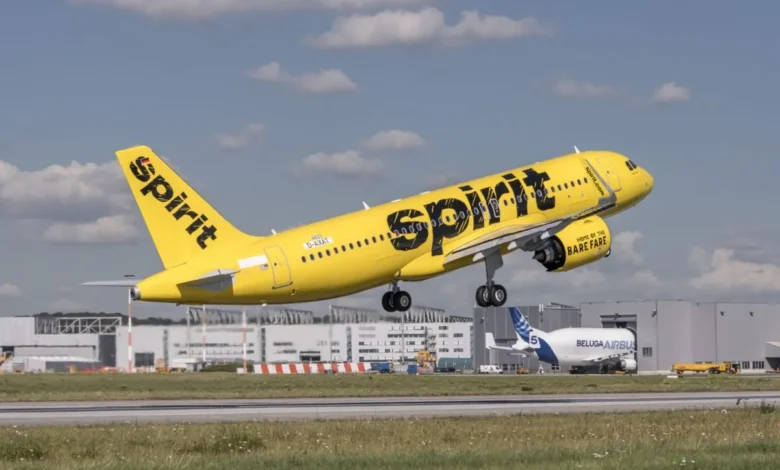
Spirit Airlines, a prominent ultra-low-cost carrier (ULCC) in the United States, is reportedly facing the imminent threat of liquidation as soon as this week. The dire situation is primarily attributed to persistently high fuel prices, which have significantly hampered the airline’s ability to execute its critical turnaround strategy, according to a Bloomberg report published Wednesday, citing sources familiar with the ongoing discussions. While the specter of liquidation looms large, the airline is reportedly still engaged in active negotiations with its creditors, suggesting that the final outcome remains fluid and subject to change. This development marks a critical juncture for the airline, its employees, passengers, and the broader aviation industry, potentially reshaping the competitive landscape in key leisure markets across the U.S.
Background: Spirit’s Trajectory and the Weight of Unfulfilled Mergers
Spirit Airlines has long been a distinctive player in the U.S. aviation market, known for its "unbundled" fare model, offering extremely low base fares and charging separately for virtually every amenity, from carry-on bags to seat selection. This strategy allowed it to attract price-sensitive travelers and expand rapidly, particularly into leisure-heavy markets. Its fleet, primarily composed of Airbus A320 family aircraft, was optimized for high utilization and efficient operations.
However, the airline’s aggressive growth and unique business model have also made it particularly vulnerable to external shocks. The COVID-19 pandemic delivered an unprecedented blow to the entire travel industry, and while Spirit, like its peers, received government aid, the subsequent recovery brought its own set of challenges. Operational disruptions, including staffing shortages and air traffic control limitations, led to frequent flight cancellations and delays, damaging customer perception and incurring significant costs.
The most significant strategic pivot, and ultimately a pivotal setback, for Spirit was its attempt to merge with other carriers. In February 2022, Frontier Airlines, another ULCC, announced its intention to merge with Spirit in a deal valued at approximately $2.9 billion, aiming to create the fifth-largest airline in the U.S. This proposed merger was quickly challenged by JetBlue Airways, which launched a competing, higher-value bid for Spirit in April 2022, initiating a dramatic bidding war.
JetBlue ultimately prevailed in July 2022, with Spirit’s shareholders approving a $3.8 billion acquisition by JetBlue. The proposed merger aimed to create a stronger challenger to the "Big Four" U.S. airlines (American, Delta, United, Southwest) by combining Spirit’s extensive network and aircraft with JetBlue’s premium service model. However, this ambitious plan faced immediate scrutiny from antitrust regulators.
The Fatal Blow: Regulatory Intervention and Merger Termination
In March 2023, the U.S. Department of Justice (DOJ) filed a lawsuit to block the JetBlue-Spirit merger, arguing that it would lead to higher fares and reduced competition, particularly for price-sensitive travelers. The DOJ contended that JetBlue’s plan to convert Spirit’s ULCC model to its own higher-cost structure would eliminate the lowest-fare option for millions of passengers. After a lengthy trial, a federal judge sided with the DOJ in January 2024, issuing an injunction to block the merger.
This ruling was a devastating blow to both airlines, but particularly to Spirit. The merger with JetBlue was not just about scale; it was also seen as a crucial lifeline, providing a much-needed capital infusion, financial stability, and a path to resolve its increasing debt burden and operational challenges. Without the merger, Spirit was left to navigate a highly competitive and volatile market as a standalone entity, significantly weakened and without the strategic advantage it had sought.
Just two months later, in March 2024, JetBlue and Spirit officially terminated their merger agreement, citing the inability to meet the closing conditions before the agreed-upon deadline and the unlikelihood of overcoming the regulatory hurdles. Spirit received a $69 million termination fee from JetBlue, a small sum compared to the billions it had hoped to gain, and far from sufficient to address its deep-seated financial issues.
The Immediate Crisis: Soaring Fuel Costs and Liquidity Pressures
The current crisis facing Spirit Airlines is fundamentally rooted in its financial health, exacerbated by external economic pressures. Jet fuel prices, notoriously volatile, have been a persistent headwind for airlines globally. While prices have fluctuated, periods of sustained high costs directly erode profitability, especially for ULCCs like Spirit, which operate on thinner margins and rely on filling every seat to offset their low base fares.
For example, the price of jet fuel can represent anywhere from 20% to 35% of an airline’s operating costs. When crude oil benchmarks like Brent crude experience spikes, jet fuel prices follow suit. Even marginal increases can translate into millions of dollars in additional expenses annually for an airline operating hundreds of flights daily. Spirit’s lack of significant fuel hedging strategies, or the ineffectiveness of existing hedges in extreme market conditions, could further expose it to these fluctuations.
The Bloomberg report specifically highlights that these high fuel prices are making it "harder for the carrier to execute its post-bankruptcy plans." While Spirit has not publicly filed for bankruptcy recently, this phrasing likely refers to critical restructuring plans or a comprehensive turnaround strategy that the airline has been attempting to implement to avert a formal bankruptcy filing or to recover from its significant financial distress. These plans would typically involve cost-cutting measures, network optimization, and potentially seeking new financing or renegotiating existing debt. The inability to execute these plans effectively due to external factors like fuel costs means the airline is burning through cash at an unsustainable rate.
Spirit’s recent financial performance has underscored these challenges. In its latest earnings reports, the airline consistently reported net losses, with significant operating expenses outpacing revenue growth. Its balance sheet reflects substantial debt, accumulated from aircraft purchases, leases, and operational financing, while its liquidity position has steadily eroded. The airline’s market capitalization has plummeted, and its stock price has been on a downward spiral, reflecting investor apprehension about its long-term viability.
Creditor Negotiations and the Path Forward
The mention of ongoing talks with creditors is a critical detail. In such situations, creditors—which could include aircraft lessors, bondholders, and banks—are typically engaged in intense negotiations to protect their investments. These discussions could revolve around:
- Debt Restructuring: Renegotiating repayment terms, interest rates, or converting debt into equity.
- New Financing: Seeking emergency loans or equity injections, although this becomes increasingly difficult for a distressed company.
- Asset Sales: Divesting non-essential assets, or even entire aircraft, to raise capital.
- Pre-packaged Bankruptcy: A strategic move where the airline and its creditors agree on a reorganization plan before filing for Chapter 11 bankruptcy, allowing for a quicker exit.
- Liquidation: If no viable restructuring plan can be agreed upon, or if the financial situation is deemed irreversible, creditors may push for liquidation to sell off the airline’s assets to recover their money. This is the scenario currently being reported as a potential outcome this week.
Spirit Airlines has consistently maintained a stance of "no comment on market speculation or rumors," as indicated in the snippet, whenever queried about its financial stability or potential strategic moves. This standard corporate response underscores the sensitivity and confidentiality of such high-stakes negotiations. However, the lack of a definitive denial also leaves room for the reported liquidation threat to be a credible scenario.
Timeline of Key Events Leading to the Current Crisis:
- Pre-2020: Spirit Airlines experiences significant growth, establishing itself as a leading ULCC with a strong presence in leisure markets.
- March 2020: The COVID-19 pandemic severely impacts air travel, leading to widespread flight reductions and financial distress across the industry. Spirit receives government aid.
- 2021-2022: Post-pandemic recovery efforts are hampered by operational challenges, including staffing shortages and air traffic control issues, leading to cancellations and customer dissatisfaction.
- February 2022: Frontier Airlines announces a merger agreement with Spirit Airlines.
- April 2022: JetBlue Airways launches a competing bid for Spirit, initiating a bidding war.
- July 2022: Spirit shareholders approve JetBlue’s revised, higher offer.
- March 2023: The U.S. Department of Justice files an antitrust lawsuit to block the JetBlue-Spirit merger.
- January 2024: A federal judge blocks the JetBlue-Spirit merger, ruling it would harm competition.
- March 2024: JetBlue and Spirit officially terminate their merger agreement, leaving Spirit as a standalone, financially vulnerable entity.
- Present Week: Reports emerge of Spirit Airlines facing potential liquidation this week due to high fuel prices and struggles to execute its turnaround strategy, while creditor talks continue.
Broader Impact and Implications for the Aviation Industry and Consumers
Should Spirit Airlines cease operations or enter liquidation, the ripple effects would be substantial, impacting various stakeholders:
1. Competitors:
- United Airlines and JetBlue: As noted in the Skift Take, these airlines "could benefit in markets like Fort Lauderdale." Fort Lauderdale-Hollywood International Airport (FLL) is a crucial hub for Spirit, offering a vast network of domestic and international flights. Spirit’s exit would free up valuable airport slots, gates, and potentially aircraft or even trained personnel. United, a major legacy carrier, could expand its presence on key routes, particularly those connecting to its own hubs. JetBlue, having failed to acquire Spirit, would find an opportunity to organically grow its network and capture market share that Spirit previously held, particularly in Florida and Caribbean markets where both had significant operations.
- Other ULCCs (Frontier, Allegiant, Southwest): Frontier Airlines, Spirit’s former suitor, would see a major competitor removed from the market, potentially allowing it to expand its own network and pricing power. Allegiant Air, another leisure-focused ULCC, could also absorb some of Spirit’s routes. Even Southwest Airlines, while not a pure ULCC, could benefit from reduced competition on price-sensitive routes, potentially expanding its point-to-point network.
- Market Consolidation: Spirit’s departure would further consolidate the U.S. airline industry, leaving fewer major players and potentially reducing overall competition, especially at the lower end of the fare spectrum.
2. Consumers:
- Higher Fares: The most immediate and likely impact would be an increase in airfares, particularly on routes where Spirit was a dominant low-cost option. With fewer competitors vying for price-sensitive travelers, remaining airlines would have less pressure to keep fares low.
- Reduced Options: Passengers would have fewer flight options, especially in secondary markets or on specific point-to-point routes where Spirit provided unique service. This could mean fewer direct flights, less frequency, or the elimination of certain routes altogether.
- Impact on Specific Hubs: Cities like Fort Lauderdale, Orlando, and Las Vegas, which are key Spirit operating bases, would experience significant changes in their air service. Local economies reliant on tourism facilitated by Spirit’s low fares could also feel the pinch.
3. Employees:
- Job Losses: A liquidation would inevitably lead to thousands of job losses for pilots, flight attendants, mechanics, ground staff, and administrative personnel. This would be a devastating blow to a workforce that has already endured years of industry volatility.
- Uncertainty: Even if some employees are absorbed by other airlines, the transition would be fraught with uncertainty regarding seniority, benefits, and location.
4. Aircraft Lessors and Manufacturers:
- Airbus: Spirit operates an all-Airbus fleet. A liquidation could lead to a glut of used Airbus A320 family aircraft entering the market, potentially depressing values for lessors and complicating future sales for Airbus. Order backlogs might also be affected if Spirit had outstanding commitments.
- Lessors: Companies that lease aircraft to Spirit would face the challenge of repossessing and re-leasing aircraft in a potentially saturated market, leading to financial losses.
5. Airport Authorities:
- Airports that host Spirit operations would need to find new tenants for gates, counter space, and landing slots. While major hubs might quickly fill these vacancies, smaller airports heavily reliant on Spirit could face significant revenue losses and reduced connectivity.
Conclusion
Spirit Airlines stands at a precipice, with its future hanging in the balance as it navigates intense creditor negotiations amidst an unforgiving economic environment. The potential liquidation of Spirit would not merely be the end of an airline; it would be a significant event for the entire U.S. aviation landscape. It underscores the fragility of the ultra-low-cost model in the face of sustained external pressures like high fuel costs, particularly for carriers lacking the scale or financial buffers of larger competitors. The outcome of the ongoing talks will determine whether Spirit can find a path to survival, perhaps through a distressed sale or a successful restructuring, or if it will indeed become another chapter in the long history of airline consolidation and failure. The industry, regulators, and consumers alike will be watching closely as the situation unfolds in the coming days.
Related posts: