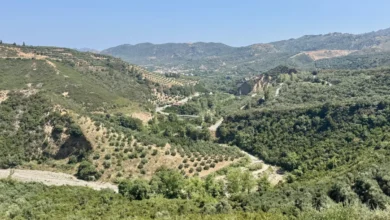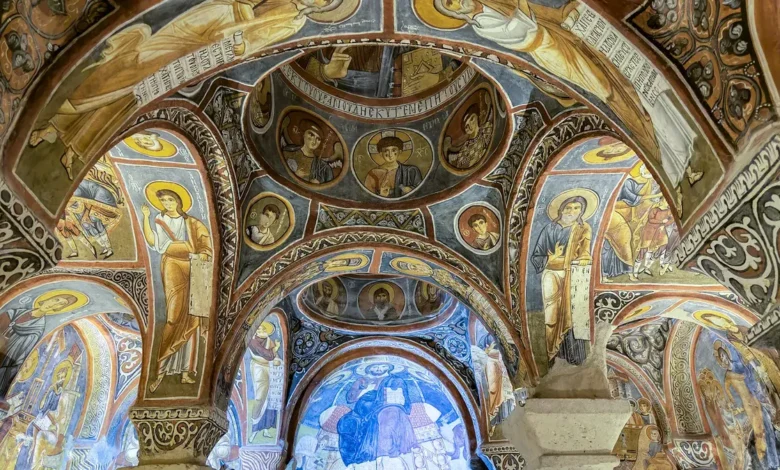
The Anatolian plateau of Cappadocia unveils a landscape profoundly sculpted by ancient volcanic forces and centuries of unwavering spiritual devotion. Long predating its contemporary global recognition for breathtaking sunrise balloon flights, this unique region was forged by geological cataclysms that fundamentally reshaped the Earth’s surface. To traverse its terrain is to journey across a chronicle written by primordial fire, relentless erosion, and the enduring resilience of human spirit. Beyond the familiar aerial panoramas, a deeper, quieter dimension awaits, where meticulously carved sanctuaries, labyrinthine monastic corridors, and seldom-trodden paths narrate a saga measured not in fleeting decades but in geological epochs.
Understanding Cappadocia from the ground up, rather than merely from the sky, permits the region to unfold with a profound gradualness. What initially strikes the eye as dramatic soon transforms into a contemplative experience. What first appears remote begins to feel intimately connected to the human story.
The Genesis of a Unique Landscape: Cappadocia’s Volcanic Birth
Millions of years ago, spanning the Miocene epoch (approximately 23 to 5.3 million years ago), the central Anatolian landmass was subjected to intense and prolonged volcanic activity. Monumental stratovolcanoes, including the towering Mount Erciyes, the formidable Hasan Dağı, and the extensive Melendiz range, erupted with cataclysmic force. These explosive events blanketed the plateau with vast deposits of ash, molten lava, and fragmented rock, forever altering its topography.
Over immense stretches of time, these volcanic ejections underwent a remarkable transformation. The lighter, finer ash compressed into soft, porous tuff, while harder layers of ignimbrite formed above, often capped by even more resilient basalt. This unique stratification created the perfect conditions for differential erosion. Wind and water, acting as relentless sculptors over millennia, gradually wore away the softer tuff, leaving the harder caps perched atop slender columns. These iconic geological formations, universally recognized as "fairy chimneys," are not static monuments but a testament to ongoing natural processes.
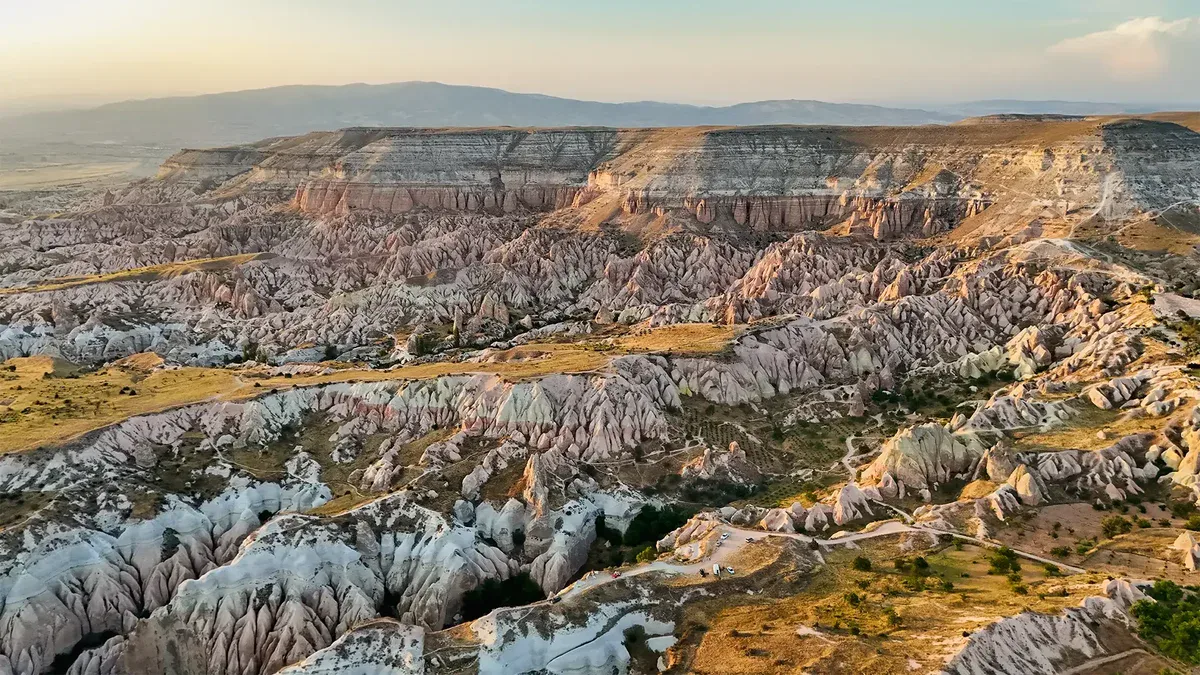
However, Cappadocia’s geological identity extends far beyond these singular pillars. Powerful rivers carved deep, sinuous canyons through the volcanic bedrock. Seasonal freeze-thaw cycles exploited and widened existing fractures within the rock, creating intricate networks of caves and hollows. Rain, tracing patient pathways across the plateau, meticulously separated ridges into valleys, each with its distinct character. Cappadocia is not a fossilized landscape but a dynamically evolving system. To walk its valleys is to navigate chapters of planetary history that continue to shift, subtly and silently, revealing the raw power of Earth’s forces.
From Geological Shelter to Spiritual Refuge: The Human Adaptation
The very same soft volcanic stone that natural forces sculpted into dramatic valleys also presented early inhabitants with an invaluable, unexpected advantage. Tuff, despite its structural stability, could be carved with relative ease using rudimentary tools. This inherent characteristic allowed early communities to excavate dwellings directly into the rock, providing natural shelter from the region’s harsh seasonal extremes. These subterranean and semi-subterranean structures offered consistent interior temperatures, remaining naturally cool in the searing summers and insulated during the often-snowy winters.
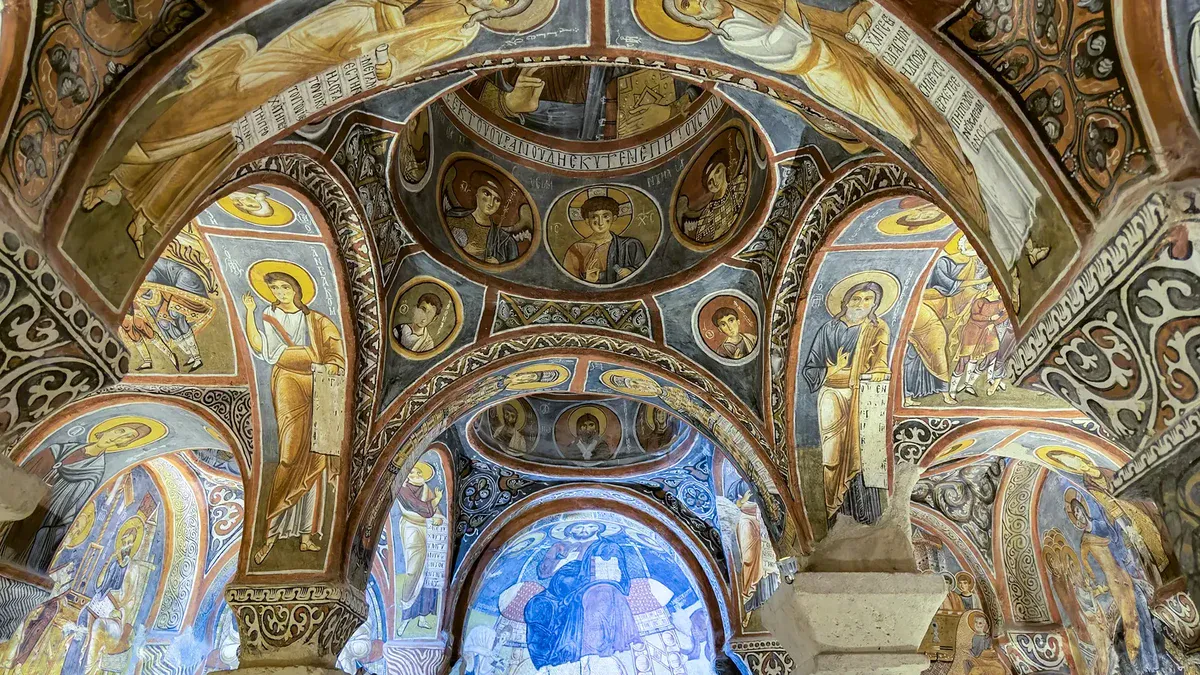
Over countless generations, simple chambers expanded into sophisticated multi-room residences, comprehensive storage areas for harvests, and eventually, profound spiritual centers. It was within this extraordinary geological framework that the unique monastic tradition of Cappadocia began to take root and flourish. The landscape, initially a mere shelter, thus became a canvas for spiritual expression and communal life.
The Rise of Monastic Life in Cappadocia: A Fourth-Century Dawn
Beginning in the fourth century CE, Cappadocia emerged as an enormously influential intellectual and spiritual hub within early Christianity. This period witnessed the profound contributions of the Cappadocian Fathers – Basil the Great (Basil of Caesarea), Gregory of Nyssa, and Gregory of Nazianzus. These pivotal figures articulated fundamental principles of communal monastic living, emphasizing a balanced approach that integrated deep contemplation with shared responsibility and service.
The pursuit of isolation was highly valued, offering an environment conducive to spiritual focus and ascetic practice. However, complete detachment from society was rarely the ultimate goal. Monastic communities strategically positioned themselves within reach of arable land, ensuring self-sufficiency through agriculture, while simultaneously maintaining the profound silence and solitude necessary for spiritual discipline. The monasteries of Cappadocia were therefore neither accidental nor purely defensive; they represented a deliberate and thoughtful search for spiritual clarity and community in a challenging world.
These early communities, often seeking refuge from Roman persecution or simply striving for a life dedicated to God, found the carved rock an ideal medium for their aspirations. The rock-cut architecture offered not only physical protection but also symbolic separation from the secular world.
Monasteries of Cappadocia and the Valleys That Protected Them
While certain iconic viewpoints now draw global attention, many of Cappadocia’s valleys retain an atmosphere of profound stillness rather than spectacular fanfare. These natural corridors were not merely scenic routes but functioned as inherent sanctuaries, perfectly suited to supporting a contemplative monastic life. They provided both physical seclusion and the raw materials for their rock-cut dwellings and places of worship.
Meskendir Valley: Silence as Architecture
Meskendir Valley, often bypassed in favor of more frequently visited routes, unfolds as a serene corridor of shifting mineral tones. Early morning light gently reveals muted reds and soft ochres embedded within the ancient rock layers, offering a visual experience of quiet introspection rather than dramatic contrast. Such environments proved ideal settings for spiritual withdrawal. Though modest in scale compared to larger monastic complexes, the devotional spaces found here profoundly reflect the broader spiritual geography shaped by the monasteries of Cappadocia. The valley’s natural tranquility, supported by diverse birdlife and the gentle flutter of butterflies in warmer months, reinforces a sense of separation from the rhythms of the modern world. Its unique microclimate allows for specific flora to thrive, further enhancing the valley’s secluded charm.
Red and Rose Valleys: Devotion Along Ancient Paths
The interconnected Red and Rose Valleys are a stunning demonstration of how geology interacts with the shifting sunlight, deepening in color toward amber and fiery red as the afternoon progresses. Historic footpaths, worn smooth by centuries of travel, once connected scattered agricultural pockets with the various religious communities residing within the rock. Along these ancient routes, countless rock-cut chapels appear unexpectedly, often adorned with remnants of frescoes, suggesting that spiritual practice was not an isolated activity but intrinsically woven into the fabric of daily life and labor. Walking these valleys today offers invaluable insight into how the monasteries of Cappadocia functioned within a wider, interconnected cultural and economic landscape. These paths were not just routes for pilgrims but lifelines for trade and communication.
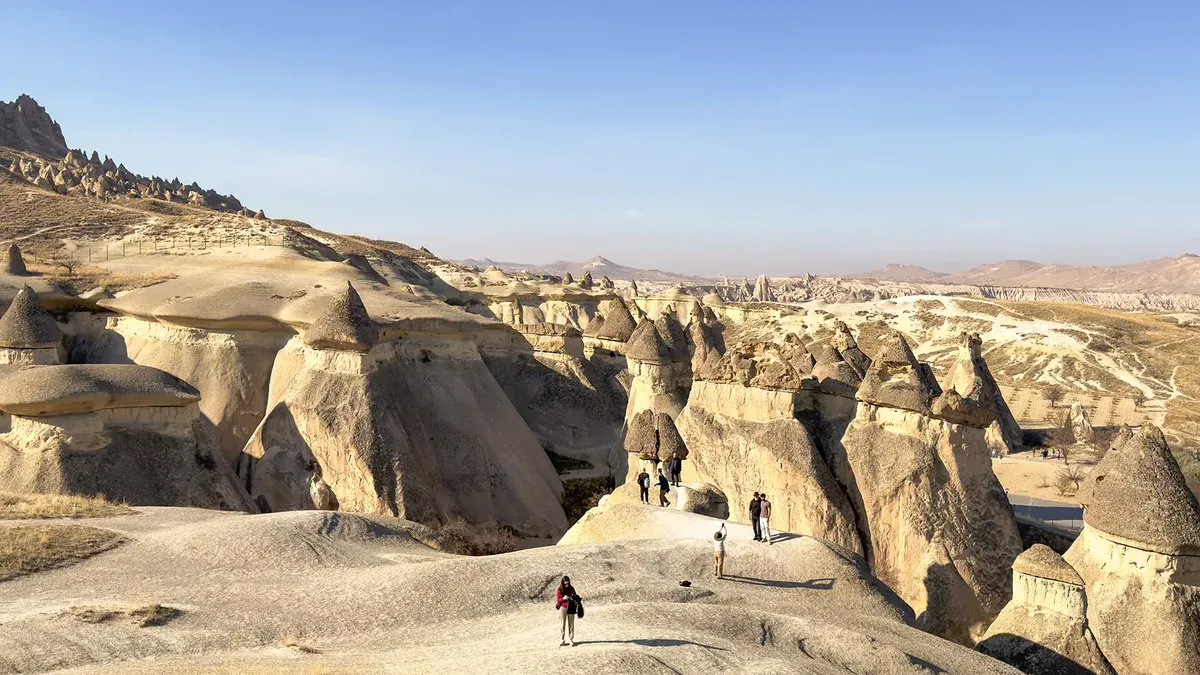
Zemi Valley: A Terrain Still in Formation
Closer to the bustling town of Göreme yet surprisingly secluded, Zemi Valley presents a landscape characterized by denser vegetation and active seasonal water channels that continuously shape the ground. Here, the terrain does not feel merely preserved but dynamically active. The ongoing geological processes persist, serving as a powerful reminder to visitors that the environment supporting the monasteries of Cappadocia remains an integral part of a living, breathing system. Walking through Zemi thus becomes an immersive encounter with natural formation still actively in progress, a testament to the ceaseless dance between rock and element.
Spatial Intelligence in Rock-Cut Monasteries: Engineering for Eternity
The construction of Cappadocia’s rock-cut monasteries demonstrates an extraordinary level of spatial intelligence and sophisticated planning, adapted perfectly to the unique geological medium. While specific layouts naturally varied from one complex to another, recurring architectural and functional elements reveal a profound understanding of community needs, defense, and spiritual practice.
These sites were meticulously designed not as temporary refuges but as fully functioning, enduring environments shaped for continuity across centuries. Key elements include:
- Churches and Chapels: Often featuring intricate frescoed interiors depicting biblical scenes and saints, these were the spiritual hearts of the communities. Their orientation and design often optimized natural light.
- Refectories: Communal dining halls, sometimes with long rock-cut tables and benches, reflecting the importance of shared meals in monastic life.
- Monastic Cells: Individual or shared sleeping quarters, often spartan, emphasizing asceticism and contemplation.
- Storage Areas: Essential for preserving food (grains, dried fruits) and wine, crucial for self-sufficiency. Many feature rock-cut pigeon houses for collecting guano (fertilizer) and consuming pigeons.
- Wine Presses: Indicating local viticulture, which was a significant economic activity.
- Kitchens and Bakeries: Communal facilities to support the population.
- Water Cisterns and Wells: Ingenious systems for collecting and storing precious water.
- Defensive Features: Hidden entrances, narrow passages, and strategic viewpoints for protection against invaders.
The sheer scale and intricacy of these carved complexes underscore a culture characterized by foresight and ingenuity rather than improvisation.
Lesser-Known Monasteries of Cappadocia Worth Discovering
Beyond the more prominent sites, Cappadocia holds a treasure trove of lesser-known monastic complexes that offer a more intimate glimpse into this spiritual heritage.
Keşlik Monastery: Composure Amidst Cultivation
Set amidst cultivated lands and seasonal orchards, Keşlik Monastery emanates an atmosphere of profound composure and quiet resilience. Its interior surfaces still preserve faint decorative traces, offering subtle hints of its past artistic splendor. Darker areas within the complex suggest later practical uses, illustrating how these structures adapted and evolved across centuries to meet changing community needs. Keşlik Monastery invites deep observation rather than immediate interpretation, allowing visitors to connect with its layered history at their own pace. Its remote location contributes to its serene ambiance.
Soğanlı Valley: Faith Within the Rural Landscape
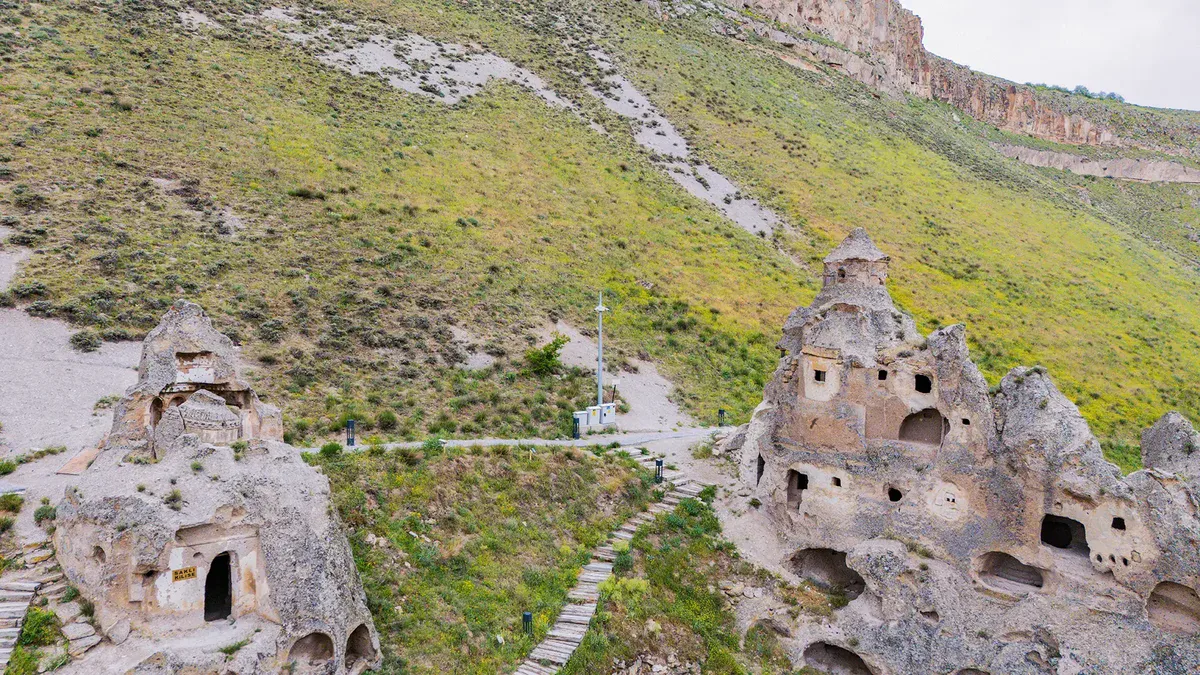
Further south, the Soğanlı Valley presents a compelling synthesis of traditional agricultural life and rich spiritual heritage. Here, numerous rock-cut churches rise majestically from the earth, often in close proximity to actively tended fields and vineyards. This arrangement powerfully illustrates how faith and daily labor once coexisted without clear division, forming an integrated way of life. Movement naturally slows in Soğanlı, fostering a deeper perception and appreciation for the harmonious relationship between humanity and the land. The valley is also known for its traditional doll-making, a craft passed down through generations.
Underground Engineering: The Logic of Survival
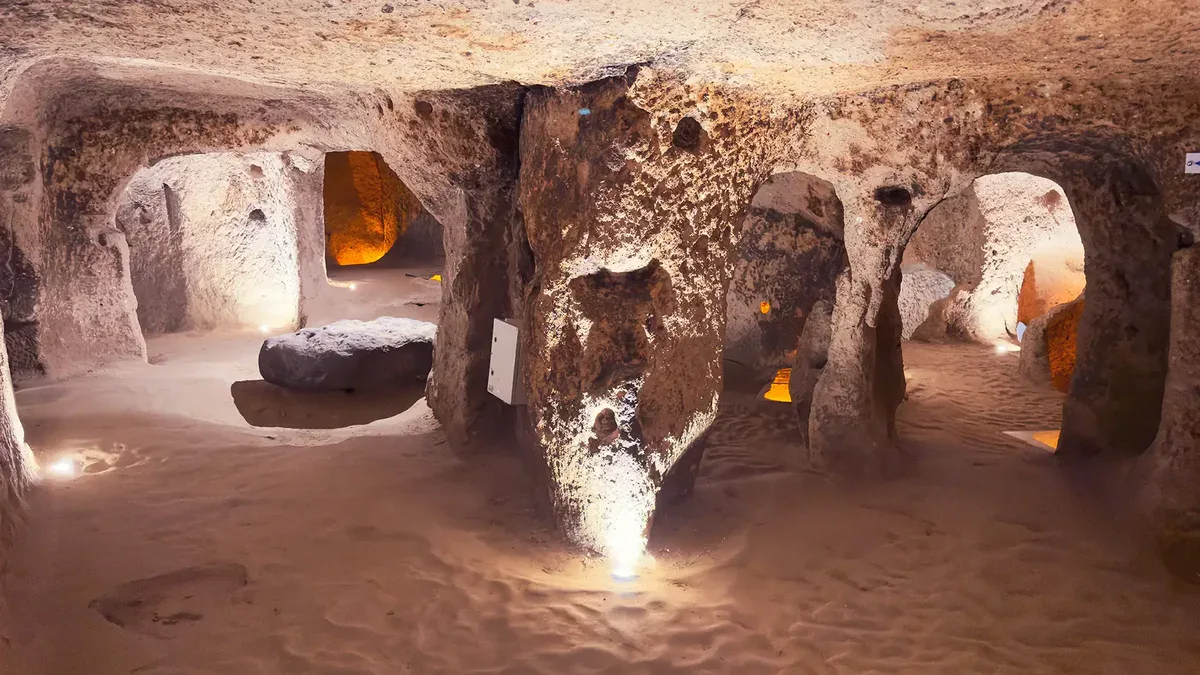
Above-ground monastic retreat formed only one facet of Cappadocia’s remarkable adaptive strategy. Beneath the surface, extensive subterranean complexes were meticulously engineered to shelter entire populations during protracted periods of instability and invasion. These ingenious underground cities, such as the famous Derinkuyu and Kaymaklı, served as vital refuges from successive waves of invaders, including Hittites, Phrygians, Persians, Romans, Byzantines, and later, Arab raiders.
These multi-level cities were astonishing feats of ancient engineering. Sophisticated ventilation shafts regulated airflow across numerous subterranean floors, ensuring breathable air for thousands of inhabitants. Massive circular stone doors, weighing hundreds of kilograms, could be rolled into place to seal off passages, controlling access and offering formidable defense. Shared kitchens, communal dining areas, stables for livestock, and extensive storage facilities for food and water ensured the continuity of daily life for extended periods.
Together with the above-ground monasteries of Cappadocia, these subterranean environments unequivocally reveal a culture shaped by proactive foresight and strategic planning, rather than mere improvisation in the face of adversity. They represent a testament to the collective ingenuity and determination of communities striving for survival and spiritual preservation.
Before the Balloons: A More Recent Chapter
While hot air balloon imagery now largely defines the global perception of Cappadocia, the region’s modern travel narrative began far more quietly in the mid-twentieth century. Early researchers, archaeologists, and culturally curious travelers were initially drawn by the extraordinary rock-cut architecture and the vibrant painted sanctuaries preserved within.
Accommodation in those pioneering days was often informal and deeply integrated with local life. Households frequently welcomed visitors, offering authentic meals and engaging conversation that often extended stays far beyond initial expectations. This early form of cultural exchange fostered a deep appreciation for the region’s unique heritage. Commercial hot air balloon aviation emerged decades later, transforming the region visually and introducing a new dimension to its tourism. However, it did not redefine Cappadocia’s deeper historical and spiritual significance. The enduring attraction has always been the profound landscape and the monasteries of Cappadocia, intricately carved within its very fabric.
Experiencing the Monasteries of Cappadocia With Insight
For travelers aspiring to understand the monasteries of Cappadocia in their profound historical and geological context, thoughtful preparation is paramount. This diligence often marks the difference between merely visiting and genuinely perceiving the essence of the place. Routes that appear close on a map may vary significantly in terrain and pace, demanding appropriate footwear and planning. Furthermore, many of the lesser-known complexes are not always straightforward to access without regional familiarity or the guidance of a knowledgeable local expert.
Cappadocia profoundly rewards those who venture beyond a mere checklist approach to travel. Entering a monastic complex with an informed understanding of how communities once organized their daily life, their spiritual practices, and their defense mechanisms often transforms the experience from passive observation into active comprehension. Perspective, far more than simple proximity, is what deepens memory and leaves a lasting imprint long after the journey concludes.
Despite its immense historical depth, Cappadocia is not a static open-air archive. Agriculture continues to shape its seasonal rhythms, echoing practices that date back millennia. Vineyards still trace gentle slopes, producing local wines, and vibrant local markets reflect enduring patterns of production and trade. The ancient ceramic traditions along the Kızılırmak River persist with quiet continuity, demonstrating how heritage truly survives through living practice rather than mere proclamation or exhibition.
The monasteries of Cappadocia serve as a powerful reminder to travelers that the region’s most profound impressions are often found not in the sky, but on the ground. This is a landscape where immense volcanic forces shaped shelter, unwavering belief guided architectural endeavors, and resilient communities adapted without ever severing their ties to the very earth beneath their feet.
Hot air balloons remain a compelling and beautiful symbol of Cappadocia’s present, yet they represent only one ephemeral moment within a continuum measured across millions of years. Those who choose to step beyond the familiar aerial spectacle frequently discover that Cappadocia’s most lasting impressions arise quietly—through the tactile texture of ancient rock, the interplay of light and shadow in a carved chapel, and the gradual, profound recognition of time made visibly manifest in every valley and every stone.
Frequently Asked Questions
What is the best time of year to visit the monasteries of Cappadocia?
Spring (April–May) and autumn (September–October) generally offer the most comfortable walking conditions, with mild temperatures and fewer crowds at lesser-known sites. Summer visits are feasible, but valley trails can become quite warm by midday, so it’s advisable to start early. Winter brings occasional snow, which transforms the landscape dramatically, though some access roads to remote valleys may temporarily close.
How much time do I need to explore Cappadocia’s monasteries and valleys properly?
A minimum of three full days allows for a comprehensive visit to the main monastic sites, including the Göreme Open-Air Museum, Keşlik Monastery, and Soğanlı Valley, without feeling rushed. Budget an additional day or two if you wish to walk the quieter valleys, such as Meskendir or Zemi, at a contemplative pace that truly allows the terrain and its history to register.
Do I need a guide to visit the lesser-known monasteries?
While not strictly necessary for all sites, regional familiarity significantly enhances the experience. Soğanlı Valley is generally well-signposted and accessible independently. Keşlik Monastery is less frequently visited and benefits greatly from local guidance, both for navigation and for a deeper understanding of its interior and historical context. Several Göreme-based operators specialize in historically focused itineraries rather than standard tours.
Is the walking terrain suitable for all fitness levels?
Most valley trails are moderate in difficulty and manageable for reasonably fit travelers. The Red and Rose Valleys involve some uneven rock surfaces and occasional short climbs. Meskendir and Zemi valleys are generally gentler. However, exploring the underground complexes often involves low ceilings, narrow passages, and sometimes steep descents, which may be challenging for individuals with mobility limitations or claustrophobia.
Are the frescoes inside the rock-cut churches well preserved?
The state of preservation varies considerably across the region. The Göreme Open-Air Museum contains some of the most intact fresco cycles, with 10th–12th century paintings still retaining significant color and detail. Smaller chapels in outlying valleys often show wear from centuries of exposure, and in some unfortunate cases, deliberate damage. Visiting with this expectation allows one to focus attention on what magnificent artistry remains rather than lamenting what has been lost.
Can I combine a monastery visit with a hot air balloon flight?
Yes, and many travelers successfully combine these two iconic experiences. Hot air balloon flights typically launch at dawn and last approximately one hour, leaving the full morning and afternoon free for extensive ground-level exploration. The two experiences are genuinely complementary: the aerial view provides an invaluable spatial orientation to the valleys and formations that you then explore and walk through at ground level.