Nestled in the Maghreb region of North Africa, Tunisia represents a remarkably compact geographic intersection of Mediterranean coastline, ancient imperial history, and vast desert ecosystems. Bounded by the Mediterranean Sea to the north and east, Algeria to the west and southwest, and Libya to the southeast, the nation spans approximately 163,610 square kilometers. Despite its relatively small size—allowing adventurous travelers to traverse its core regions within a single week—Tunisia contains an immense density of cultural heritage sites, ecological zones, and historical landmarks. While it often remains overlooked by mass tourism compared to its Mediterranean neighbors, the country has increasingly positioned itself as a premier destination for cultural heritage tourism, archaeological study, and desert exploration.
To effectively navigate the country’s diverse landscapes, which range from the lush coastal plains of the north to the arid dune seas of the Sahara, travel logistics require careful planning. Because major points of interest are geographically dispersed, tourism boards and international travel agencies report a rising demand for comprehensive tour packages. These curated itineraries streamline transportation, accommodations, and certified local guides, allowing visitors to bypass administrative hurdles and maximize their engagement with Tunisia’s extensive historical timeline.

Historical Foundations: Tunis, Carthage, and the Roman Empire
Tunisia’s historical narrative spans millennia, serving as a critical crossroads for Phoenician, Roman, Byzantine, Arab-Islamic, Ottoman, and French colonial powers. Most itineraries commence in the capital city of Tunis, where the historic Medina stands as a testament to medieval urban planning. Designated as a UNESCO World Heritage Site in 1979, the Medina of Tunis features a dense, labyrinthine network of covered souks, historic madrasas, and traditional merchant residences. Urban historians and tourism authorities consistently recommend navigating this district with licensed local guides to fully understand the architectural evolution and socio-economic history of the old merchant quarters.
Just outside the modern capital lie the sprawling archaeological remains of ancient Carthage. Founded by the Phoenicians in the 9th century BCE, Carthage grew into a formidable maritime empire and the primary geopolitical rival of the Roman Republic during the Punic Wars. The site was famously destroyed by Rome in 146 BCE before being rebuilt as a major Roman provincial capital. Today, visitors can explore the monumental Antonine Baths—one of the largest thermal bath complexes built by the Roman Empire outside of Rome itself—alongside the ancient Punic ports and the artifacts housed within the hilltop Byrsa Museum.
Further enriching the country’s classical portfolio is the National Bardo Museum in Tunis, which safeguards one of the most significant and pristine collections of Roman mosaics in the world. These intricate floor artworks provide invaluable empirical data regarding daily life, agriculture, mythology, and fauna in Roman North Africa.

Beyond the capital, Tunisia preserves some of the most structurally intact Roman architecture in the Mediterranean basin. Notable among these is the Amphitheatre of El Djem. Constructed around 238 CE during the reign of the Gordian emperors, this monumental arena could seat up to 35,000 spectators, making it the third-largest amphitheater in the Roman world, surpassed only by the Colosseum in Rome and the theater at Capua. Unlike many European ruins that have suffered from stone-robbing over the centuries, El Djem’s exterior facade remains remarkably well-preserved, standing as a masterclass in Roman engineering and imperial projection.
Architectural Landmarks and Cultural Preservation
The cultural landscape of Tunisia is equally defined by its striking vernacular architecture, notably exemplified by the coastal village of Sidi Bou Said. Situated on a steep cliff overlooking the Gulf of Tunis, the village is globally renowned for its strict adherence to a traditional aesthetic characterized by stark whitewashed walls, vivid cobalt-blue doors and window shutters, and cascading clusters of bright bougainvillea. The town’s distinct visual identity was legally codified in the 1920s through the efforts of French Baron Rodolphe d’Erlanger, who sought to preserve its Andalusian architectural heritage. Today, Sidi Bou Said functions both as a vibrant residential community and a vital hub for artistic inspiration, drawing painters, writers, and international travelers who frequent establishments such as the historic Café des Nattes for traditional mint tea and local pastries like bambalouni.
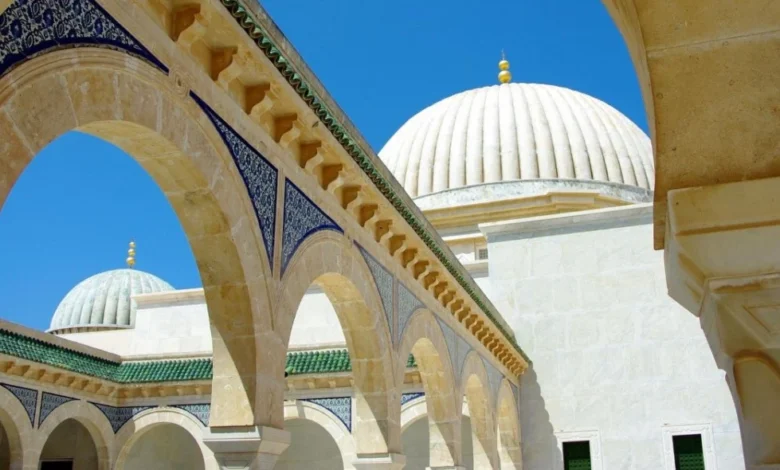
Moving inland, the city of Kairouan holds profound religious and historical significance as one of the holiest cities in Islam. Founded in 670 CE by the Arab general Uqba ibn Nafi under the Umayyad Caliphate, Kairouan served as an essential administrative and religious center that facilitated the spread of Islam across North Africa and into Southern Europe. The Great Mosque of Kairouan, featuring a massive marble-paved courtyard and a formidable square minaret, is widely regarded as a foundational prototype for Islamic architecture throughout the western Islamic world. In addition to its religious monuments, Kairouan maintains a centuries-old tradition of hand-knotted carpet weaving, serving as a vital economic engine for local artisan communities.

The Sahara Desert and Southern Ecosystems
As travelers venture southward, the topography shifts dramatically from Mediterranean scrublands to the dramatic expanses of the Sahara. The oasis town of Douz serves as the primary gateway to the desert, offering visitors structured camel expeditions across undulating dune fields and immersive overnight stays in traditional Bedouin-style desert camps. These experiences provide economic support to local nomadic and semi-nomadic communities while promoting sustainable tourism practices in fragile ecosystems.
Further west, the landscape yields unique geological formations, including the sprawling salt flats of Chott el Djerid. Covering thousands of square kilometers, the salt pan undergoes striking visual transformations, shifting in color from blinding white to iridescent pinks and silvers depending on the angle of the sun and seasonal evaporation rates. Nearby, the oasis of Tozeur supports hundreds of thousands of date palms, producing the internationally prized Deglet Nour dates, a major agricultural export for the region.
International pop culture has also left a distinct footprint in southern Tunisia. Locations such as Matmata and Ong Jemel gained global recognition as filming locations for George Lucas’s Star Wars franchise, serving as the fictional planet Tatooine. However, architectural anthropologists emphasize that the subterranean troglodyte dwellings found in Matmata are authentic, centuries-old indigenous structures designed by local Amazigh (Berber) populations to combat extreme desert temperatures, rather than temporary cinematic constructions.

Coastal Retreats and Culinary Heritage
For travelers seeking coastal recreation, the island of Djerba offers a blend of relaxed beach tourism and deep-rooted multicultural history. Djerba is home to the El Ghriba Synagogue, one of the oldest active Jewish pilgrimage sites in Africa, with historical roots tracing back to the destruction of Solomon’s Temple in 586 BCE. The island’s capital, Houmt Souk, provides a bustling commercial center featuring traditional markets, fortifications, and a thriving artisanal community. Along the mainland coast, resort cities such as Hammamet and Sousse offer extensive sandy beaches alongside medieval fortified medinas, balancing modern leisure tourism with historical immersion.
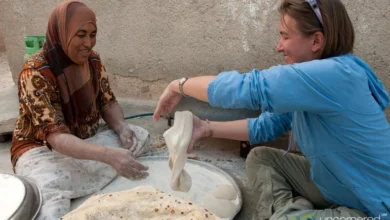
Tunisian cuisine reflects the nation’s diverse Mediterranean and North African heritage, characterized by bold spices, fresh seafood, and agricultural staples like wheat, olive oil, and legumes. Culinary staples include brik, a delicate, deep-fried pastry traditionally filled with an egg, tuna, capers, and parsley; savory couscous preparations accompanied by lamb, fish, or seasonal vegetables; and lablabi, a comforting chickpea soup flavored with cumin, garlic, and harissa. Harissa, a hot chili pepper paste made from roasted red peppers, garlic, and various spices, serves as a ubiquitous condiment across Tunisian households and dining establishments. Sweet specialties, such as makroudh—semolina pastries filled with date paste and soaked in honey—demonstrate the enduring influence of Andalusian and Middle Eastern culinary traditions.
Travel Logistics, Seasonality, and Economic Implications
Tourism sector analysts note that Tunisia offers exceptional value for international travelers, providing high densities of historical assets and natural wonders at significantly lower price points than many Western European destinations. However, optimizing a visit requires careful consideration of seasonal weather patterns.

Climatological data indicates that the optimal windows for tourism are the shoulder seasons of spring (March to May) and autumn (September to November). During these months, daytime temperatures remain moderate, facilitating comfortable exploration of extensive archaeological sites and desert terrain without the oppressive heat characteristic of the summer months. While summer remains popular for coastal resort tourism along the Mediterranean, interior regions frequently experience extreme high temperatures. Conversely, winter on the coast is mild, though nighttime temperatures in the Sahara can drop significantly, necessitating appropriate cold-weather apparel for desert excursions.
From an economic perspective, the Tunisian government and international tourism boards have increasingly emphasized structured tour packages to streamline visitor experiences and ensure equitable regional economic distribution. By bundling accommodations, transit, and expert-led excursions, these packages mitigate logistical challenges associated with independent travel across vast geographic distances. Industry experts advise prospective travelers to thoroughly review package inclusions—such as archaeological site entrance fees, meal provisions, and the duration of desert stays—to ensure itineraries align with personal travel objectives.
Ultimately, Tunisia presents a multifaceted destination where millennia of layered civilizations converge within a remarkably accessible geographic footprint. Through strategic planning, adherence to seasonal recommendations, and engagement with structured travel frameworks, visitors can access a deeply historic landscape defined by architectural splendor, ecological diversity, and enduring cultural hospitality.