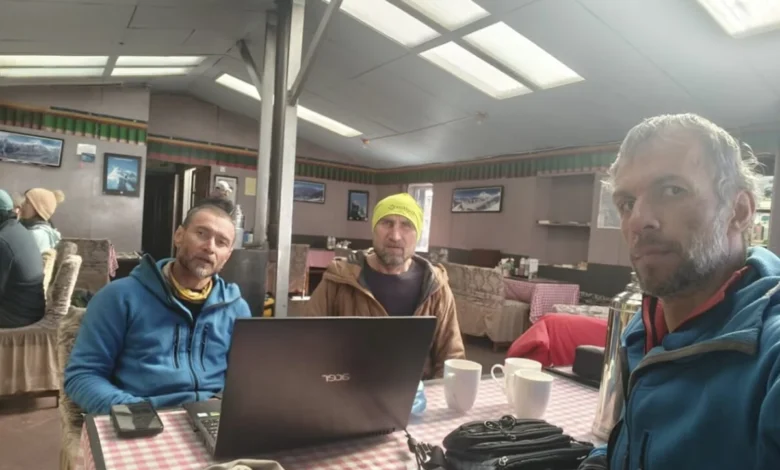
The ambitious expedition to summit Mount Everest via the treacherous West Ridge has officially come to an abrupt end, as the Russian climbing team, led by Andrei Vasiliev, announced their withdrawal from the mountain this week. Following a period of intense atmospheric instability and physical degradation, the team retreated from their high-altitude camps to the relative safety of Lobuche. This decision marks a definitive conclusion to their current season, with the group citing a confluence of persistent illness, physical injury, and deteriorating environmental conditions as the primary drivers for their early departure.
A Chronology of the 2026 Attempt
The expedition’s final phase began with the team positioned at 5,600 meters, waiting for a weather window that never materialized in their favor. The team had been systematically executing a series of acclimatization rotations, a standard procedure for high-altitude mountaineering on the world’s tallest peak. The plan, as outlined by Vasiliev, was to push toward 7,500 meters to complete their necessary physiological adaptation before preparing for the final summit push.
However, the 24-hour period following their last update proved to be the turning point. After sheltering in their tents against high-velocity winds, the team conducted an internal assessment of their physical readiness. The realization that they lacked the metabolic and physical reserves to complete the final ascent, compounded by the logistical challenges of high-altitude logistics, led to the immediate cessation of climbing activities. By the time the team reached the lodge in Lobuche, the decision to abandon the project was finalized.
The Cumulative Burden of High-Altitude Expeditions
The primary factor cited for the withdrawal was a compounding health crisis within the team. According to Vasiliev, the climbers had been battling respiratory ailments—specifically persistent colds and severe coughing—that plagued them throughout their successive trips up the mountain. In the thin, oxygen-depleted air of the "Death Zone" and its surrounding high-altitude camps, minor respiratory infections often escalate into debilitating conditions.
Furthermore, team member Vitaly Shipilov sustained a shoulder injury during the latest rotation. In extreme mountaineering, an injury of this nature significantly diminishes a climber’s ability to handle technical gear, manage fixed ropes, or maintain the necessary pace to avoid dangerous weather windows. Vasiliev noted that while the team might have managed to push through their current rotation, they lacked the sufficient "depth" of strength required for a successful, safe summit attempt and subsequent descent.
Environmental Risks and the West Ridge Challenge
The West Ridge of Mount Everest is widely considered one of the most technical and dangerous routes on the mountain. Unlike the more commonly traversed South Col route, the West Ridge offers fewer opportunities for safe retreat and is subject to extreme, unpredictable weather patterns.
During this season, the team reported that the mountain’s physical structure was becoming increasingly volatile. Vasiliev highlighted that seracs—large blocks of glacial ice—were calving and collapsing with higher frequency than observed at the start of the expedition. The instability of the ice fields adds a layer of risk that is often unpredictable, turning even well-trodden paths into hazardous corridors. The decision to retreat was, in the team’s view, a calculated move to avoid unnecessary risk in an environment where safety margins are already razor-thin.
Broader Implications for Himalayan Mountaineering
The abandonment of the expedition reflects the recurring challenges faced by professional mountaineers in an era of shifting weather patterns and increasing climate variability in the Himalayas. While commercial expeditions often rely on a surplus of support staff and oxygen, smaller, more technical teams attempting difficult routes face a much narrower margin for error.
The logistical cost of such expeditions is substantial. From the initial base camp setup in the Khumbu region to the complex coordination of high-altitude logistics, the resource commitment is massive. When a team is forced to withdraw, the loss is not merely financial but involves the immense psychological toll of months of preparation. Vasiliev’s remarks regarding his "frustration and dissatisfaction" mirror the sentiments of many elite climbers who find themselves at the mercy of factors entirely outside their control.
Future Outlook and Strategic Shifts
Despite the disappointment, the team has already begun pivoting toward future objectives. Rather than viewing the end of this season as a failure, Vasiliev has framed it as a strategic necessity. "I’m channeling my frustration and dissatisfaction as fuel for a future attempt," he stated, confirming that the team intends to return to the mountain in the spring of the following year.
A spring attempt offers different variables compared to the current cycle. Weather patterns in the pre-monsoon season are generally more conducive to summit bids, though the crowds on the mountain are significantly larger. The team will likely spend the coming months focusing on rehabilitation for the injured and recuperation for those who suffered from prolonged illness.
Analysis: The Cost of the "Death Zone"
The events of this week underscore the harsh reality of mountaineering above 7,000 meters. The human body does not acclimatize to such altitudes indefinitely; it merely survives there for a limited window. The combination of sustained infection and the physical taxation of hauling gear at high altitude creates a state of physiological bankruptcy.
Data from previous Everest expeditions suggests that teams that do not reach their peak physical condition before the final push are statistically more likely to suffer from frostbite, HAPE (High Altitude Pulmonary Edema), or HACE (High Altitude Cerebral Edema). By choosing to descend, the Russian team acted in accordance with the most conservative—and arguably most professional—principles of mountain safety. The decision to prioritize the long-term health of the team over the short-term goal of a summit badge is increasingly becoming the standard for professional expeditions, moving away from the "summit at all costs" mentality that characterized earlier eras of high-altitude climbing.
Conclusion
The Russian team’s withdrawal from the Everest West Ridge serves as a poignant reminder that the mountain dictates the timeline, not the climber. While the team’s aspirations for this season were cut short, their transparency regarding their physical limitations provides a valuable look into the decision-making processes of elite climbers. As they look toward the spring, the lessons learned during this attempt—regarding both their own health protocols and the environmental changes on the West Ridge—will undoubtedly form the foundation of their next strategy. For now, the team remains in Lobuche, transitioning from the intensity of the high peaks to the recovery phase, with their sights firmly set on a return to the world’s highest point.