The culinary landscape of southern Brazil is defined by an unwavering dedication to open-fire cooking, a tradition deeply embedded in the cultural identity of the region. Among the establishments preserving this heritage, Costelão do Gaúcho in Curitiba stands out as a historic landmark for traditional churrasco. Operating for more than four decades near the city center, the restaurant has earned a reputation among locals and culinary travelers alike for serving what many consider to be the finest beef ribs in the country. This institution offers more than just a meal; it provides a comprehensive look into the meticulous craftsmanship, historical techniques, and social rituals that characterize authentic Brazilian barbecue.
Historical Context and Evolution of Churrasco Culture
Barbecue, or churrasco, traces its origins to the pampas of southern Brazil, where 17th-century gauchos—nomadic pastoralists—would roast beef over open pits of glowing embers. Over generations, this nomadic necessity evolved into a sophisticated culinary art form. Costelão do Gaúcho embodies this historical lineage through its steadfast refusal to modernize away from foundational techniques. While many contemporary steakhouses have adopted industrial gas grills and accelerated cooking methods, this Curitiba establishment maintains traditional charcoal-burning infrastructure.
The restaurant’s physical layout reflects this commitment. Situated just outside the main commercial district, the building features a specialized rear smoking and roasting facility. Long before patrons cross the threshold, the dense, savory aroma of slow-cooked beef signals the scale of operations within. Massive chimneys channel the smoke from chambers where massive sides of beef are suspended over charcoal, initiating a slow-roasting process that can last for hours.
Anatomy of a Masterpiece: The Preparation Process
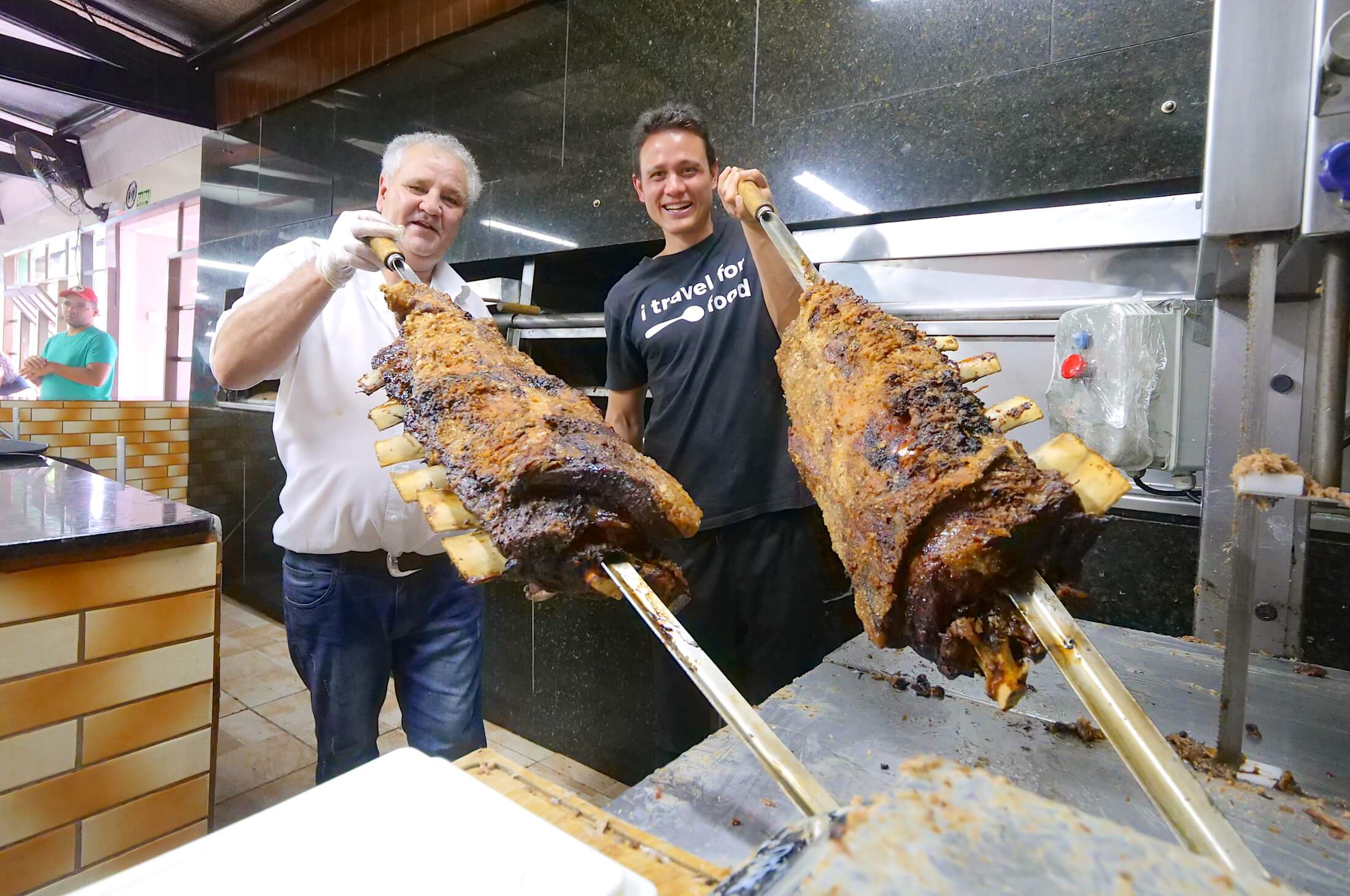
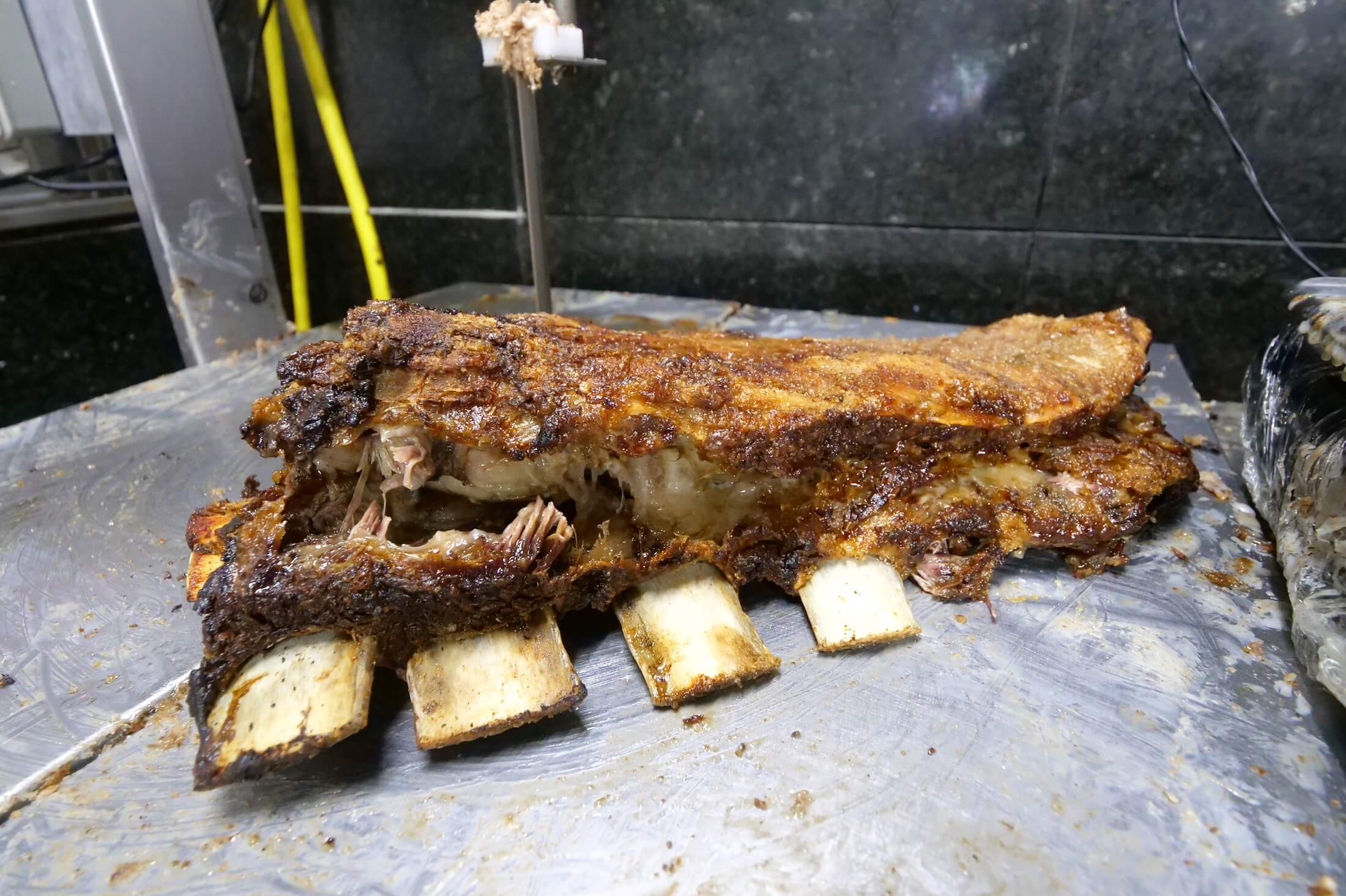
The preparation of beef ribs at Costelão do Gaúcho is an exercise in precision and physical endurance. The process begins in the early morning hours, long before the dining room opens its doors to the public. Assistant chefs manage the initial stages of roasting in the rear chambers, ensuring that the colossal cuts—often weighing between 15 and 20 kilograms—achieve a tender interior while rendering excess fat.
Once the meat approaches optimal tenderness, it is transported to the front grill station for final inspection and carving. Here, the restaurant’s owner, a veteran pitmaster with over forty years of specialized experience, oversees the final steps. Each side of beef is reinforced with a heavy metal skewer, allowing the staff to maneuver the massive cuts safely. The master carver meticulously trims excess salt and surface fat, periodically testing the meat’s structural integrity with a gentle touch to ensure it meets the establishment’s exacting standards.
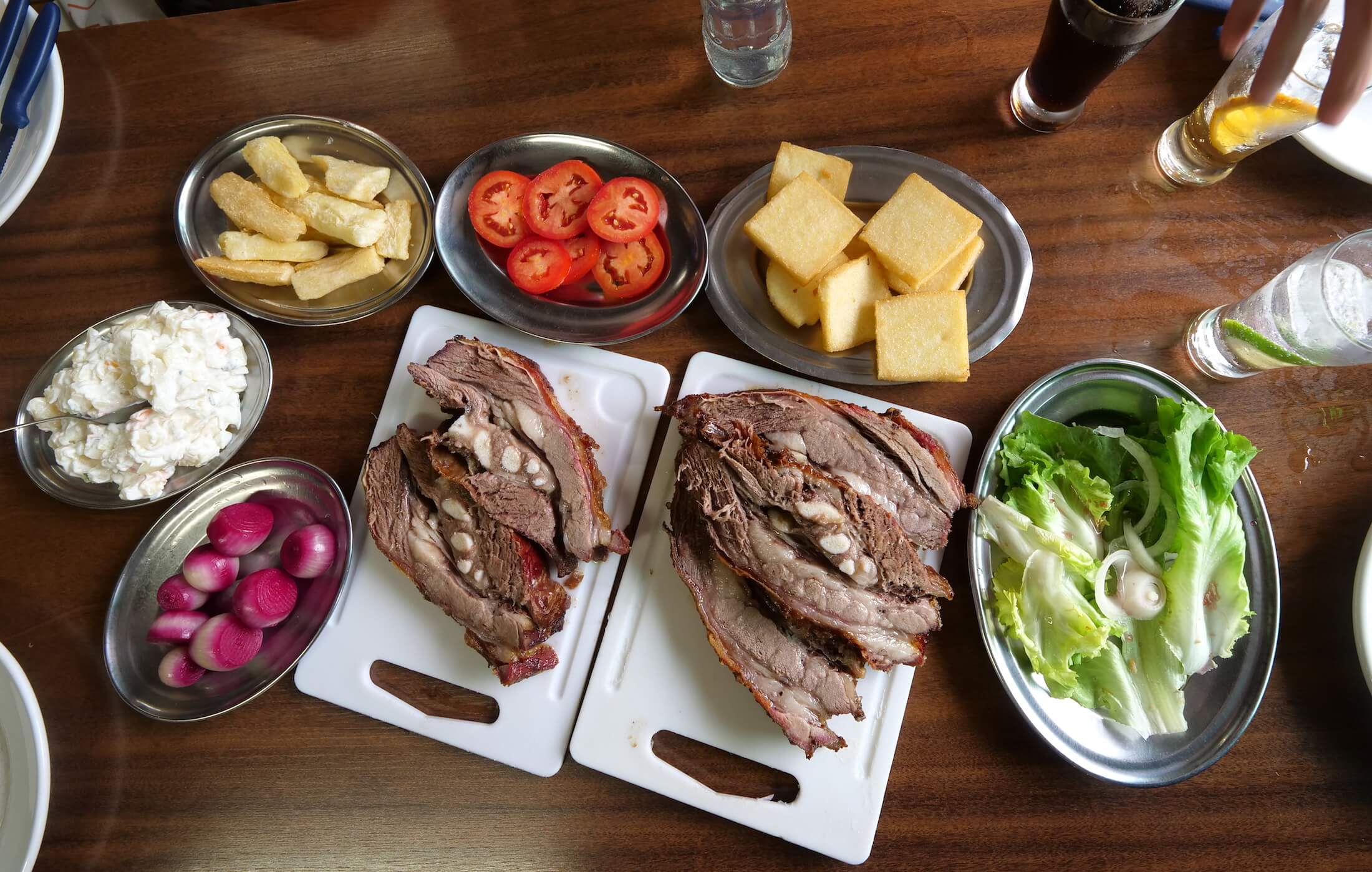
The carving process itself is a unique operational spectacle. Eschewing traditional carving knives for heavy-duty equipment, the chef utilizes a vertical band saw—a tool more commonly found in carpentry workshops—to slice through the two-to-three-inch-thick rib bones and dense connective tissue. Despite the industrial nature of the saw, the execution is remarkably fluid. The blade moves through the outer layers of fat and tendon with minimal resistance, producing clean, uniform portions that highlight the meat’s exceptional tenderness.
Service Style and the Bottomless Culinary Model
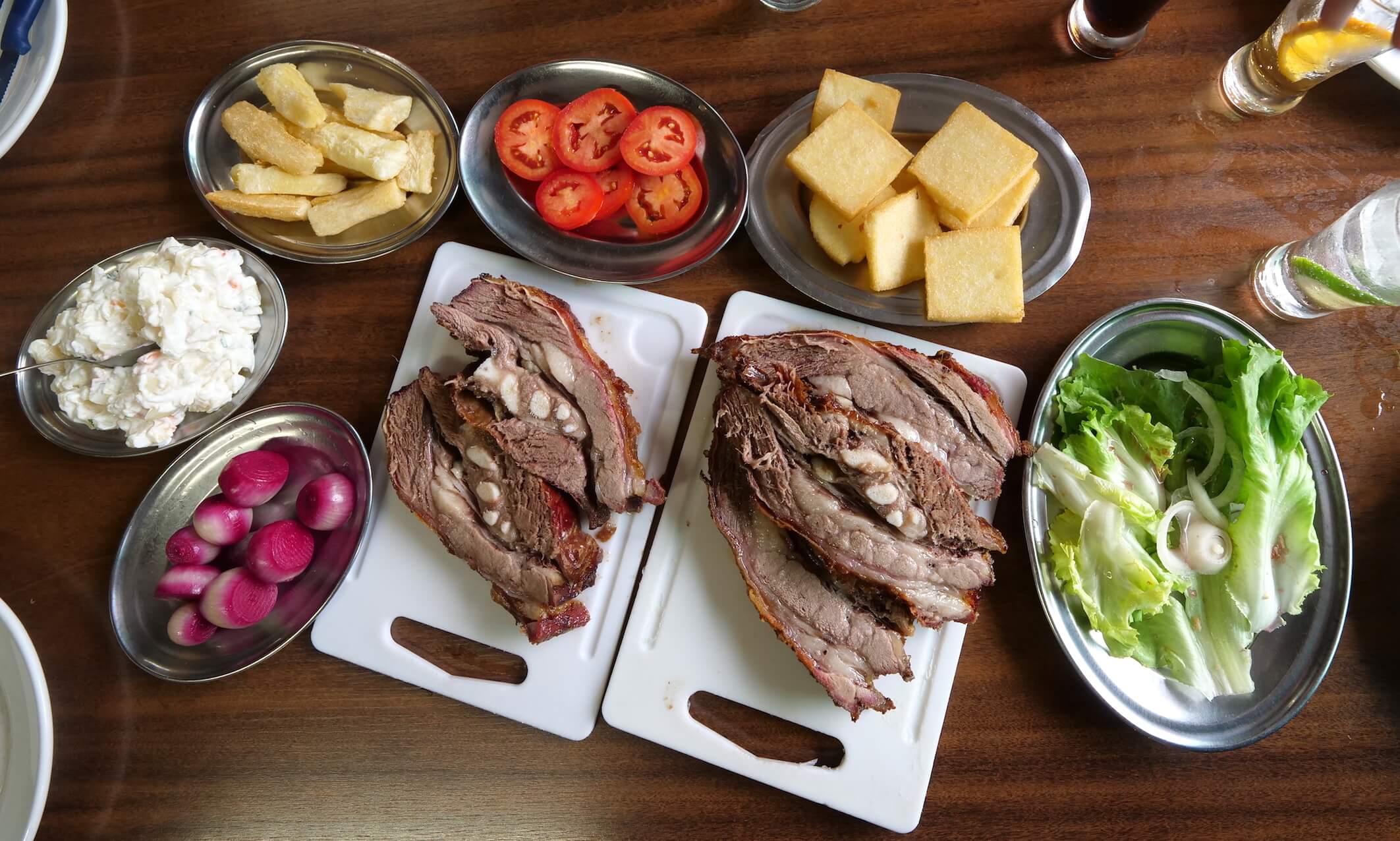
Costelão do Gaúcho operates on a hybrid service model that combines elements of a traditional à la carte menu with the continuous flow of a Brazilian rodízio. Upon selecting a cut of beef, which is weighed to order and typically served in generous one-kilogram portions, diners are seated in a relaxed, family-friendly dining room.
Rather than requiring guests to leave their seats for a self-service buffet, the establishment employs roaming servers who deliver an array of traditional side dishes directly to the table. This service style encourages an unhurried dining experience, allowing parties to sample and continuously replenish accompaniments without interrupting their meal.
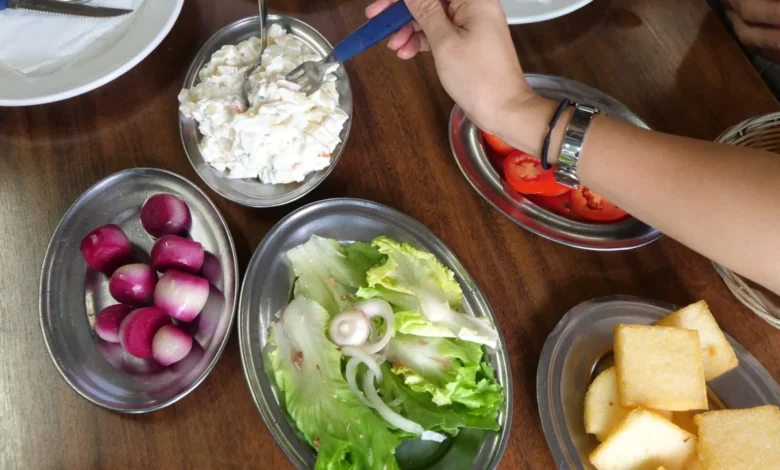
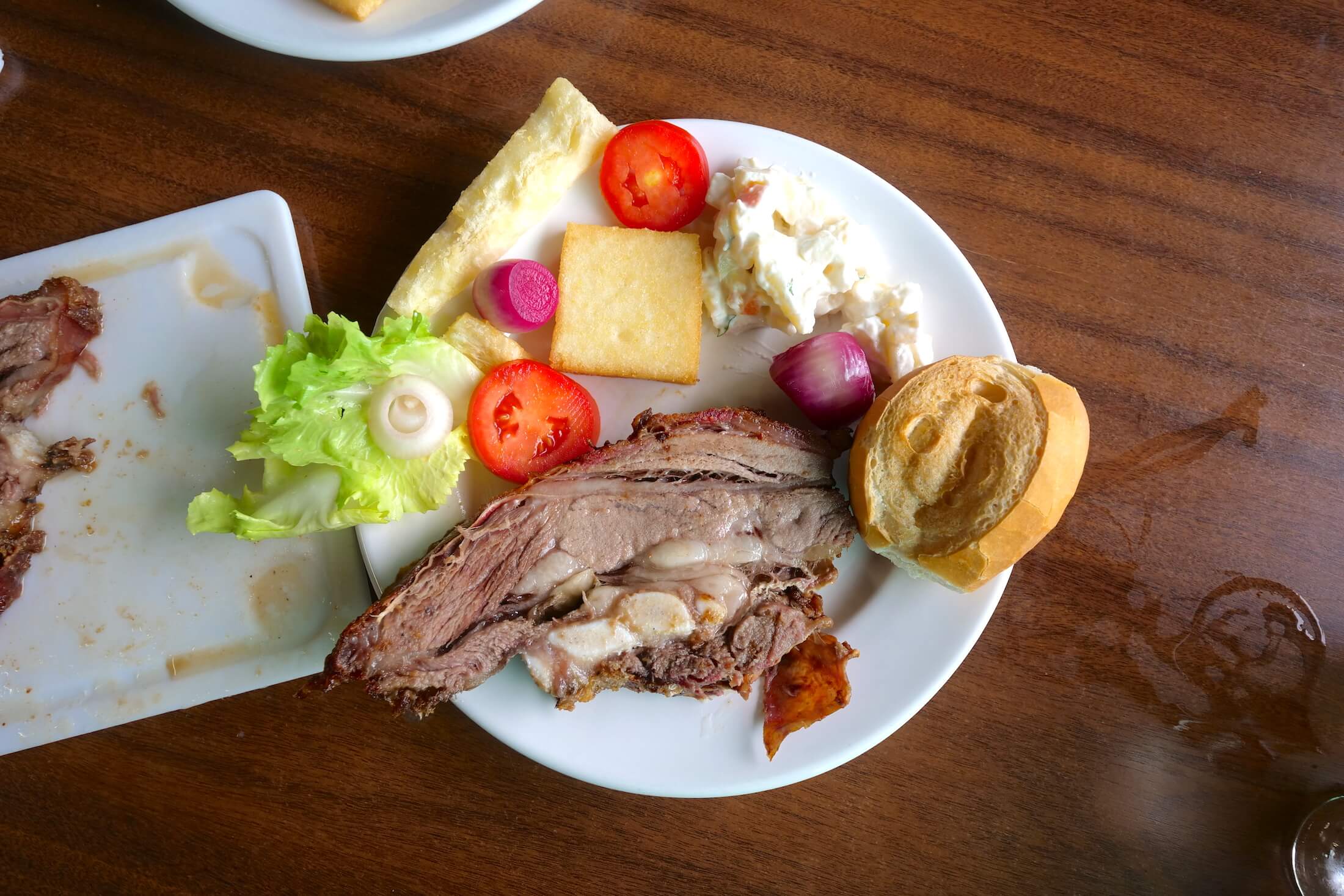
The accompanying side dishes are designed to complement the rich, smoky profile of the primary protein. The menu features a rotating selection of fresh and pickled vegetables, including thinly sliced beets and crisp greens dressed in sharp vinegar. Among the most popular non-meat offerings are the establishment’s signature shallots, which undergo a brief steaming and rapid-frying process to achieve a tender interior encased in a crisp, savory outer layer.
Staples of the South American Table
No traditional Brazilian barbecue is complete without foundational starches that trace their lineage deep into the agricultural history of the Americas. Costelão do Gaúcho features two primary carbohydrate staples: polenta and manioc.
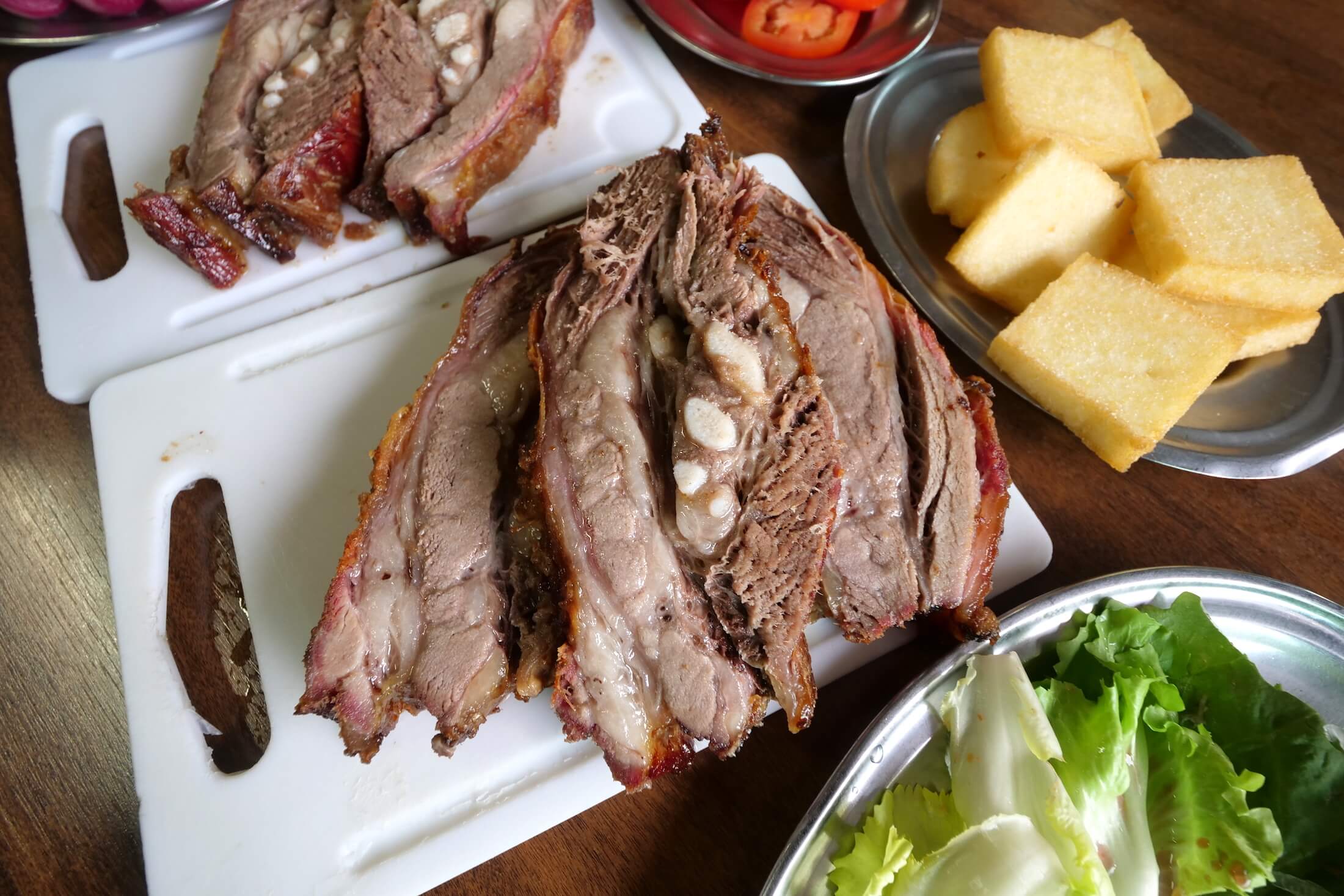
The polenta is served as thick, deep-fried sticks prepared from a traditional corn flour mix, offering a crisp exterior that functions well with various house-made sauces. Alongside the polenta is manioc, a root vegetable fundamental to South American cuisine. Boasting a fibrous, translucent golden interior, manioc provides a dense texture and subtle flavor profile that balances the high fat content of the beef ribs.
Complementing the food is a selection of regional beverages, most notably Guaraná Antarctica, a sweet and carbonated soft drink brewed from the guaraná fruit of the Amazon basin. The inclusion of these regional staples reinforces the restaurant’s role as a cultural touchstone rather than merely a commercial dining venue.
Operational Framework and Economic Impact
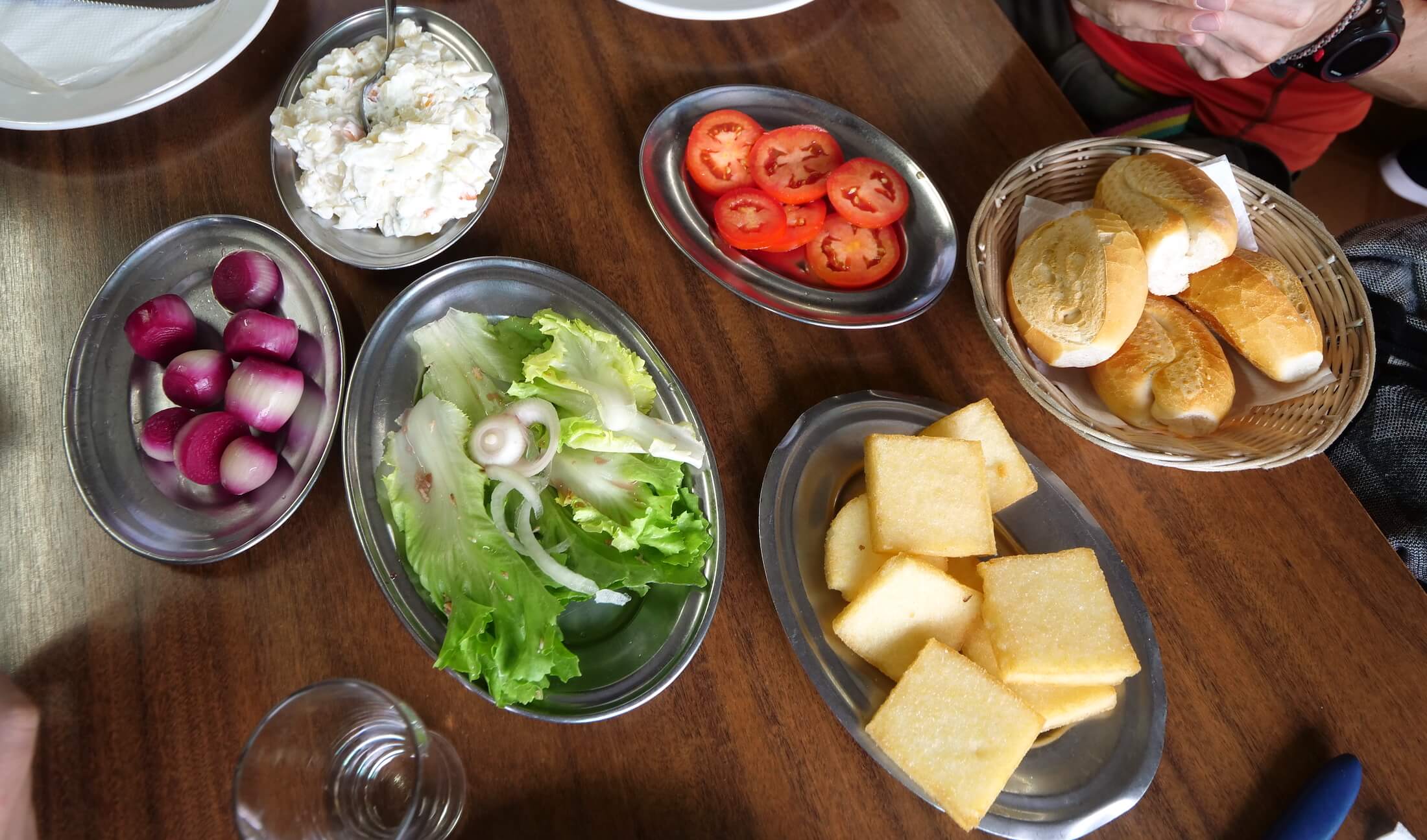
From an economic perspective, Costelão do Gaúcho operates with a predictable and accessible pricing structure designed to accommodate both local families and international tourists. While the primary cuts of beef are priced by weight, side dishes are included under a nominal per-person flat fee, allowing diners to customize their meal expenditures while maintaining access to unlimited accompaniments.
The restaurant maintains consistent operating hours, opening Monday through Saturday from 11:00 AM to 11:00 PM, and shortening hours on Sunday to close at 4:00 PM. Its longevity in Curitiba’s competitive culinary market underscores the enduring appeal of authenticity in the food service sector.
Broader Implications for Culinary Tourism
As gastronomic tourism continues to influence travel patterns across South America, establishments like Costelão do Gaúcho serve as vital ambassadors for regional culture. Tourism boards frequently highlight traditional barbecue as a primary draw for international visitors. However, the true significance of institutions practicing heritage cooking extends beyond promotional campaigns. By preserving labor-intensive, historical preparation methods, these restaurants safeguard intangible cultural heritage against the homogenizing pressures of modern commercial dining.
The dedication exhibited by the kitchen staff at Costelão do Gaúcho—operating away from the spotlight and focusing entirely on the refinement of a single core discipline—demonstrates the value of culinary specialization. For travelers seeking an unvarnished encounter with Brazilian foodways, the restaurant offers an instructive case study in how tradition, when executed with uncompromising precision, remains as relevant today as it was decades ago.