Cultivating Change: How an Urban Agricultural Collective on the Outskirts of Rome is Rewriting Italy’s Farming Future

On the sun-drenched outskirts of Rome, a quiet revolution in sustainable agriculture is taking root, offering a blueprint for how modern cities can reconnect with their rural food sheds while empowering the next generation of agrarians. At the heart of this movement is Cooperativa Coraggio, a collective of young farmers operating the 22-hectare Borghetto San Carlo Agricultural Estate. What began more than a decade ago as an improbable dream among a group of friends has blossomed into a thriving model of agroecology, community resilience, and innovative climate adaptation that is reshaping public land policy across Italy.
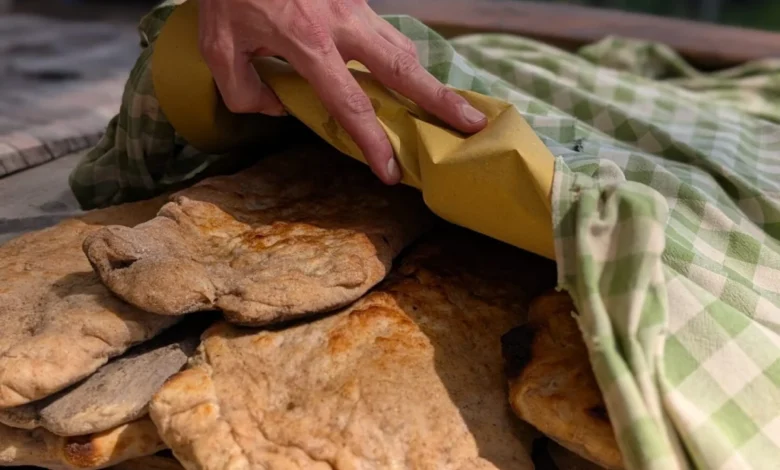
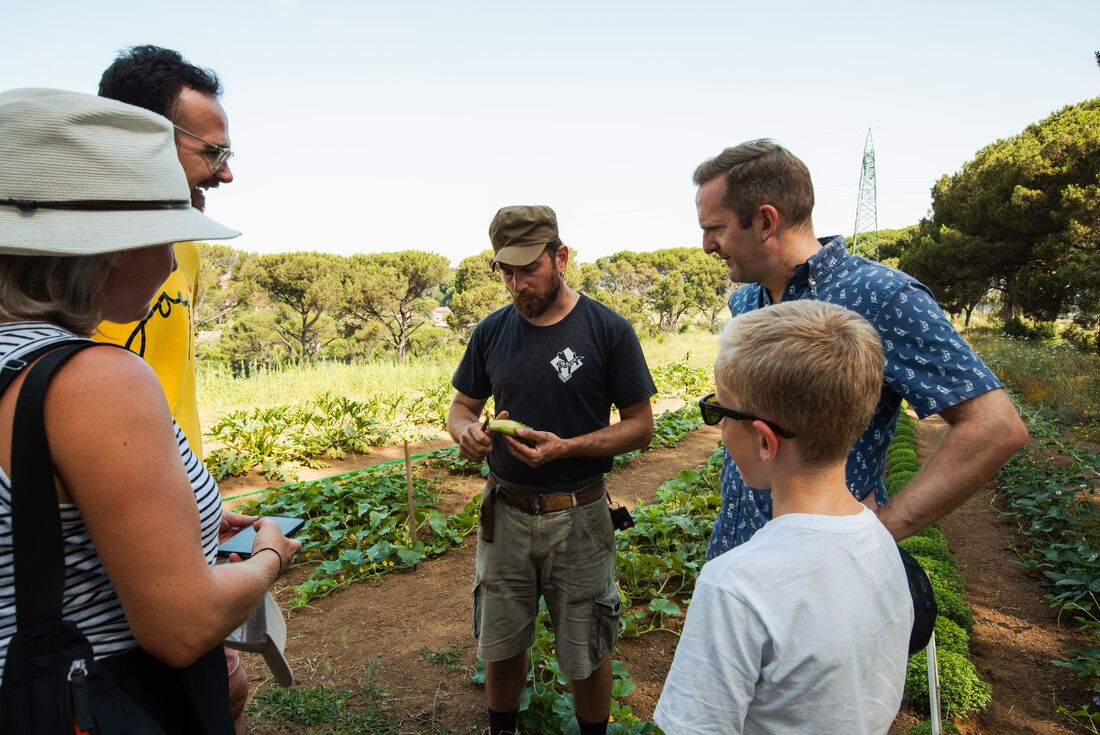
The initiative unfolds daily against a backdrop of rolling Roman countryside, where travellers participating in Intrepid Travel’s Paris to Rome by Rail itinerary gather around a large wooden picnic table. Here, farm-to-table dining is stripped of marketing hyperbole and reduced to its literal essence. Under the guidance of farmers like Alessia Mazzu, visitors slice sun-warmed, drought-resistant tomatoes, tear fresh basil, and prepare traditional panzanella—a rustic salad composed of produce harvested metres away, paired with locally sourced olive oil, balsamic vinegar, and artisanal bread. The vibrant, deep-red hues of the produce stand in stark contrast to the uniform appearance of supermarket aisles, serving as an immediate sensory testament to zero-mile, hyper-local food production.
Origins of a Grassroots Agricultural Movement
The genesis of Cooperativa Coraggio dates back to 2011, when co-founder Giacomo Lepri and a group of seventeen peers—comprising farm workers, chefs, and hospitality staff—recognized the profound environmental and social disconnect inherent in long, industrial food supply chains. Witnessing firsthand the degradation caused by unsustainable farming practices, the collective resolved to build an alternative framework for how food could be grown, distributed, and consumed within the Italian capital.
For four years, the group’s vision remained a conceptual framework without physical soil. That changed when the Borghetto San Carlo Estate, originally slated for high-density residential and commercial development, was abandoned after archaeological excavations unearthed ancient ruins prior to construction. Under Italian law, land of historical significance can be designated for public ownership; however, such sites frequently languish in legal limbo, turning into derelict zones vulnerable to vandalism and neglect.
Rather than allowing the estate to fall into disrepair, Giacomo and his colleagues launched a protracted legal challenge against government claims, petitioning for the right to transform the barren space into an active, sustainable agricultural hub. Their landmark legal victory in 2015 not only secured the 22-hectare plot for the cooperative but fundamentally altered Roman public land policy.
Pioneering Public Land Access for Young Farmers
The success of Cooperativa Coraggio established a vital legal and administrative precedent, compelling municipal authorities to formalize public procurement processes for abandoned state-owned lands. The municipality instituted a competitive bidding framework designed to entrust neglected parcels to reliable applicants capable of executing viable, sustainable environmental projects.
This systemic shift dismantled traditional economic barriers that historically restricted farming to individuals with substantial generational wealth or large financial backing. The subsequent municipal tender cycles yielded immediate regional dividends. In Rome’s Marcigliana Nature Reserve, a 21-year-old farmer named Daniel Burrai was awarded 33 hectares to establish organic farming operations and community allotments. Simultaneously, north of Rome in the broader Lazio region, a young family secured 70 hectares to implement regenerative grazing practices involving cattle, hens, and sheep.

The ripple effect of the Borghetto San Carlo model ultimately informed a national land-access initiative that has since replicated similar programs across approximately 900 municipalities throughout Italy, transforming dormant public assets into engines of ecological and economic vitality.
Climate Adaptation and Agronomic Innovation
Operating on the arid fringes of Rome presents severe structural challenges, most notably the absence of an on-site well—a critical resource for conventional agricultural enterprises in the region. Faced with this deficit, Cooperativa Coraggio rejected energy-intensive solutions such as deep-well drilling in favour of radical agronomic adaptation.
The cooperative undertook extensive research to identify crop varieties capable of thriving under intensifying heatwaves and prolonged drought conditions. A primary success story is the adoption of the siccagno tomato, an ancient Sicilian heirloom variety historically cultivated in dry, mountainous terrain. By integrating rainwater harvesting systems and limiting irrigation to roughly a single glass of water per plant per week—a fraction of the volume demanded by industrial cultivars—the farm maintains high-yield, premium-quality production without depleting local aquifers. Furthermore, the team has begun exploring experimental technologies, such as fog nets, to capture atmospheric moisture as part of their broader climate resilience strategy.
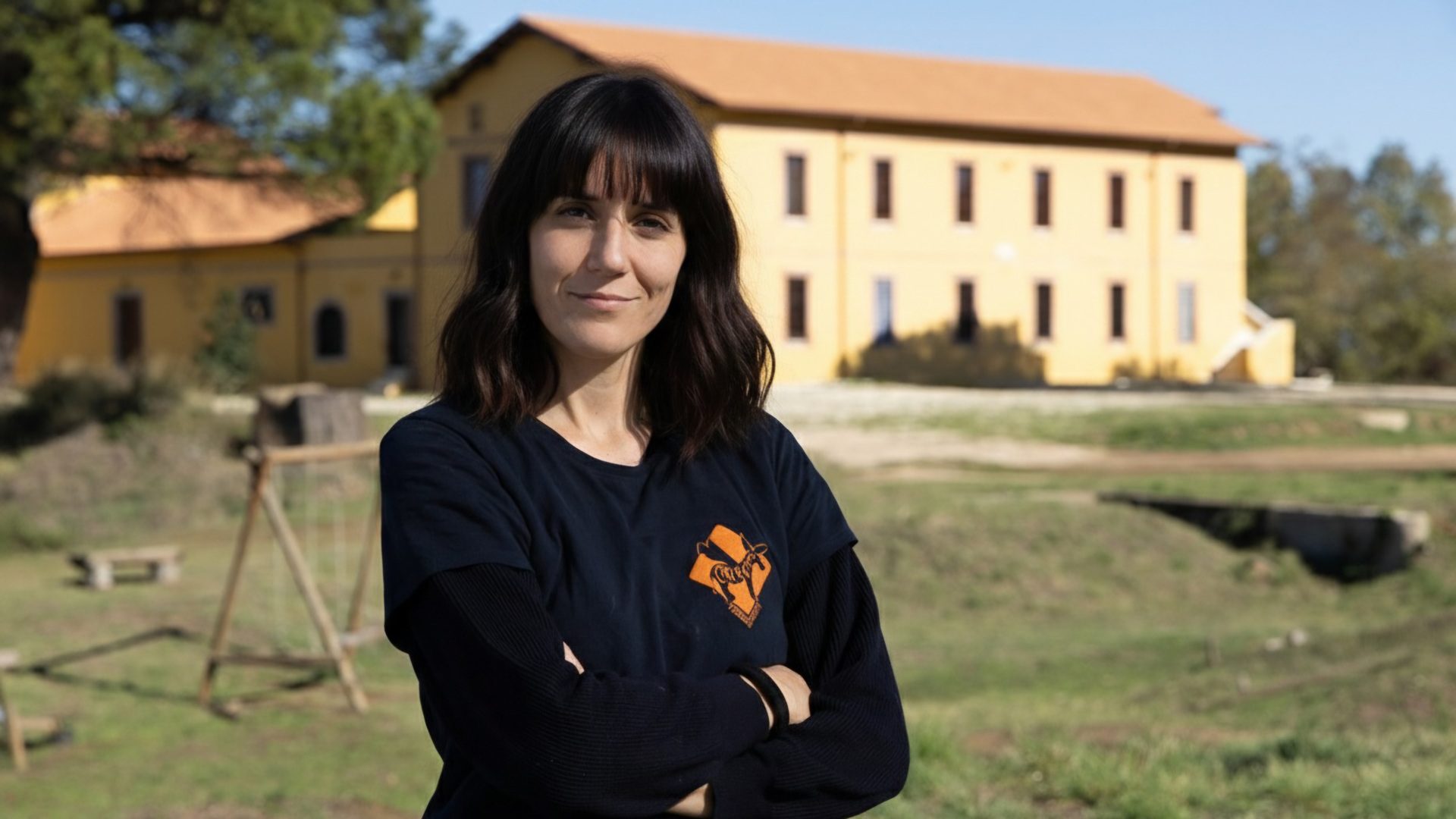
This philosophy of working in concert with natural systems rather than attempting to dominate them is visually encapsulated in the cooperative’s corporate emblem: a winged donkey. Drawing on the Italian idiom equivalent to "when pigs fly," the mascot honours the widespread skepticism the founding members faced in 2011, when industry observers doubted that a coalition of young urbanites could successfully revolutionize traditional agriculture.
Economic Integration and Social Impact
Beyond agricultural production, Cooperativa Coraggio functions as an essential economic node within Rome’s high-end culinary ecosystem. The estate supplies fresh, organic produce to four prominent local establishments—including two artisanal pizzerias operated by globally renowned chef Gabriel Bonci and an additional venue owned by one of his alumni—alongside five neighbourhood retail shops.
The cooperative directly employs six full-time local farmers, hosts four professional interns, and runs specialized agricultural training and inclusion programs designed for individuals with intellectual disabilities. These initiatives are spearheaded by staff members like Alessia Mazzu, who initially arrived at the farm for a brief two-week university placement following the completion of her degree in sustainability and environmental studies. Seven years later, she remains a cornerstone of the operation, viewing her role not merely as employment, but as a stewardship responsibility that bridges theoretical ecological education with hands-on environmental regeneration.
The Role of Sustainable Tourism and International Partnerships
In recent years, the cooperative has integrated mission-driven tourism into its operational model to enhance financial stability and educational outreach. In 2023, Cooperativa Coraggio entered a formal partnership with The Intrepid Foundation, the philanthropic arm of global adventure travel company Intrepid Travel.
Since 2024, Intrepid has incorporated the Borghetto San Carlo Estate into its Paris to Rome by Rail itineraries, making it the sole commercial tour operator granted regular access to the property. While group visits are carefully managed to preserve the farm’s daily operations, the partnership extends far beyond physical site visits. Intrepid matches all traveller donations globally, funnelling financial support directly to the co-op. To date, these contributions have disbursed more than AUD 194,000 in vital funding.
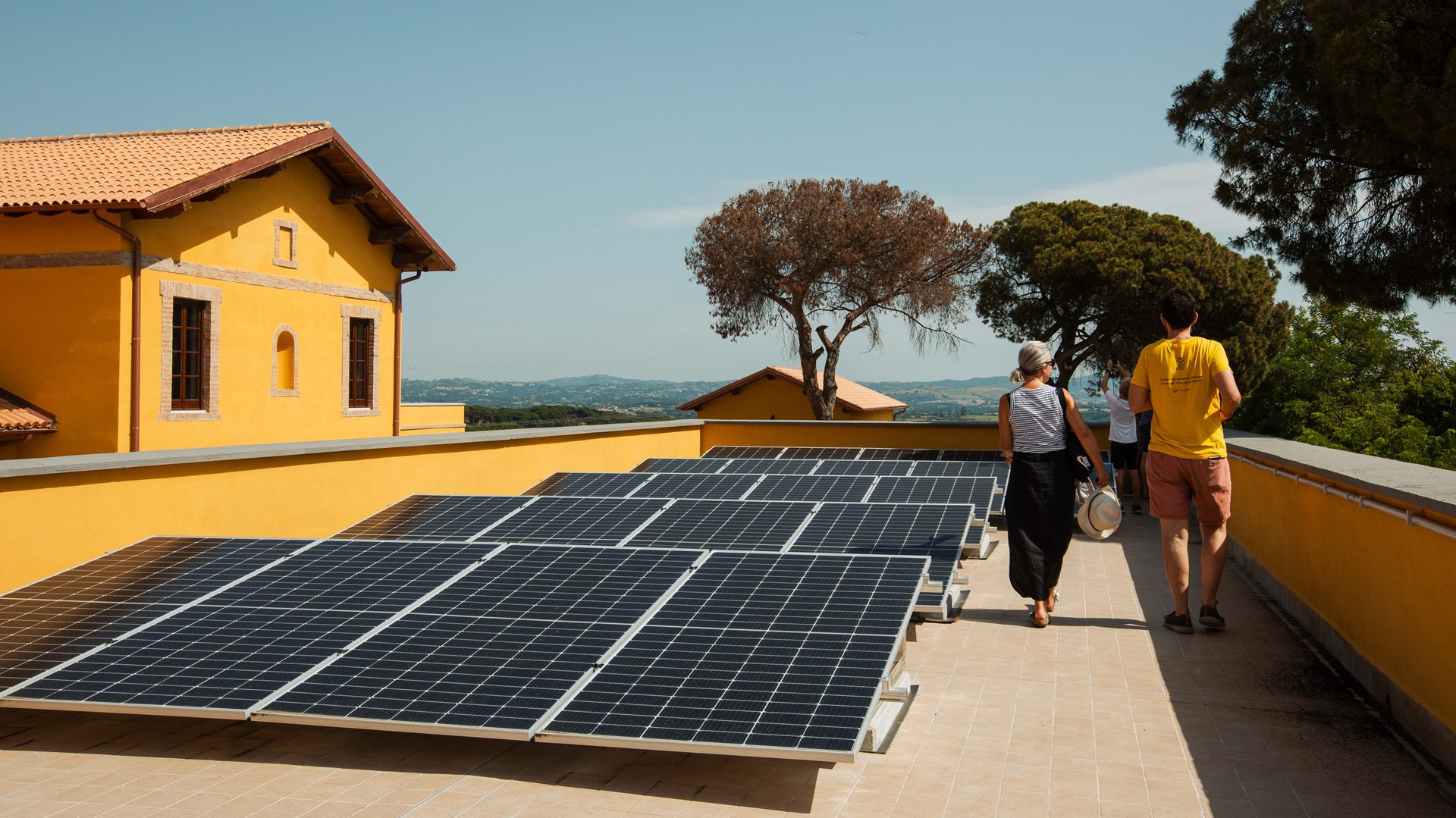
Notable among these contributions is a AUD 50,000 impact grant awarded by The Intrepid Foundation to finance the installation of solar-powered showers for an upcoming on-site hostel. Currently under construction within one of the estate’s historic farmhouses, the facility is designed to accommodate international volunteers, researchers, and students who wish to reside on-site, study agroecological methods, and contribute manual labor to the farm’s daily routines.
Broader Implications and Future Trajectory
As Cooperativa Coraggio looks toward the future, its leadership aims to expand beyond primary production, envisioning the Borghetto San Carlo Estate as a comprehensive agroecological hub. Plans include the establishment of dedicated food processing facilities, an expanded educational curriculum, and a community gathering space centred around sustainable food systems.
The trajectory of Cooperativa Coraggio illustrates how grassroots activism, when paired with supportive public policy and responsible tourism partnerships, can successfully challenge entrenched economic and environmental norms. By transforming neglected public land into a productive, climate-resilient ecosystem, the collective has demonstrated that the future of farming lies not in the unyielding extraction of natural resources, but in cooperative stewardship, innovation, and generational empowerment.