Uncovering the Legacy of Conflict and Journalism at Prishtina’s Reporting House Museum

Nearly twenty-seven years after British journalist Christian Jennings first arrived in Kosovo during the turbulent summer of 1999, the landscape of Prishtina has undergone a profound transformation. In June 1999, the skies above the capital were crisscrossed by NATO fighter aircraft, the streets were jammed with peacekeeping troops from over thirty nations, and tens of thousands of Kosovo Albanian refugees were streaming back home from exile in neighboring Albania and North Macedonia (then Macedonia). Today, that chaotic chapter of European history is preserved not just in memory or academic archives, but within the walls of a groundbreaking cultural institution: Reporting House.
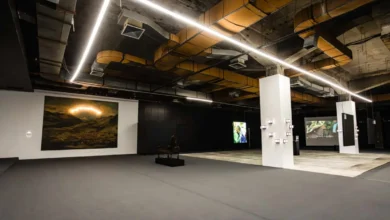
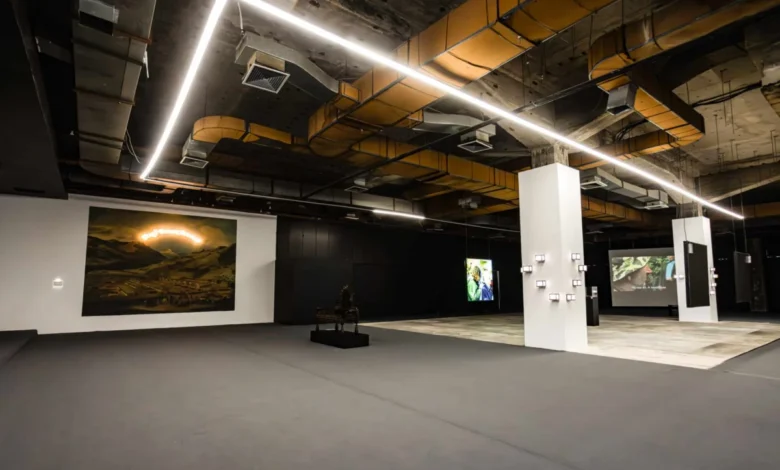
Situated on Mother Teresa Avenue in the heart of Prishtina—directly adjacent to the towering equestrian statue of Albanian national hero Skanderbeg—Reporting House occupies a striking, industrial-style space within a repurposed Yugoslav-era department store. In the two years since its grand opening, the museum has welcomed approximately 30,000 visitors, establishing itself as a vital educational and cultural hub. By stripping the building’s interior back to its raw, structural basics, the museum provides a gritty, quasi-industrial backdrop that mirrors the harsh realities of the conflict it commemorates.
The Genesis of the Conflict and the Role of Global Media
To fully understand the gravity of the exhibits inside Reporting House, one must examine the broader geopolitical context of the late 19th and 20th centuries, culminating in the Kosovo War of 1998–1999. Tensions between the ethnic Albanian majority in Kosovo and the Serbian-dominated government in Belgrade had been simmering for decades, escalating sharply following the dissolution of the Socialist Federal Republic of Yugoslavia. By the mid-1990s, the Kosovo Liberation Army (KLA) had emerged to wage an armed insurgency against Serbian security forces.
The resulting crackdown triggered a severe humanitarian crisis characterized by widespread displacement, violence, and international alarm. In this high-stakes environment, the role of international journalism proved pivotal. Foreign correspondents and local fixers risked their lives daily to beam images of atrocities, refugee columns, and military engagements into living rooms around the globe. This relentless media coverage galvanized international public opinion, ultimately forcing Western governments and NATO to intervene diplomatically and, subsequently, militarily through Operation Allied Force in the spring of 1999.

Artifacts of Survival and Resistance
Reporting House captures this climactic historical period through an extensive collection of roughly 500 photographs, 150 television broadcasts, multimedia installations, and harrowing personal testimonies. The curation extends beyond local perspectives, incorporating contemporary artworks from creators across the Balkans and as far away as Mozambique, creating a global dialogue on the universal impacts of war and displacement.
Upon entering the gallery space, visitors are immediately confronted with visceral reminders of the dangers faced by those chronicling the conflict. One of the most arresting early exhibits is a battered Sony mobile phone that stopped a high-velocity rifle bullet. The device was tucked inside the belt-bag of a BBC television cameraman who came under direct fire while filming Serbian forces in 1998. The shattered electronics absorbed the lethal kinetic energy, likely saving the journalist’s life. The footage captured by that crew contributed to the global pool of evidence that shifted foreign policy and accelerated humanitarian and military intervention.
Further into the museum, the exhibits transition from technological relics to deeply personal human documents. Glass display cases hold the poignant love letters exchanged between Fehmi and Xheve Lladrovci, a married couple who served as KLA fighters. They lived in the rugged hills, fought side-by-side, and ultimately made the ultimate sacrifice together during a fierce firefight against Serbian forces in September 1998. Juxtaposed against these intimate paper artifacts is an original, heavily dented LandRover Defender—an armored vehicle scarred by the physical wear and tear of navigating active combat zones while transporting international press corps.
The Architecture of Memory: Exterior and Interior Installations
The curatorial philosophy of Reporting House relies heavily on environmental storytelling. On the exterior grounds, visitors encounter an evocative architectural installation constructed from scarred, fire-blackened timbers salvaged from houses burned during the war. This physical preservation of destruction sets a solemn tone before guests even cross the threshold.

Inside, the industrial skeleton of the former department store serves as a blank canvas for digital screens, linear lighting, and central sculptures. The design deliberately avoids traditional, clinical museum aesthetics in favor of a raw environment that mimics the urgency of a field newsroom or a ruined urban landscape.
Expansion: The Opening of Exodus ’99
Building on the success of its flagship location on Mother Teresa Avenue, Reporting House recently expanded its footprint across the city to the Prishtina Train Station, launching a secondary site designated as Exodus ’99.
This new exhibition space centers on an authentic railway wagon—the very type utilized to forcibly transport and exile thousands of refugees during the ethnic cleansing campaigns of the war. Flanked by a specialized gallery space containing personal effects, photographs, and oral histories of the displaced, Exodus ’99 offers a sobering look at the logistics of mass human displacement and the resilience of those who survived the exodus.
Visitor Information and Access
In keeping with the institution’s mission to make historical education universally accessible, admission to both Reporting House and Exodus ’99 is completely free of charge. Visitors have the option to explore the galleries independently or participate in structured, informative guided tours led by knowledgeable local staff.

Reporting House is open from Tuesday through Sunday, operating between the hours of 10:00 and 18:00. The Exodus ’99 annex at the Prishtina Train Station operates on a slightly adjusted schedule, welcoming visitors from Tuesday through Sunday between 12:00 and 18:00. Both locations are closed on Mondays. For further inquiries, updates, and educational programming, the museum can be reached via telephone at +383 48 831 998, or through its official social media channels on Instagram and Facebook under the handle @reportinghouse.
Implications and Broader Historical Significance
The establishment and sustained popularity of Reporting House and Exodus ’99 carry significant implications for post-conflict reconciliation, historical memory, and cultural tourism in the Western Balkans. As generations born after the 1999 conflict come of age, institutions that rely on primary-source journalism, authentic artifacts, and unfiltered personal narratives play a critical role in civic education.
By framing the conflict through the lens of those who reported on it—and those who lived through it—Reporting House transcends a standard military history museum. It offers a sophisticated meditation on the power of information, the ethics of global intervention, and the enduring human cost of war. In doing so, it ensures that the lessons of Prishtina’s past remain visible, tangible, and relevant to a global audience for decades to come.
Related posts: